
When 'Electrical Fire' Means the Roof Got Blown Off
Rocket Lab's Archimedes engine test explosion at NASA facility reveals gap between official reports and actual damage, raising questions about transparency in commercial space industry
The Phone Call That Understated Everything
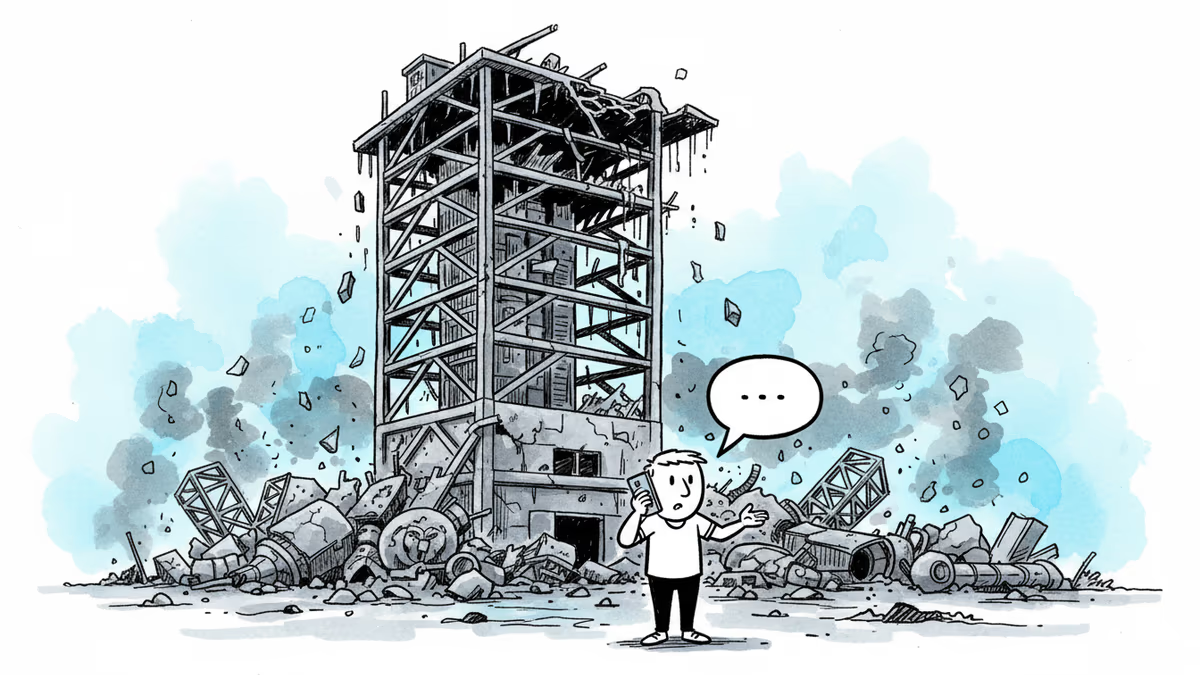
On November 30th, a Rocket Lab employee made what seemed like a routine call to the Stennis Space Center Fire Department. "Grass fire" at the A3 test stand, they said. Could someone come take a look? The cause? "An anomaly caused an electrical box to catch fire."
Satellite imagery tells a different story. The roof of one test cell had been completely blown off. According to someone familiar with the incident, "The characterization of this as an electrical fire doesn't reflect what actually occurred. This was a catastrophic engine explosion that resulted in significant infrastructure damage."
The gap between "electrical fire" and "catastrophic explosion" isn't just semantic—it's about how the commercial space industry communicates risk.
The Transparency Tightrope
Rocket Lab, founded by New Zealand's Peter Beck, has built its reputation on reliable small satellite launches with its Electron rocket. The company is now developing the larger Neutron rocket, powered by the Archimedes engines that were being tested when the explosion occurred.

This isn't just any startup blowing things up in a field. Rocket Lab is a publicly traded company with $1.7 billion in market cap and customers ranging from NASA to national security agencies. When something goes wrong, the stakes extend far beyond a single test.
The commercial space industry has embraced a "fail fast, learn faster" mentality borrowed from Silicon Valley. SpaceX's early rocket explosions are now celebrated as stepping stones to success. But there's a difference between accepting failure as part of innovation and downplaying the severity when it happens.
Testing at America's Rocket Proving Ground
The Stennis Space Center isn't just any test facility—it's where America has tested its most critical rocket engines for over 50 years. From the Saturn V engines that took us to the moon to the Space Launch System engines preparing for our return, this Mississippi facility has seen it all.
For Rocket Lab to test here represents both validation and responsibility. It signals the company has graduated from small-scale operations to major league rocket development. But it also means failures happen under the watchful eye of NASA and with potential impact on America's space infrastructure.
The facility's A3 test stand has two test cells. With one now damaged, testing schedules for multiple programs could face delays—a reminder that in the interconnected world of space development, one company's "anomaly" can ripple across the entire industry.
Authors
Related Articles
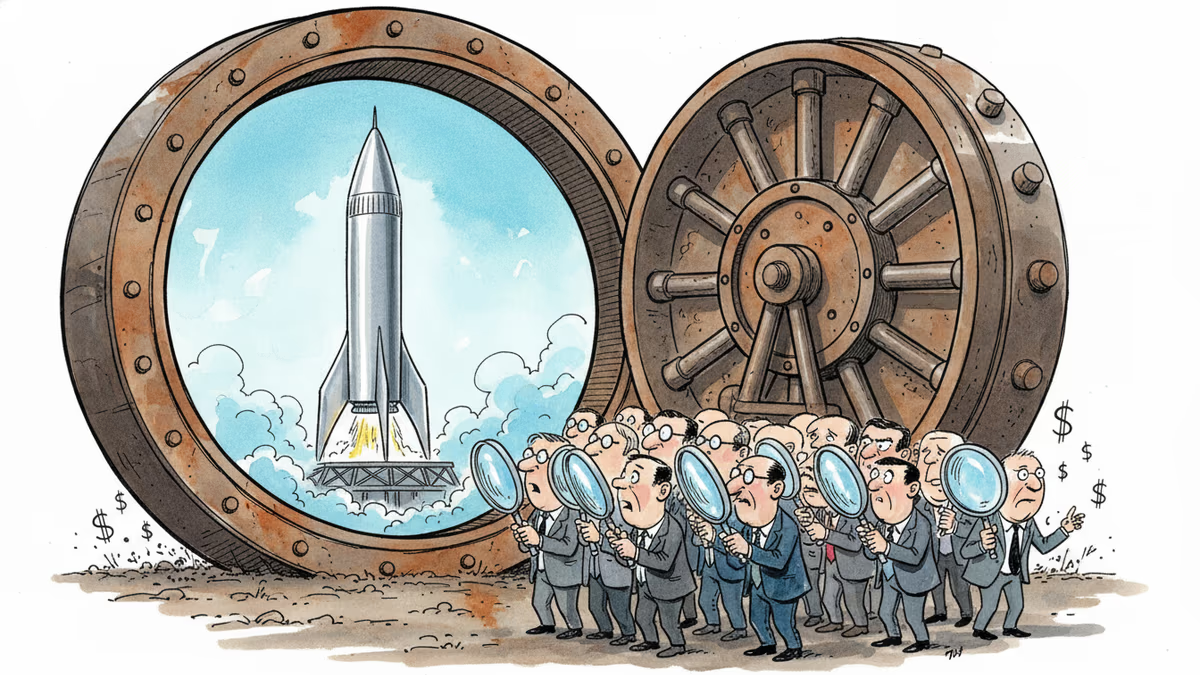
SpaceX filed a nearly 400-page S-1 with the SEC, targeting an IPO as early as June 12. Here's what the filing reveals—and what it doesn't.

SpaceX has filed its S-1 with the SEC, targeting the Nasdaq under ticker SPCX. With $18.67B in revenue but a $4.9B loss, the IPO forces investors to answer one hard question.

Blue Origin successfully reflew an orbital-class booster for the first time, but New Glenn's upper stage failed on its third mission — raising questions about NASA's Artemis timeline.
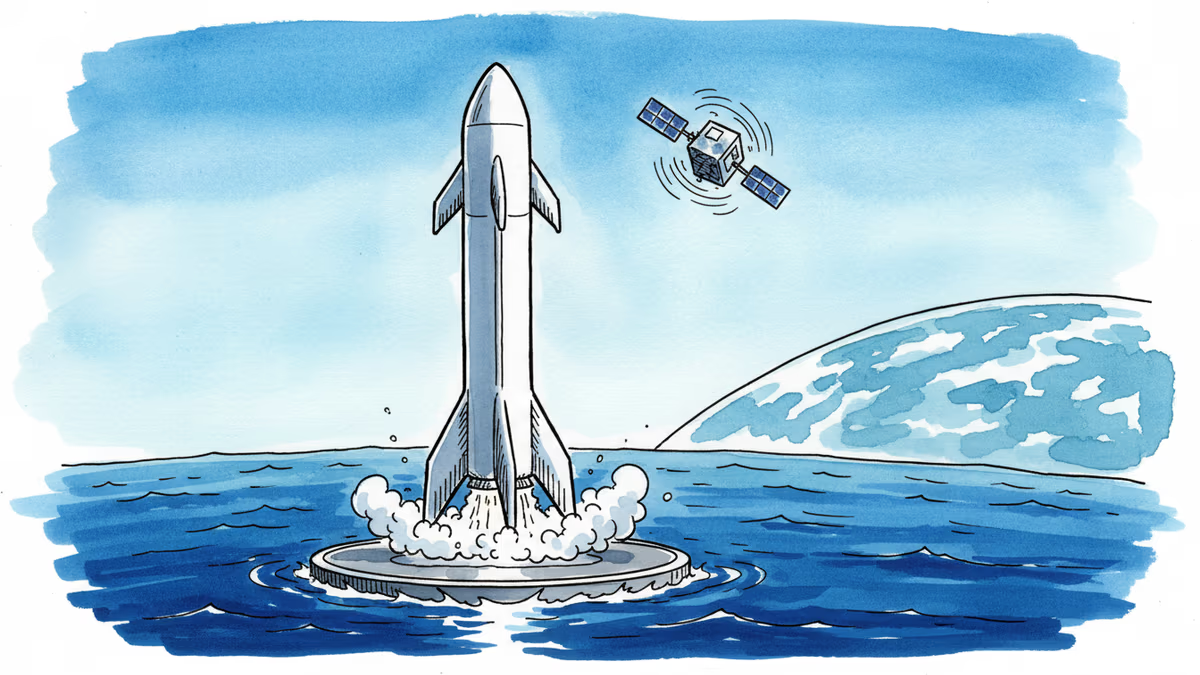
Blue Origin's New Glenn rocket nailed its first booster reuse — but lost a customer satellite to a botched upper stage. What this split verdict means for the space industry, NASA's moon plans, and the race against SpaceX.
SpaceX filed a nearly 400-page S-1 with the SEC, targeting an IPO as early as June 12. Here's what the filing reveals—and what it doesn't.
SpaceX has filed its S-1 with the SEC, targeting the Nasdaq under ticker SPCX. With $18.67B in revenue but a $4.9B loss, the IPO forces investors to answer one hard question.
Blue Origin successfully reflew an orbital-class booster for the first time, but New Glenn's upper stage failed on its third mission — raising questions about NASA's Artemis timeline.
Blue Origin's New Glenn rocket nailed its first booster reuse — but lost a customer satellite to a botched upper stage. What this split verdict means for the space industry, NASA's moon plans, and the race against SpaceX.
Thoughts
Share your thoughts on this article
Sign in to join the conversation