

SpaceX Removes Crew Access Arm from Historic Launch Pad
The Crew Access Arm at Kennedy Space Center's Pad 39A has been removed, marking another transformation for the 60-year-old launch site that has adapted from Apollo to Shuttle to SpaceX.
The $2 Billion Launch Pad That Refuses to Retire
At Kennedy Space Center's Launch Complex 39A, construction crews removed the Crew Access Arm on Wednesday—the walkway astronauts used to board SpaceX's Dragon spacecraft. It's just the latest makeover for a launch pad that's been reinventing itself for over 60 years.
This isn't just facility maintenance. It's a symbol of how the space industry keeps evolving, and how the most valuable real estate in spaceflight adapts to survive.
From Moon Shots to Private Rockets
The numbers tell the story of transformation. Construction workers first carved this launch pad from Florida wetlands in the early 1960s. NASA used it to launch 17 Saturn V rockets, including the ones that took humans to the Moon. Then came 82 Space Shuttle missions before the program ended in 2011.
After sitting idle, NASA leased the pad to SpaceX in 2014 for $20 million annually. The private company started launching from 39A in 2017, installed the now-removed Crew Access Arm in 2018, and began flying astronauts in 2020.
The arm itself suspended crews more than 200 feet above the pad surface—a engineering marvel that's now obsolete after just six years of service.

The Economics of Adaptation
What makes 39A fascinating isn't just its history—it's its business model. Each transformation required massive investment. NASA spent hundreds of millions converting it from Saturn V to Shuttle configuration. SpaceX invested heavily again to make it work for Falcon 9 and Falcon Heavy.
Yet the pad keeps paying off. SpaceX has launched dozens of missions from 39A, from crew rotations to heavy-lift commercial satellites. The site generates revenue that would make most businesses envious.
This raises questions about space infrastructure investment. Should launch facilities be designed for specific vehicles, or built for maximum adaptability? SpaceX's approach suggests the latter.
What Comes Next?
The removal of the Crew Access Arm hints at future plans. SpaceX is developing Starship, a much larger vehicle that would require different ground support equipment. Is 39A being prepped for another reinvention?
The space industry is watching closely. Blue Origin, Rocket Lab, and other companies are building their own launch facilities. But none have the proven adaptability of 39A.
Authors
Related Articles

American Airlines just signed Starlink for 500+ aircraft. It's not just about faster inflight internet — it's a calculated move in the run-up to what could be the largest IPO in history.
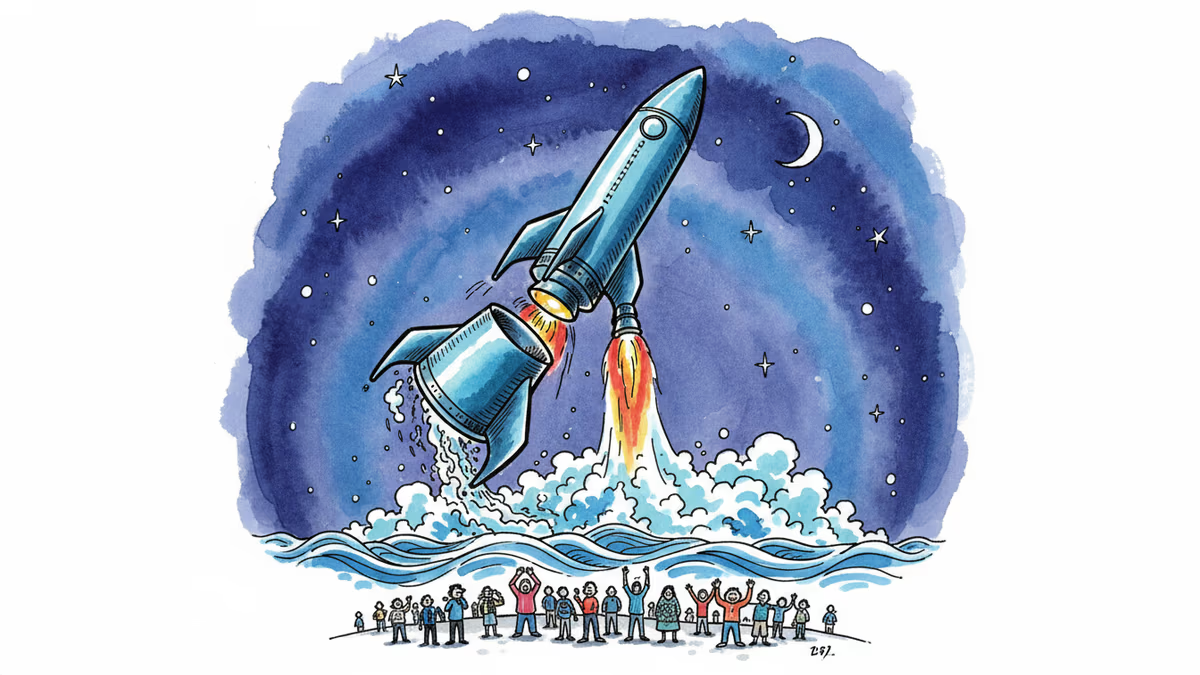
SpaceX's upgraded Starship V3 completed its first test flight, deploying 20 Starlink simulators but losing the Super Heavy booster. With an IPO weeks away, the stakes just got higher.

SpaceX's IPO filing puts AI at the center, claiming a $26.5 trillion market opportunity. But can Grok compete with OpenAI and Anthropic for enterprise customers?
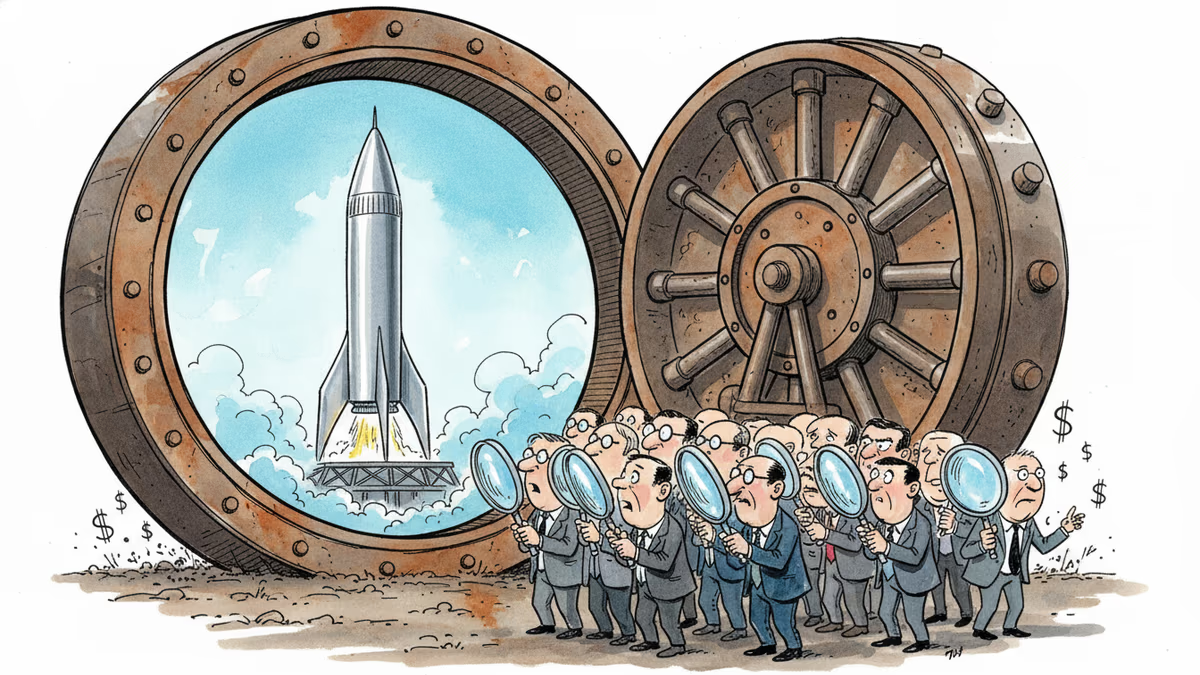
SpaceX filed a nearly 400-page S-1 with the SEC, targeting an IPO as early as June 12. Here's what the filing reveals—and what it doesn't.
American Airlines just signed Starlink for 500+ aircraft. It's not just about faster inflight internet — it's a calculated move in the run-up to what could be the largest IPO in history.
SpaceX's upgraded Starship V3 completed its first test flight, deploying 20 Starlink simulators but losing the Super Heavy booster. With an IPO weeks away, the stakes just got higher.
SpaceX's IPO filing puts AI at the center, claiming a $26.5 trillion market opportunity. But can Grok compete with OpenAI and Anthropic for enterprise customers?
SpaceX filed a nearly 400-page S-1 with the SEC, targeting an IPO as early as June 12. Here's what the filing reveals—and what it doesn't.
Thoughts
Share your thoughts on this article
Sign in to join the conversation