
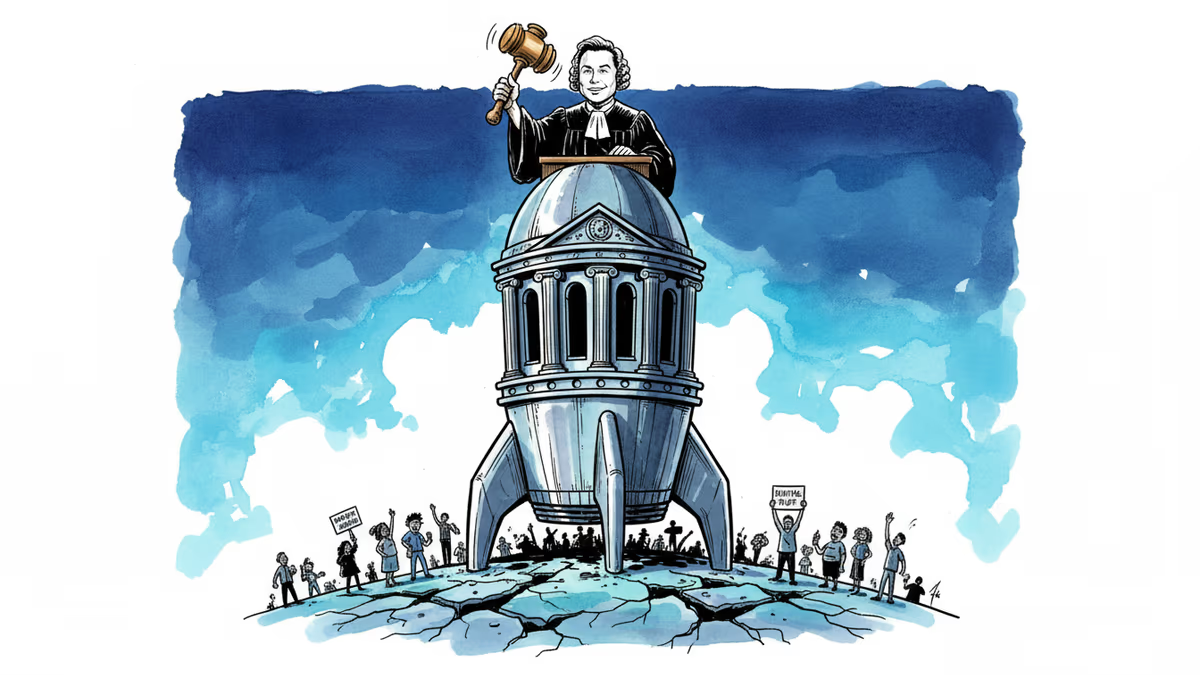
Elon Musk's Company Town Wants Its Own Court
SpaceX's private city Starbase seeks to establish municipal court, raising questions about corporate governance and democratic accountability in modern America.
580 residents. 420 law enforcement calls. One ambitious plan to rewrite how American cities work.
SpaceX's company town in Texas isn't even a year old, but Starbase is already building something unprecedented: a complete municipal infrastructure controlled by a single corporation. The latest addition? Its own court system.
Building Government from Scratch
On Wednesday, Starbase's city administrator proposed an ordinance to create a municipal court with a part-time judge, prosecutor, and court clerk. Here's the twist: until they appoint someone, the mayor will serve as judge. They hope to have a candidate ready by next month's meeting.
This isn't just about legal convenience. Starbase has systematically built its own municipal services—volunteer fire department, building permits, fire code inspections. When a deal to contract county sheriff's deputies fell through, they decided to create the Starbase Police Department instead. (They're still paying Cameron County to use jail facilities, according to city paperwork.)
The police department is still six months away from full operation, but the application to Texas's Commission on Law Enforcement reveals telling details about this corporate city experiment.
The Numbers Behind the Experiment
Starbase's law enforcement application paints a picture of rapid growth and unique challenges. In 2025 alone: 420 law enforcement calls, 180 fire service calls, 140 EMS calls. Highway 4—the main artery through Starbase—sees over 7,000 vehicles daily, with 353 documented crashes last year.

The city argues Cameron County Sheriff's Office can't "guarantee dedicated law enforcement coverage," and Starbase's remote location "requires rapid and reliable" response times. Translation: they want control over their own destiny.
But there's more to it. The city boasts about its "unique blend of cutting-edge technology and coastal charm, coupled with high median household incomes and rising property values." SpaceX launches, expected to increase dramatically, draw tourists who expect premium municipal services.
Three Perspectives on Corporate Cities
Efficiency advocates see Starbase as innovation in governance. Why shouldn't a company that can land rockets also run a city more efficiently than traditional bureaucracy? Fast permitting, responsive services, aligned incentives—it's Silicon Valley meets municipal government.
Democratic theorists worry about accountability. When the same entity that employs most residents also controls police, courts, and city council, where are the checks and balances? What happens when corporate interests conflict with resident rights?
Legal scholars point to historical precedent. Company towns weren't uncommon in 19th-century America, but they often devolved into exploitation. Modern labor laws and constitutional protections exist for good reason.
The Bigger Picture: Governance in the 21st Century
Starbase isn't happening in isolation. Tech billionaires are increasingly interested in governance experiments—from charter cities to seasteading to space colonization. The question isn't whether these experiments will continue, but what lessons we'll learn from them.
Some see opportunity: traditional government moves slowly, corporate governance moves fast. In an era of climate change and technological disruption, maybe we need new models.
Others see danger: democracy is messy by design. When you streamline away the friction, you might also streamline away the freedom.
Authors
Related Articles
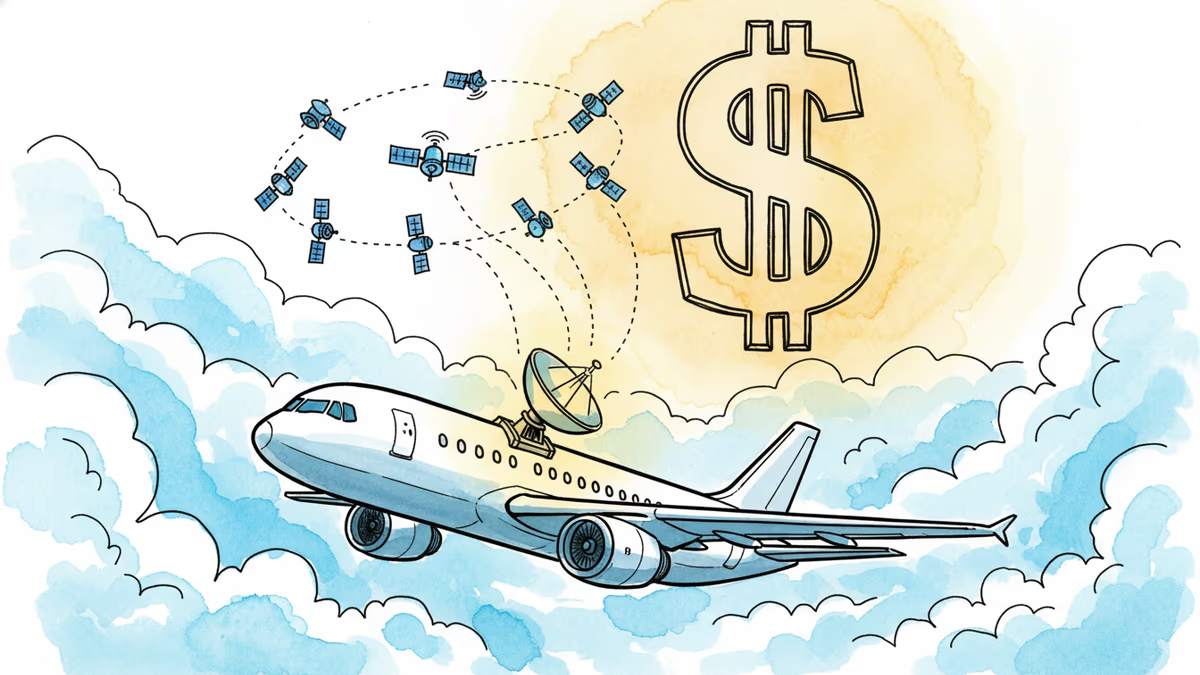
American Airlines just signed Starlink for 500+ aircraft. It's not just about faster inflight internet — it's a calculated move in the run-up to what could be the largest IPO in history.

SpaceX's upgraded Starship V3 completed its first test flight, deploying 20 Starlink simulators but losing the Super Heavy booster. With an IPO weeks away, the stakes just got higher.
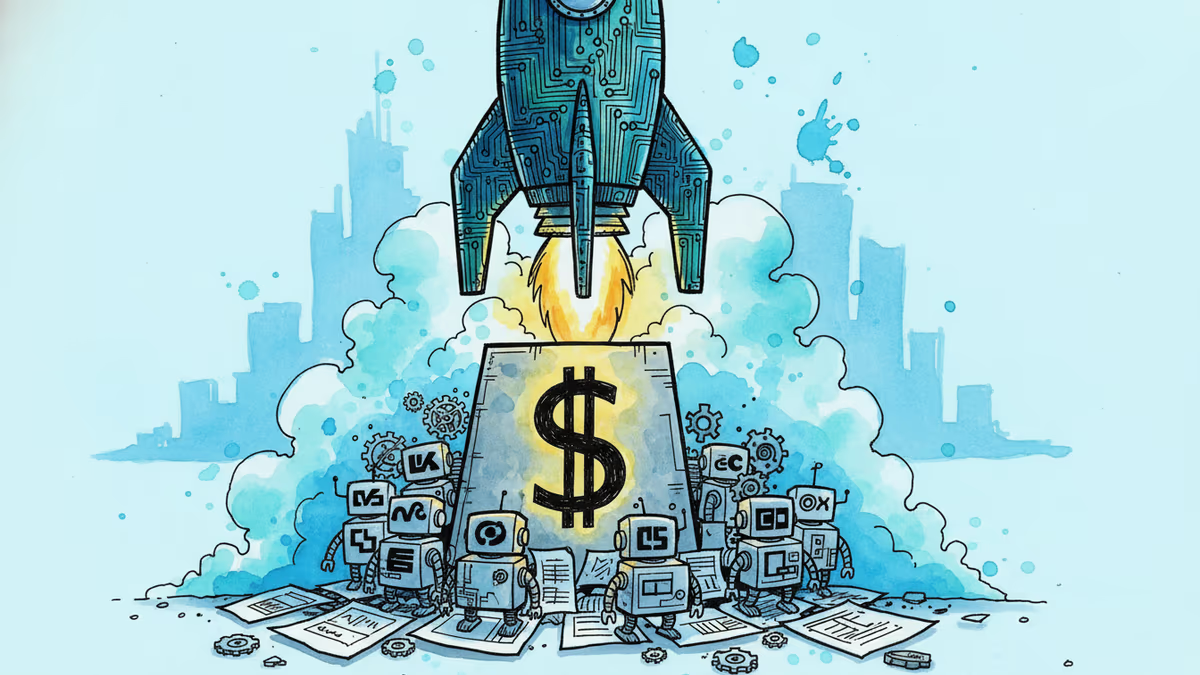
SpaceX's IPO filing puts AI at the center, claiming a $26.5 trillion market opportunity. But can Grok compete with OpenAI and Anthropic for enterprise customers?
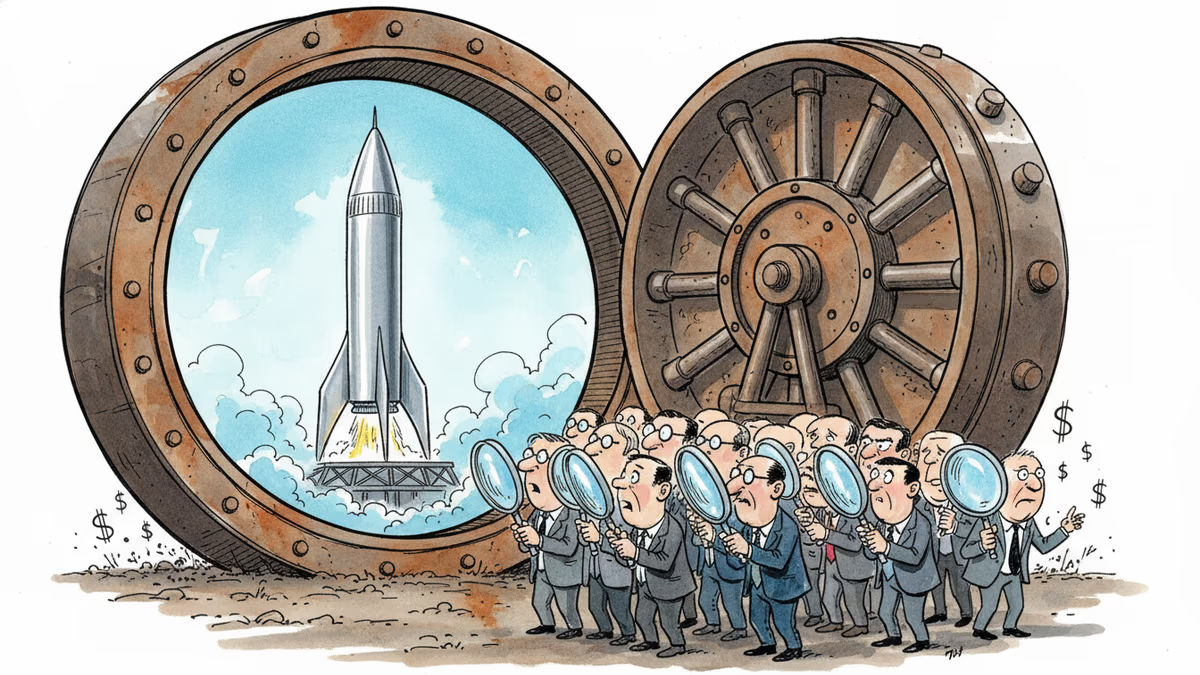
SpaceX filed a nearly 400-page S-1 with the SEC, targeting an IPO as early as June 12. Here's what the filing reveals—and what it doesn't.
American Airlines just signed Starlink for 500+ aircraft. It's not just about faster inflight internet — it's a calculated move in the run-up to what could be the largest IPO in history.
SpaceX's upgraded Starship V3 completed its first test flight, deploying 20 Starlink simulators but losing the Super Heavy booster. With an IPO weeks away, the stakes just got higher.
SpaceX's IPO filing puts AI at the center, claiming a $26.5 trillion market opportunity. But can Grok compete with OpenAI and Anthropic for enterprise customers?
SpaceX filed a nearly 400-page S-1 with the SEC, targeting an IPO as early as June 12. Here's what the filing reveals—and what it doesn't.
Thoughts
Share your thoughts on this article
Sign in to join the conversation