

Musk's Mars Pivot: Why the Moon Suddenly Makes Business Sense
Elon Musk abandons Mars obsession for lunar city plans. Space experts roll eyes, but the strategic shift reveals deeper changes in the space economy and geopolitical landscape.
From "Distraction" to Destination
Just 12 months ago, Elon Musk dismissed the Moon as a "distraction." Mars was the prize, he insisted—why waste time on a lunar pit stop when humanity could go straight to the red planet? Now, in a complete strategic reversal, he's announced that SpaceX is pivoting to build a city on the Moon.
The space science community's reaction? Collective eye-rolling. Many experts have grown weary of Musk's "overly ambitious plans and wildly unrealistic time scales," as one researcher put it. The skepticism isn't surprising—Musk's Mars timeline has slipped repeatedly, from his original 2024 target to sometime in the 2030s.
But dismissing this as another Musk whim might miss the bigger picture. This pivot reveals fundamental shifts in space economics, geopolitics, and technological reality.
The Math Behind the Madness
Mars always had a marketing problem disguised as a technical challenge. The 7-month journey each way, radiation exposure, and hostile environment make it humanity's ultimate moonshot. The Moon? It's a 3-day commute with proven Apollo-era technology as a foundation.
More importantly, the money has shifted. NASA's Artemis program has unleashed billions in lunar contracts. In 2024 alone, NASA allocated over $7 billion for Moon-related projects. SpaceX's Starship is already contracted for lunar missions—guaranteed revenue that Mars can't match.

China's successful lunar missions add urgency. Their discovery of water ice at the Moon's south pole isn't just scientific achievement—it's resource claiming. The Moon is becoming a geopolitical chess piece, and Musk knows it.
Wall Street's Lunar Logic
Investors never bought the Mars dream's timeline. Lunar projects offer clearer paths to profitability: space tourism ($400,000 per seat), helium-3 mining, and satellite servicing stations. Mars colonization? That's a multi-decade investment with uncertain returns.
"Musk is finally being realistic about business fundamentals," says one space industry analyst. "The Moon isn't a stepping stone to Mars—it's a destination with its own massive market potential."
Even traditional aerospace contractors are betting lunar. Boeing, Lockheed Martin, and Blue Origin are all positioning for Moon contracts. The lunar economy could reach $170 billion by 2040, according to PwC projections.
The Skeptics Have a Point
Yet space scientists remain unconvinced. Musk's track record on timelines is abysmal—Full Self Driving was "next year" for nearly a decade. His 2026 lunar city timeline feels equally fantastical.
"We've heard grand pronouncements before," notes one NASA veteran. "The question isn't whether SpaceX can build lunar infrastructure—it's whether they can do it on Musk's timeline and budget."
Regulatory hurdles loom large too. Lunar development requires international coordination through treaties dating to the 1960s. Environmental concerns about space debris and lunar contamination are growing among scientists.
Authors
Related Articles
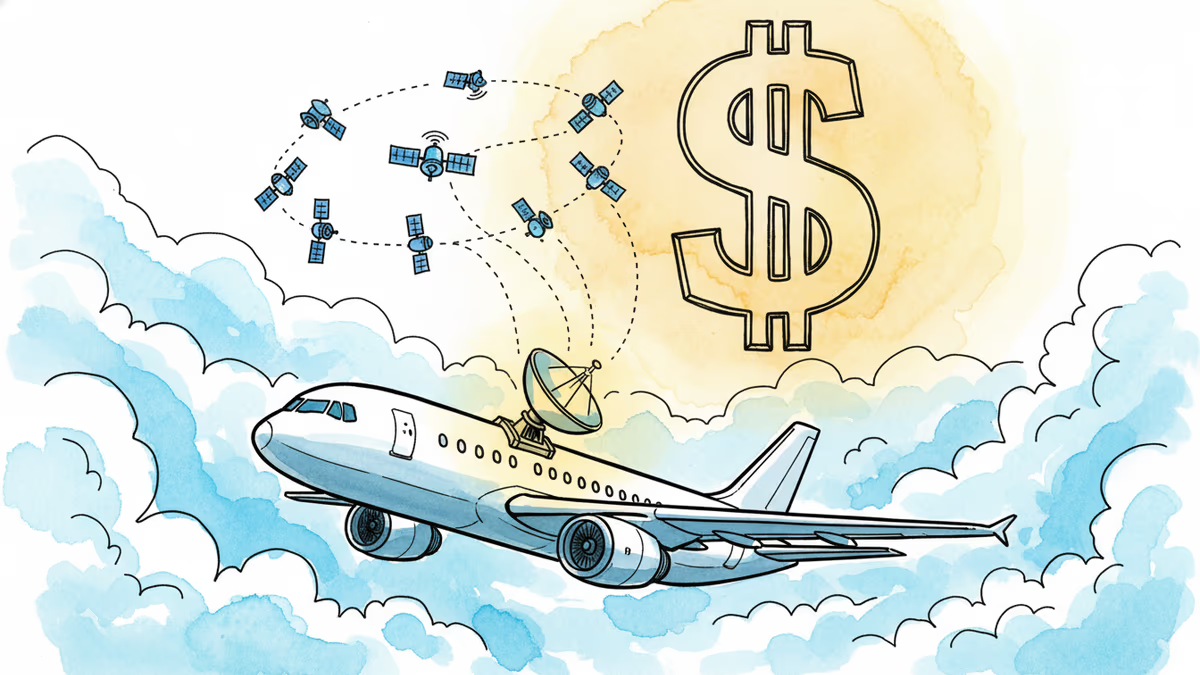
American Airlines just signed Starlink for 500+ aircraft. It's not just about faster inflight internet — it's a calculated move in the run-up to what could be the largest IPO in history.
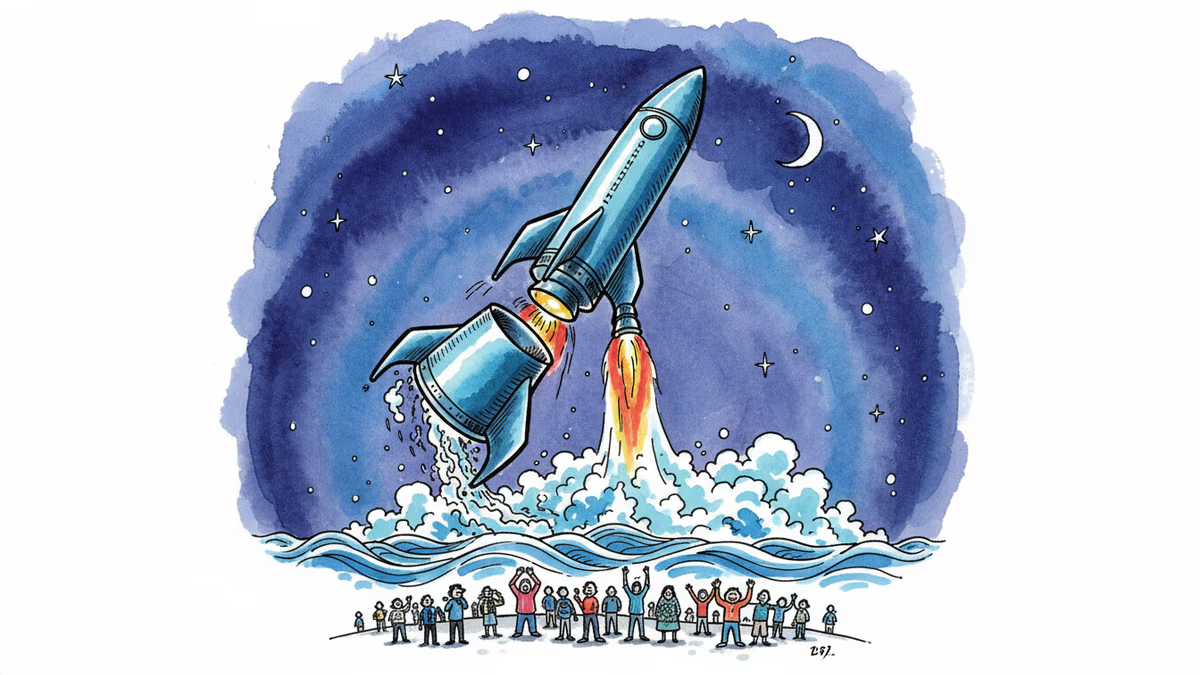
SpaceX's upgraded Starship V3 completed its first test flight, deploying 20 Starlink simulators but losing the Super Heavy booster. With an IPO weeks away, the stakes just got higher.
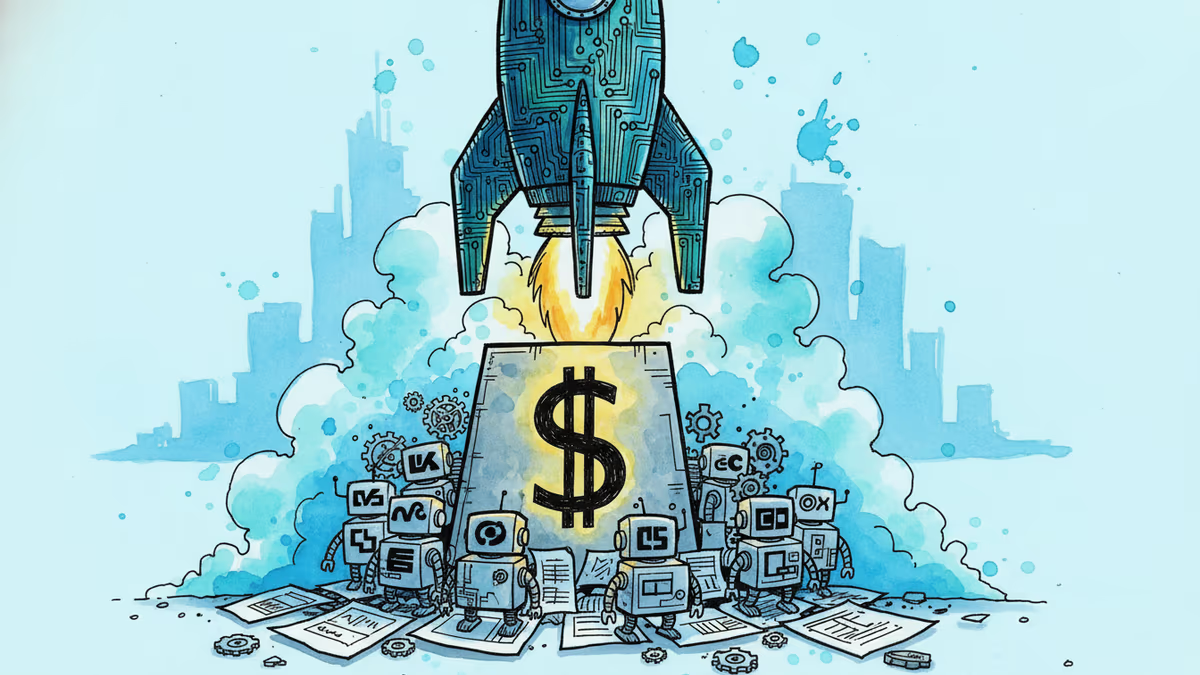
SpaceX's IPO filing puts AI at the center, claiming a $26.5 trillion market opportunity. But can Grok compete with OpenAI and Anthropic for enterprise customers?
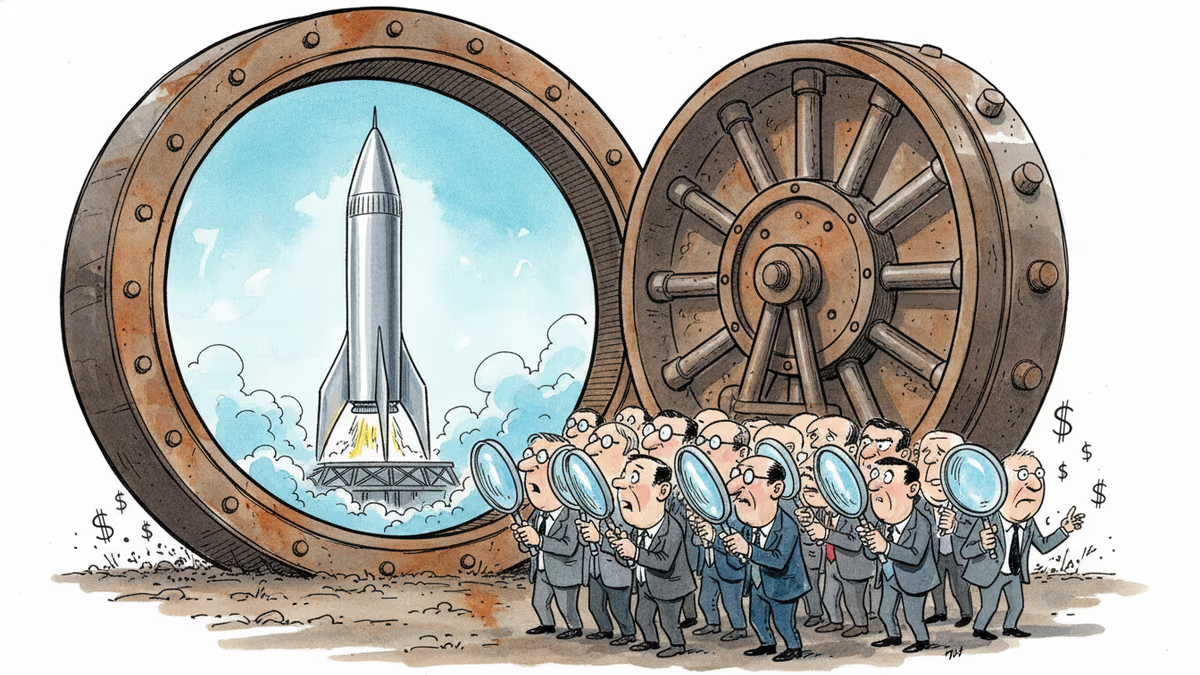
SpaceX filed a nearly 400-page S-1 with the SEC, targeting an IPO as early as June 12. Here's what the filing reveals—and what it doesn't.
American Airlines just signed Starlink for 500+ aircraft. It's not just about faster inflight internet — it's a calculated move in the run-up to what could be the largest IPO in history.
SpaceX's upgraded Starship V3 completed its first test flight, deploying 20 Starlink simulators but losing the Super Heavy booster. With an IPO weeks away, the stakes just got higher.
SpaceX's IPO filing puts AI at the center, claiming a $26.5 trillion market opportunity. But can Grok compete with OpenAI and Anthropic for enterprise customers?
SpaceX filed a nearly 400-page S-1 with the SEC, targeting an IPO as early as June 12. Here's what the filing reveals—and what it doesn't.
Thoughts
Share your thoughts on this article
Sign in to join the conversation