
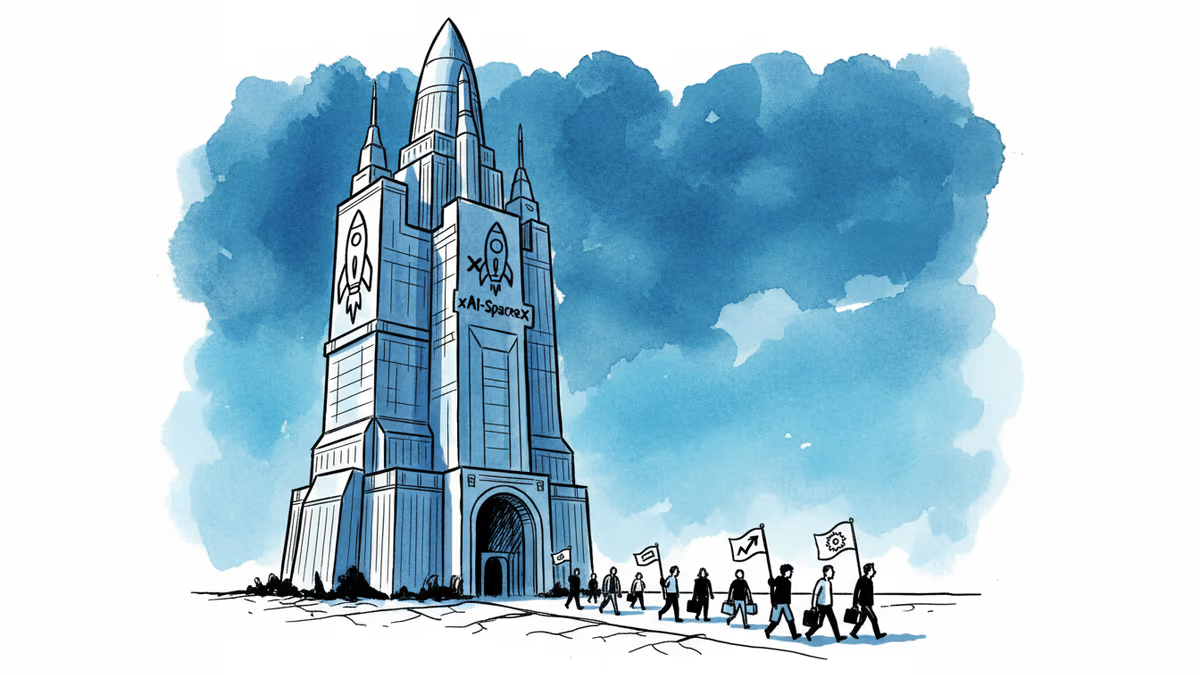
Talent Exodus Follows xAI's $1.25T Mega-Merger
Co-founders and key employees leave xAI after historic SpaceX merger, raising questions about AI talent retention in mega-corporations and startup culture preservation.
The ink was barely dry on the $1.25 trillion xAI-SpaceX merger when the departures began. Within days of last week's announcement—the largest corporate merger in history—two co-founders and several key employees walked away from what should have been the ultimate Silicon Valley victory lap.
Yuhai (Tony) Wu and Jimmy Ba, both co-founders of the AI startup that Elon Musk launched just 18 months ago, posted cryptic farewell messages on X. Wu called it "time for [his] next chapter," while Ba wrote about needing to "recalibrate [his] gradient on the big picture"—tech-speak for "I'm out."
When Victory Feels Like Defeat
The timing couldn't be more puzzling. xAI went from zero to a trillion-dollar valuation faster than any company in history, merging with SpaceX and X (formerly Twitter) to create what Musk called "the everything company." For most employees, this would mean instant wealth and career-defining credentials.
Yet the departures tell a different story. Several of the exiting employees announced plans to start their own AI companies, suggesting they're walking away from guaranteed riches to chase something else entirely.
The pattern isn't random. Sources familiar with the situation describe a culture clash between xAI's scrappy startup mentality and the corporate machinery required to manage a $1.25 trillion entity. "It's like watching a garage band get signed to a major label," one former employee told industry observers. "Suddenly you're not making music anymore—you're managing a business."
The Talent Retention Paradox

This exodus highlights a peculiar challenge facing today's AI industry: how do you keep entrepreneurial talent once you've achieved entrepreneurial success?
Ba and Wu weren't just employees—they were co-founders who helped build xAI from concept to trillion-dollar valuation. Their departure signals something deeper than typical post-merger turnover. It suggests that for some of the brightest minds in AI, the appeal of building something new outweighs the security of managing something massive.
The phenomenon isn't unique to xAI. OpenAI has seen similar departures following its partnership with Microsoft, and Anthropic was founded by former OpenAI researchers seeking a different approach to AI development. The pattern suggests that AI talent values autonomy and innovation culture more than traditional corporate incentives.
The Startup Diaspora Effect
What happens when proven AI founders leave trillion-dollar companies? Historically, such departures have accelerated innovation rather than hindered it. The PayPal Mafia—former employees who went on to found companies like Tesla, LinkedIn, and YouTube—demonstrates how talent dispersion can multiply industry impact.
The xAI departures could trigger a similar effect. Wu and Ba bring deep experience in large language models and neural network architecture. Their new ventures, backed by their xAI credibility and likely substantial financial resources, could become tomorrow's AI unicorns.
For the broader AI ecosystem, this creates a fascinating dynamic: mega-mergers that consolidate power while simultaneously seeding new competition through talent exodus.
Authors
Related Articles
SpaceX's IPO filing puts AI at the center, claiming a $26.5 trillion market opportunity. But can Grok compete with OpenAI and Anthropic for enterprise customers?
SpaceX filed a nearly 400-page S-1 with the SEC, targeting an IPO as early as June 12. Here's what the filing reveals—and what it doesn't.
SpaceX has filed its S-1 with the SEC, targeting the Nasdaq under ticker SPCX. With $18.67B in revenue but a $4.9B loss, the IPO forces investors to answer one hard question.
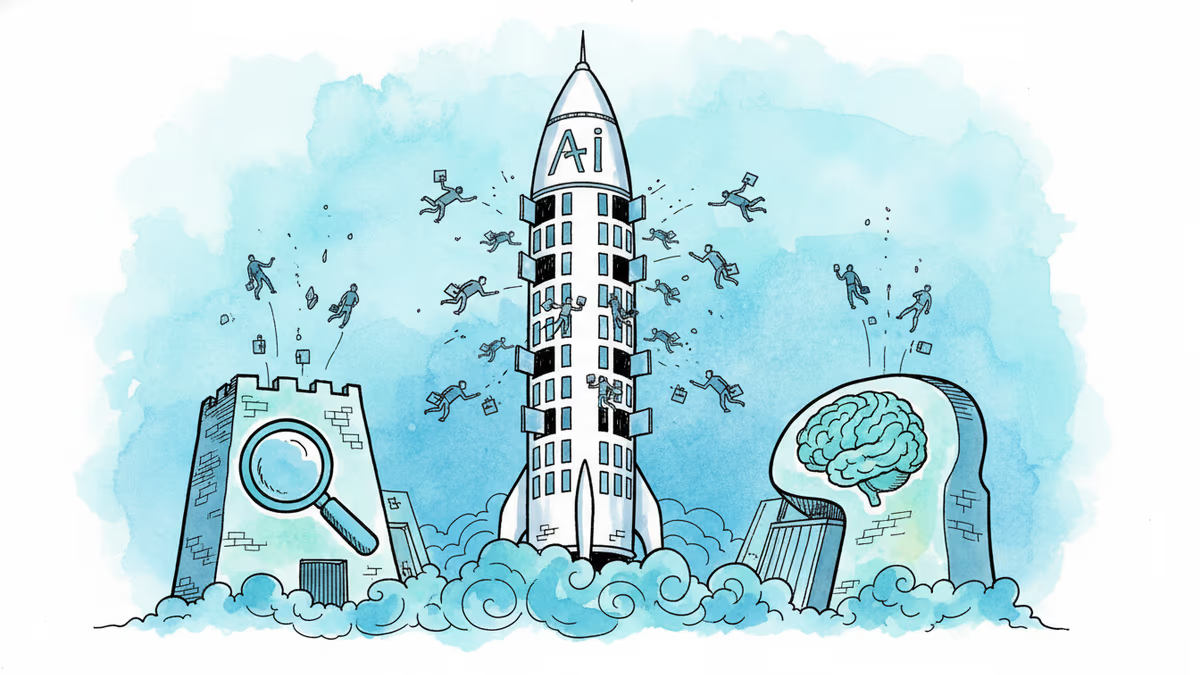
Over 50 researchers and engineers have left SpaceXAI since February's merger. With the pre-training team nearly gutted, questions mount about whether Musk's AI ambitions can survive his management style.
SpaceX's IPO filing puts AI at the center, claiming a $26.5 trillion market opportunity. But can Grok compete with OpenAI and Anthropic for enterprise customers?
SpaceX filed a nearly 400-page S-1 with the SEC, targeting an IPO as early as June 12. Here's what the filing reveals—and what it doesn't.
SpaceX has filed its S-1 with the SEC, targeting the Nasdaq under ticker SPCX. With $18.67B in revenue but a $4.9B loss, the IPO forces investors to answer one hard question.
Over 50 researchers and engineers have left SpaceXAI since February's merger. With the pre-training team nearly gutted, questions mount about whether Musk's AI ambitions can survive his management style.
Thoughts
Share your thoughts on this article
Sign in to join the conversation