
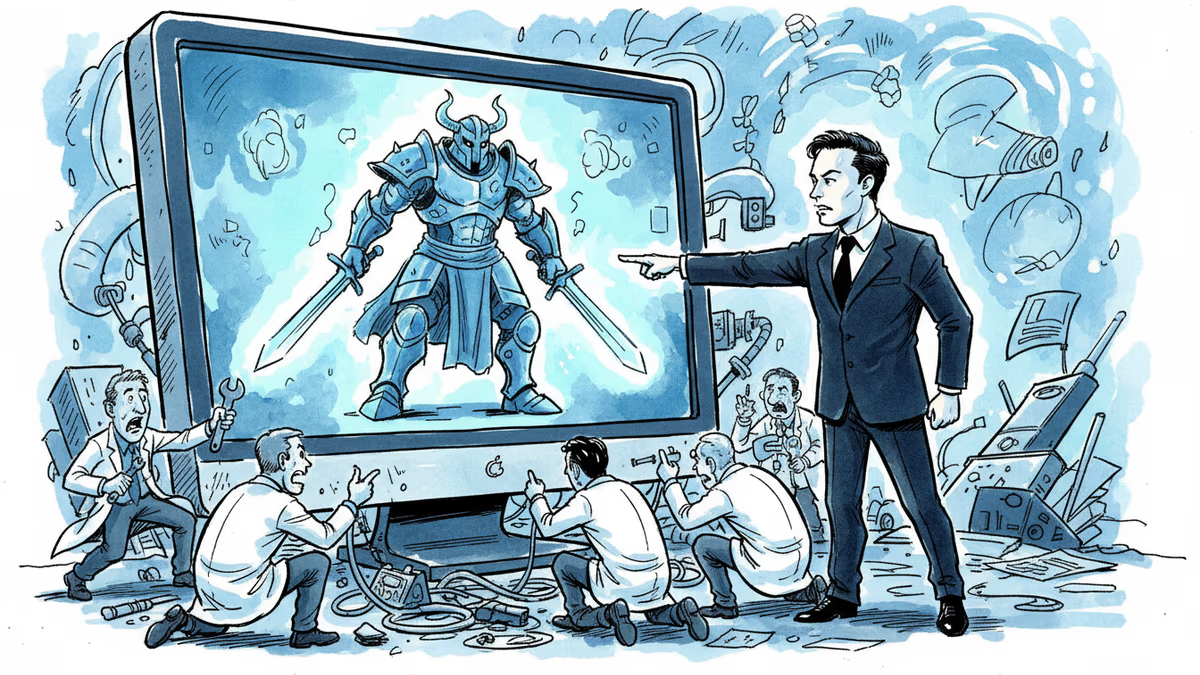
Why Elon Musk Made Engineers Fix AI's Gaming Skills Before Launch
xAI delayed a model release for days to perfect Baldur's Gate responses. What this gaming obsession reveals about AI competition strategies and market positioning.
When a Billionaire's Gaming Hobby Derailed an AI Launch
Last year, high-level engineers at xAI received an unexpected assignment. Their CEO, Elon Musk, wasn't satisfied with how the company's AI chatbot handled detailed questions about Baldur's Gate. The result? A model release delayed for several days while engineers were pulled from other projects to perfect the bot's gaming advice.
At first glance, this looks like a 54-year-old billionaire prioritizing his personal gaming obsession over business deadlines. But dig deeper, and you'll find a calculated strategy that could reshape how AI companies compete.
Gaming: The New AI Battleground
According to Business Insider's reporting, Musk's xAI has been placing "particular emphasis on video-game walkthroughs" – a sharp contrast to competitors. While OpenAI targets everyday consumers and Anthropic focuses on enterprises, xAI is carving out gaming as its specialty.
Our "BaldurBench" test confirmed the strategy worked. Grok delivered dense, jargon-heavy responses peppered with terms like "save-scumming" and "DPS" that would make sense to serious gamers but might confuse casual users. The AI also showed a clear preference for tables and theoretical optimization – exactly what hardcore RPG players want.
But why gaming? Games represent some of the most complex decision-making scenarios humans engage with regularly. They involve intricate rule systems, multiple variables, and strategic thinking. An AI that masters gaming advice might excel at other complex problem-solving domains.
The Competition's Different Personalities

When we tested the same Baldur's Gate questions across major AI models, each revealed its distinct personality. ChatGPT preferred bulleted lists and sentence fragments – efficient but clinical. Gemini loved to bold important words for emphasis. But Claude surprised us most.
When asked about party compositions, Claude concluded with: "Don't stress too much and just play what sounds fun to you." It was genuinely concerned about spoiling the gaming experience – prioritizing user enjoyment over optimization.
These responses reveal competing philosophies: efficiency (Grok), information delivery (ChatGPT, Gemini), and user experience (Claude).
What This Means for Consumers
For gamers, this specialization trend is promising. Instead of getting generic advice from a general-purpose AI, you might soon choose an AI based on its expertise in your specific interests. Want investment advice? Use the finance-focused AI. Planning a vacation? Try the travel specialist.
But there's a flip side. As AI models become more specialized, users might need multiple subscriptions to get comprehensive help across different domains. The "one AI fits all" dream could fragment into a marketplace of niche experts.
The Regulatory Question
Musk's gaming focus also raises interesting questions about AI development priorities. While competitors face scrutiny over misinformation and bias, xAI has been quietly perfecting responses about fictional fantasy worlds. It's a clever way to demonstrate AI capabilities without triggering regulatory concerns about real-world impact.
But as these gaming-trained models eventually tackle serious topics, will their specialized training create blind spots? Or will their deep expertise in complex rule systems make them better at navigating real-world complexity?
Authors
Related Articles

Samsung and SK unveiled a chip and AI investment package worth thousands of trillions of won on June 29. The headline number swings wildly by outlet, but the real contest isn't capital — it's water and power.
SpaceX's IPO filing puts AI at the center, claiming a $26.5 trillion market opportunity. But can Grok compete with OpenAI and Anthropic for enterprise customers?

Viral videos show 2026 graduates jeering executives who praise AI at commencement ceremonies. It's not just rudeness — it's a signal about who pays for technological optimism.
Filipino virtual assistants using AI to ghost-manage LinkedIn profiles for executives is now a structured industry. 30 comments a day, fake engagement rings, and a platform struggling to tell real from fabricated.
Samsung and SK unveiled a chip and AI investment package worth thousands of trillions of won on June 29. The headline number swings wildly by outlet, but the real contest isn't capital — it's water and power.
SpaceX's IPO filing puts AI at the center, claiming a $26.5 trillion market opportunity. But can Grok compete with OpenAI and Anthropic for enterprise customers?
Viral videos show 2026 graduates jeering executives who praise AI at commencement ceremonies. It's not just rudeness — it's a signal about who pays for technological optimism.
Filipino virtual assistants using AI to ghost-manage LinkedIn profiles for executives is now a structured industry. 30 comments a day, fake engagement rings, and a platform struggling to tell real from fabricated.
Thoughts
Share your thoughts on this article
Sign in to join the conversation