

The Great AI Reality Check Has Arrived
MIT's 2025 report reveals why AI promises fell short, LLM limitations, and what the hype correction means for the future
December 2025: MIT Technology Review published a damning report titled "The Great AI Hype Correction." When one of tech's most respected publications uses the word "correction," you know something's gone seriously wrong.
The Promises That Couldn't Be Kept
Let's revisit the bold predictions AI leaders made in 2024. OpenAI's Sam Altman claimed AGI would arrive within two years. Google's Sundar Pichai declared AI would "reshape every industry." Microsoft's Satya Nadella proclaimed the "AI-first era" had begun.
Reality check: 2025 told a different story. Enterprise AI adoption rates hit barely half of projected numbers. Only 30% of companies reported measurable productivity gains from AI investments. The gap between promise and performance became impossible to ignore.
LLMs Aren't Everything
MIT's report drives home a crucial point: Large Language Models are not the be-all and end-all of AI. We got seduced by ChatGPT's conversational fluency and assumed AI could solve everything. But real-world applications revealed harsh limitations.
Consider manufacturing quality control. Companies invested millions in AI-powered inspection systems, only to find them 15% less accurate than experienced human workers. Why? AI struggles with edge cases—those subtle anomalies that a 20-year veteran spots through intuition, not data patterns.

What Kind of Bubble Are We In?
The report poses a fascinating question: "If we're in a bubble, what kind?" Is this a dot-com style crash waiting to happen, or more like the smartphone "hype cycle"—initially overvalued but ultimately transformative?
Signs point to the latter. Unlike the dot-com era's pure speculation, AI has demonstrated real value in specific domains. Tesla's autopilot works (with limitations). DeepMind's protein folding breakthrough is genuinely revolutionary. The problem isn't that AI doesn't work—it's that we expected it to work everywhere, immediately.
The Correction Is Already Happening
Smart companies are recalibrating. Meta quietly scaled back its metaverse AI promises. Amazon refocused Alexa development on practical applications rather than general intelligence. Even NVIDIA, despite record profits, now emphasizes "AI infrastructure" over "AI revolution."
Startups are feeling the pinch. Venture funding for AI companies dropped 40% in late 2025 as investors demanded proof of revenue, not just impressive demos. The era of "AI for AI's sake" is ending.
ChatGPT Was Neither the Beginning Nor the End
MIT's most insightful observation: "ChatGPT was not the beginning, and it won't be the end." AI research existed for decades before ChatGPT, and it'll continue evolving long after the current hype fades.
This perspective matters. The real AI revolution might not look like human-like chatbots at all. It could be invisible—embedded in infrastructure, optimizing supply chains, or accelerating scientific discovery. Less flashy, more valuable.
Authors
Related Articles
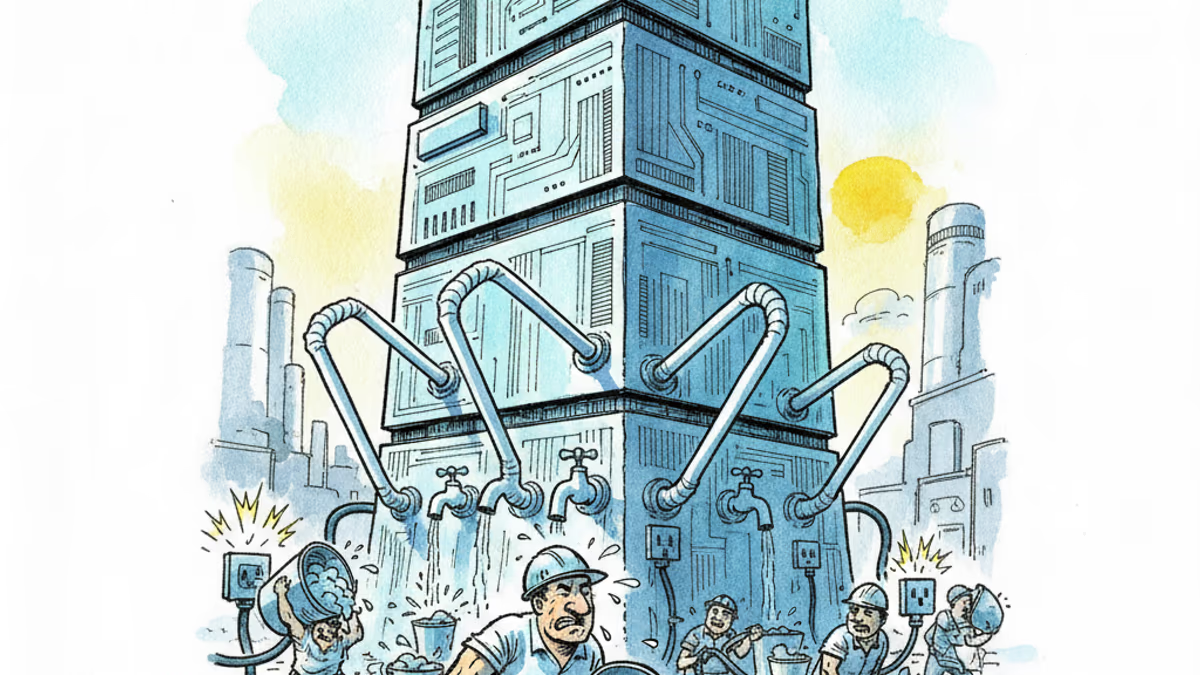
Samsung and SK unveiled a chip and AI investment package worth thousands of trillions of won on June 29. The headline number swings wildly by outlet, but the real contest isn't capital — it's water and power.
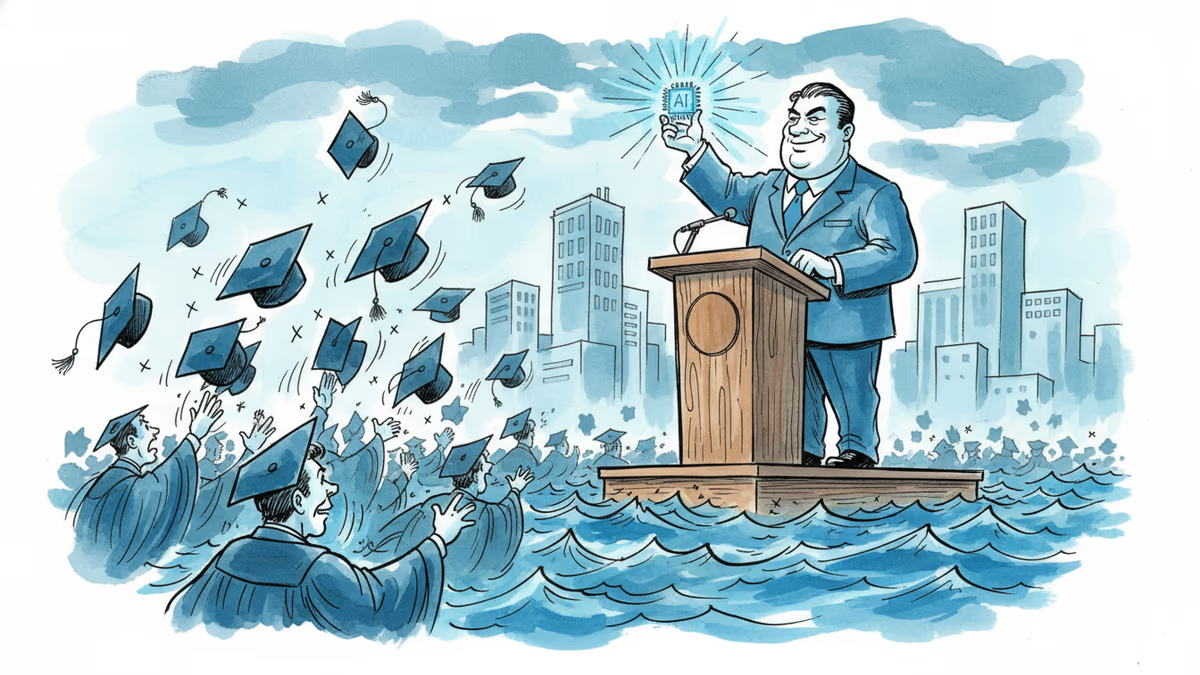
Viral videos show 2026 graduates jeering executives who praise AI at commencement ceremonies. It's not just rudeness — it's a signal about who pays for technological optimism.
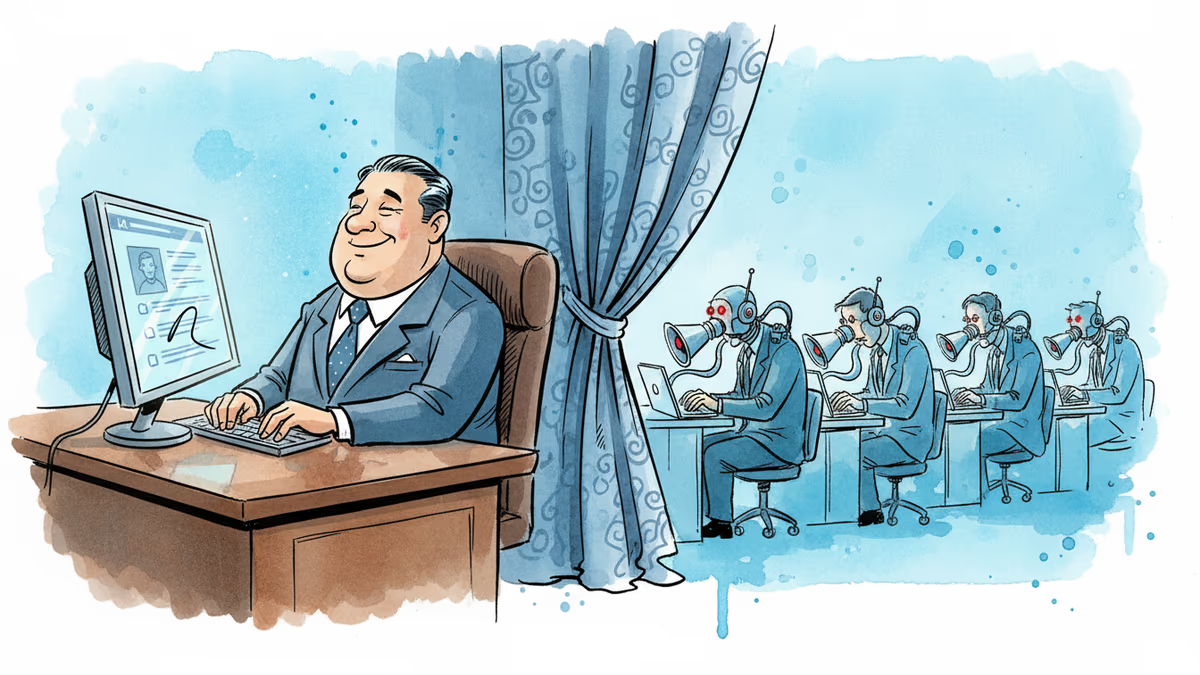
Filipino virtual assistants using AI to ghost-manage LinkedIn profiles for executives is now a structured industry. 30 comments a day, fake engagement rings, and a platform struggling to tell real from fabricated.
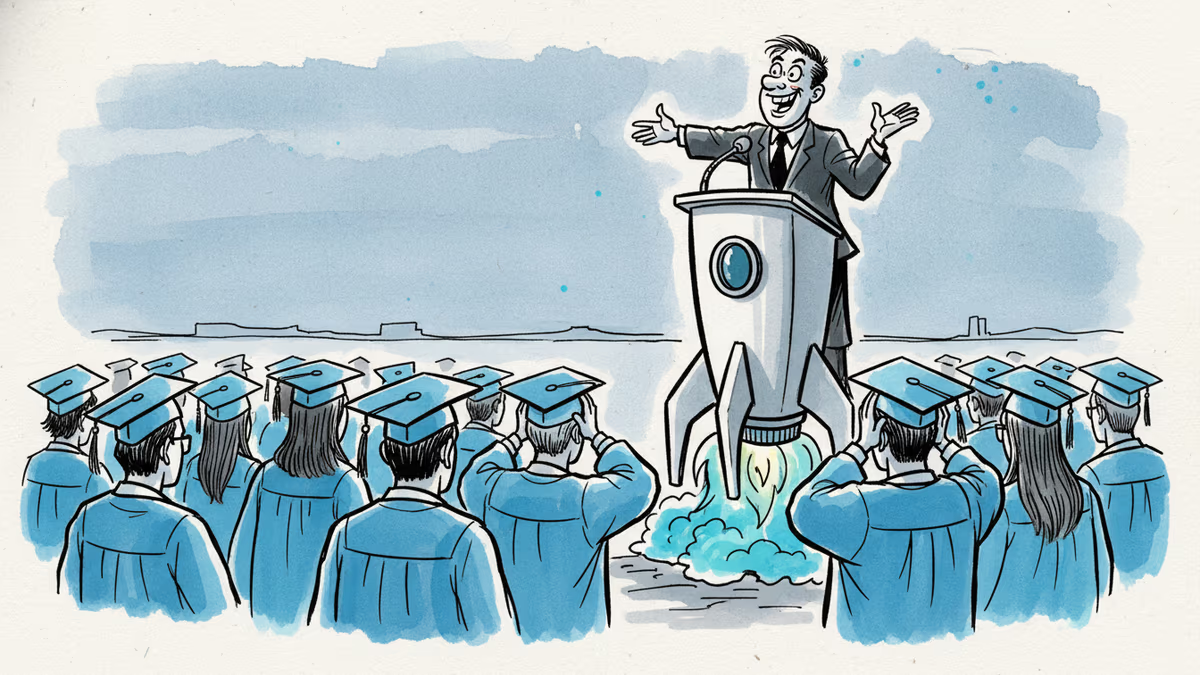
Two commencement speakers learned the hard way that AI enthusiasm doesn't land well with today's graduates. The backlash reveals a widening gap between tech optimism and Gen Z's economic reality.
Samsung and SK unveiled a chip and AI investment package worth thousands of trillions of won on June 29. The headline number swings wildly by outlet, but the real contest isn't capital — it's water and power.
Viral videos show 2026 graduates jeering executives who praise AI at commencement ceremonies. It's not just rudeness — it's a signal about who pays for technological optimism.
Filipino virtual assistants using AI to ghost-manage LinkedIn profiles for executives is now a structured industry. 30 comments a day, fake engagement rings, and a platform struggling to tell real from fabricated.
Two commencement speakers learned the hard way that AI enthusiasm doesn't land well with today's graduates. The backlash reveals a widening gap between tech optimism and Gen Z's economic reality.
Thoughts
Share your thoughts on this article
Sign in to join the conversation