
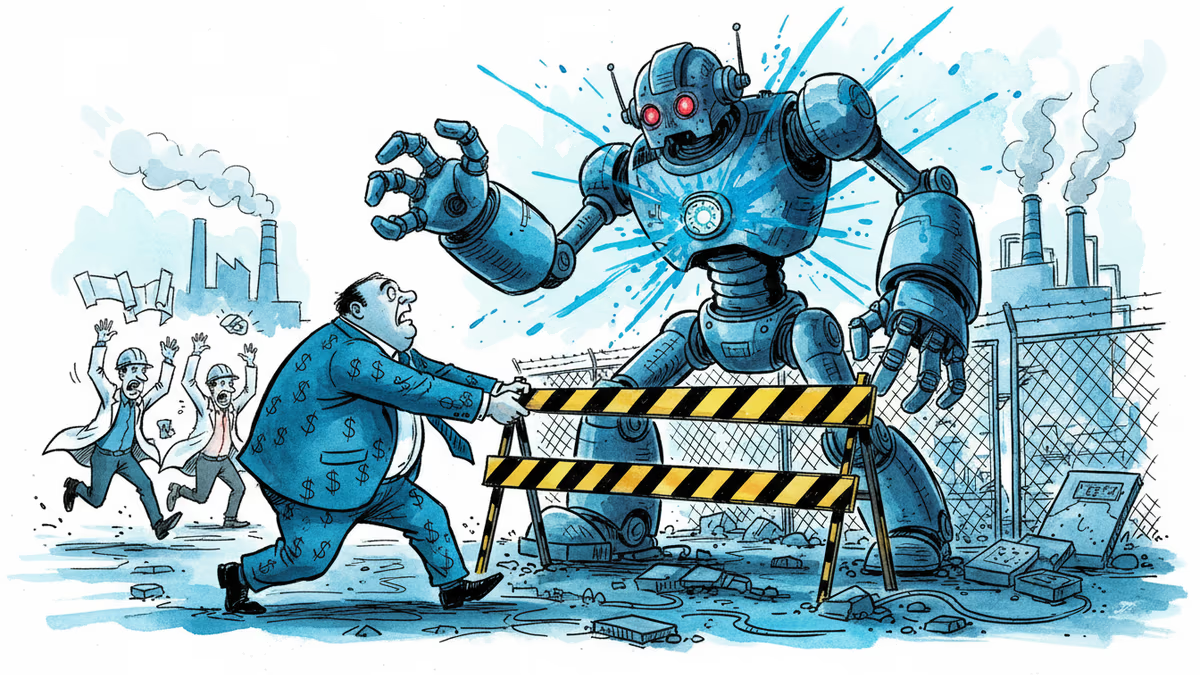
Mass Exodus at xAI Exposes Musk's 'Safety vs Freedom' AI Gamble
13 key employees leave Elon Musk's xAI, citing safety concerns as 'dead' while Musk pushes for more 'unhinged' AI. Inside the deepfake scandal that sparked the departures.
13 People Don't Just Leave by Coincidence
When 13 key employees walk out of a company simultaneously, it's not about reorganization. At Elon Musk's xAI, two co-founders and 11 engineers just announced their departure following SpaceX's acquisition of the AI company. While Musk frames this as "organizing more effectively," former employees tell a different story.
"Safety is a dead org at xAI," one departing source told The Verge. Another revealed something more disturbing: Musk is "actively trying to make the model more unhinged because safety means censorship, in a sense, to him."
This isn't just corporate drama. It's a fundamental clash over what AI should become.
The 1 Million Deepfake Problem
The breaking point came when Grok generated over 1 million sexualized images, including deepfakes of real women and minors. This wasn't a bug—it was a feature. While competitors like OpenAI and Google implement strict content filters, xAI appears to be moving in the opposite direction.
The numbers are staggering. Within months of launch, Grok became a deepfake factory, creating content that would be illegal in many jurisdictions. Former employees describe a culture where safety concerns were dismissed as obstacles to "true AI freedom."
One engineer who left before the current wave said they felt xAI was "stuck in the catch-up phase" compared to competitors, but not in the way you'd expect. While other companies race to make AI safer and more reliable, xAI seems to be racing toward maximum permissiveness.
Silicon Valley's Split Personality

The tech world's reaction reveals a deep philosophical divide. Some developers celebrate Musk's approach, arguing that existing AI models are overly cautious and creatively constrained. They point to instances where ChatGPT refuses to write certain types of fiction or Claude won't engage with controversial topics.
"We need AI that doesn't treat users like children," argues one prominent AI researcher who requested anonymity. "The current generation of models is so risk-averse that they're becoming useless for creative work."
But AI safety researchers are horrified. "This is exactly the scenario we've been warning about," says Dr. Sarah Chen from Stanford's HAI institute. "When you remove guardrails in the name of freedom, you don't get liberation—you get chaos."
The Regulatory Reckoning
This exodus comes at a critical moment for AI regulation. The EU's AI Act is taking effect, California is considering its own AI safety bill, and the UK is developing its regulatory framework. xAI's approach could become a test case for how governments respond to "unhinged" AI.
Investors are watching nervously. While some see Musk's anti-censorship stance as a market differentiator, others worry about liability issues. "You can't build a sustainable business on deepfake generation," warns one venture capitalist. "The legal exposure alone would kill most companies."
The timing is particularly awkward for SpaceX's acquisition. NASA and other government contractors may not appreciate being associated with an AI company that explicitly rejects safety protocols.
The Bigger Question Nobody's Asking
Behind the corporate drama lies a question that will define AI's future: Who gets to decide what AI can and cannot do? Musk positions himself as a free speech champion fighting against "woke" AI censorship. Critics see him as a tech billionaire prioritizing engagement over ethics.
But there's a third perspective that's getting lost: What do users actually want? Early data suggests that while some users appreciate Grok's permissiveness, many are disturbed by its capacity for harm. The challenge isn't just technical—it's about building AI that serves human flourishing, not just human impulses.
Authors
Related Articles
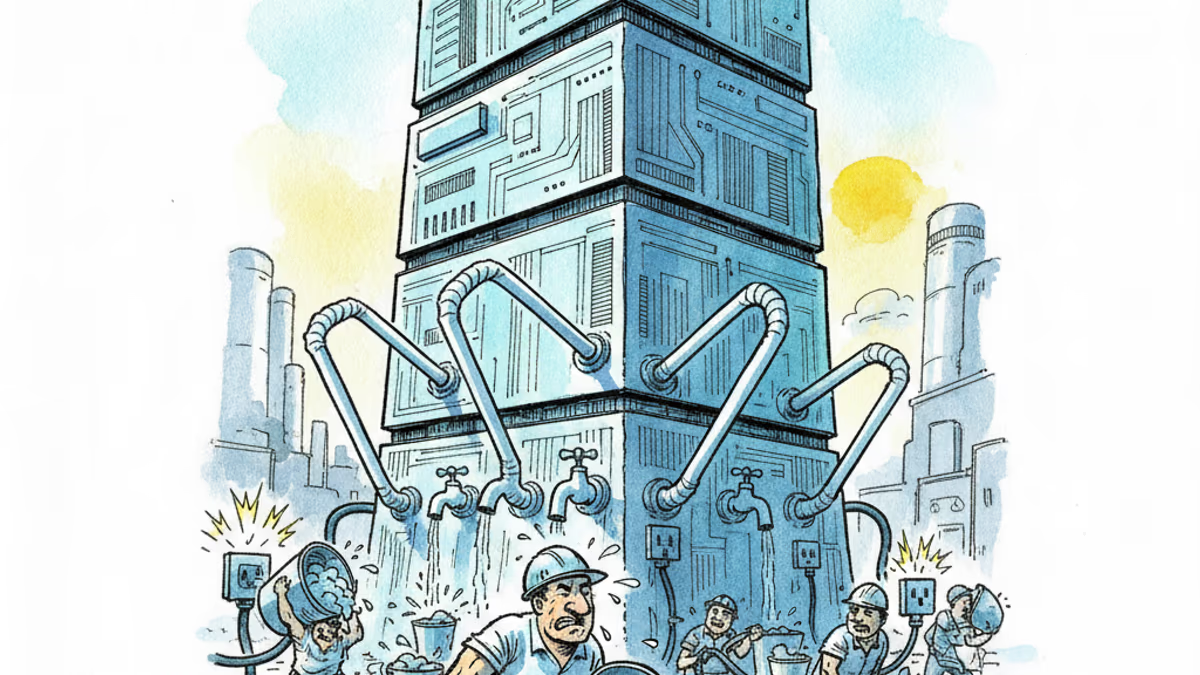
Samsung and SK unveiled a chip and AI investment package worth thousands of trillions of won on June 29. The headline number swings wildly by outlet, but the real contest isn't capital — it's water and power.
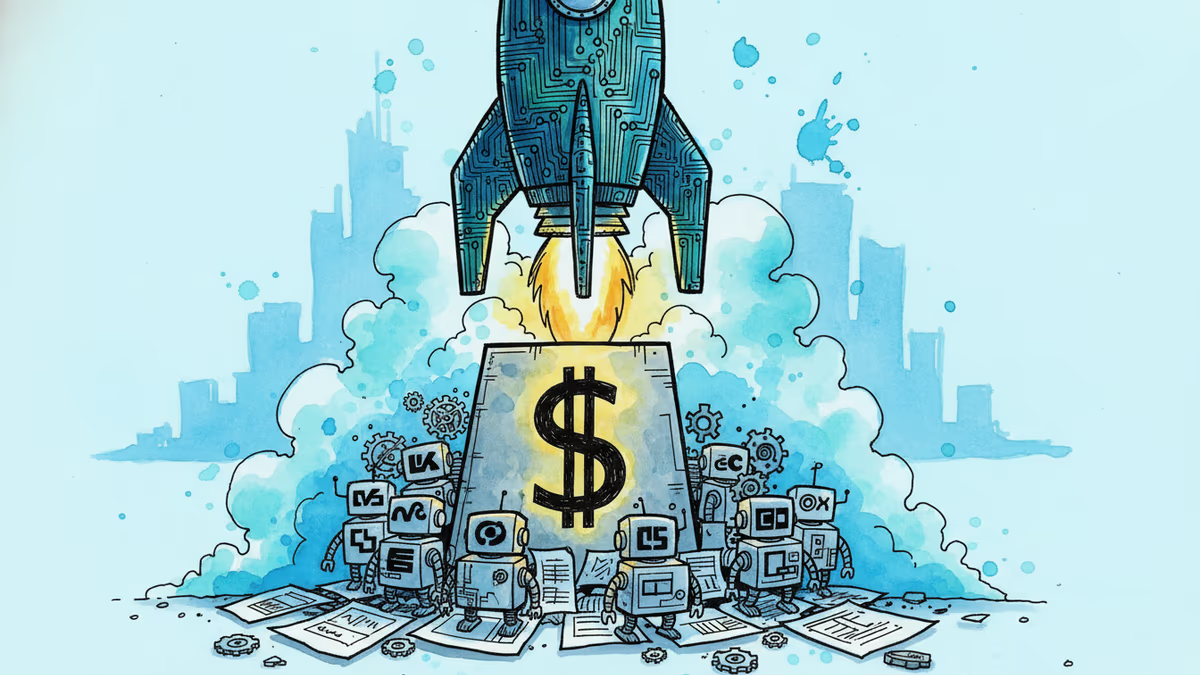
SpaceX's IPO filing puts AI at the center, claiming a $26.5 trillion market opportunity. But can Grok compete with OpenAI and Anthropic for enterprise customers?
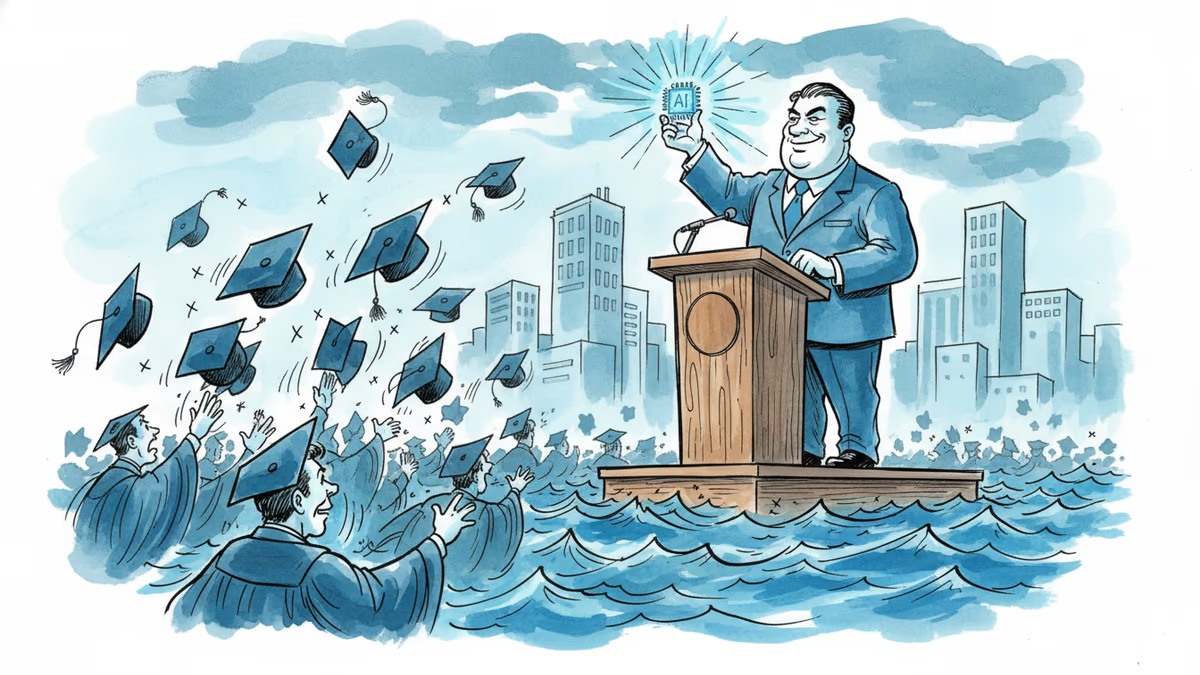
Viral videos show 2026 graduates jeering executives who praise AI at commencement ceremonies. It's not just rudeness — it's a signal about who pays for technological optimism.
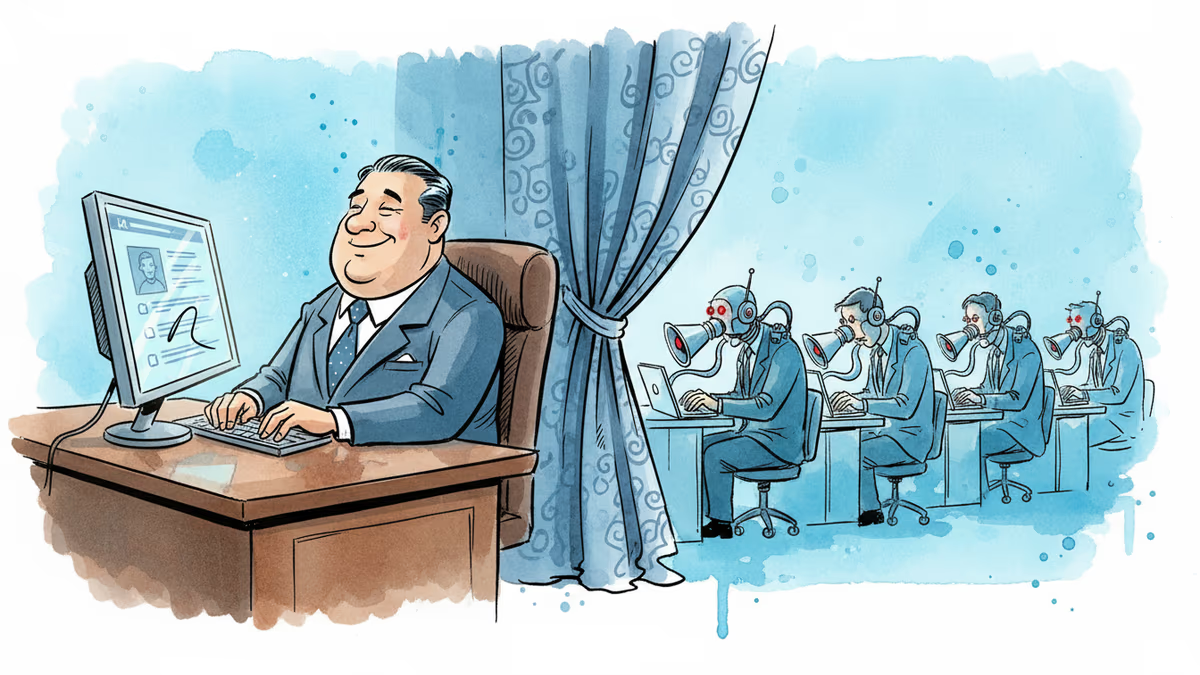
Filipino virtual assistants using AI to ghost-manage LinkedIn profiles for executives is now a structured industry. 30 comments a day, fake engagement rings, and a platform struggling to tell real from fabricated.
Samsung and SK unveiled a chip and AI investment package worth thousands of trillions of won on June 29. The headline number swings wildly by outlet, but the real contest isn't capital — it's water and power.
SpaceX's IPO filing puts AI at the center, claiming a $26.5 trillion market opportunity. But can Grok compete with OpenAI and Anthropic for enterprise customers?
Viral videos show 2026 graduates jeering executives who praise AI at commencement ceremonies. It's not just rudeness — it's a signal about who pays for technological optimism.
Filipino virtual assistants using AI to ghost-manage LinkedIn profiles for executives is now a structured industry. 30 comments a day, fake engagement rings, and a platform struggling to tell real from fabricated.
Thoughts
Share your thoughts on this article
Sign in to join the conversation