
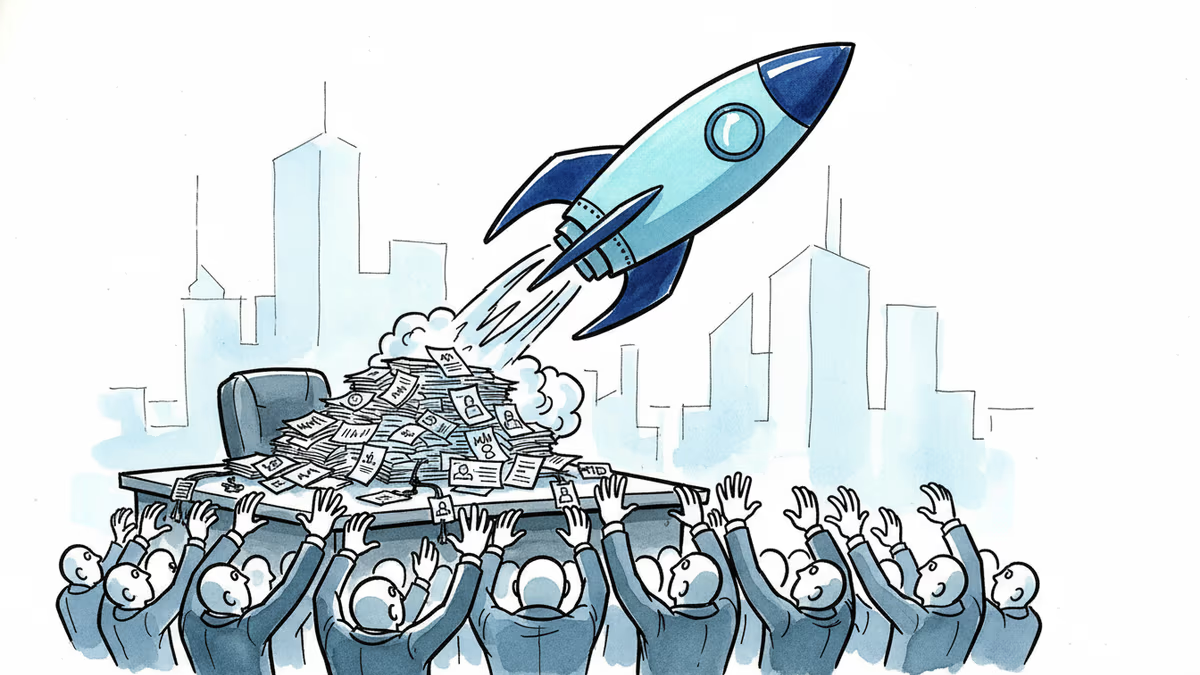
Blue Origin Finally Puts Money Where Its Mission Is
For nearly two decades, Blue Origin employees held stock options that had no clear path to value. A new plan changes that—and signals something bigger about where the company is headed.
For twenty years, Blue Origin handed new employees a letter from Jeff Bezos that contained, buried within its optimism, a quiet warning: don't expect a return on investment anytime soon. That letter became something of a rite of passage. Now, in March 2026, CEO Dave Limp sent a very different kind of message—one that, for the first time, tells every employee their stock options might actually be worth something.
The Letter That Started It All
When Bezos founded Blue Origin in the summer of 2000 and began building its team in earnest by 2004, he was candid in a way few founders are. "I accept that Blue Origin will not meet a reasonable investor's expectations for return on investment over a typical investing horizon," he wrote. He wasn't apologizing. He was filtering. The people who stayed were betting on a decades-long vision, not a liquidity event.
That bet had a cost. While SpaceX built toward a potential IPO and Rocket Lab went public in 2021, Blue Origin remained privately held, funded almost entirely by Bezos selling Amazon stock. Employees received options, but those options existed in a kind of financial limbo—real on paper, uncertain in practice. There was no secondary market, no IPO on the horizon, no clear moment when the numbers would become dollars.
What Changed, and Why Now
Limp's announcement introduces a structured path for employees to convert vested options—a mechanism that didn't exist before. The company hasn't announced an IPO. It hasn't been acquired. But it has, in the past year, crossed several thresholds that matter.
The New Glenn rocket completed its first successful orbital flight earlier this year. NASA contracts under the Artemis program are moving from planning to execution. Blue Origin is no longer a company that talks about going to space. It's a company that goes to space. That operational shift changes the compensation calculus entirely.

The timing also reflects a harder reality: the talent market for aerospace engineers, propulsion specialists, and systems architects is brutally competitive. SpaceX attracts people with the pull of Elon Musk's velocity and a culture of relentless iteration. Big tech offers certainty—RSUs that vest on schedule, stock prices you can look up. Blue Origin was asking people to believe in something that didn't yet have a price tag. That's a harder sell in 2026 than it was in 2006.
Three Ways to Read This
For current employees, this is the most concrete sign yet that leadership believes the company's value will eventually be realized—and wants workers to share in it. The psychological shift matters as much as the financial one. An option you can convert is an option you think about differently.
For competitors and the industry, it's a signal that the private space sector is maturing. The era of "join us for the mission" as a standalone retention strategy may be ending. When companies start building real compensation infrastructure, they're signaling they expect to be around—and growing—long enough for it to matter.
For skeptics, the questions remain. Blue Origin is still privately held. The options' value depends entirely on a future liquidity event that has no confirmed timeline. Employees are still, in a meaningful sense, betting on a promise. The structure around that promise has improved, but the underlying uncertainty hasn't disappeared.
The Bezos Prediction, Revisited
In that original letter, Bezos wrote that over "a very long-term horizon—perhaps even decades from now—Blue will be self-sustaining and operationally profitable, and will yield returns." He was writing in 2004. Twenty years later, the company is operationally active, generating revenue from launch contracts, and now telling employees their equity has a path to value.
That's not the same as being profitable. But it's closer to the prediction than most observers expected even five years ago.
Authors
Related Articles
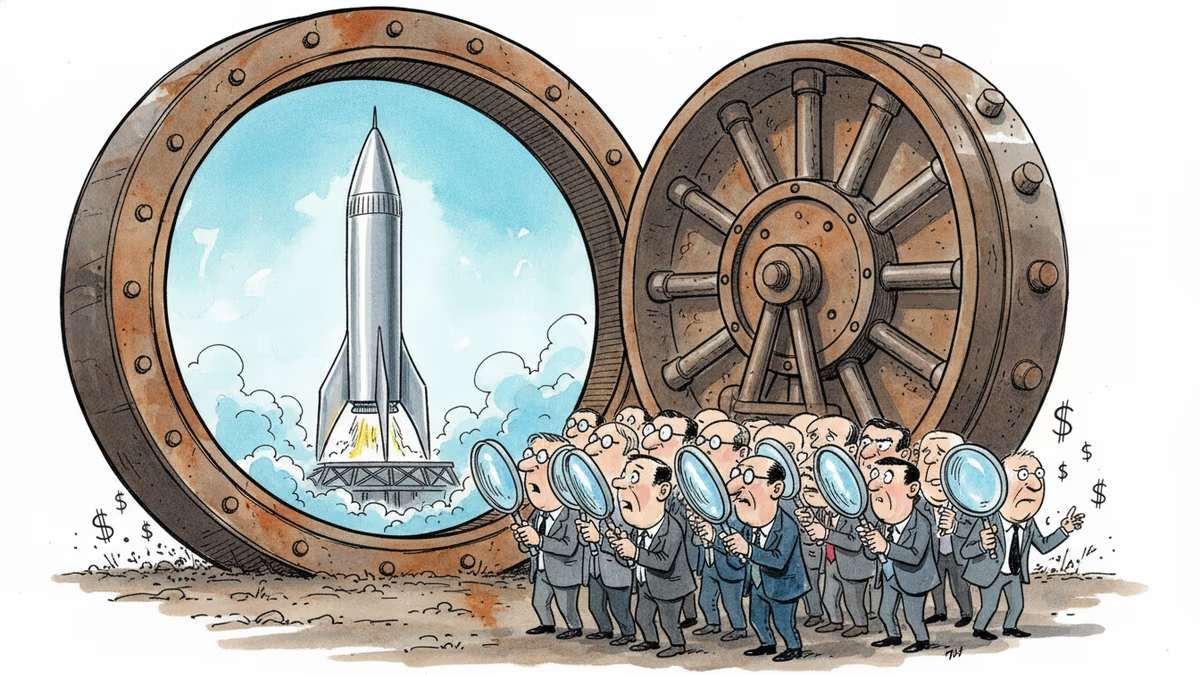
SpaceX filed a nearly 400-page S-1 with the SEC, targeting an IPO as early as June 12. Here's what the filing reveals—and what it doesn't.
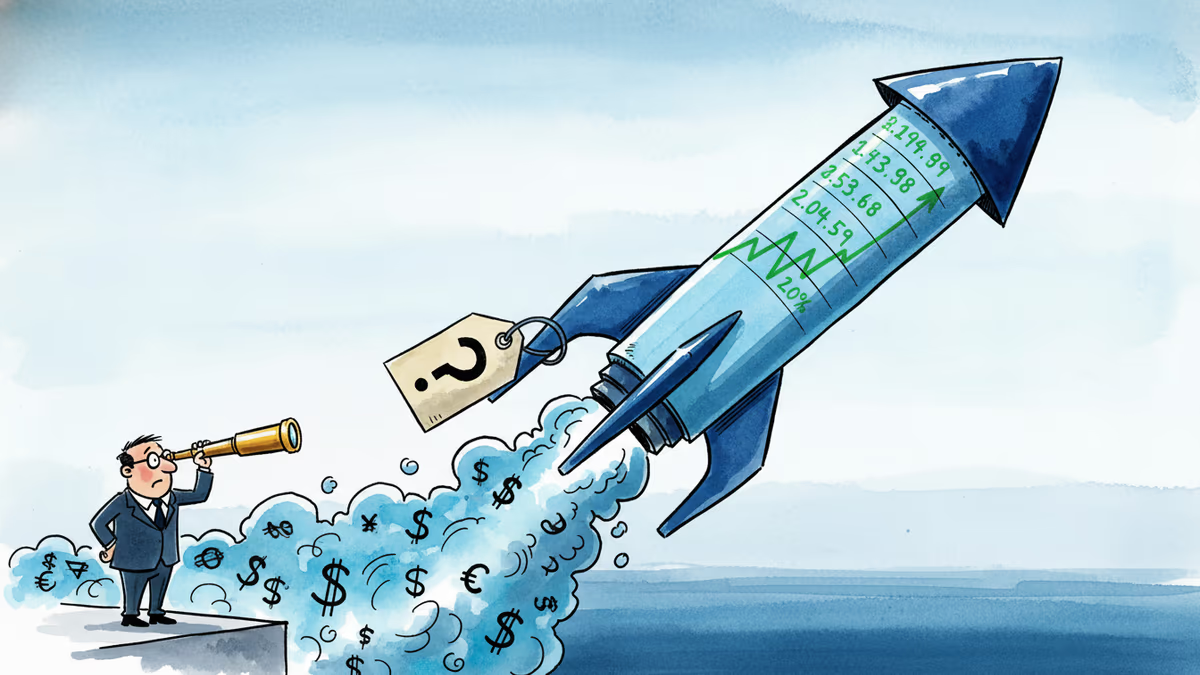
SpaceX has filed its S-1 with the SEC, targeting the Nasdaq under ticker SPCX. With $18.67B in revenue but a $4.9B loss, the IPO forces investors to answer one hard question.
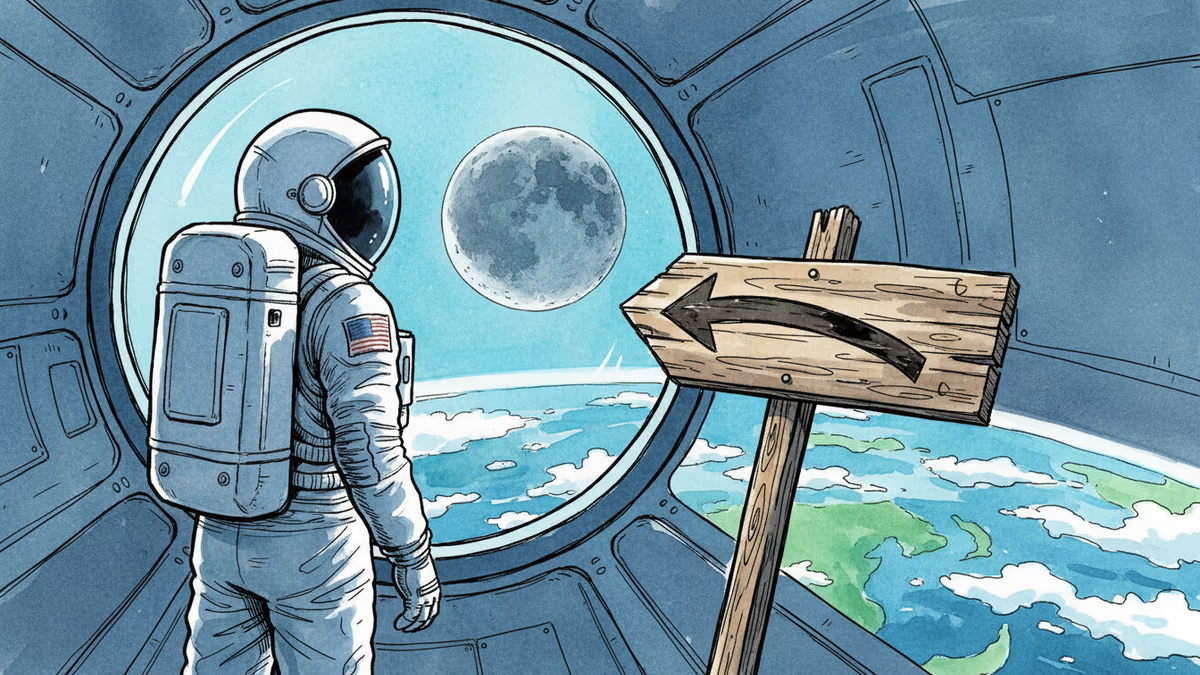
NASA's Artemis III has been redesigned as an Earth-orbit mission. SpaceX and Blue Origin say their landers won't be ready until late 2027. What does this mean for the future of lunar exploration?
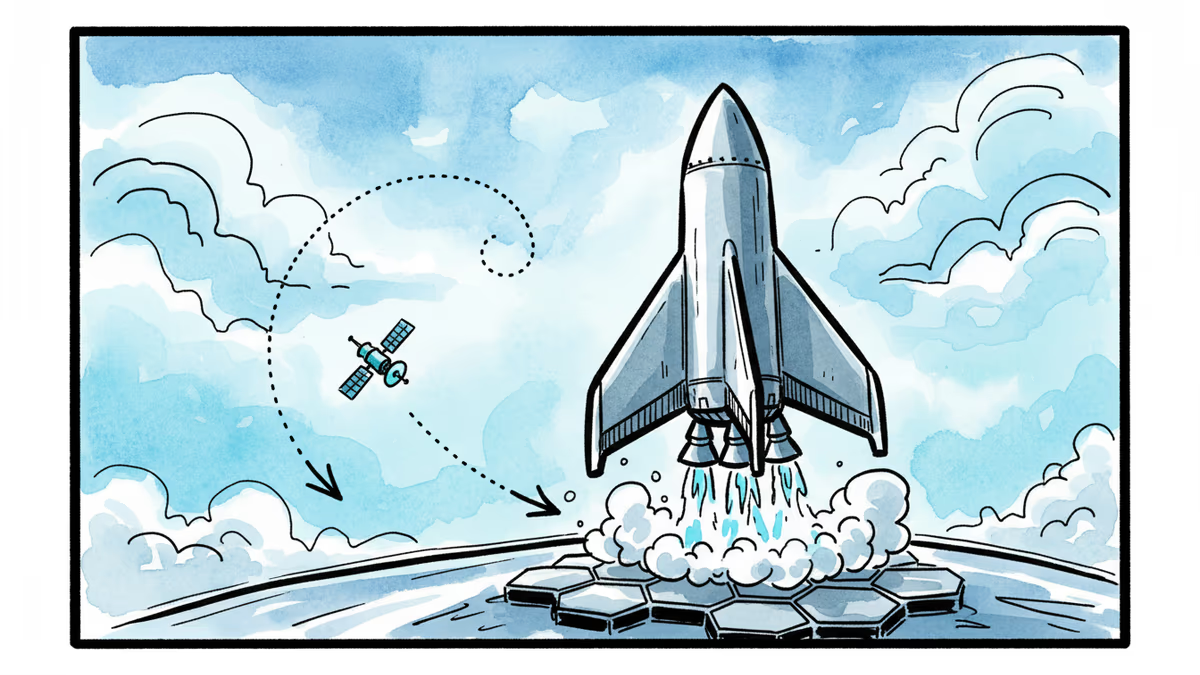
Blue Origin's New Glenn nailed its second booster landing, but AST SpaceMobile's BlueBird 7 satellite ended up in the wrong orbit—effectively useless. What this split outcome reveals about the space race.
SpaceX filed a nearly 400-page S-1 with the SEC, targeting an IPO as early as June 12. Here's what the filing reveals—and what it doesn't.
SpaceX has filed its S-1 with the SEC, targeting the Nasdaq under ticker SPCX. With $18.67B in revenue but a $4.9B loss, the IPO forces investors to answer one hard question.
NASA's Artemis III has been redesigned as an Earth-orbit mission. SpaceX and Blue Origin say their landers won't be ready until late 2027. What does this mean for the future of lunar exploration?
Blue Origin's New Glenn nailed its second booster landing, but AST SpaceMobile's BlueBird 7 satellite ended up in the wrong orbit—effectively useless. What this split outcome reveals about the space race.
Thoughts
Share your thoughts on this article
Sign in to join the conversation