
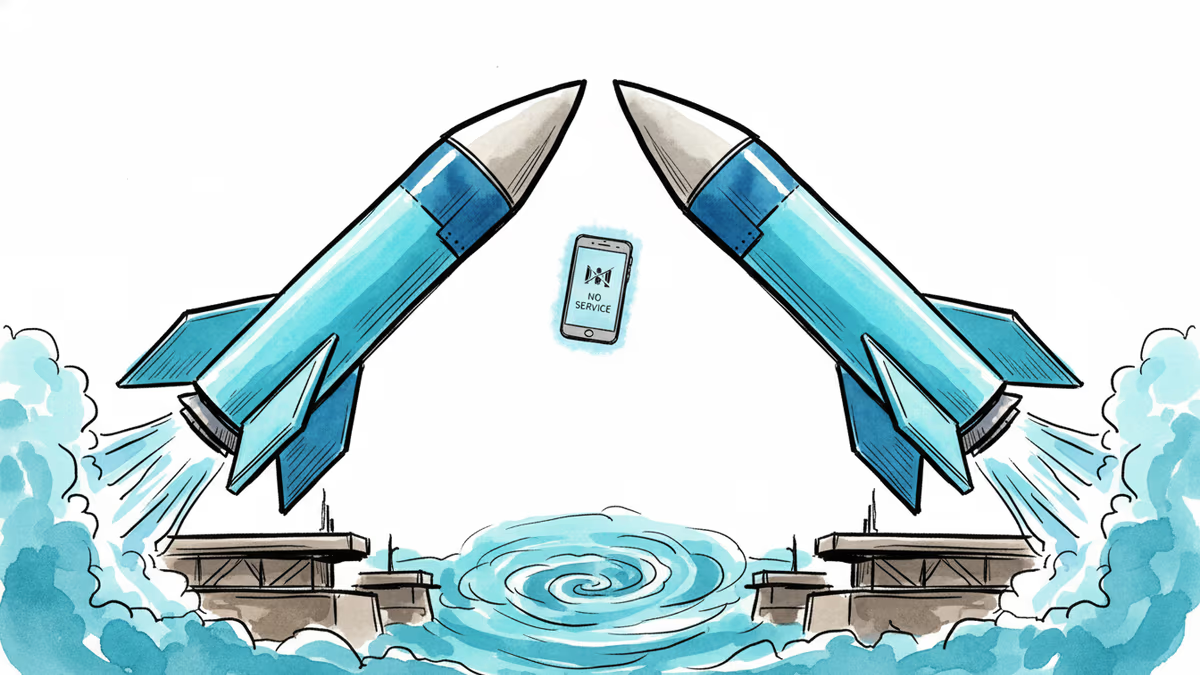
The End of SpaceX's Monopoly Might Come This Sunday
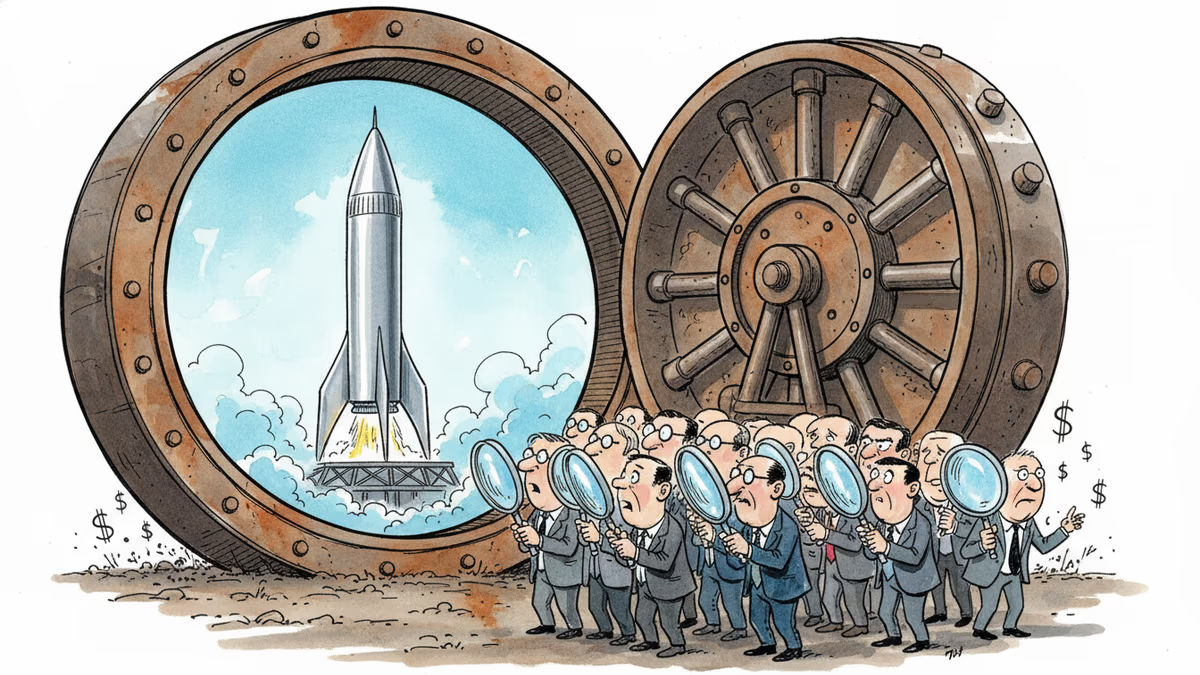
Blue Origin's New Glenn is set to refly a used booster, directly challenging SpaceX's grip on orbital launch. If it works, a three-way satellite internet race begins—and your 'No Service' problem gets a lot more interesting.
There's a four-word phrase that unites every hiker, sailor, and airline passenger in shared frustration: "No Service." This Sunday morning, a rocket launch could mark the beginning of the end for it—and for the company that's dominated space for the better part of a decade.
What's Actually Happening This Weekend
Blue Origin's New Glenn rocket is scheduled to lift off Sunday with a booster that's already been to space. That booster flew on the program's second mission last November, landed successfully, and has since been refurbished for another flight. This is the part that matters: it's the first time Blue Origin will attempt to reuse an orbital-class booster.
This might sound like an incremental engineering milestone. It isn't. Booster reuse is precisely what made SpaceX's Falcon 9 the dominant force in global launch. By recovering and reflying the most expensive part of the rocket, SpaceX slashed per-launch costs dramatically—and no competitor could match it. For years, New Glenn has been a capable rocket without that critical economic advantage. Sunday changes that calculus, if it works.
Why Amazon Has Everything Riding on This
Jeff Bezos founded Blue Origin, but the urgency here is corporate, not personal. Amazon's Project Kuiper is a $10 billion+ bet on low-Earth orbit satellite internet, designed to go head-to-head with SpaceX's Starlink and OneWeb. To make Kuiper competitive, Amazon needs to put hundreds of satellites into orbit—fast and cheaply.
Right now, Amazon is paying third parties like ULA and Arianespace to do its launches. That's a structural cost disadvantage against Starlink, which launches its own satellites on its own rockets at marginal cost. A reusable New Glenn doesn't just save money—it potentially transforms Kuiper from a well-funded underdog into a genuine rival.

The satellite internet market, currently a Starlink near-monopoly, could become a genuine three-way race: Starlink, OneWeb, and Kuiper. That competition has direct implications for pricing, coverage, and who controls the infrastructure of global connectivity.
Don't Write the Victory Speech Yet
Context matters here. New Glenn failed to recover its booster on its debut mission. It succeeded on the second. Sunday would be the third. Meanwhile, SpaceX has reflown individual Falcon 9 boosters more than 20 times and has turned routine reuse into an almost boring operational reality.
One successful reflown booster is a proof of concept. It is not a business. The gap between "we did it once" and "we can do this reliably at scale" is where rocket programs have historically struggled. Blue Origin has the capital and the talent—but catching SpaceX's operational lead will take years, not a single launch.
Three Stakeholders, Three Very Different Sundays
For telecom investors, this is a signal to watch Kuiper's timeline more closely. If Blue Origin demonstrates reuse, Amazon's satellite deployment schedule becomes more credible—and Starlink's pricing power faces a longer-term threat.
For the average consumer, the competition is ultimately about coverage and cost. Starlink currently charges around $120/month for residential service. A genuine price war between Starlink and Kuiper could push that figure meaningfully lower, while extending coverage to places that have never had broadband.
For regulators, the consolidation question looms. Two of the world's largest private companies are racing to own the infrastructure layer of global internet access. Whether that's a feature or a bug depends heavily on which side of the antitrust debate you sit.
Authors
Related Articles
American Airlines just signed Starlink for 500+ aircraft. It's not just about faster inflight internet — it's a calculated move in the run-up to what could be the largest IPO in history.
SpaceX's upgraded Starship V3 completed its first test flight, deploying 20 Starlink simulators but losing the Super Heavy booster. With an IPO weeks away, the stakes just got higher.
SpaceX's IPO filing puts AI at the center, claiming a $26.5 trillion market opportunity. But can Grok compete with OpenAI and Anthropic for enterprise customers?
SpaceX filed a nearly 400-page S-1 with the SEC, targeting an IPO as early as June 12. Here's what the filing reveals—and what it doesn't.
American Airlines just signed Starlink for 500+ aircraft. It's not just about faster inflight internet — it's a calculated move in the run-up to what could be the largest IPO in history.
SpaceX's upgraded Starship V3 completed its first test flight, deploying 20 Starlink simulators but losing the Super Heavy booster. With an IPO weeks away, the stakes just got higher.
SpaceX's IPO filing puts AI at the center, claiming a $26.5 trillion market opportunity. But can Grok compete with OpenAI and Anthropic for enterprise customers?
SpaceX filed a nearly 400-page S-1 with the SEC, targeting an IPO as early as June 12. Here's what the filing reveals—and what it doesn't.
Thoughts
Share your thoughts on this article
Sign in to join the conversation