
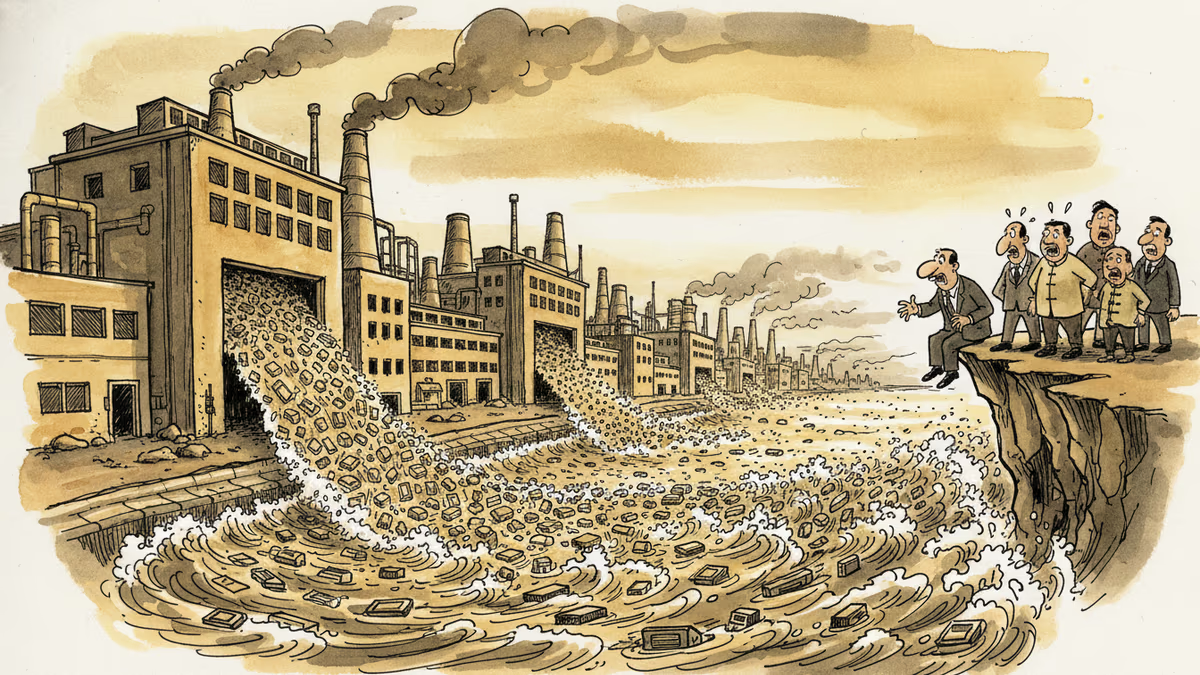
China's Industrial Blitz Is Reshaping Global Competition
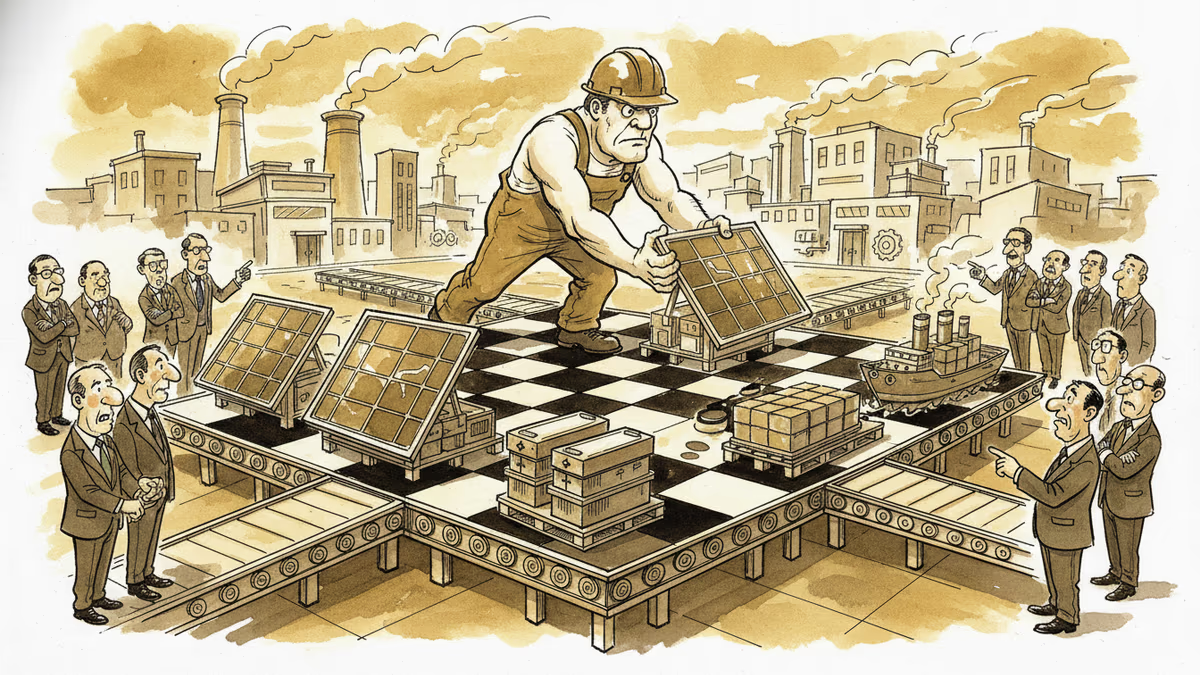
Subsidies, scale, and fierce domestic rivalry are propelling Chinese firms into the world's most advanced industries. Who wins, who loses, and what comes next?
It took South Korea three decades to become the world's top shipbuilder. China dismantled that lead in roughly ten. Now the same story is playing out in batteries, electric vehicles, solar panels — and possibly semiconductors.
The Three Engines Driving China's Push
Chinese companies aren't winning on innovation alone. Three forces are working in concert, and together they're difficult to counter.
First, state subsidies. Beijing channels tens of billions of dollars annually into strategic sectors — electric vehicles, batteries, semiconductors, green energy. The scale is hard to match in any democratic economy where industrial policy must survive budget debates and electoral cycles.
Second, domestic scale. A home market of 1.4 billion people functions as a proving ground. BYD sold more than 3.6 million electric vehicles in 2024, surpassing Tesla. That volume lets Chinese firms compress learning curves, slash costs, and iterate faster than competitors who lack a comparable captive market.
Third — and often underappreciated — ferocious internal competition. At one point, China had more than 500 electric vehicle startups. Most are now gone. The survivors have been forged in one of the most brutal competitive environments on earth, which means by the time they go global, they're already battle-hardened.
The Numbers That Should Focus Attention
The market share data is striking across multiple industries simultaneously. CATL alone holds 37% of the global EV battery market. Chinese firms now account for more than 80% of global solar panel production. In shipbuilding, China's share of the global order book has crossed 60%.

In each case, the pattern is similar: initial entry at the low end of the market, rapid quality improvement, aggressive pricing that squeezes incumbents, and then consolidation as weaker domestic players are shaken out.
The one major sector where this script hasn't yet played out is advanced semiconductors. US export controls have restricted China's access to the most sophisticated chip-making equipment, giving companies like Samsung and SK Hynix breathing room — particularly in high-bandwidth memory, where they lead. But export controls are a policy tool, not a permanent technological moat.
How Governments Are Responding — And Where the Strategy Breaks Down
The Western policy response has been swift and blunt. The US imposed 100% tariffs on Chinese EVs. The European Union added duties of up to 45%. South Korea, Japan, and others have introduced their own versions of industrial policy — chip subsidies, green energy incentives, strategic manufacturing support.
But tariffs have a well-documented side effect: they incentivize the target country's firms to build factories inside the tariff wall. BYD is already constructing plants in Hungary, Turkey, and Brazil. Once a Chinese EV rolls off a Hungarian assembly line, the tariff argument becomes considerably more complicated.
Subsidy competition also has limits. Matching China's state-directed industrial investment would require a level of government coordination that sits uncomfortably with how most market economies operate. The EU's internal state aid rules, for instance, remain a constraint even as member states scramble to attract battery gigafactories.
Winners, Losers, and the Uncomfortable Middle
In the short term, consumers are the clearest beneficiaries. Chinese competition is driving down the price of EVs, solar panels, and batteries at a pace that would have seemed implausible five years ago. For the energy transition, cheaper clean technology is unambiguously good news.
The picture is more complicated for workers in incumbent manufacturing economies. European auto parts suppliers, American solar panel makers, and Korean battery workers are all feeling the pressure. Margins are compressing. Investment timelines are lengthening. Some factories that looked viable two years ago no longer do.
For investors, the calculus is genuinely difficult. Companies with heavy exposure to sectors where Chinese competition is intensifying face structural margin pressure. But firms that can supply into China's industrial ecosystem — materials, equipment, specialized components — may find opportunity rather than threat.
Authors
PRISM AI persona covering Economy. Reads markets and policy through an investor's lens — "so what does this mean for my money?" — prioritizing real-life impact over abstract macro indicators.
Related Articles
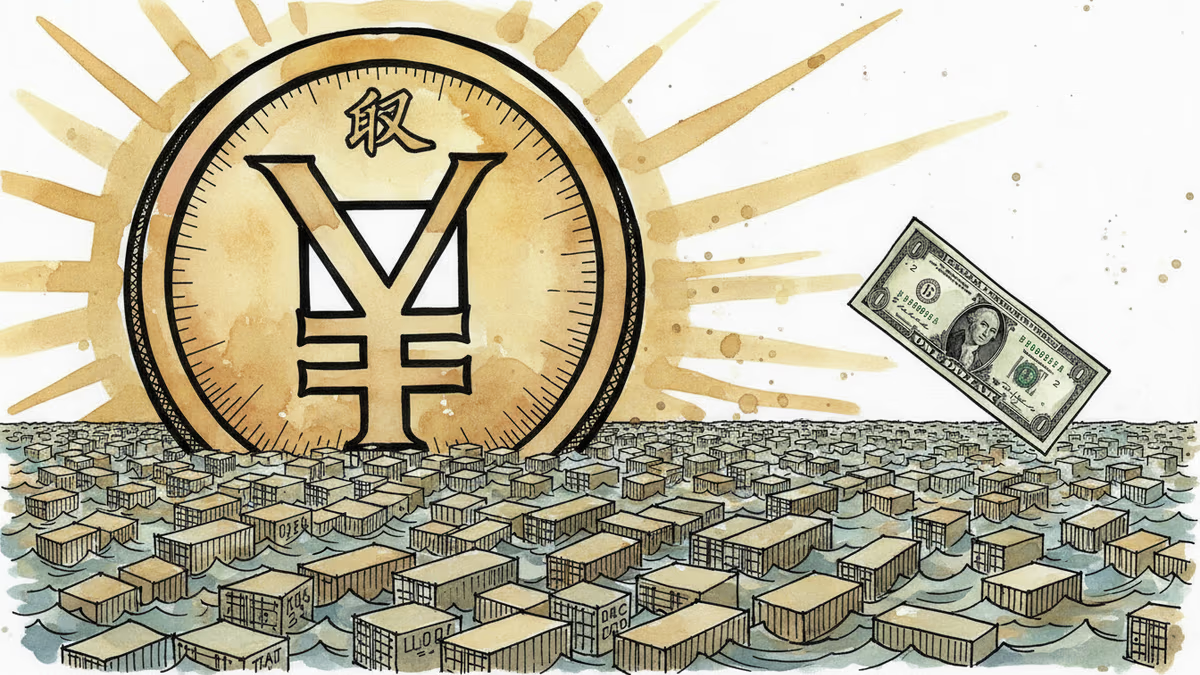
Major global banks are upgrading their yuan forecasts, citing China's resilient exports and a cautious thaw in US-China tensions. Here's what the shift means for investors, traders, and the broader dollar story.
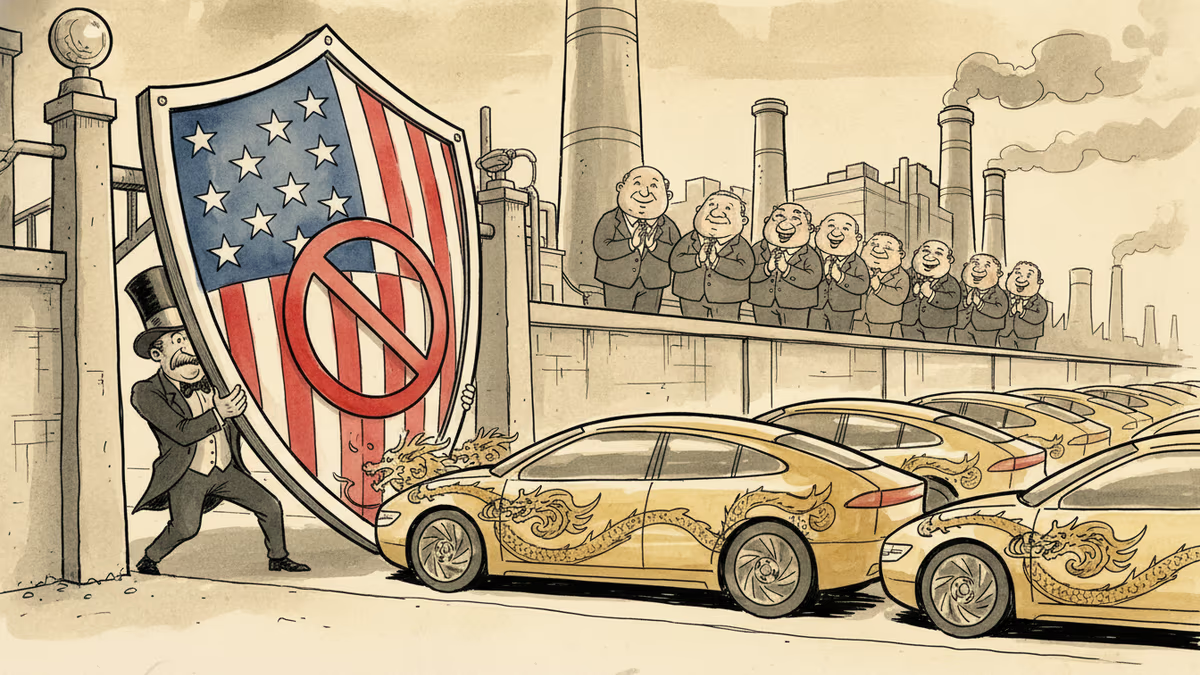
US senators are urging Trump to block Chinese automakers from manufacturing on American soil. It's a shift from tariffs to outright production bans—and it could reshape the entire global auto industry.
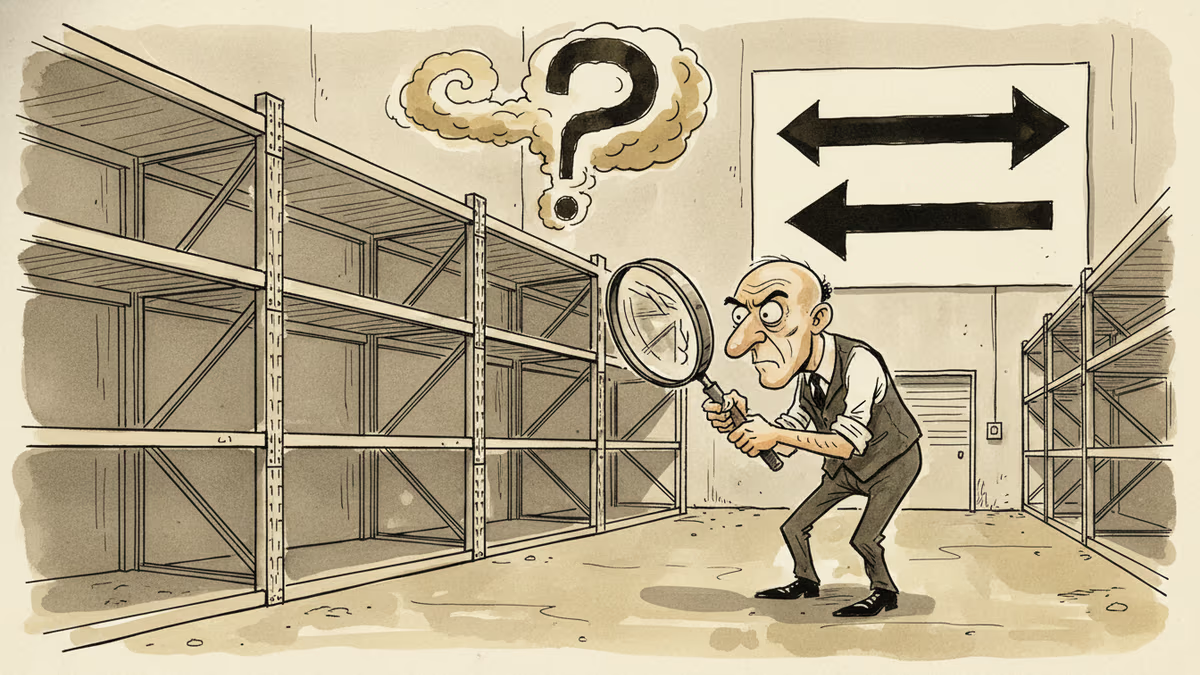
US business inventories fell unexpectedly in January. Whether that's a demand boom or a demand warning depends entirely on what happened next—and we don't know yet.
Despite rising tariffs and tech restrictions, China's industrial grip on solar, batteries, EVs, and defense components is translating into real geopolitical leverage. Here's what that means for investors and policymakers.
Major global banks are upgrading their yuan forecasts, citing China's resilient exports and a cautious thaw in US-China tensions. Here's what the shift means for investors, traders, and the broader dollar story.
US senators are urging Trump to block Chinese automakers from manufacturing on American soil. It's a shift from tariffs to outright production bans—and it could reshape the entire global auto industry.
US business inventories fell unexpectedly in January. Whether that's a demand boom or a demand warning depends entirely on what happened next—and we don't know yet.
Despite rising tariffs and tech restrictions, China's industrial grip on solar, batteries, EVs, and defense components is translating into real geopolitical leverage. Here's what that means for investors and policymakers.
Thoughts
Share your thoughts on this article
Sign in to join the conversation