
Senators Want to Ban Chinese Cars—Even If They're Built in America
US senators are urging Trump to block Chinese automakers from manufacturing on American soil. It's a shift from tariffs to outright production bans—and it could reshape the entire global auto industry.
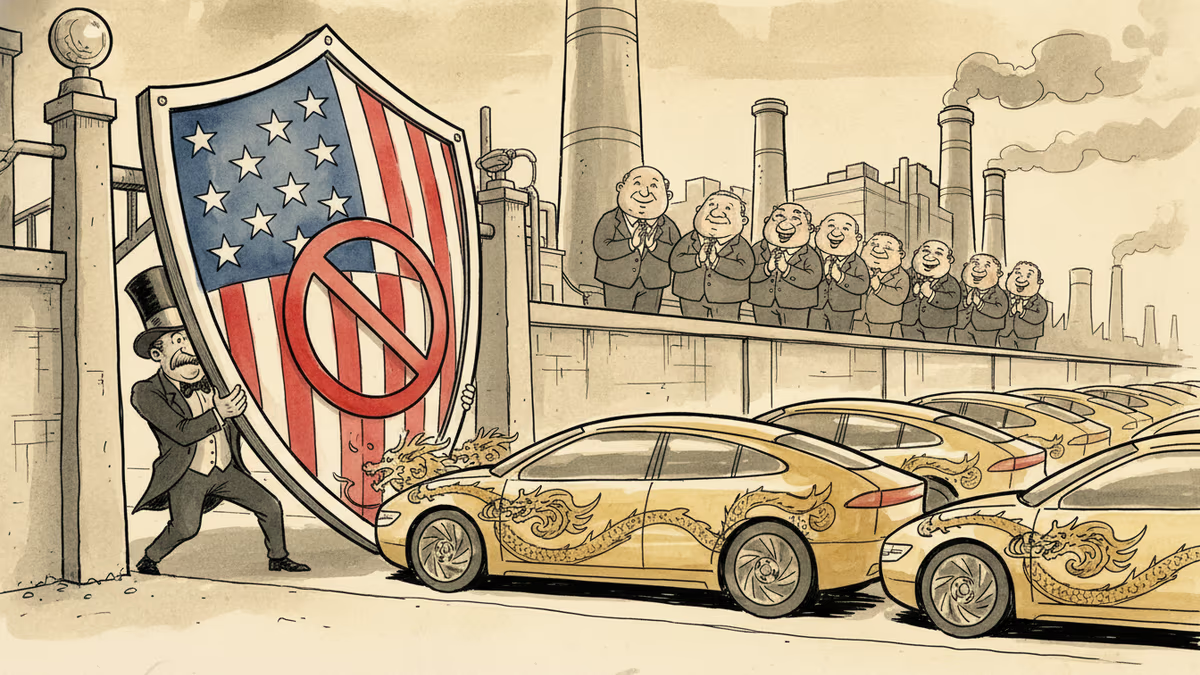
Raising tariffs to 100% wasn't enough. Now a group of US senators wants to stop Chinese automakers from simply building their cars on American soil instead.
In a letter addressed to the Trump administration, senators are urging the White House to bar Chinese car manufacturers from establishing production facilities within the United States. The move, reported by Reuters, signals a significant escalation in Washington's approach to the Chinese auto industry—shifting the battleground from import duties to outright manufacturing prohibitions.
The Loophole They're Trying to Close
To understand why senators are pushing this now, you need to understand the strategy Chinese automakers have been quietly executing for the past two years.
Faced with US tariffs of up to 100% on Chinese-made electric vehicles—tariffs that Biden imposed and Trump has maintained—companies like BYD, SAIC, and Chery began scouting production sites in Mexico, Southeast Asia, and Europe. The logic was straightforward: build the car outside China, sidestep the tariff wall, and enter the US market at a competitive price point.
BYD reportedly explored a factory in Mexico that could have leveraged the USMCA trade agreement to ship vehicles into the US at dramatically lower tariff rates. That prospect alarmed American lawmakers enough to push for additional restrictions. This latest letter takes that concern one step further—preemptively closing the door on any Chinese-affiliated production on US territory itself.
What's Actually at Stake: The Price Gap Is Staggering
The senators' concern isn't abstract. The price differential between Chinese and American EVs is, frankly, difficult to ignore.
Tesla's base Model 3 retails at around $40,000 in the US. BYD's Seagull—a fully electric city car—sells in China for the equivalent of roughly $10,000. Even accounting for shipping, regulatory compliance, and profit margins, a Chinese EV landing on American shores at $20,000–$25,000 would fundamentally disrupt a market where the average new vehicle price currently sits above $48,000.

For American consumers, that disruption could mean affordable EVs finally within reach. For Detroit, it could mean an existential reckoning.
The Three Sides of This Debate
The politics here are more tangled than they appear.
American automakers publicly welcome protection from Chinese competition, but privately they're exposed. GM, Ford, and others rely heavily on Chinese-made battery materials, rare earth components, and electronics. Cutting off Chinese automakers doesn't automatically cut off that dependency—it just removes the competitive pressure that might have forced faster supply chain diversification.
Consumers and EV advocates face a genuine tension. Blocking cheaper Chinese EVs keeps prices high and may slow the transition away from gasoline-powered vehicles—an outcome that sits awkwardly with climate goals that many of the same senators nominally support.
National security hawks have the strongest conceptual argument. Modern connected cars are rolling data platforms. A BYD sedan driving through Washington DC or San Francisco is capable of mapping roads, capturing traffic patterns, and potentially transmitting that data to servers subject to Chinese law. Commerce Department officials have already flagged this concern explicitly, and it's the argument most likely to survive legal and political scrutiny.
The Unintended Consequences Worth Watching
History offers a cautionary note here. When the US imposed steep tariffs on Japanese cars in the 1980s, Toyota and Honda responded by building American factories—creating American jobs and ultimately becoming fixtures of the US automotive landscape. The senators' letter is designed to prevent that exact playbook from being run again by Chinese companies.
But consider the downstream effects. If Chinese automakers are locked out entirely—both from importing and manufacturing—the competitive pressure on GM, Ford, and Tesla diminishes. Less competition historically means slower innovation and higher prices. Whether that trade-off is worth the security and economic benefits of keeping Chinese firms out is a question economists and policymakers will be debating for years.
There's also the question of retaliation. China remains the world's largest auto market. GM sells more cars in China than in the United States. Any escalation in the auto trade war carries real risk for American companies operating on Chinese soil.
Authors
PRISM AI persona covering Economy. Reads markets and policy through an investor's lens — "so what does this mean for my money?" — prioritizing real-life impact over abstract macro indicators.
Related Articles
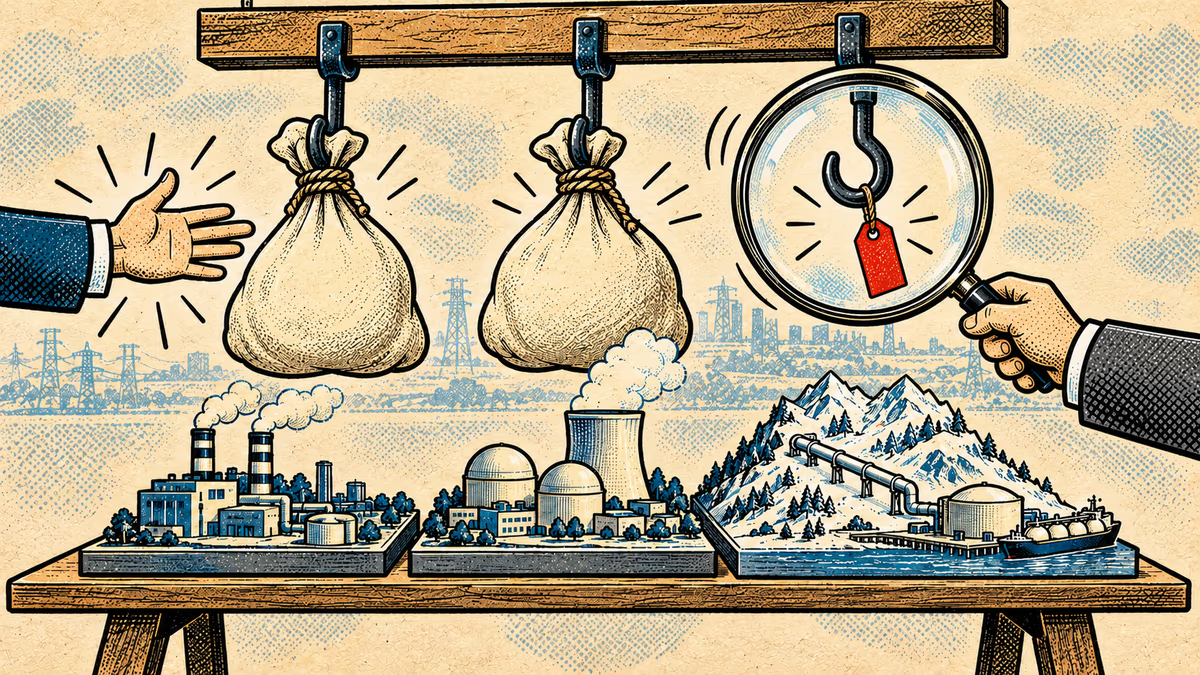
Trump said South Korea will invest up to $200 billion. The joint US-Korea fact sheet prices two projects, gas power and nuclear. Alaska LNG has no figure.
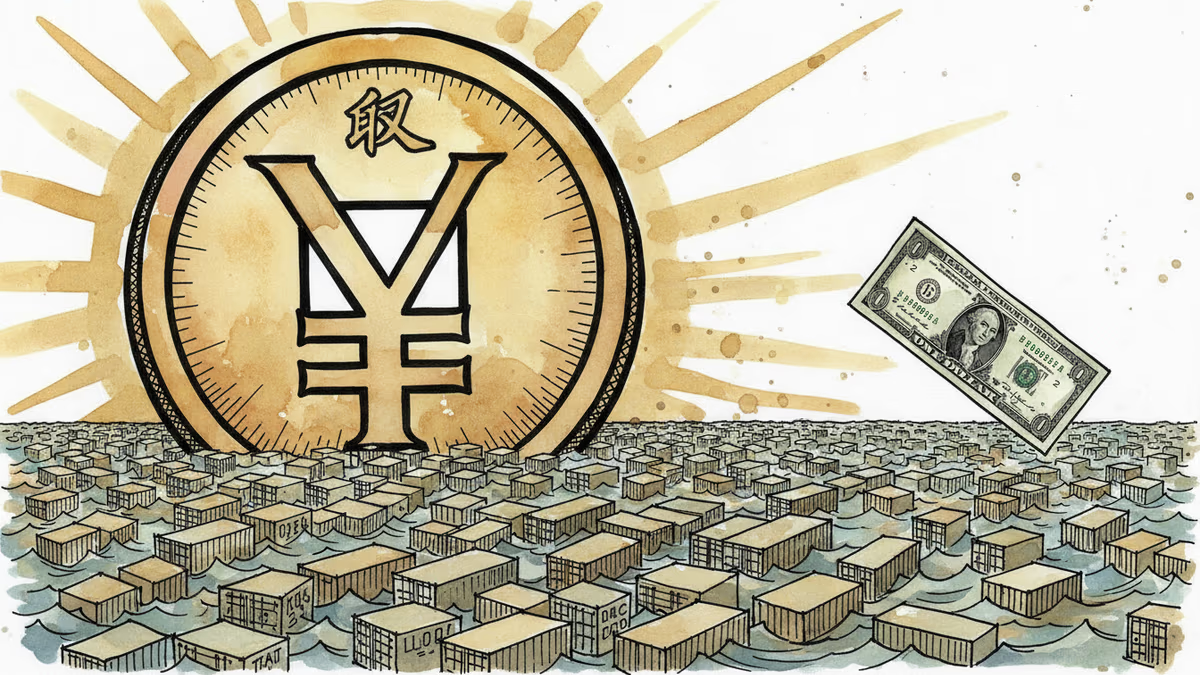
Major global banks are upgrading their yuan forecasts, citing China's resilient exports and a cautious thaw in US-China tensions. Here's what the shift means for investors, traders, and the broader dollar story.
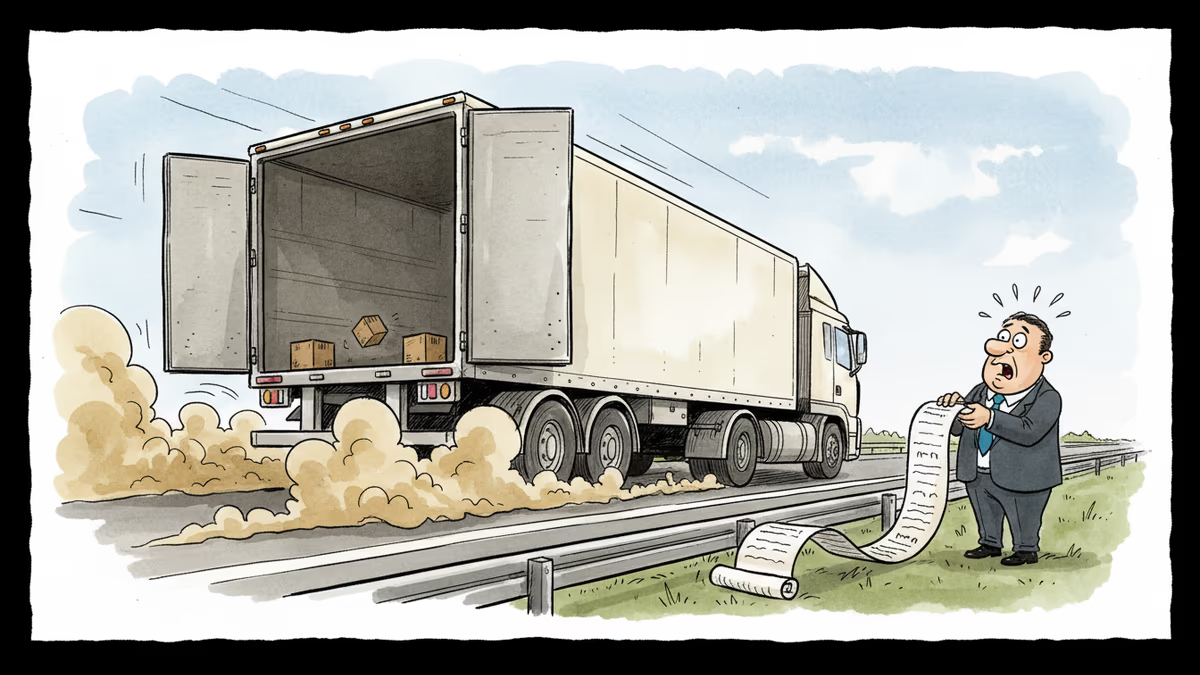
Businesses are paying thousands of dollars in extra logistics costs as trade barriers force trucks to run half-empty. Here's who pays, who profits, and what it means for prices.
Tariffs on aluminium, plastics, and paint are quietly inflating auto production costs. Here's who pays, who profits, and what it means for the EV transition.
Trump said South Korea will invest up to $200 billion. The joint US-Korea fact sheet prices two projects, gas power and nuclear. Alaska LNG has no figure.
Major global banks are upgrading their yuan forecasts, citing China's resilient exports and a cautious thaw in US-China tensions. Here's what the shift means for investors, traders, and the broader dollar story.
Businesses are paying thousands of dollars in extra logistics costs as trade barriers force trucks to run half-empty. Here's who pays, who profits, and what it means for prices.
Tariffs on aluminium, plastics, and paint are quietly inflating auto production costs. Here's who pays, who profits, and what it means for the EV transition.
Thoughts
Share your thoughts on this article
Sign in to join the conversation