
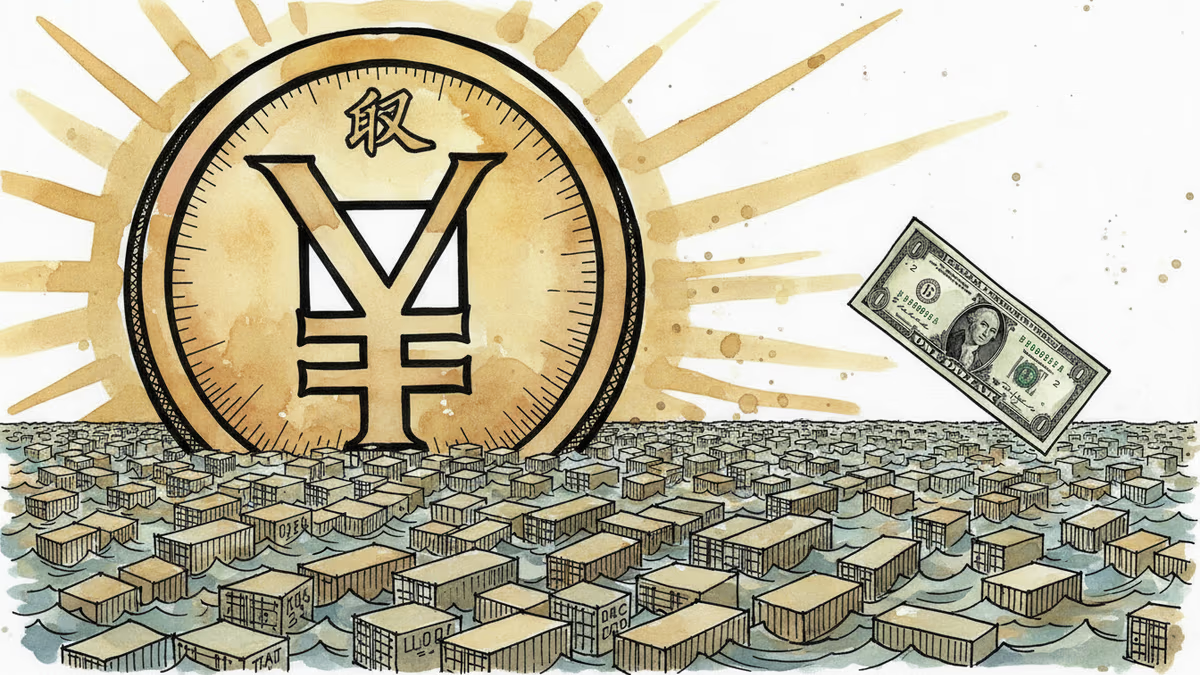
The Yuan Is Rising. Who Wins, Who Loses?
Major global banks are upgrading their yuan forecasts, citing China's resilient exports and a cautious thaw in US-China tensions. Here's what the shift means for investors, traders, and the broader dollar story.
Not long ago, a weakening yuan was the default assumption. Now, the biggest names on Wall Street are quietly tearing up that script.
Goldman Sachs, JPMorgan, and UBS have all revised their yuan forecasts upward in recent weeks, converging around a year-end target near 7.0 per dollar—a meaningful shift from earlier projections of 7.3 or weaker. The catalyst isn't a single headline. It's a confluence of factors that, taken together, suggest the yuan's trajectory for 2026 looks fundamentally different than it did at the start of the year.
What's Driving the Upgrade
The first factor is China's export machine, which has proved more durable than most analysts expected. Despite elevated US tariffs, China's exports grew 6.9% year-on-year in Q1 2026, as manufacturers accelerated their pivot toward Southeast Asia, the Middle East, and Africa. The supply chain diversification that analysts debated in theory has been happening in practice, faster than the models predicted.
The second factor is a relative easing in US-China tensions. High-level diplomatic contacts resumed in early 2026, and both sides have so far avoided escalating tariff measures further. This isn't a trade deal—it's more of a managed standoff—but financial markets are pricing in the reduced tail risk of a sudden rupture. When the worst-case scenario recedes, risk assets in the region tend to benefit, and the yuan is no exception.
Layered on top of both is the dollar itself. With the Federal Reserve maintaining a bias toward rate cuts, the dollar has softened broadly. A weaker dollar is almost always a tailwind for emerging market currencies, and the yuan, despite its managed float, is no different.
The Case Against the Upgrade

The bullish consensus deserves scrutiny. China's domestic economy remains under pressure in ways that export figures don't fully capture. Consumer price inflation has been hovering near zero, property market recovery is sluggish at best, and youth unemployment sits around 16%. A strong yuan, paradoxically, can become a liability for the export sector it's supposed to reflect—eroding the price competitiveness that drove the strong trade numbers in the first place.
The People's Bank of China is acutely aware of this tension. It has historically managed the yuan's daily fixing to prevent sharp appreciation, and there's little reason to think that instinct has changed. The PBOC wants a stable yuan, not a strong one. How much appreciation it will tolerate before intervening is a key variable that the bank forecasts don't fully answer.
Winners, Losers, and What It Means for Your Portfolio
For investors, the yuan move has real consequences across asset classes. A stronger yuan typically lifts emerging market sentiment broadly, benefiting equities in South Korea, Taiwan, and Southeast Asia that trade in China's economic orbit. Commodity markets could also see a ripple: as the yuan strengthens, dollar-denominated raw materials become cheaper for Chinese buyers, potentially supporting demand for copper, iron ore, and energy.
For multinational corporations with significant China revenue—think Apple, LVMH, Volkswagen—yuan appreciation translates directly into higher reported earnings when converted back to dollars or euros. That's a quiet tailwind that may not make headlines but will show up in Q3 and Q4 earnings calls.
On the other side, Chinese exporters face margin compression if the currency keeps rising. And for US consumers, a stronger yuan offers little immediate relief: tariffs, not exchange rates, are the dominant factor in import pricing right now.
For currency traders, the crowded consensus is itself a risk factor. When every major bank is leaning the same direction, the positioning is already stretched—and stretched positioning is what makes reversals sharp.
This content is AI-generated based on source articles. While we strive for accuracy, errors may occur. We recommend verifying with the original source.
Related Articles
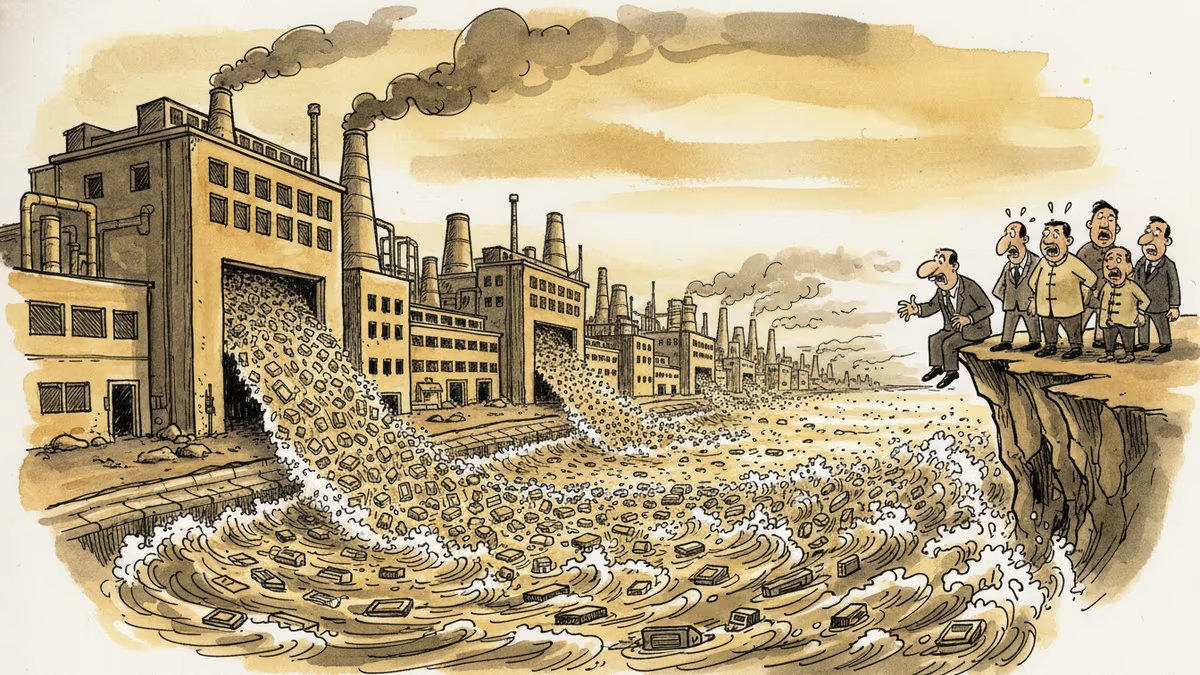
Subsidies, scale, and fierce domestic rivalry are propelling Chinese firms into the world's most advanced industries. Who wins, who loses, and what comes next?
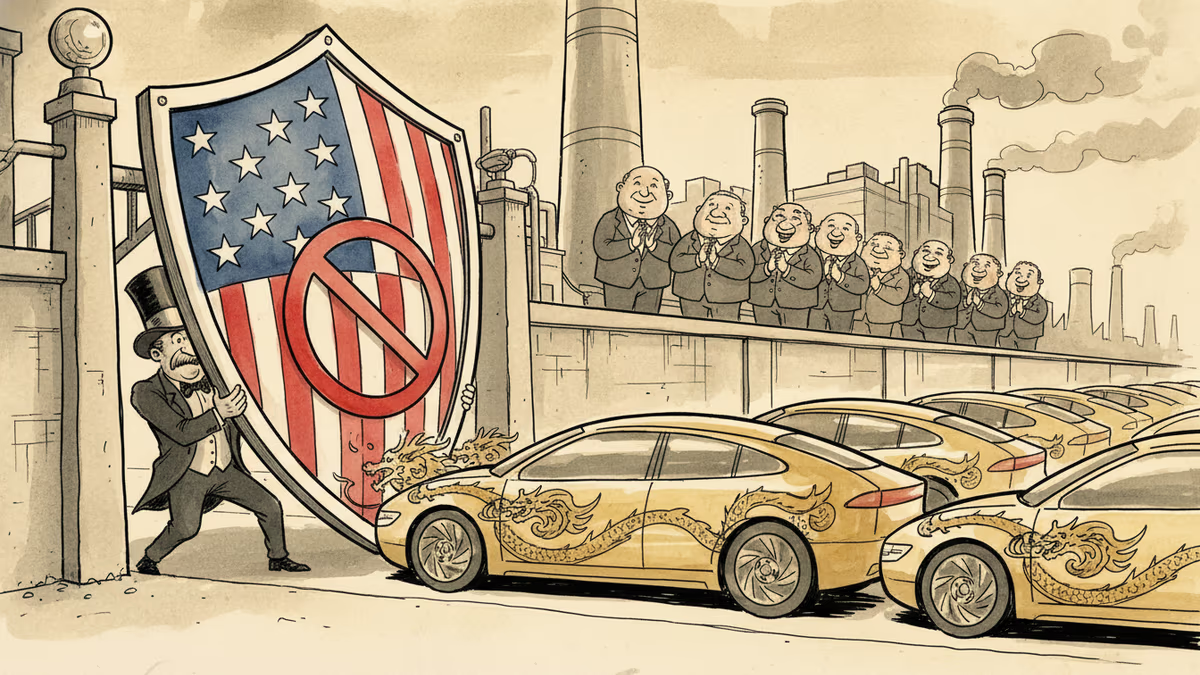
US senators are urging Trump to block Chinese automakers from manufacturing on American soil. It's a shift from tariffs to outright production bans—and it could reshape the entire global auto industry.
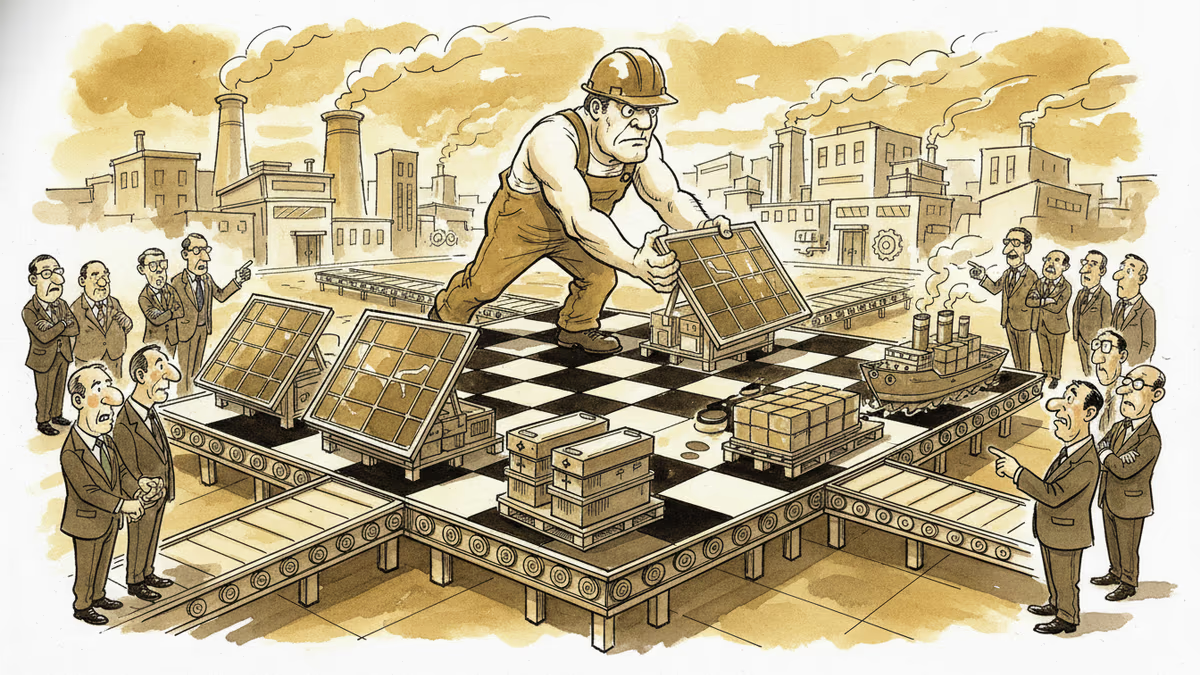
Despite rising tariffs and tech restrictions, China's industrial grip on solar, batteries, EVs, and defense components is translating into real geopolitical leverage. Here's what that means for investors and policymakers.
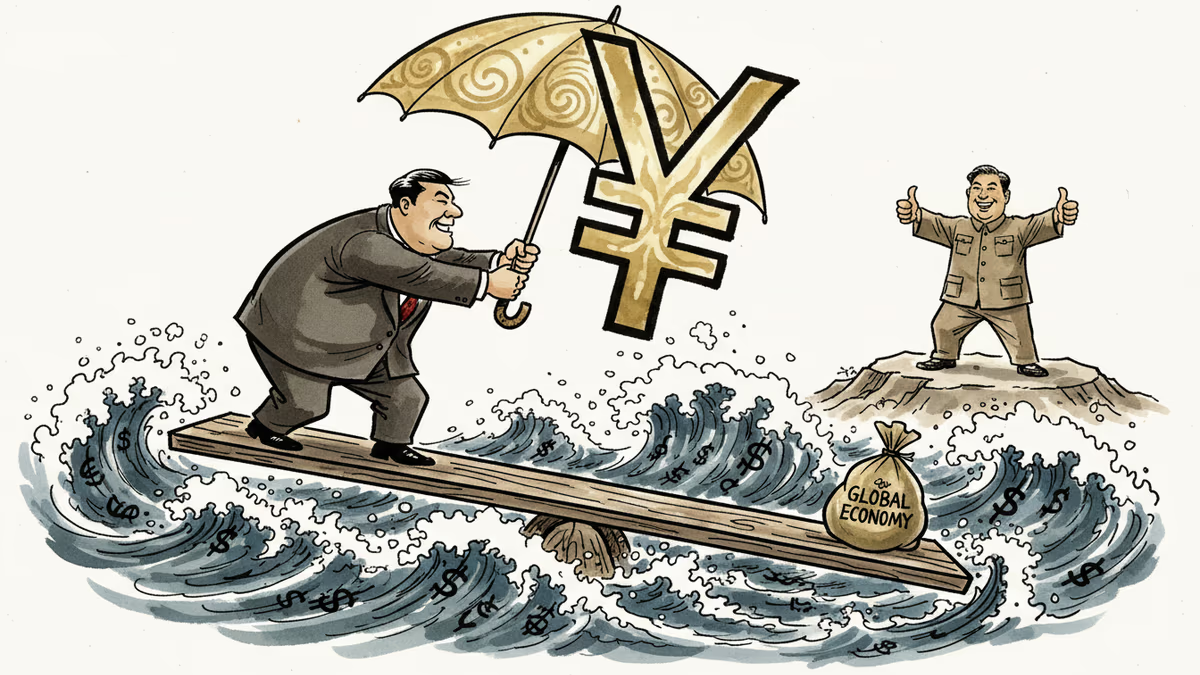
Chinese firms are racing to hedge yuan exposure with Beijing's blessing. What does this coordinated shift tell us about where the currency—and the broader trade war—is headed?
Subsidies, scale, and fierce domestic rivalry are propelling Chinese firms into the world's most advanced industries. Who wins, who loses, and what comes next?
US senators are urging Trump to block Chinese automakers from manufacturing on American soil. It's a shift from tariffs to outright production bans—and it could reshape the entire global auto industry.
Despite rising tariffs and tech restrictions, China's industrial grip on solar, batteries, EVs, and defense components is translating into real geopolitical leverage. Here's what that means for investors and policymakers.
Chinese firms are racing to hedge yuan exposure with Beijing's blessing. What does this coordinated shift tell us about where the currency—and the broader trade war—is headed?
Thoughts
Share your thoughts on this article
Sign in to join the conversation