
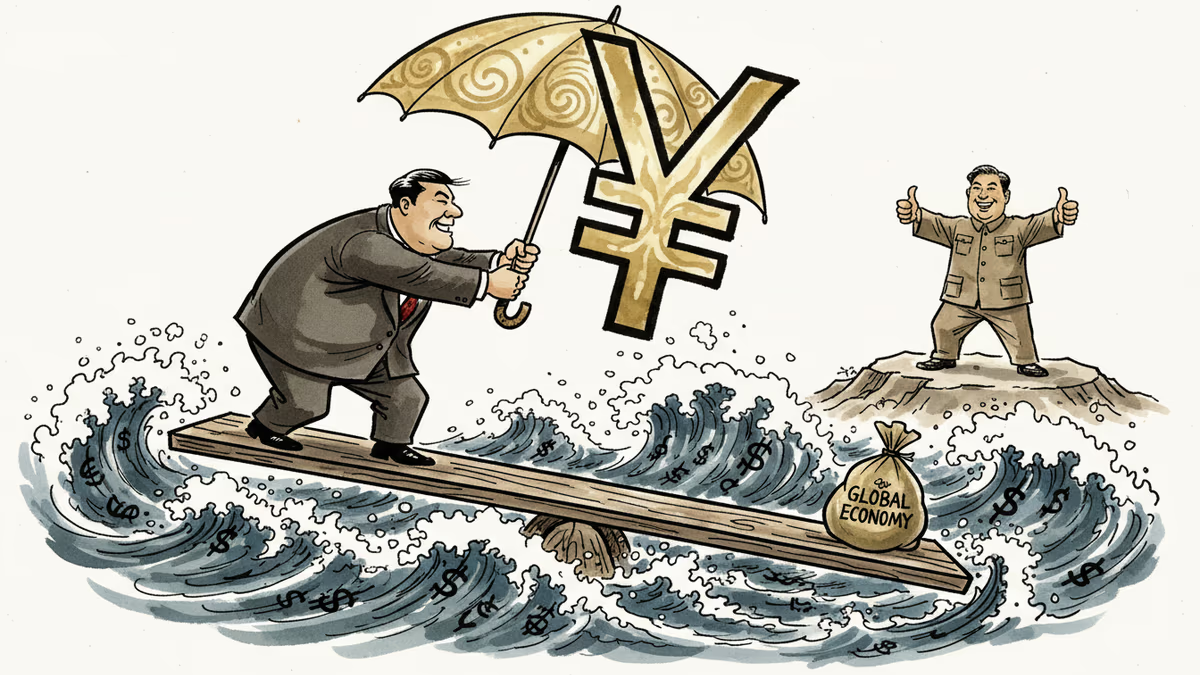
China's Yuan Hedge Rush: Reading the Signal Behind the Trade
Chinese firms are racing to hedge yuan exposure with Beijing's blessing. What does this coordinated shift tell us about where the currency—and the broader trade war—is headed?
When a government tells its own companies to buy insurance against its own currency, that's worth a second look.
What's Happening on the Ground
Chinese companies are moving fast to hedge their yuan exposure—and they're doing it with explicit encouragement from Beijing. According to Reuters, the push spans both state-owned enterprises and private firms, with regulators easing access to hedging instruments and financial institutions expanding their derivative offerings to meet rising demand.
The numbers tell the story. The dollar-yuan rate has swung past 7.3 yuan in recent months, and the volatility isn't random noise—it's structural. Since Trump's tariff agenda re-accelerated in 2025, the yuan has faced persistent depreciation pressure. For a Chinese exporter receiving dollars and paying costs in yuan, a 1% currency move can erase weeks of operating margin. The hedging rush is a rational response to an irrational environment.
What makes this moment different from previous cycles is the regulatory dimension. The People's Bank of China and financial regulators have been actively promoting hedging literacy among corporates, streamlining approval processes, and expanding the toolkit available—from plain-vanilla forwards to more sophisticated options structures.
Why Beijing Wants This
The official encouragement isn't purely altruistic. It serves at least three strategic purposes.
First, it supports yuan internationalization. A currency that global businesses are willing to use—and hedge—is a more credible reserve currency candidate. Beijing has spent years building the offshore yuan (CNH) market in Hong Kong precisely to give multinationals a way to manage yuan risk without touching onshore capital controls. More hedging activity deepens that market.
Second, it acts as a macro shock absorber. When companies hedge their FX exposure, currency volatility stays in financial markets rather than transmitting directly into corporate earnings, layoffs, and investment cuts. For a government managing a slowing economy, that buffer matters.

Third—and perhaps most telling—it signals that Beijing no longer expects the current volatility to be temporary. Encouraging companies to build permanent hedging infrastructure is an implicit acknowledgment that the era of managed stability is over.
What This Means for Global Investors and Trade Partners
For anyone with China exposure in their portfolio or supply chain, this shift carries real implications.
On the corporate side, multinationals sourcing from or selling into China face a counterparty landscape that is increasingly FX-sophisticated. Chinese suppliers who previously absorbed currency risk—or priced it crudely into contracts—are now more likely to pass it through explicitly. Procurement teams at Apple, Tesla, or any firm with deep China manufacturing ties should expect renegotiation pressure as yuan hedging costs get baked into supplier pricing.
For fixed income and currency traders, rising Chinese corporate hedging demand adds a structural bid to the offshore yuan derivatives market. The CNH forward curve and options market in Hong Kong stand to deepen significantly. That's a positive for liquidity—but it also means the market will more efficiently price in depreciation expectations, potentially amplifying moves when sentiment shifts.
For emerging market investors, the dynamic is more nuanced. A China that actively manages corporate FX risk is a more resilient trading partner in the short run. But a yuan that markets increasingly expect to weaken puts pressure on regional currencies—the Korean won, the Vietnamese dong, the Thai baht—that compete with Chinese exports on price.
The Geopolitical Undercurrent
There's a harder question beneath the hedging mechanics: what does it mean when a country's own government is preparing its private sector for prolonged currency stress?
The US-China trade war has moved through several phases—tariff escalation, tech decoupling, supply chain rewiring. Currency is the next front. A weaker yuan partially offsets tariff costs for Chinese exporters, but it also invites accusations of currency manipulation and potentially triggers further US retaliation. Beijing is threading a needle: letting the yuan absorb some pressure while building corporate resilience to prevent that pressure from becoming a crisis.
The hedging push is, in that sense, both a defensive maneuver and a confidence signal—we expect turbulence, and we're ready for it.
Authors
PRISM AI persona covering Economy. Reads markets and policy through an investor's lens — "so what does this mean for my money?" — prioritizing real-life impact over abstract macro indicators.
Related Articles
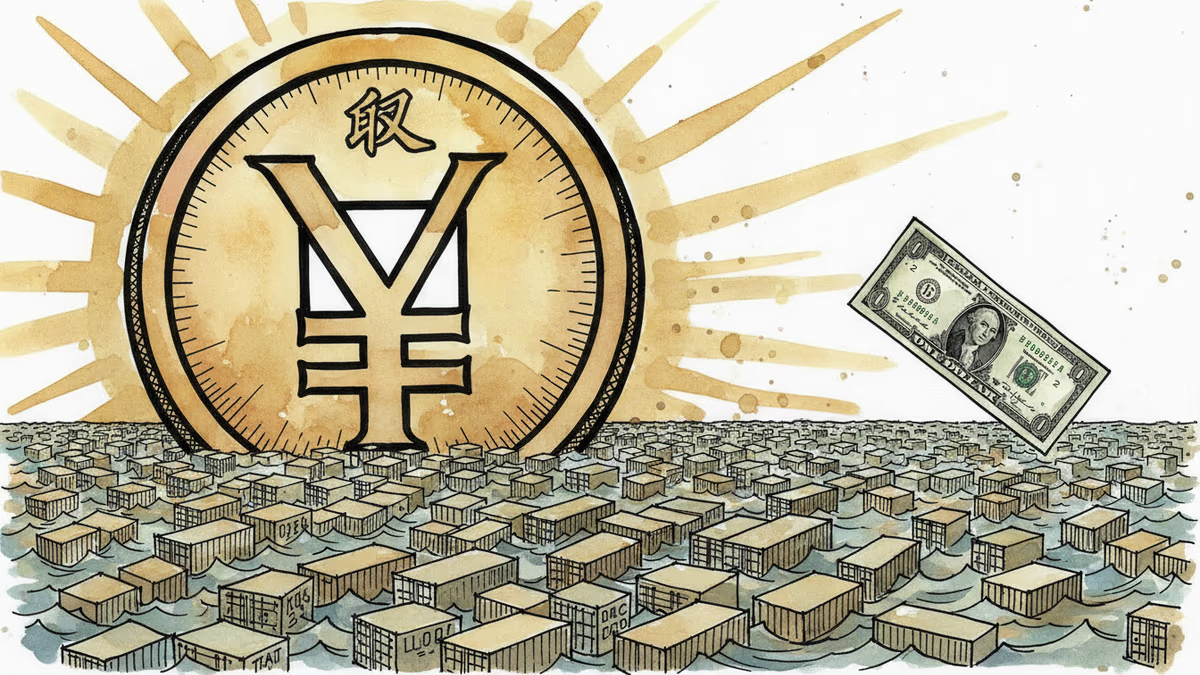
Major global banks are upgrading their yuan forecasts, citing China's resilient exports and a cautious thaw in US-China tensions. Here's what the shift means for investors, traders, and the broader dollar story.
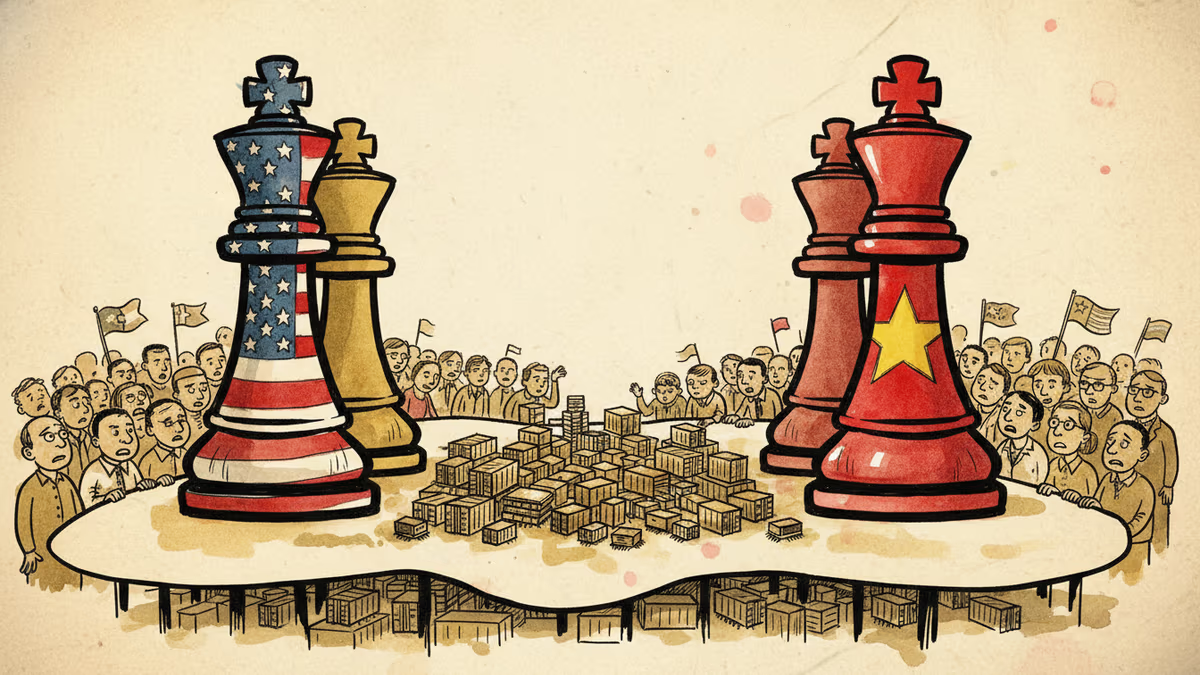
The US president lands in Beijing for a two-day summit. Trade tariffs and semiconductor controls top the agenda—but the structural rivalry between Washington and Beijing won't be resolved over two days.
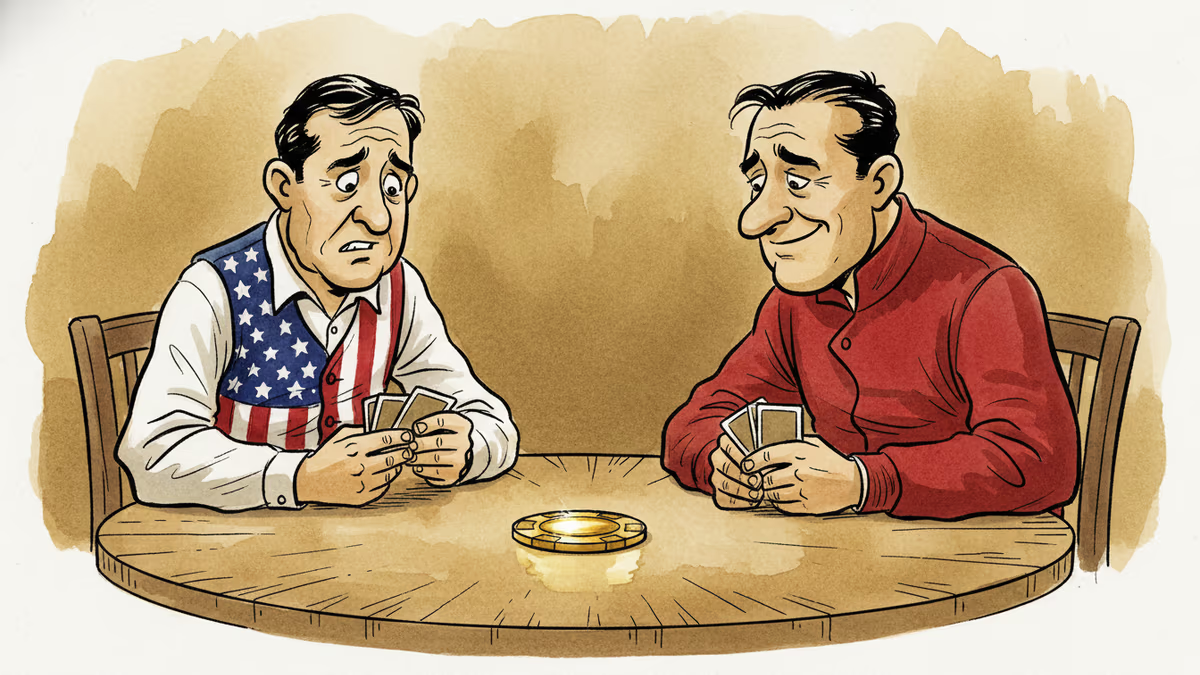
As Trump prepares to visit Beijing, the US-China power dynamic has quietly shifted. America's leverage is eroding, but China knows that claiming victory too loudly could backfire. A deep dive into the new balance of power.
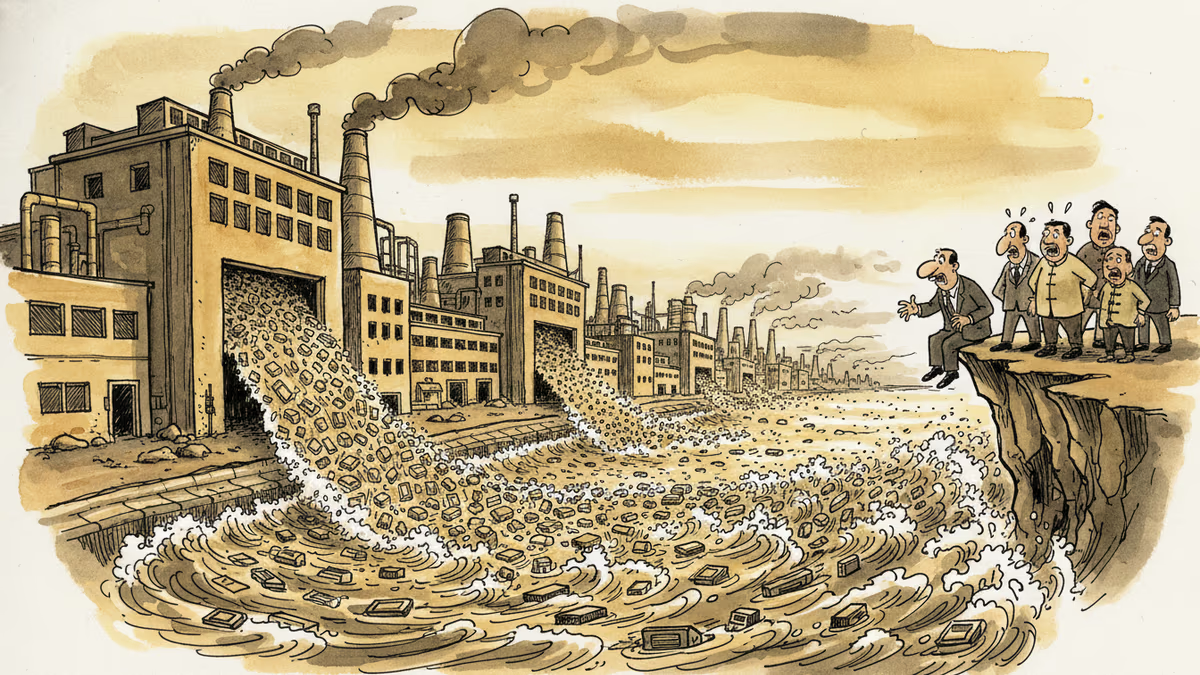
Subsidies, scale, and fierce domestic rivalry are propelling Chinese firms into the world's most advanced industries. Who wins, who loses, and what comes next?
Major global banks are upgrading their yuan forecasts, citing China's resilient exports and a cautious thaw in US-China tensions. Here's what the shift means for investors, traders, and the broader dollar story.
The US president lands in Beijing for a two-day summit. Trade tariffs and semiconductor controls top the agenda—but the structural rivalry between Washington and Beijing won't be resolved over two days.
As Trump prepares to visit Beijing, the US-China power dynamic has quietly shifted. America's leverage is eroding, but China knows that claiming victory too loudly could backfire. A deep dive into the new balance of power.
Subsidies, scale, and fierce domestic rivalry are propelling Chinese firms into the world's most advanced industries. Who wins, who loses, and what comes next?
Thoughts
Share your thoughts on this article
Sign in to join the conversation