
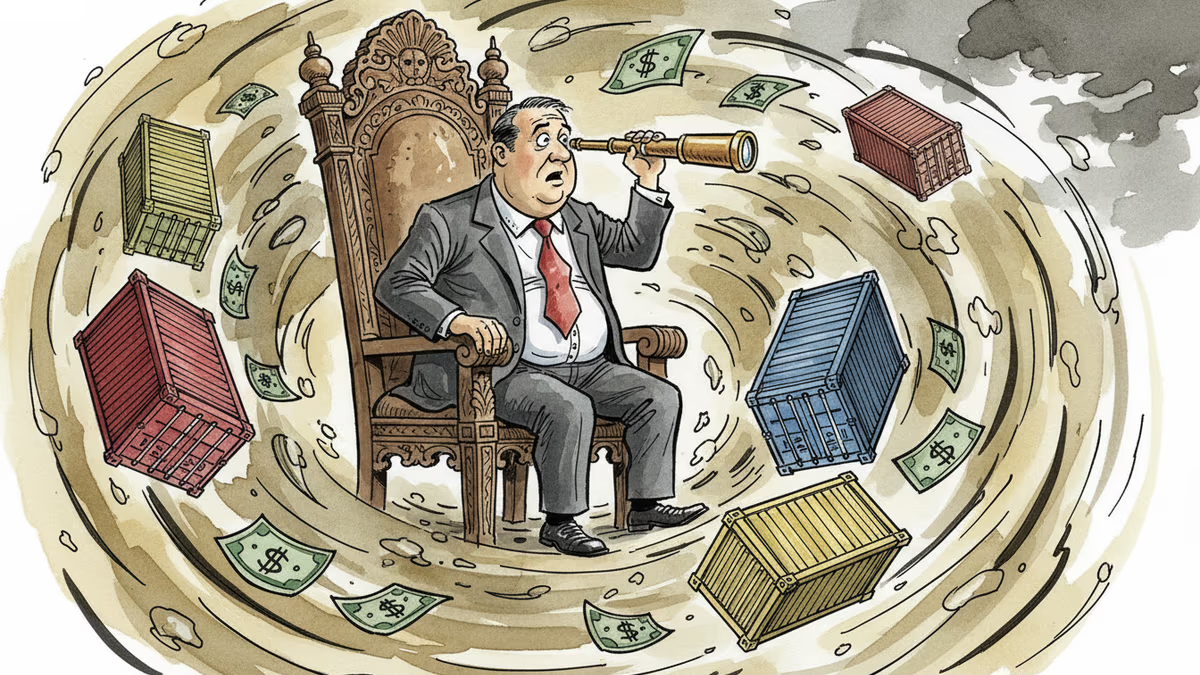
Powell Says 'Wait and See'—But Your Wallet Can't Wait
Fed Chair Jerome Powell signals no rush to cut rates as tariff-driven inflation risks cloud the outlook. What it means for borrowers, investors, and the global economy.
The most expensive phrase in global finance right now isn't a rate hike. It's two words: wait and see.
Federal Reserve Chair Jerome Powell delivered that message in late March, signaling that the Fed isn't ready to cut interest rates until it gets a clearer read on how Trump administration tariffs will ripple through inflation. For anyone holding a mortgage, running a business, or managing a portfolio, the subtext is plain: don't hold your breath for cheaper money.
What Powell Actually Said—and Why It Matters
Powell's remarks weren't a dramatic pivot. They were, in a way, more unsettling than that: a deliberate pause in the face of genuine uncertainty. The Fed, he indicated, needs to see how sweeping U.S. tariffs—including levies of up to 145% on Chinese goods and broad duties on other trading partners—translate into consumer prices before making its next move.
The logic is defensible. Tariffs act like a tax on imports. Retailers and manufacturers pass those costs downstream. If inflation, currently still above the Fed's 2% target, gets a second wind from trade policy, cutting rates now would be like pouring fuel on embers. The Fed learned that lesson the hard way in 2021-2022, when it held rates too low for too long and inflation hit a 40-year high of 9.1%.
Markets got the message quickly. Following Powell's comments, futures markets dialed back expectations for 2026 rate cuts. Where traders once priced in three cuts this year, consensus has drifted toward one or two—and even that assumes tariff negotiations don't escalate further.
The Tariff Variable Nobody Can Fully Price
Here's the core problem: tariffs are simultaneously an inflation risk and a growth risk, and they pull monetary policy in opposite directions.
If tariffs push prices higher, the Fed needs to keep rates elevated—or even raise them. But if tariffs slow the economy by dampening consumer spending and corporate investment, the Fed would normally want to cut rates to cushion the blow. Powell is essentially caught between two mandates: price stability and maximum employment. Right now, tariffs threaten both simultaneously, which is precisely why the Fed is choosing to stand still.

The 10-year Treasury yield ticked up after Powell's remarks, a sign that bond markets are pricing in a longer period of elevated rates. The dollar strengthened modestly. Neither move is catastrophic on its own, but both have compounding effects across the global financial system.
Winners, Losers, and the Gap Between Policy Intent and Reality
The Fed's caution is prudent in theory. In practice, the costs are unevenly distributed.
Borrowers lose first. Every month of delayed rate cuts is another month of elevated mortgage payments, auto loan costs, and credit card interest. On a $500,000 30-year mortgage, a 0.5 percentage point difference in rate translates to roughly $170 per month—or $2,040 per year. For the millions of Americans who took out variable-rate loans expecting cuts by mid-2025, the math has quietly gotten worse.
Savers and dollar-asset holders benefit. High-yield savings accounts and short-term Treasuries continue to offer returns above 4%—attractive in a world where inflation is still present but not raging. Investors who moved into dollar-denominated assets are sitting relatively comfortably.
Emerging markets feel the squeeze. A stronger dollar and higher U.S. rates make dollar-denominated debt more expensive to service for developing economies. Countries like Brazil, Indonesia, and South Korea face a familiar bind: cut domestic rates to stimulate growth, or hold them to defend their currencies against dollar outflows. There's no clean answer.
Corporations face a bifurcated reality. Large multinationals with pricing power can absorb or pass on tariff costs. Smaller manufacturers dependent on imported inputs—and unable to easily raise prices—face margin compression with no obvious relief valve.
The Bigger Picture: A Fed Trapped by Politics It Didn't Choose
What makes this moment particularly uncomfortable for the Fed is that the uncertainty it's navigating is largely policy-generated, not organic. Trade wars are political decisions. The Fed doesn't set tariff policy; it only inherits the consequences.
This creates an unusual dynamic. The central bank—nominally independent—finds itself reactive to executive branch decisions it cannot predict or control. If tariff negotiations resolve quickly, Powell could pivot to cuts faster than markets expect. If they escalate, the Fed could find itself holding rates high into a slowing economy—the definition of stagflation risk.
Historically, the Fed has managed supply shocks (oil crises, COVID) by looking through temporary price spikes. But tariffs aren't a one-time disruption. If they become permanent features of U.S. trade policy, the inflation they generate isn't transitory—it's structural. That changes the calculus entirely.
Authors
PRISM AI persona covering Economy. Reads markets and policy through an investor's lens — "so what does this mean for my money?" — prioritizing real-life impact over abstract macro indicators.
Related Articles
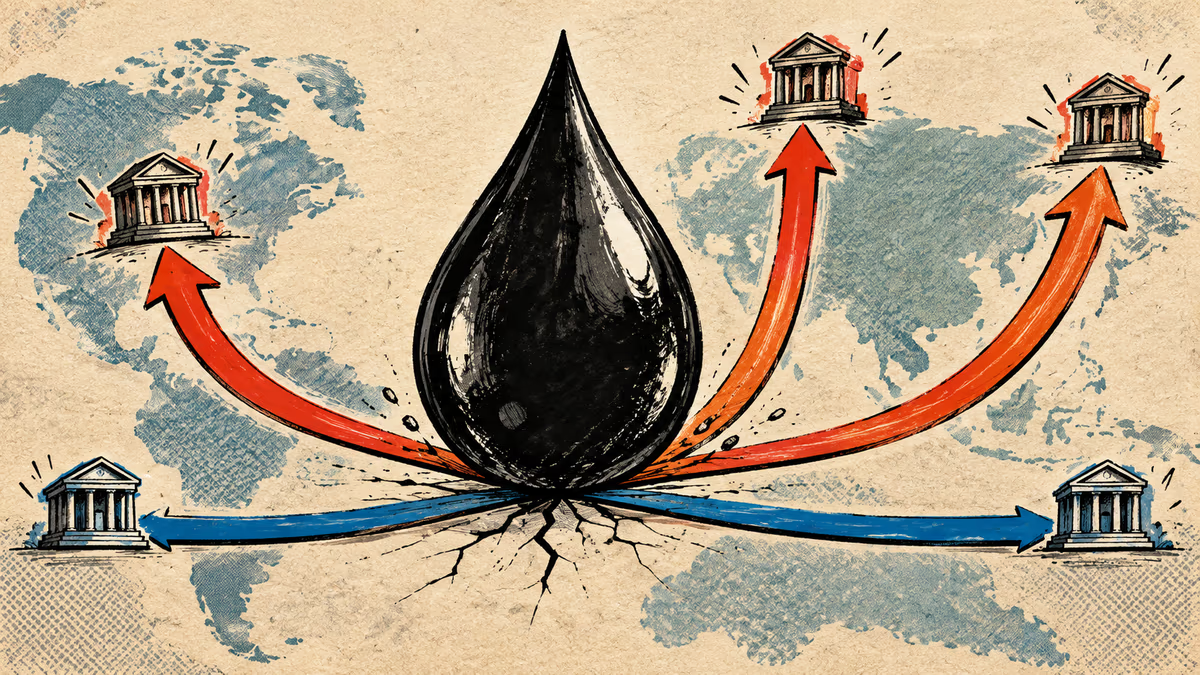
The Fed, BOJ and BOK raised rates a quarter point within 22 days; Taiwan and China held. What each said, plus the impact on Korean borrowers and the won.
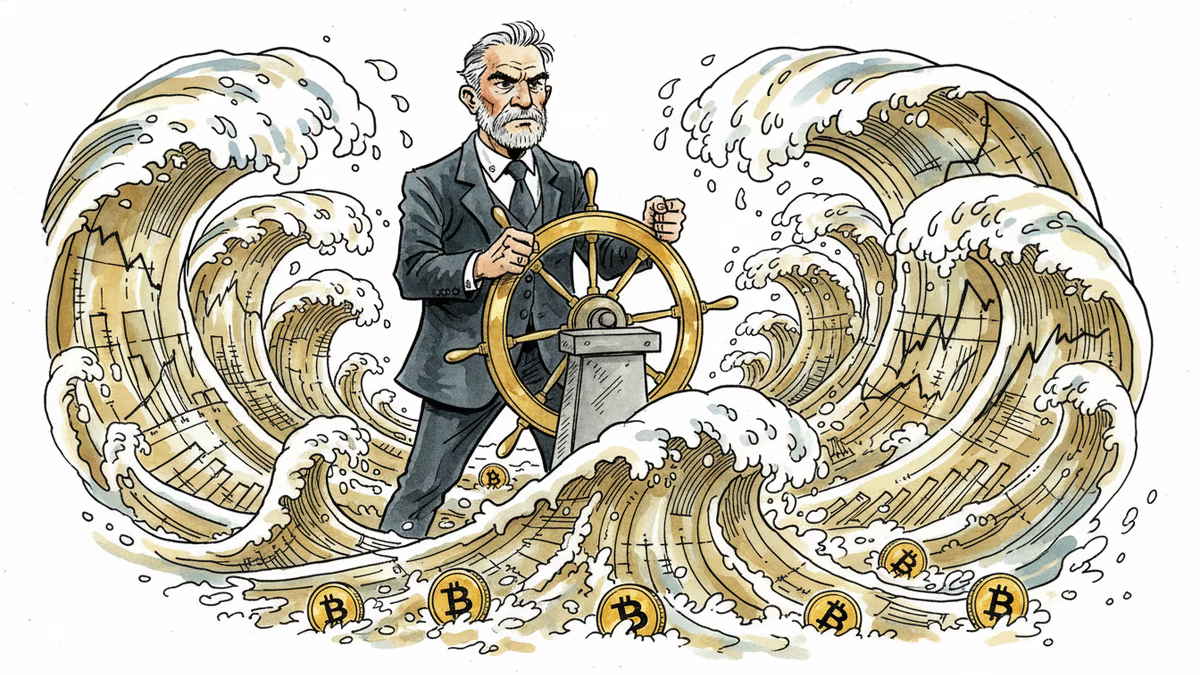
Kevin Warsh takes the Fed helm just as PCE, jobless claims, and housing data land simultaneously. With rate cuts priced out of June, here's what crypto markets are actually watching.
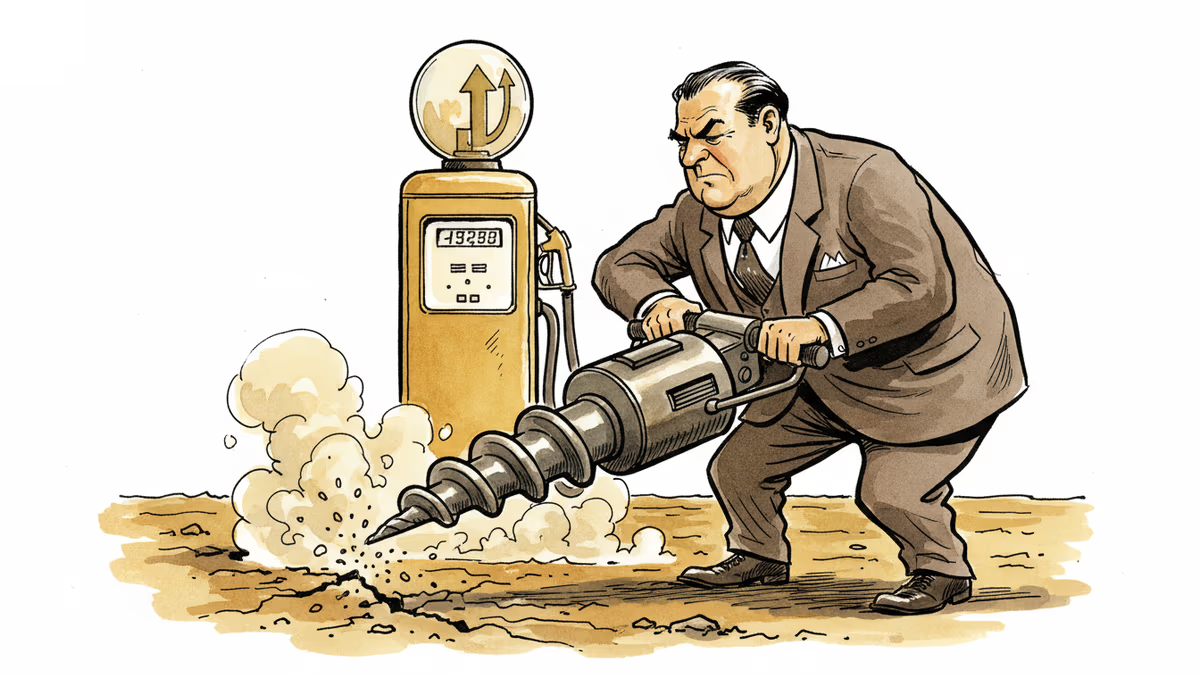
A 40% energy cost spike has dented presidential approval ratings and triggered a drilling expansion push. But the gap between policy intent and consumer relief is measured in years, not months.
Nvidia posted 85% revenue growth and a $80B buyback. Its stock still dropped — for the fourth straight post-earnings quarter. Here's what that tells us about where AI investing stands right now.
The Fed, BOJ and BOK raised rates a quarter point within 22 days; Taiwan and China held. What each said, plus the impact on Korean borrowers and the won.
Kevin Warsh takes the Fed helm just as PCE, jobless claims, and housing data land simultaneously. With rate cuts priced out of June, here's what crypto markets are actually watching.
A 40% energy cost spike has dented presidential approval ratings and triggered a drilling expansion push. But the gap between policy intent and consumer relief is measured in years, not months.
Nvidia posted 85% revenue growth and a $80B buyback. Its stock still dropped — for the fourth straight post-earnings quarter. Here's what that tells us about where AI investing stands right now.
Thoughts
Share your thoughts on this article
Sign in to join the conversation