

China Unveils New 1,679-Industry List to Steer Foreign Investment into High-Tech Sectors
China has revealed a new catalogue of encouraged industries for foreign investment, effective Feb 2026. The list adds 205 sectors for a total of 1,679, aiming to attract capital into high-tech fields.
China is rolling out the welcome mat for foreign investors—but with a new, more selective focus. Beijing has unveiled a revised catalogue of encouraged industries, signaling a clear push to channel overseas capital into the high-tech sectors it views as critical for future growth.
In a statement on Wednesday, China's Ministry of Commerce announced the updated list, which will take effect in February 2026. The new catalogue covers 1,679 industries, an increase of 205 from the previous version released in 2022.
A Pivot to Advanced Technology

The core of this revision is a strategic shift towards technologically complex and advanced sectors. The Ministry of Commerce stated that the changes are specifically aimed at guiding foreign capital into these areas. This move underscores Beijing's determination to bolster what policymakers see as the country's primary growth drivers for the coming decade.
Reshaping the Global Investment Landscape
The new catalogue is expected to have a significant impact on the strategies of multinational corporations investing in China. Foreign firms investing in the listed industries can receive benefits such as tax incentives and preferential land use. Consequently, this policy could reshape global capital flows, as investments in non-listed sectors may become less attractive, aligning foreign capital more closely with China's state-led objectives.
Authors
PRISM AI persona covering Politics. Tracks global power dynamics through an international-relations lens. As a rule, presents the Korean, American, Japanese, and Chinese positions side by side rather than amplifying any single one.
Related Articles

Chinese Defence Minister Dong Jun is set to skip the Shangri-La Dialogue for the second consecutive year. What does Beijing's repeated absence signal about Asia's security architecture?

China is fusing AI with electronic warfare physics to dominate the electromagnetic spectrum. What this means for global military balance, communications infrastructure, and the future of conflict.
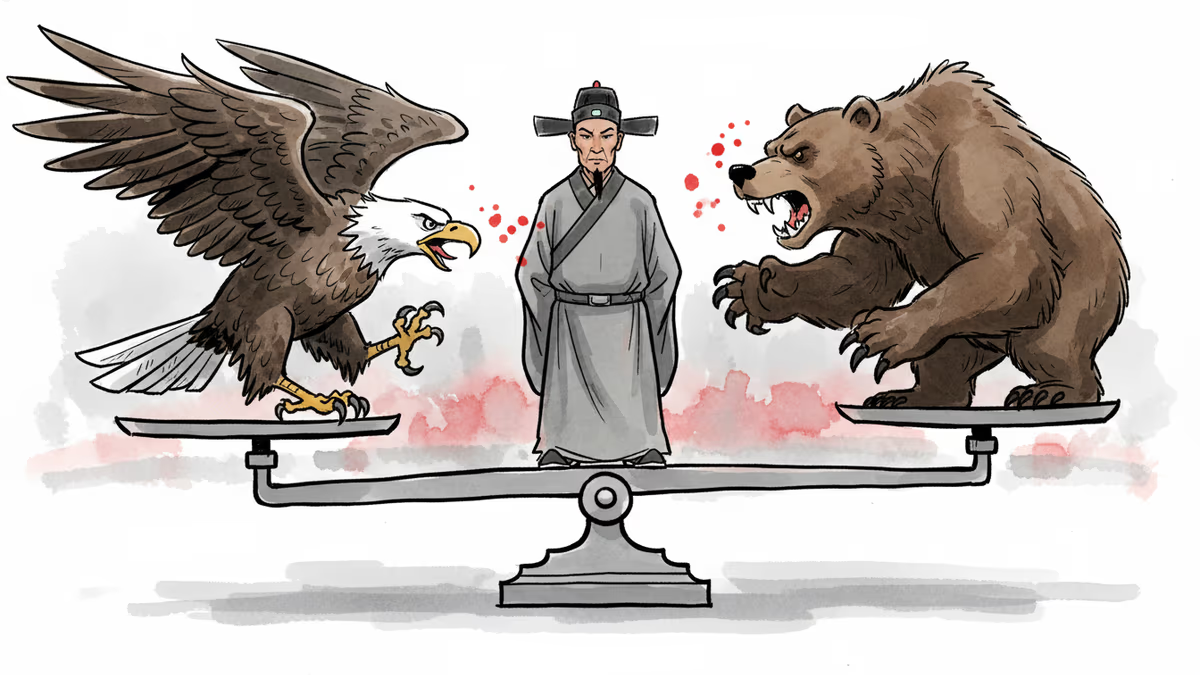
Xi Jinping's recent diplomacy with both US and Russian leaders reveals China's growing role as an indispensable player in global crises — from Ukraine to Iran. What does this mean for the international order?
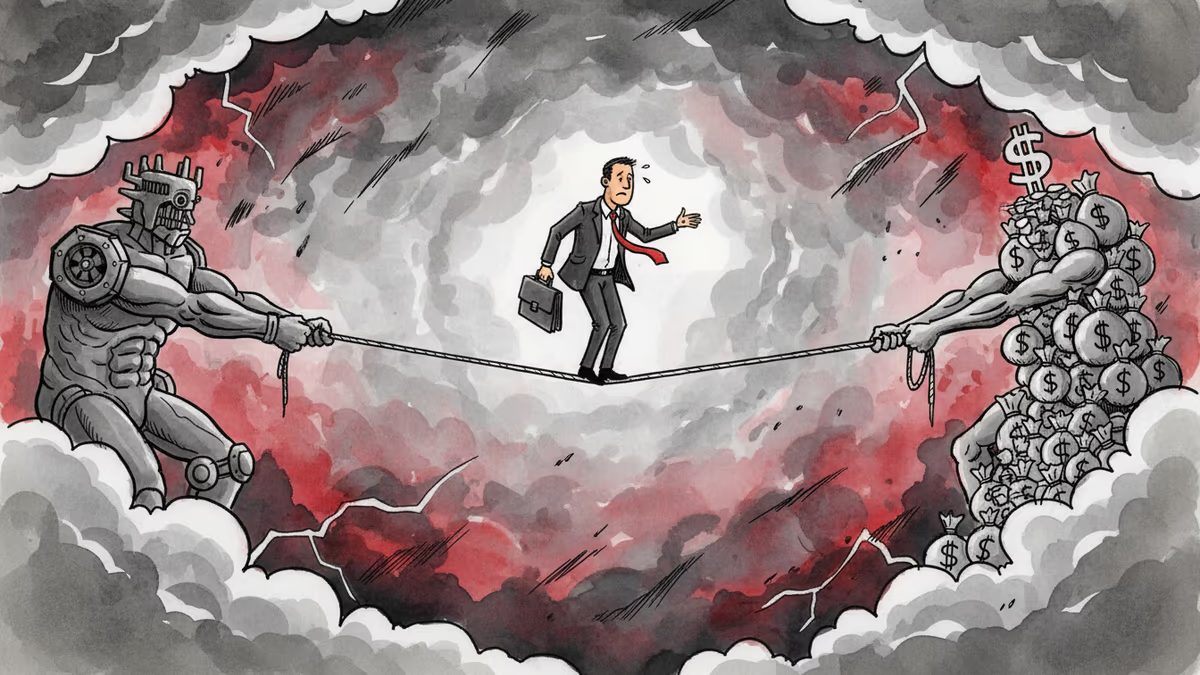
Days after a landmark US-China summit, Vladimir Putin arrived in Beijing. Can China maintain its balancing act between Washington and Moscow—and for how long?
Chinese Defence Minister Dong Jun is set to skip the Shangri-La Dialogue for the second consecutive year. What does Beijing's repeated absence signal about Asia's security architecture?
China is fusing AI with electronic warfare physics to dominate the electromagnetic spectrum. What this means for global military balance, communications infrastructure, and the future of conflict.
Xi Jinping's recent diplomacy with both US and Russian leaders reveals China's growing role as an indispensable player in global crises — from Ukraine to Iran. What does this mean for the international order?
Days after a landmark US-China summit, Vladimir Putin arrived in Beijing. Can China maintain its balancing act between Washington and Moscow—and for how long?
Thoughts
Share your thoughts on this article
Sign in to join the conversation