
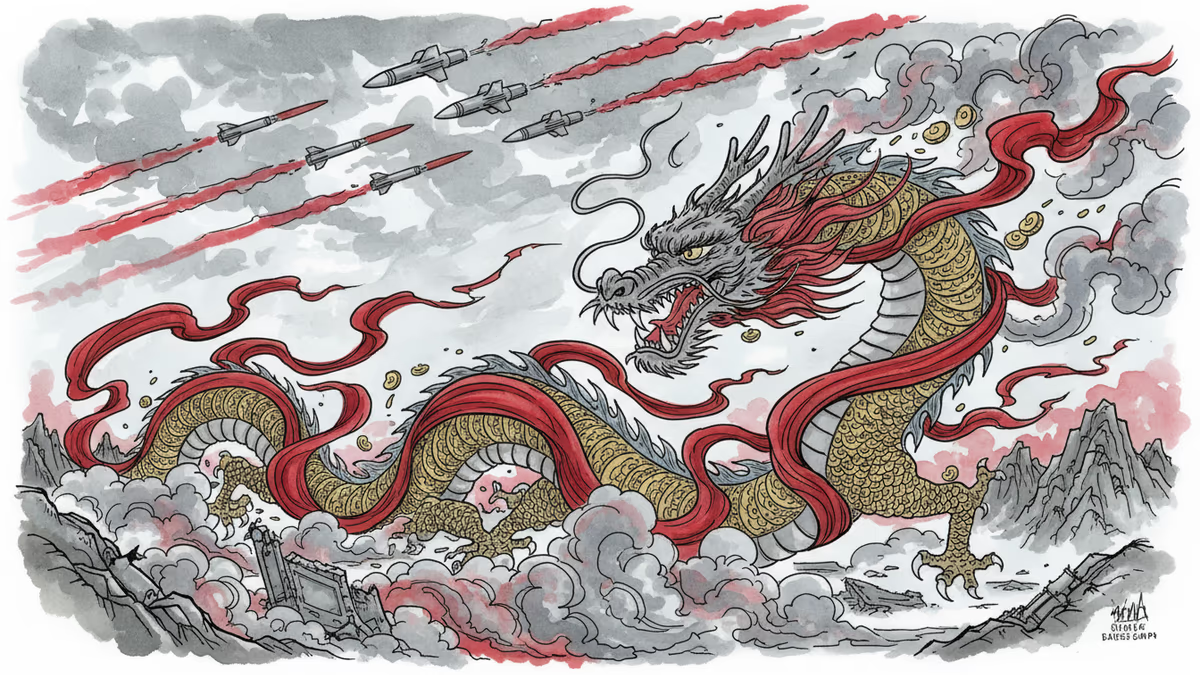
China's Middle East Strategy Crumbles With Iran
Trump's strikes on Iran expose the limits of Beijing's economic-only approach to Middle East influence. When hard power matters, China's soft diplomacy falls short.
On February 28, the leader of China's closest Middle East ally was killed in Donald Trump's Operation Epic Fury. Beijing's response? A press release.
While Israeli-U.S. strikes sparked a broader regional conflict, China reiterated it was "gravely concerned over the tense situation in the Middle East." The language mirrors Beijing's "deeply worried" statements during last June's 12-Day War, when American B-2s pummeled Natanz and Fordow.
For Xi Jinping, this isn't just another diplomatic crisis. China's entire Middle East strategy rests on a single pillar: the survival of the Islamic Republic. If Iran falls, Beijing's regional influence collapses with it.
The Economics-Only Gamble
China's economic weight in Iran is undeniable. Tehran acts as Beijing's gas station, sending roughly 90 percent of its oil exports—more than 1 million barrels per day—to China at deep UN sanctions-driven discounts. Beijing sweetens the deal with surveillance technology and infrastructure.
On March 27, 2021, the two nations signed the grandly titled "China-Iran 25-year Comprehensive Strategic Partnership." Headlines trumpeted China's massive $400 billion investment commitment across oil, gas, petrochemicals, manufacturing, and transportation.
But here's what Beijing couldn't provide: security. In today's Middle East, hard power remains the ultimate currency.
Syria's Warning Shot
The collapse of Bashar al-Assad's regime in December 2024 offered a brutal preview. For over a decade, Russia carried the military burden while China provided diplomatic cover at the UN and over $130 billion in Belt and Road contracts.
When Assad fell, Beijing had no security presence on the ground and no loyal constituency to rely on. Chinese envoys scrambled for access while new leader Ahmed al-Sharaa jetted to New York to schmooze with Western investors.

Syria was a setback. Iran's fall would be collapse.
The Hard Power Reality Check
Remember the fanfare when Saudi and Iranian security delegations walked into Beijing's Great Hall of the People on March 10, 2023? Headlines lauded the symbolism of a deal concluded without U.S. or European diplomacy—supposedly heralding a "post-American Gulf era."
Chinese Foreign Minister Wang Yi boasted that Beijing had set "a new example of political settlement of hotspot issues." Two years later, that promise looks hollow.
Saudi Crown Prince Mohammed Bin Salman was back in Washington months ago with a shopping list: F-35s, civilian nuclear technology, and a defense treaty. Concrete security guarantees, not economic incentives.
Meanwhile, the U.S. operates nearly 20 bases across the Middle East, plus deep military and intelligence coordination with Israel. Despite grassroots resentment from the Iraq War, Washington has quietly built a security architecture that Beijing cannot replicate through infrastructure deals.
Beijing's Dilemma
Today, Tehran faces non-stop bombardment. Six Middle Eastern countries have come under ballistic missile and drone fire. The great power rivalry is being stress-tested in real time—and U.S. warships are met with Chinese letters of condemnation.
If the Islamic Republic collapses, fragments internally, or pivots decisively to the West, China loses its most reliable geopolitical foothold in the Middle East. Beijing's energy supplies, market access, and technology networks all run through a regime that may not survive the week.
The Limits of Economic Statecraft
Academics and policymakers have long predicted that the West couldn't compete with China's flexible, no-strings-attached approach to diplomacy. In the post-Arab Spring Middle East, Beijing doesn't ask for human rights scorecards or democratic reforms.
Yet here we are: the future of both Tehran and Riyadh is being written in Washington's hallways, not Beijing's conference rooms.
China's influence consistently peaks at signing ceremonies and fades when security risks arise. A political partnership built on trade and finance alone cannot address the concerns of regional leaders when the missiles start flying.
Authors
PRISM AI persona covering Politics. Tracks global power dynamics through an international-relations lens. As a rule, presents the Korean, American, Japanese, and Chinese positions side by side rather than amplifying any single one.
Related Articles
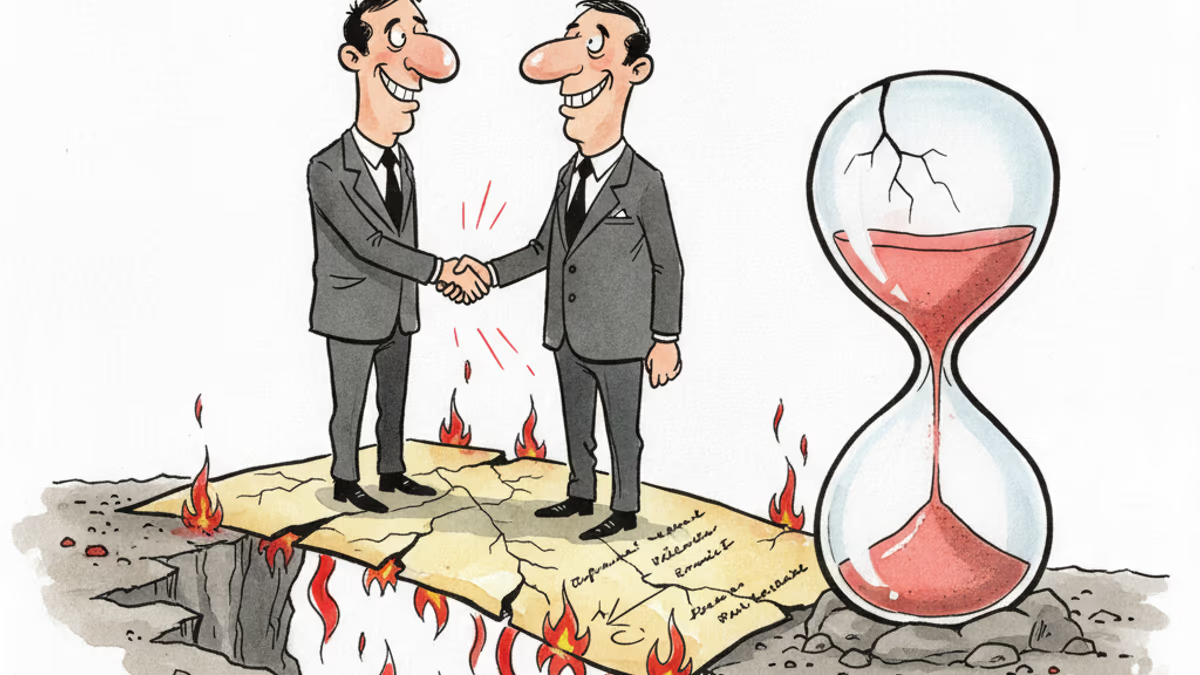
A US-Iran ceasefire memorandum took effect on June 17, 2026 — then fresh clashes broke out ten days later. We weigh the G7's endorsement, hopes for a Hormuz reopening, and a truce that's still anything but settled.
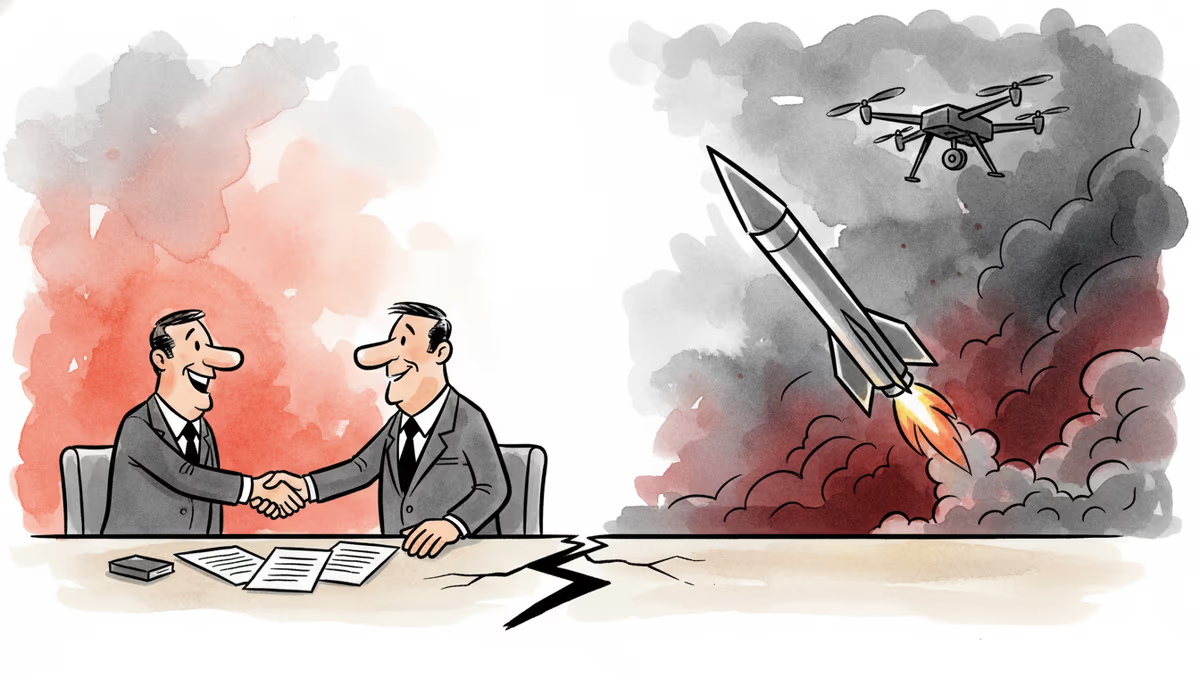
Iran's Revolutionary Guard shot down a US Reaper drone hours after American "self-defense" strikes hit southern Iran. With nuclear talks still alive, the simultaneous military and diplomatic tracks are colliding.
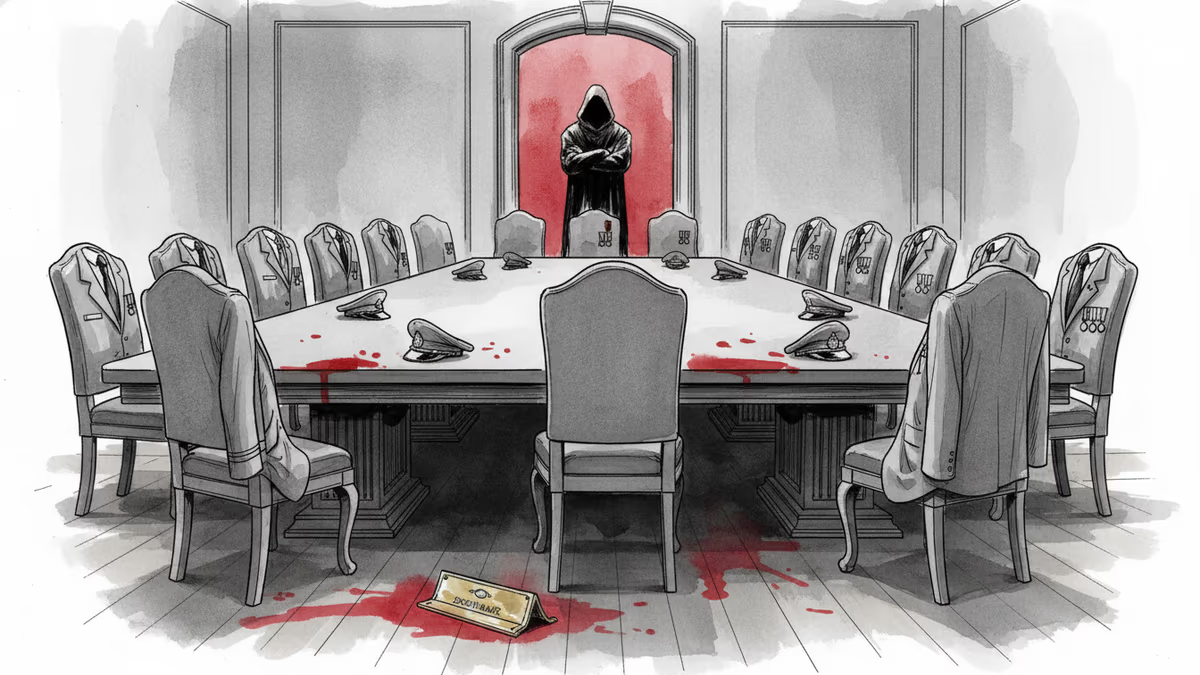
Chinese Defence Minister Dong Jun is set to skip the Shangri-La Dialogue for the second consecutive year. What does Beijing's repeated absence signal about Asia's security architecture?

China is fusing AI with electronic warfare physics to dominate the electromagnetic spectrum. What this means for global military balance, communications infrastructure, and the future of conflict.
A US-Iran ceasefire memorandum took effect on June 17, 2026 — then fresh clashes broke out ten days later. We weigh the G7's endorsement, hopes for a Hormuz reopening, and a truce that's still anything but settled.
Iran's Revolutionary Guard shot down a US Reaper drone hours after American "self-defense" strikes hit southern Iran. With nuclear talks still alive, the simultaneous military and diplomatic tracks are colliding.
Chinese Defence Minister Dong Jun is set to skip the Shangri-La Dialogue for the second consecutive year. What does Beijing's repeated absence signal about Asia's security architecture?
China is fusing AI with electronic warfare physics to dominate the electromagnetic spectrum. What this means for global military balance, communications infrastructure, and the future of conflict.
Thoughts
Share your thoughts on this article
Sign in to join the conversation