
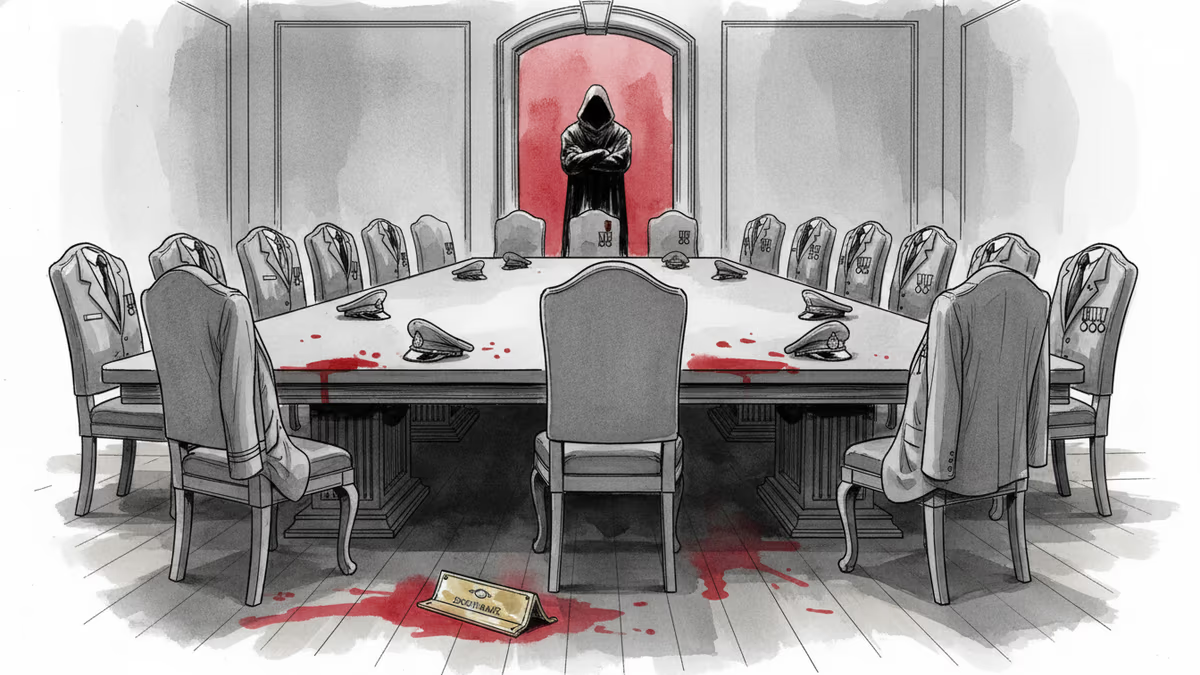
China's Empty Chair at Shangri-La, Again
Chinese Defence Minister Dong Jun is set to skip the Shangri-La Dialogue for the second consecutive year. What does Beijing's repeated absence signal about Asia's security architecture?
In diplomacy, the decision not to show up is itself a message.
Asia's premier defence forum opens Friday in Singapore, drawing defence ministers, military chiefs, and strategic thinkers from across the Indo-Pacific. US Defence Secretary Pete Hegseth is scheduled to deliver a keynote on Washington's Indo-Pacific strategy. But the seat that draws the most attention this year may be the one that stays empty: China's.
According to two sources familiar with the matter, Chinese Defence Minister Dong Jun will skip the 23rd Shangri-La Dialogue — for the second year running. Beijing will instead send a lower-level People's Liberation Army delegation. China's defence ministry has not responded to requests for comment and has yet to announce its official delegation.
What the Shangri-La Dialogue Actually Is
Organised by the International Institute for Strategic Studies (IISS) and held annually in Singapore, the Shangri-La Dialogue is the region's most prominent forum for defence diplomacy. It's where defence ministers deliver public positions, hold bilateral meetings in the corridors, and — crucially — signal intentions to rivals and partners alike.
For China, the forum has historically offered a rare opportunity: a multilateral stage to push back against US narratives on Taiwan, the South China Sea, and regional security, directly in front of Southeast Asian audiences that Beijing courts assiduously. Skipping it doesn't mean China goes unrepresented — but it does mean China's arguments go unmade at the highest level.
Hegseth's speech on Saturday will face no ministerial-level Chinese rebuttal. That's a significant asymmetry.

Why Beijing Might Be Staying Away
China offered no official explanation for last year's absence, and has said nothing yet about this year's. That silence invites interpretation — and there are at least two credible readings.
The first is institutional. Dong Jun's predecessor, Wei Fenghe, attended Shangri-La in 2022. His successor, Li Shangfu, was dismissed in 2023 amid corruption allegations without ever attending. Dong Jun himself has operated under a cloud of political uncertainty since taking office. Sending a minister to a high-profile international forum requires a degree of institutional confidence that may still be lacking inside the PLA's leadership.
The second reading is strategic. Beijing has long viewed the Shangri-La Dialogue with ambivalence. The forum is dominated by US allies and partners; its agenda tends to reflect their security concerns. Participating at the ministerial level could be seen as lending legitimacy to a framework China considers structurally biased. A lower-level delegation allows China to maintain a presence without appearing to endorse the forum's terms.
Both explanations may be true simultaneously — and that's precisely what makes China's absence difficult to decode.
The Wider Pattern
This isn't happening in isolation. China suspended high-level military communications with the United States following Nancy Pelosi's 2022 visit to Taiwan. Those channels have been partially restored, but trust remains fragile. Meanwhile, tensions in the Taiwan Strait and the South China Sea have, if anything, intensified.
The Shangri-La Dialogue was designed partly to provide a structured venue for exactly these kinds of conversations — a place where adversaries could talk without the political cost of formal bilateral summits. China's repeated absence at the ministerial level undermines that function.
For Southeast Asian nations caught between Washington and Beijing — the Philippines, Vietnam, Indonesia, Malaysia — the signal is uncomfortable. A great power that declines to engage multilaterally on security is harder to read, and harder to trust.
This content is AI-generated based on source articles. While we strive for accuracy, errors may occur. We recommend verifying with the original source.
Related Articles
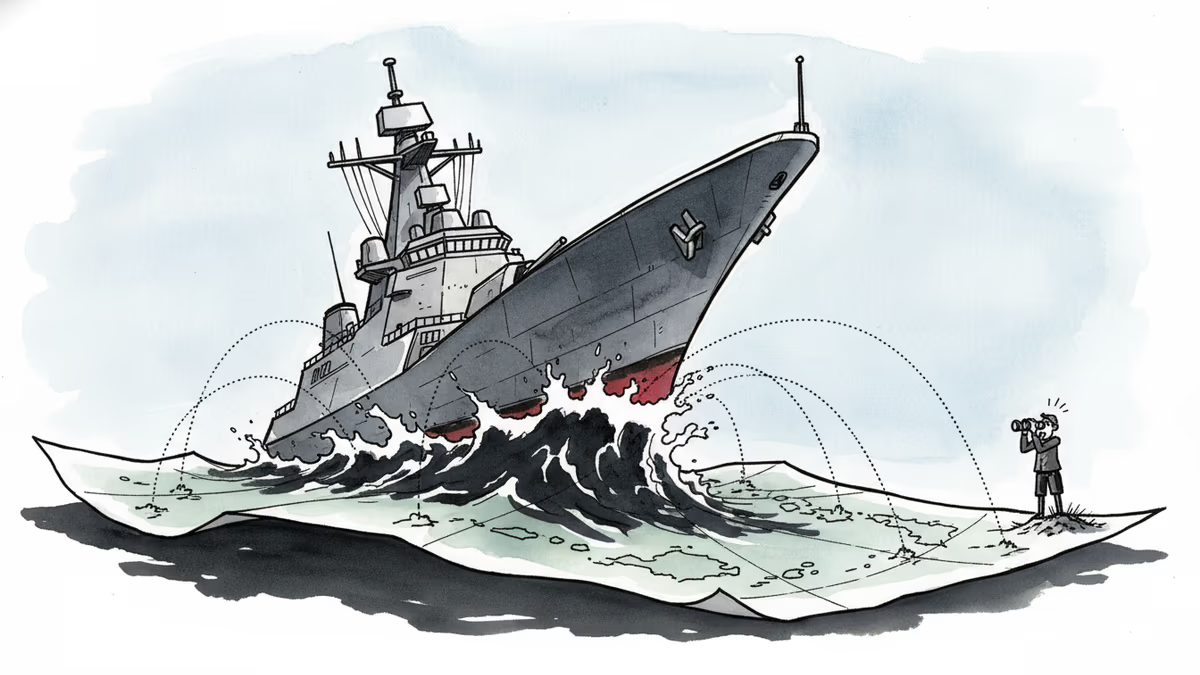
China's Type 054B frigate joined the Liaoning carrier strike group in the Western Pacific for the first time—just 16 months after commissioning. Here's what that pace of integration signals.

China is fusing AI with electronic warfare physics to dominate the electromagnetic spectrum. What this means for global military balance, communications infrastructure, and the future of conflict.
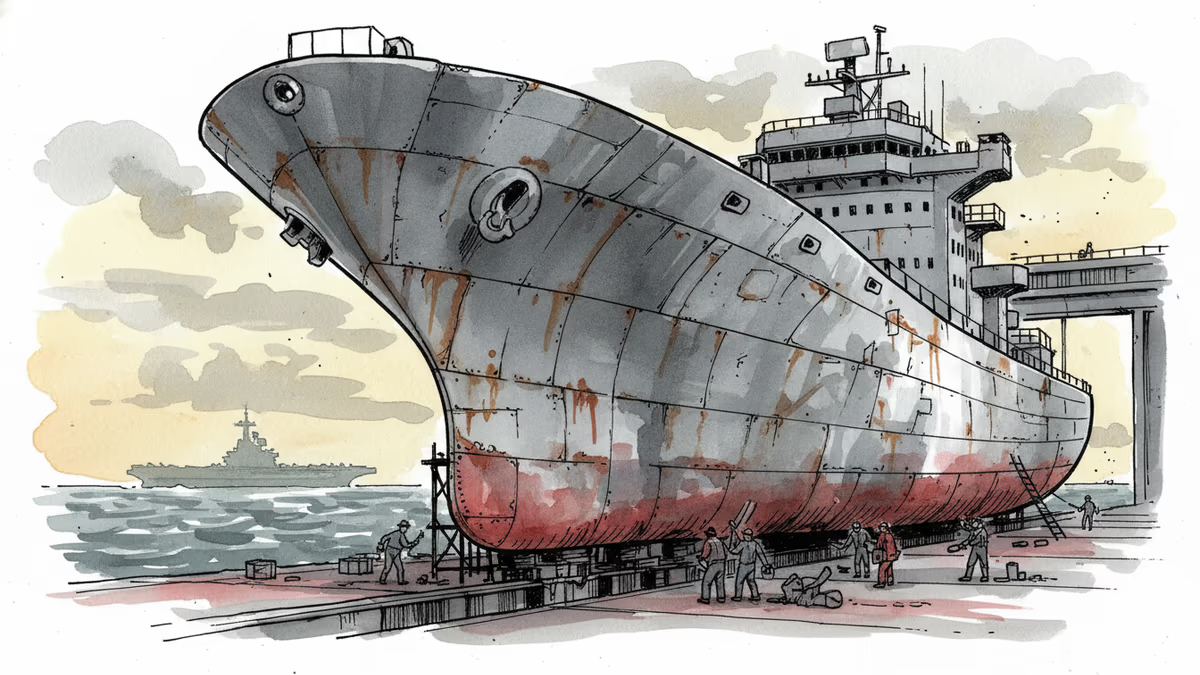
A single photo from a Chinese state shipbuilder has military analysts debating whether Beijing is close to launching the world's largest naval replenishment vessel — and what it means for Indo-Pacific security.
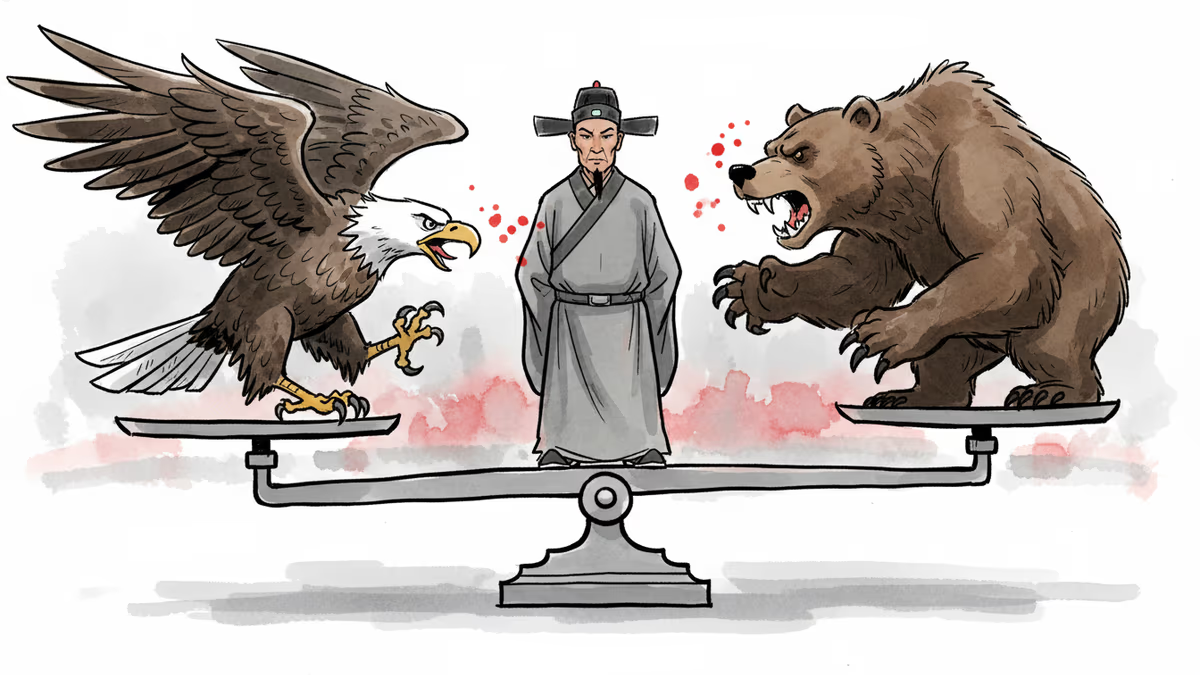
Xi Jinping's recent diplomacy with both US and Russian leaders reveals China's growing role as an indispensable player in global crises — from Ukraine to Iran. What does this mean for the international order?
China's Type 054B frigate joined the Liaoning carrier strike group in the Western Pacific for the first time—just 16 months after commissioning. Here's what that pace of integration signals.
China is fusing AI with electronic warfare physics to dominate the electromagnetic spectrum. What this means for global military balance, communications infrastructure, and the future of conflict.
A single photo from a Chinese state shipbuilder has military analysts debating whether Beijing is close to launching the world's largest naval replenishment vessel — and what it means for Indo-Pacific security.
Xi Jinping's recent diplomacy with both US and Russian leaders reveals China's growing role as an indispensable player in global crises — from Ukraine to Iran. What does this mean for the international order?
Thoughts
Share your thoughts on this article
Sign in to join the conversation