
#AI chips
Total 68 articles
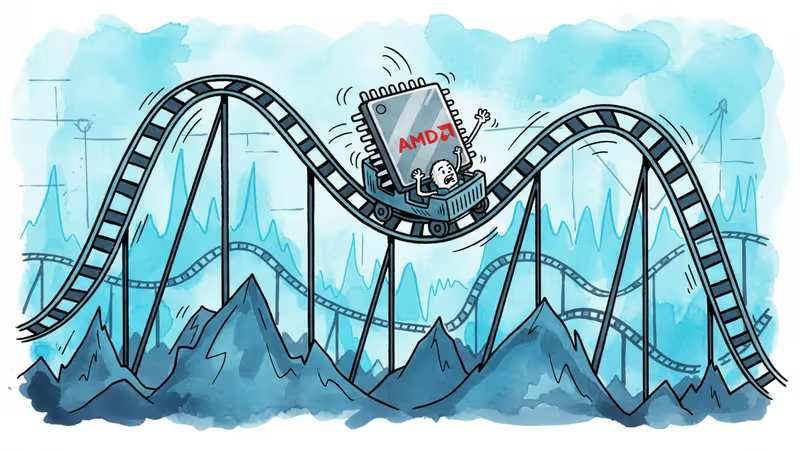
AMD reported strong Q4 results but disappointed investors with Q1 guidance that failed to match heightened AI spending expectations, sending shares down 6% after hours

Intel appoints new chief architect for GPU development as it challenges Nvidia's dominance in AI chips. Can the foundry business find its anchor customer?

After Abu Dhabi royalty invested in Trump's crypto firm, US AI chip export policy reversed. A clear case of foreign influence or just business as usual?

PRISM by Liabooks
Place your ad in this space
[email protected]
UAE's national security advisor invested $500M in Trump's crypto venture months before the US approved advanced AI chip sales to the Emirates.
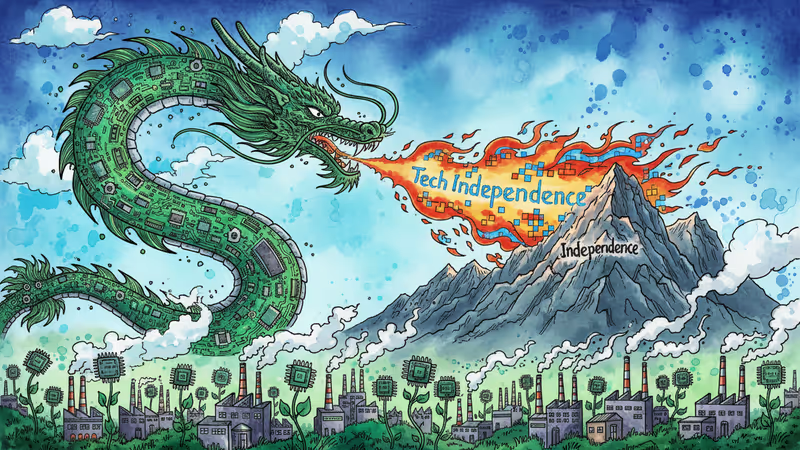
Cambricon and other Chinese GPU companies achieved first-time profitability amid AI boom and tech self-reliance drive, challenging Nvidia's dominance in the world's largest market.

Google's TPU success with Gemini 3 signals growing custom chip momentum. Broadcom partnership challenges Nvidia's GPU dominance as hyperscalers seek alternatives to reduce vendor dependency

Microsoft deploys its first homegrown AI chip, Maia 200, in data centers, claiming superior performance over Amazon and Google chips while maintaining partnerships with Nvidia and AMD.
PRISM by Liabooks
Place your ad in this space
[email protected]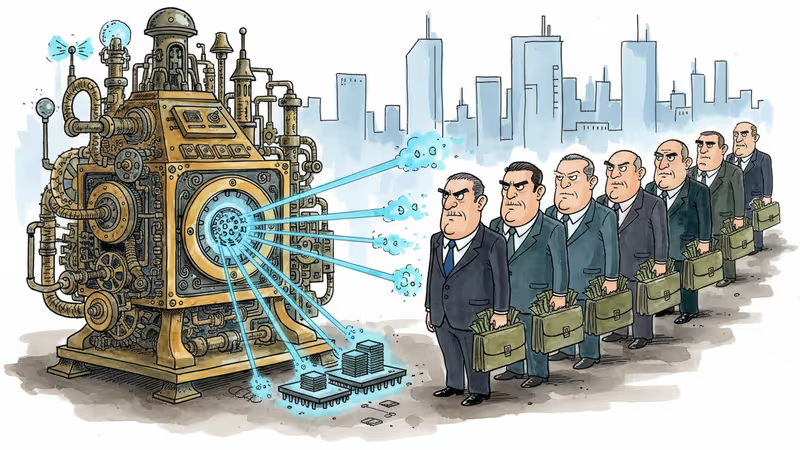
How Dutch company ASML's monopoly on EUV lithography machines gives it unprecedented control over AI chip production and global technology leadership.

SK Hynix overtook Samsung in operating profit for the first time in 2025, driven by its dominance in AI memory chips. Here's the story behind the numbers.
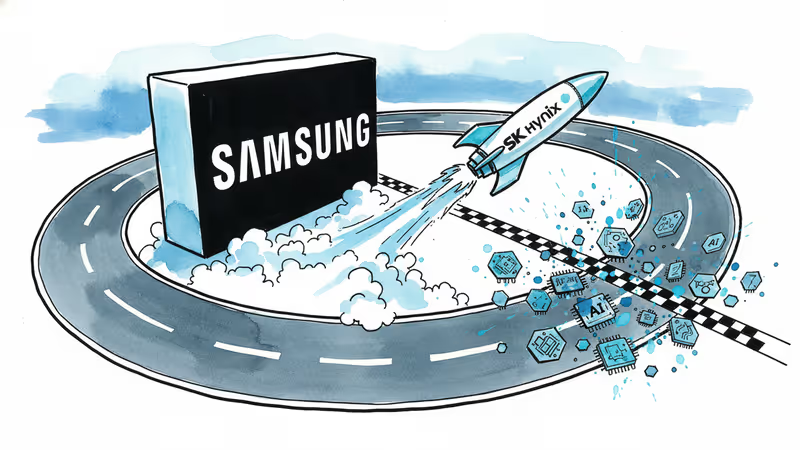
Samsung posts record Q4 profits from AI chip boom, but loses annual crown to SK Hynix for first time. What does this shift mean for tech dominance?
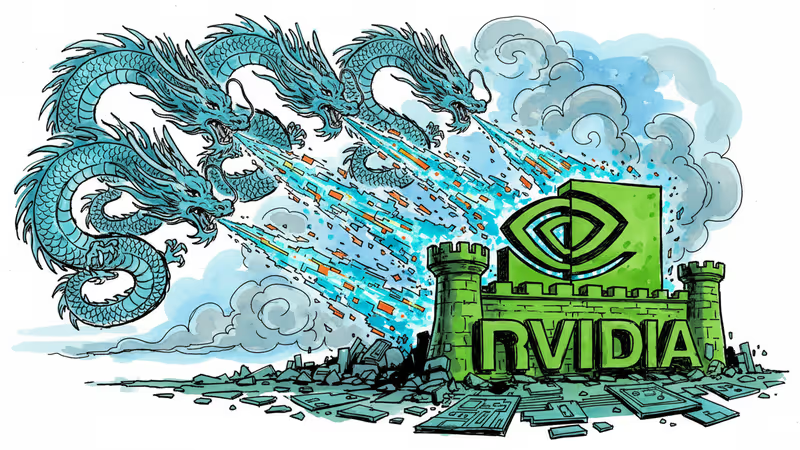
Four Chinese AI chip startups go public as China mounts coordinated challenge to Nvidia. With government backing and energy advantages, Beijing aims to break US semiconductor supremacy in AI hardware.
PRISM by Liabooks
Place your ad in this space
[email protected]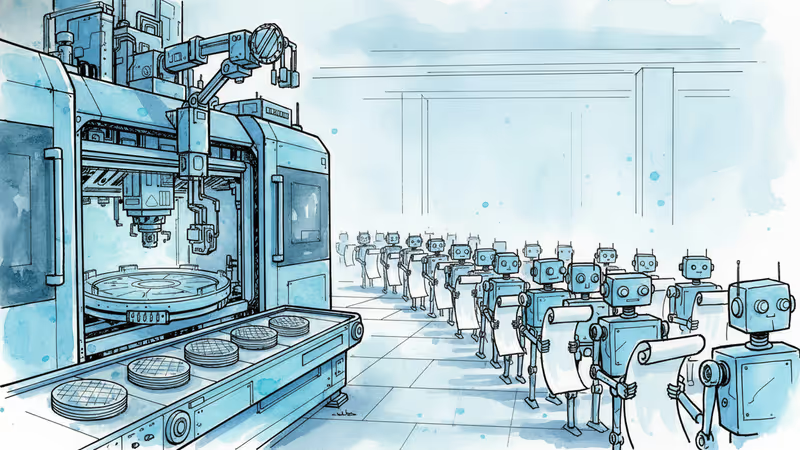
ASML's Q4 orders doubled expectations at $15.8B, driven by AI demand and memory chip shortage. What this means for the semiconductor supply chain and investors.
