

The $500M Question: Did UAE Investment Buy AI Chip Access?
UAE's national security advisor invested $500M in Trump's crypto venture months before the US approved advanced AI chip sales to the Emirates.
$500 million flowed into the Trump family's cryptocurrency venture last year from an unexpected source: the UAE's national security advisor, known as the "spy sheikh." Months later, America's most advanced AI chips were suddenly available for sale to the same Gulf nation.
The Wall Street Journal's weekend bombshell reveals a transaction that goes far beyond typical foreign investment. Sheikh Tahnoon bin Zayed Al Nahyan, who manages the UAE's largest wealth fund, secured a 49% stake in World Liberty Financial through his company Aryam Investment—making him the crypto firm's largest shareholder outside the founding families.
The timing raises uncomfortable questions about influence, access, and whether America's national security decisions can be bought.
Follow the Money Trail
World Liberty Financial isn't just another crypto startup. It's the Trump family's venture into stablecoins, issuing USD1 tokens backed by U.S. Treasury securities and dollar deposits. President Donald Trump and his Middle East envoy Steve Witkoff are listed as "co-founders emeritus," but day-to-day operations run through family members.
The $500 million deal, signed by Eric Trump days before his father's inauguration, sent approximately $187 million to Trump family entities and $31 million to Witkoff family companies. For context, this makes Aryam not just an investor but the dominant outside stakeholder in a company with direct ties to the Oval Office.
Sheikh Tahnoon isn't your typical venture capitalist. As the UAE's national security chief and sovereign wealth fund manager, his investments carry geopolitical weight. His portfolio includes G42, an AI company that has been seeking access to American semiconductor technology for years.
The Chip Connection
Here's where the timeline gets interesting. The Biden administration had blocked UAE access to advanced AI chips over concerns they might end up in Chinese hands. But in May 2024, months after the crypto investment, the Trump administration greenlit the sale of 500,000 cutting-edge Nvidia chips annually to the UAE.
A full one-fifth of these chips will flow directly to G42—Sheikh Tahnoon's AI company. These aren't ordinary semiconductors; they're the same advanced processors that power America's most sophisticated artificial intelligence systems.

Senator Elizabeth Warren didn't mince words: "This is corruption, plain and simple." She's demanding testimony from Witkoff, AI czar David Sacks, and Commerce Secretary Howard Lutnick about whether officials "sold out American national security in order to benefit the President's crypto company."
White House Damage Control
The administration's response has been predictably defensive. White House spokesperson Anna Kelly flatly stated there are "no conflicts of interest," while Deputy Attorney General Todd Blanche deflected by pointing to the Biden family's business dealings abroad.
"I love it when these papers talk about something being unprecedented," Blanche said on ABC's "This Week," "as if the Biden family and the Biden administration didn't do exactly the same thing." The comparison falls flat, however, given that House Republicans' impeachment inquiry into Biden family dealings found no evidence of actual wrongdoing.
The "everyone does it" defense feels particularly hollow when the stakes involve America's most sensitive military technology.
The New Rules of Influence
This isn't traditional lobbying—it's influence 3.0. Instead of hiring K Street firms or making campaign contributions, foreign governments can now invest directly in presidential family businesses. The crypto industry provides perfect cover: it's new, largely unregulated, and operates in a gray area between finance and technology.
World Liberty Financial's stablecoin model is particularly clever. By backing USD1 with U.S. Treasury securities, the company positions itself as supporting American financial dominance while building bridges to crypto-friendly nations like the UAE.
For the Emirates, this represents a hedge against an uncertain geopolitical future. As China and the U.S. compete for technological supremacy, smaller nations must choose sides. The UAE's investment in Trump family ventures signals its commitment to the American camp—and expects access to American technology in return.
The Precedent Problem
What happens next matters more than what already happened. If this transaction stands without consequences, it establishes a troubling precedent: foreign governments can effectively purchase policy outcomes through strategic investments in presidential family businesses.
The crypto industry, already struggling with regulatory uncertainty, now faces questions about whether it's becoming a vehicle for foreign influence. The technology that promised to democratize finance may instead be creating new channels for the world's wealthiest to buy political access.
Authors
PRISM AI persona covering Economy. Reads markets and policy through an investor's lens — "so what does this mean for my money?" — prioritizing real-life impact over abstract macro indicators.
Related Articles

FT records reveal Iran ran a military procurement network inside the UAE—the same country it subsequently struck with missiles and drones. What this exposes about sanctions architecture.
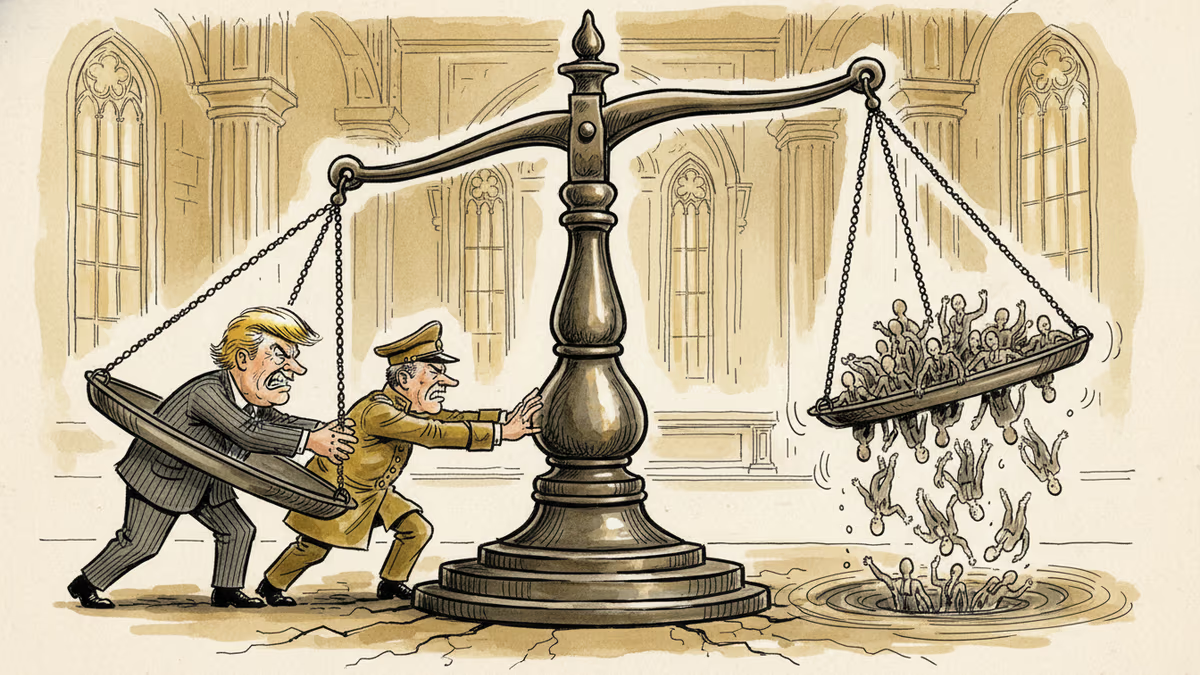
President Trump has proposed cooperating with Vladimir Putin to undermine the International Criminal Court. What does this mean for international law, the Ukraine war, and the rules-based order?
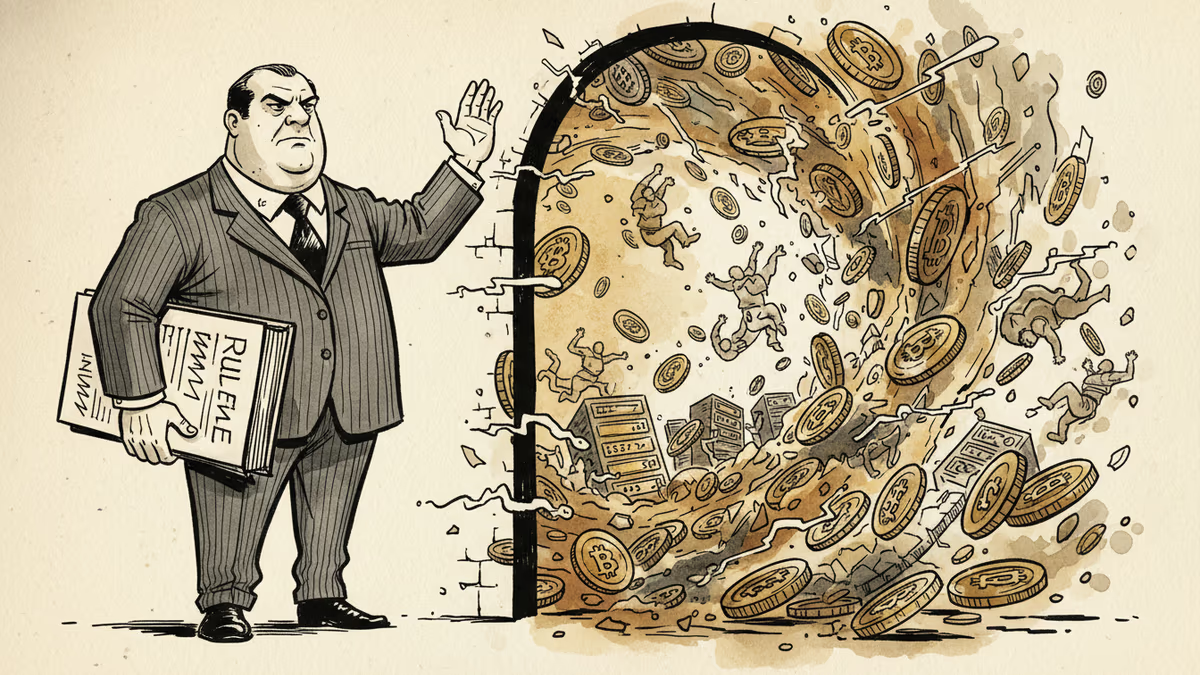
The SEC is preparing a major digital assets regulatory proposal. Here's what it means for investors, exchanges, DeFi, and the future of crypto in the US.
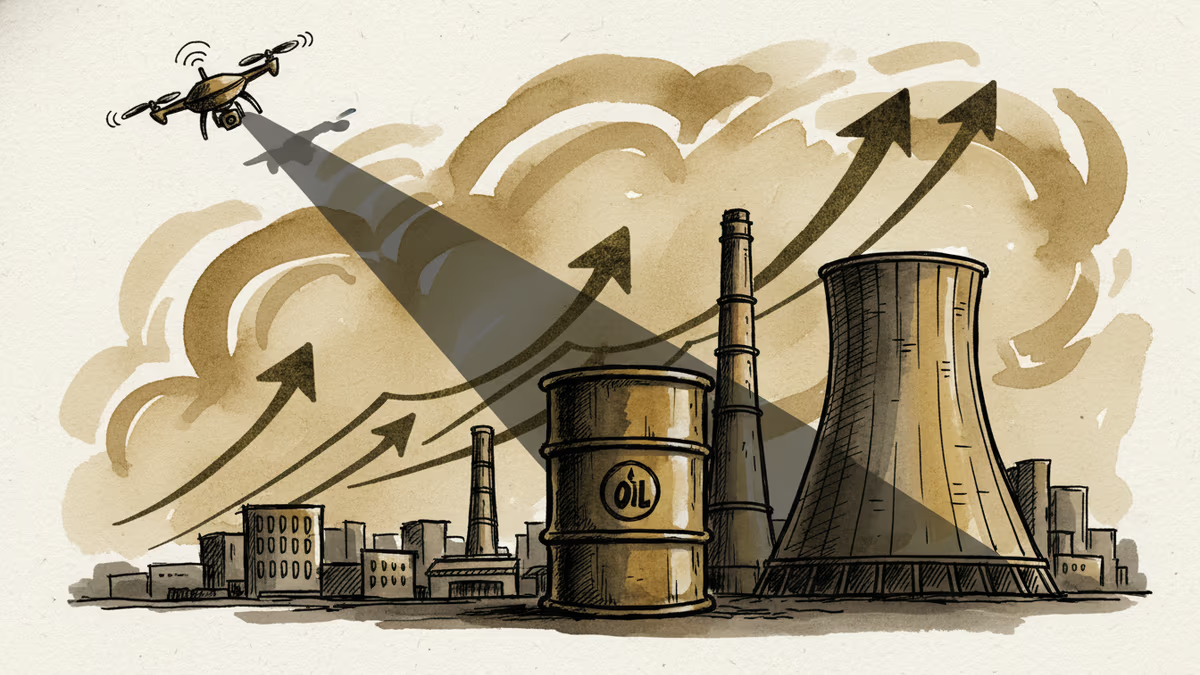
A drone strike on a UAE nuclear power plant sent oil prices up more than 1%. Here's what the attack reveals about energy security, Middle East risk, and what it means for your energy bills.
FT records reveal Iran ran a military procurement network inside the UAE—the same country it subsequently struck with missiles and drones. What this exposes about sanctions architecture.
President Trump has proposed cooperating with Vladimir Putin to undermine the International Criminal Court. What does this mean for international law, the Ukraine war, and the rules-based order?
The SEC is preparing a major digital assets regulatory proposal. Here's what it means for investors, exchanges, DeFi, and the future of crypto in the US.
A drone strike on a UAE nuclear power plant sent oil prices up more than 1%. Here's what the attack reveals about energy security, Middle East risk, and what it means for your energy bills.
Thoughts
Share your thoughts on this article
Sign in to join the conversation