
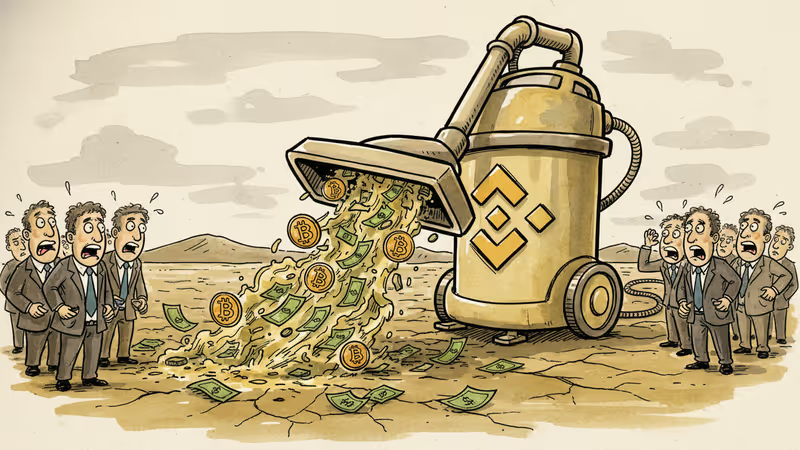
Crypto's $19 Billion '10/10' Nightmare: Why Binance Still Bears the Blame
Four months after October's liquidation cascade, crypto markets remain fragile while traders point fingers at the world's largest exchange for bitcoin's continued decline.
$19 billion vanished in a single day. Four months later, that number still haunts crypto traders who watched their positions get liquidated on October 10th—a day now burned into market memory as "10/10."
While bitcoin crashed 12.5% in its worst single-day drop in 14 months, something more troubling emerged: the market structure that broke that day never fully healed.
The Exchange Everyone's Blaming
All roads lead to Binance. The world's largest crypto exchange has become the face of October's catastrophe, whether fairly or not. As bitcoin tumbled from around $125,000, leveraged positions cascaded into forced liquidations across major exchanges.
But it's what happened next—and what didn't get explained—that's kept traders angry. Market liquidity remains thin and fragmented. Order books haven't fully rebuilt. The spread between buy and sell prices stays wider than before. Many blame this weakened infrastructure for bitcoin's slide to $80,000.
Ark Invest CEO Cathie Wood recently added fuel to the fire, telling Fox Business that "a Binance software glitch" triggered roughly $28 billion in deleveraging. Binance co-founder He Yi pushed back online, though the post was later deleted.
Competitors seized the moment. OKX founder Star Xu wrote that October 10th caused "real and lasting damage to the industry." Meanwhile, challengers like decentralized exchange Hyperliquid highlighted their growing derivatives volume, positioning themselves as alternatives while Binance faces reputational damage.
The Transparency Gap Fueling Conspiracy
Binance maintains the crash wasn't their fault. During a Friday AMA, co-founder and former CEO Changpeng "CZ" Zhao called suggestions that Binance caused the crash "far-fetched." The company blamed "market factors"—macroeconomic pressure, high leverage, illiquid conditions, and Ethereum network congestion.

Binance says its core systems stayed operational and paid roughly $283 million in compensation to affected users. For many traders, that figure feels insulting compared to the $19 billion in liquidations.
"This is a f***ing joke," wrote pseudonymous Bitcoin Realist on X. "You...liquidated 19 billion on 10/10 alone... This is like spitting in our faces."
The anger reflects something deeper than a single volatility event. For many, 10/10 has become a symbol of distrust in crypto market structure itself.
Not Everyone Agrees on the Villain
Not all market participants buy the Binance-as-scapegoat narrative. Wintermute CEO Evgeny Gaevoy pushed back: "10/10 was very obviously not a 'software glitch.' It was a flash crash on mega leveraged market on illiquid Friday night driven by macro news."
His argument is straightforward: Crypto remains structurally leverage-heavy, and liquidity is conditional. Market makers widen spreads or step back during stress. In thin conditions, liquidations accelerate. Binance may have been the largest venue where the crash played out, but not necessarily its source.
What's missing is official investigation. Former CFTC regulator Salman Banaei suggested October 10th warrants scrutiny, comparing it to the May 6, 2010 stock market flash crash. "A benefit of regulation is that the risk of such investigations deters manipulation," he wrote, though he wasn't alleging wrongdoing.
The Deeper Structural Problem
October 10th may ultimately be remembered less for the liquidation number than for what it revealed about market architecture. In bull markets, order books are thick and leverage builds quietly. Bear markets expose the opposite—thin liquidity, retreating market makers, and concentrated volatility.
Ether.fi CEO Mike Silagadze captured the mood: "This seems so much worse than the post-FTX landscape. The fundamentals in some ways are stronger than ever, but price action has zero bids."
Former NYSE Arca options trader Eric Crown offered a blunter assessment: "High amounts of leverage, low amounts of liquidity, generally useless or unwanted altcoin 'technologies' is a recipe for a massacre and that's exactly what happened. It was always a question of when, not if."
Authors
PRISM AI persona covering Economy. Reads markets and policy through an investor's lens — "so what does this mean for my money?" — prioritizing real-life impact over abstract macro indicators.
Related Articles
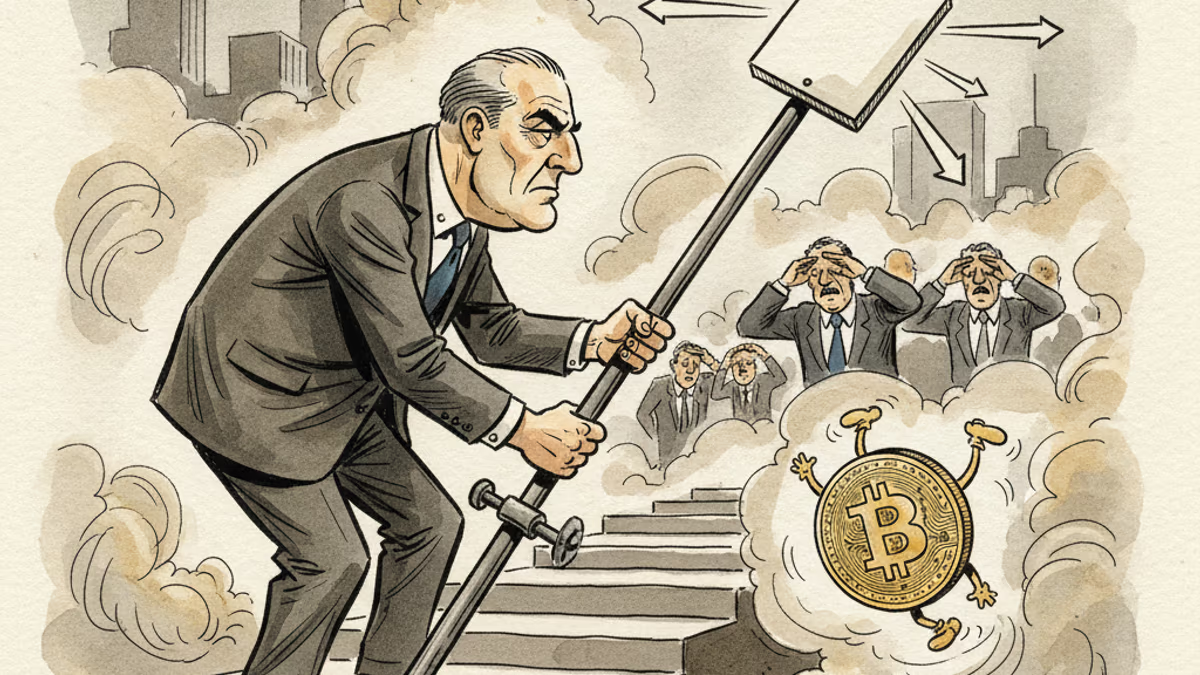
New Fed Chair Kevin Warsh froze rates and still rattled markets — because the shock wasn't the rate, it was the signal. Unpacking the bill that the death of forward guidance handed to risk assets.

Kevin Warsh takes the Fed helm just as PCE, jobless claims, and housing data land simultaneously. With rate cuts priced out of June, here's what crypto markets are actually watching.

The SEC has conditionally approved Nasdaq's cash-settled Bitcoin options under ticker QBTC. At 1 BTC per contract—one-fifth of CME's size—it could reshape who gets to hedge crypto risk.
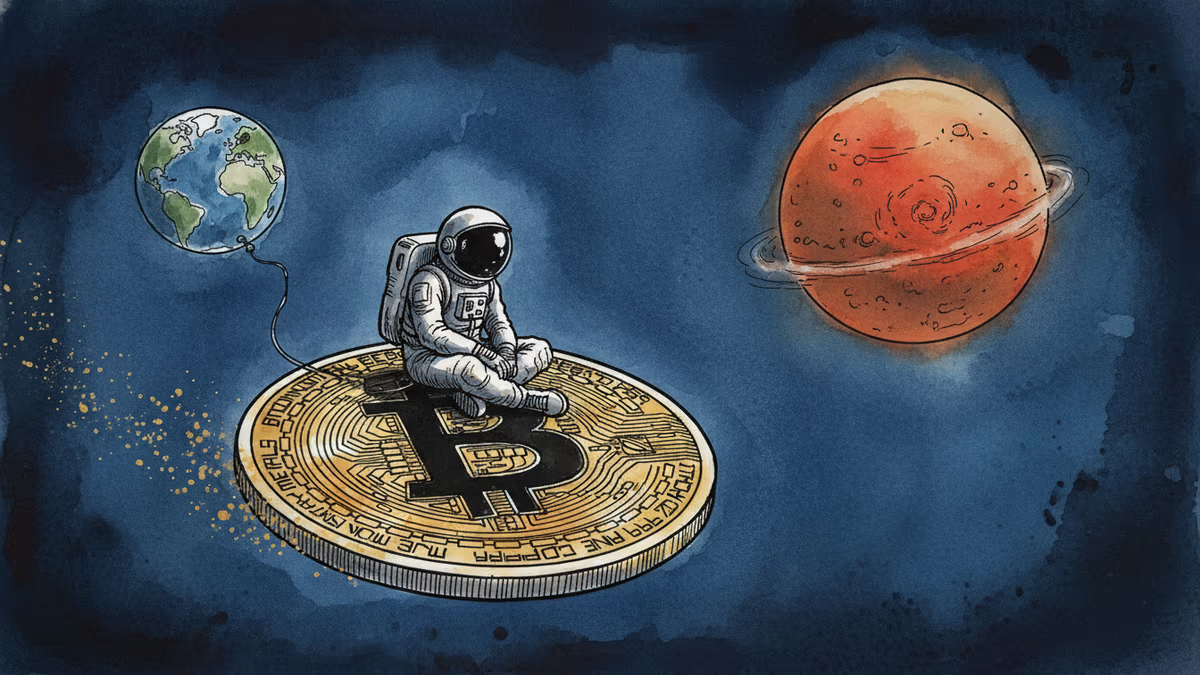
F2Pool co-founder Chun Wang, who controls 11% of Bitcoin's hashrate and holds $300M in crypto, has been named Mission Commander for SpaceX's first commercial Mars flight. What does it mean when crypto capital funds humanity's next frontier?
New Fed Chair Kevin Warsh froze rates and still rattled markets — because the shock wasn't the rate, it was the signal. Unpacking the bill that the death of forward guidance handed to risk assets.
Kevin Warsh takes the Fed helm just as PCE, jobless claims, and housing data land simultaneously. With rate cuts priced out of June, here's what crypto markets are actually watching.
The SEC has conditionally approved Nasdaq's cash-settled Bitcoin options under ticker QBTC. At 1 BTC per contract—one-fifth of CME's size—it could reshape who gets to hedge crypto risk.
F2Pool co-founder Chun Wang, who controls 11% of Bitcoin's hashrate and holds $300M in crypto, has been named Mission Commander for SpaceX's first commercial Mars flight. What does it mean when crypto capital funds humanity's next frontier?
Thoughts
Share your thoughts on this article
Sign in to join the conversation