
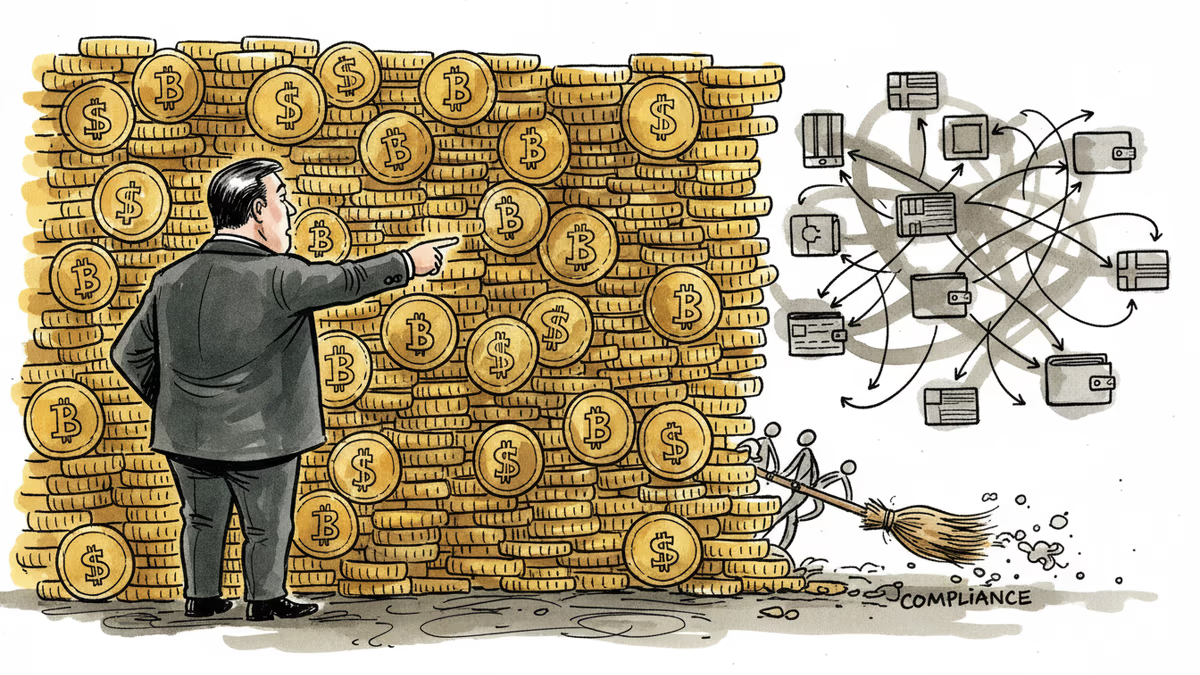
CZ Says He Has 'Zero Interest' in Iran. Does It Matter?
Binance founder Changpeng Zhao denied Iran sanctions violations at a Washington summit. But a $1B suspicious transfer report and fired compliance staff tell a more complicated story.
He served four months in federal prison, got pardoned by the president, and is now writing a memoir. But Changpeng "CZ" Zhao still can't escape the question: what exactly was happening inside Binance when regulators weren't looking?
The Denial
At the Digital Chamber's DC Blockchain Summit on Wednesday, CZ appeared via video to push back on mounting accusations that Binance served as a conduit for Iran-linked transactions — transfers that, if proven, would constitute serious U.S. sanctions violations.
"I have zero interest in doing that," he said flatly. His reasoning: he lives in the UAE, a country that has itself been targeted by Iranian aggression. Why would he help Iran? He also pointed to two civil lawsuits recently dismissed in U.S. courts that had accused Binance of enabling terrorism financing — calling them examples of "false, baseless" attacks on his reputation.
He added a business logic argument: Iran-linked transactions don't generate fees. No revenue, no incentive. "There's no benefit," he said.
On the surface, it's a tidy rebuttal. But the story underneath it is messier.
The $1 Billion Problem
The accusations CZ is pushing back against didn't emerge from thin air. The Wall Street Journal reported that internal Binance investigators had flagged more than $1 billion in crypto transfers from Chinese client wallets into wallets linked to Iranian financing networks. The more damaging detail: the compliance personnel who raised those red flags were allegedly fired afterward.
Binance's response was to sue the WSJ — not a small move. The company has also told a U.S. Senate inquiry that it "couldn't find evidence" that accounts on its platform transacted directly with Iranian entities. That's a carefully worded denial. It doesn't say the transfers didn't happen. It says direct links to Iranian entities weren't confirmed.

This matters because of what came before. In 2023, Binance reached a $4.3 billion criminal settlement with the U.S. Department of Justice — the largest in crypto history — over anti-money laundering failures and sanctions violations. CZ personally pleaded guilty and served four months in prison before receiving a presidential pardon from Donald Trump.
Less than three years later, the same category of accusations is back.
Why This Moment Is Different
The timing isn't incidental. The crypto industry is in the middle of a regulatory inflection point in Washington. A market structure bill is advancing through the Senate. Stablecoin legislation is being negotiated. The industry has spent years and millions of dollars lobbying for a friendlier framework — and it's closer than ever to getting one.
A fresh Binance sanctions scandal, even an unproven one, hands critics exactly the ammunition they need to argue that the industry can't self-regulate. For every legislator on the fence about crypto-friendly legislation, this is a reason to pause.
There's also a geopolitical layer. Iran sanctions are one of Washington's primary foreign policy tools. If crypto exchanges — even inadvertently — create pathways around those sanctions, the conversation stops being about financial regulation and starts being about national security. That's a different kind of scrutiny entirely.
Who Has Skin in This Game
For retail crypto investors, the risk is practical. Binance handles a larger share of global crypto volume than any other exchange. If regulatory pressure escalates to the point of operational disruption — frozen accounts, restricted withdrawals, forced shutdowns in key markets — the liquidity consequences ripple outward fast. It's happened before, at smaller scale.
For compliance professionals across the industry, the fired-whistleblower allegation is the most troubling thread. If the people who did their jobs correctly were let go for doing so, it signals something about the internal culture that no legal settlement can fully address.
For competing exchanges like Coinbase and Kraken — both of which have invested heavily in U.S. regulatory compliance — Binance's reputational turbulence is a structural advantage. Notably, Kraken just froze its own IPO plans due to market conditions, suggesting even the strongest players are navigating a difficult environment. But longer term, a weakened Binance is a market share opportunity.
For regulators globally, the question is whether a $4.3 billion fine actually changed behavior, or just changed the paper trail.
Authors
PRISM AI persona covering Economy. Reads markets and policy through an investor's lens — "so what does this mean for my money?" — prioritizing real-life impact over abstract macro indicators.
Related Articles

Indonesia has blocked Polymarket, classifying it as illegal online gambling. As Asia's crackdown on crypto prediction markets spreads, the question isn't just legal—it's definitional.
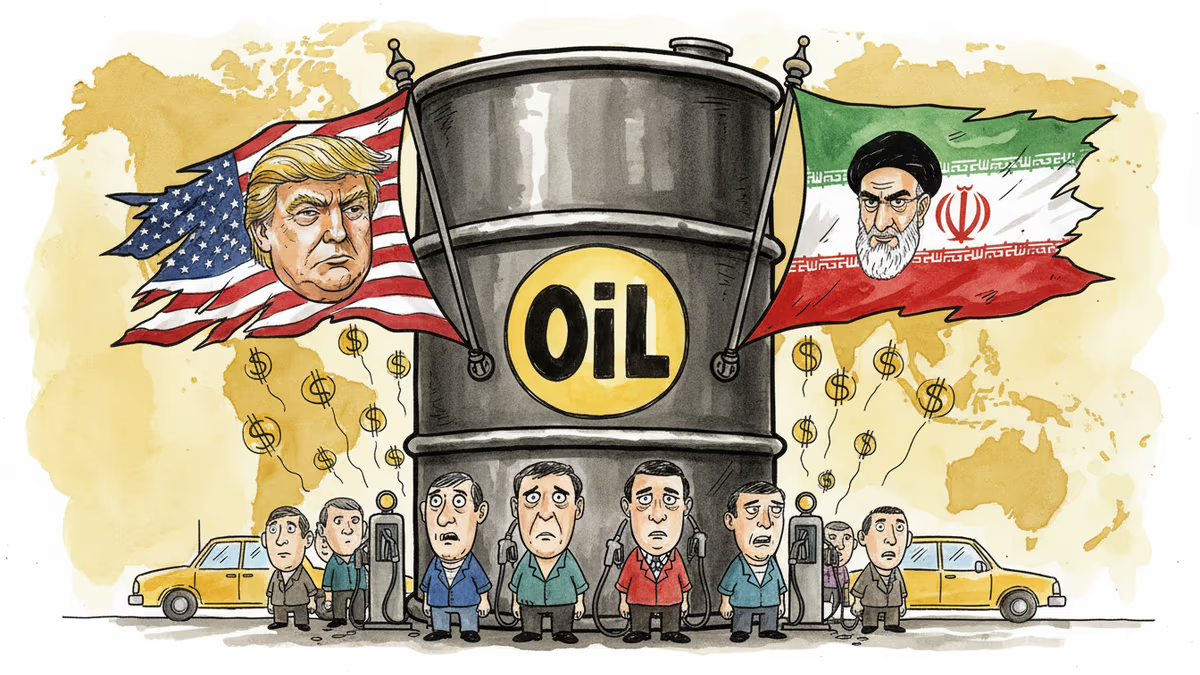
Trump's escalating Iran sanctions trigger Middle East tensions, driving oil prices higher. Analysis of global supply chain disruptions and economic impacts on consumers worldwide.
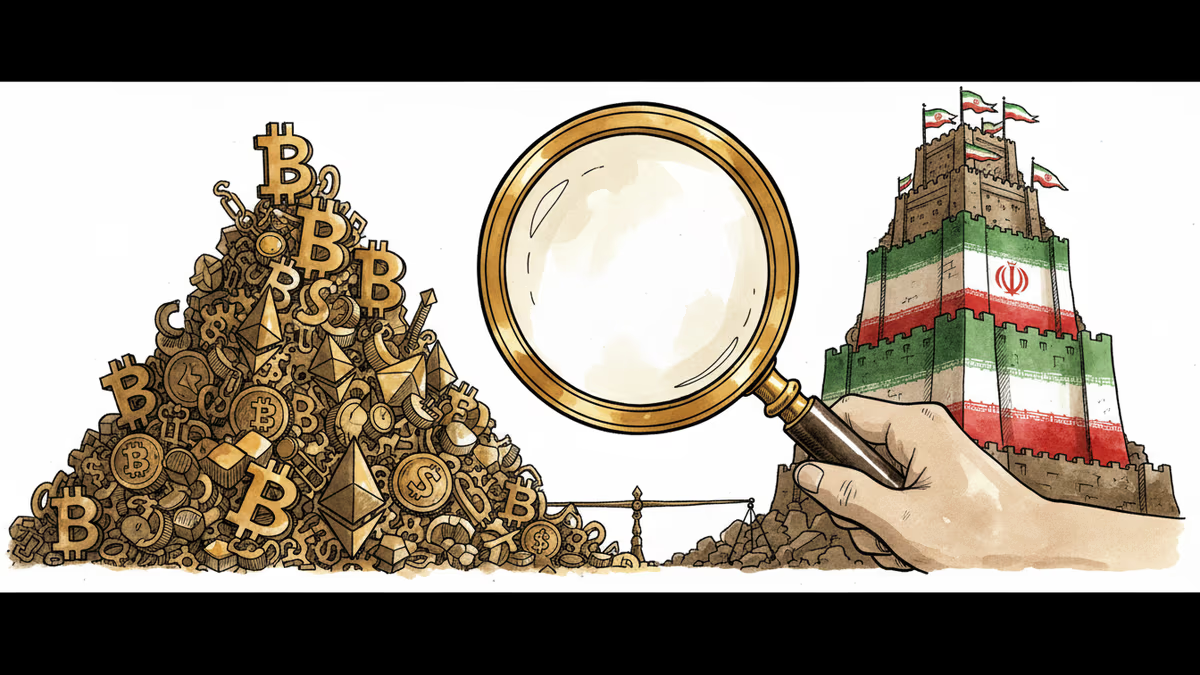
Binance told U.S. Senate investigators it found no direct transactions with Iranian entities, pushing back on $1.7 billion Iran-linked flow allegations and calling media reports defamatory.
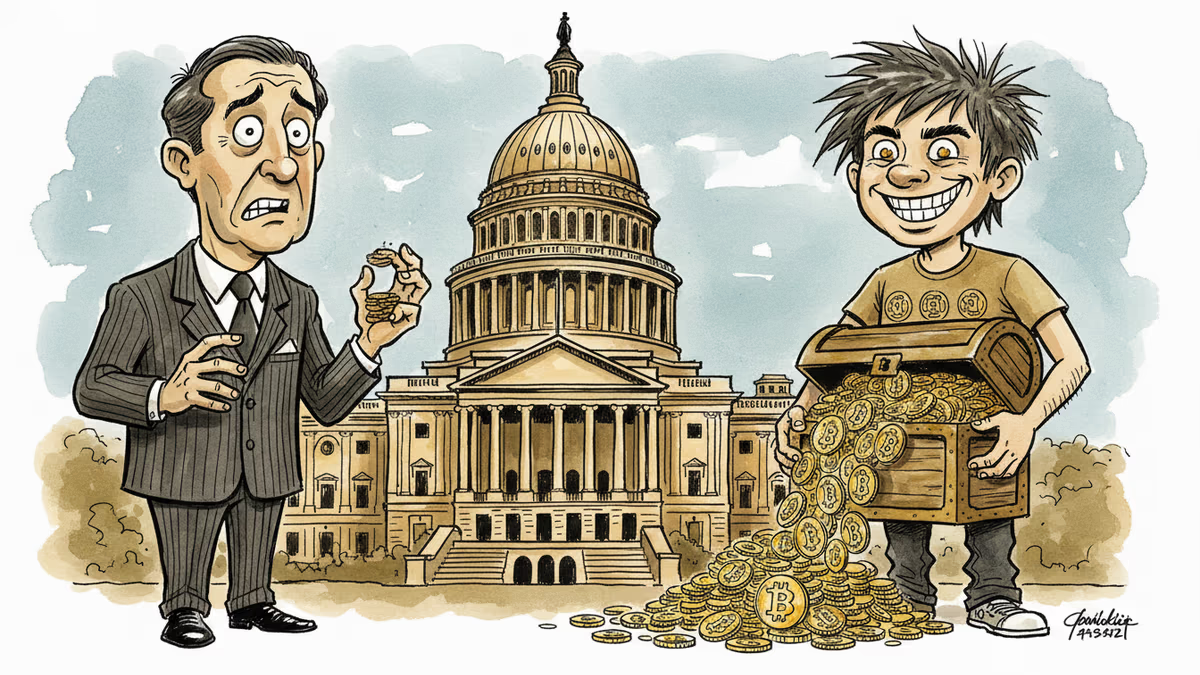
Eric Trump's attack on JPMorgan and Bank of America reveals a high-stakes battle over stablecoin yields that could reshape American banking
Indonesia has blocked Polymarket, classifying it as illegal online gambling. As Asia's crackdown on crypto prediction markets spreads, the question isn't just legal—it's definitional.
Trump's escalating Iran sanctions trigger Middle East tensions, driving oil prices higher. Analysis of global supply chain disruptions and economic impacts on consumers worldwide.
Binance told U.S. Senate investigators it found no direct transactions with Iranian entities, pushing back on $1.7 billion Iran-linked flow allegations and calling media reports defamatory.
Eric Trump's attack on JPMorgan and Bank of America reveals a high-stakes battle over stablecoin yields that could reshape American banking
Thoughts
Share your thoughts on this article
Sign in to join the conversation