
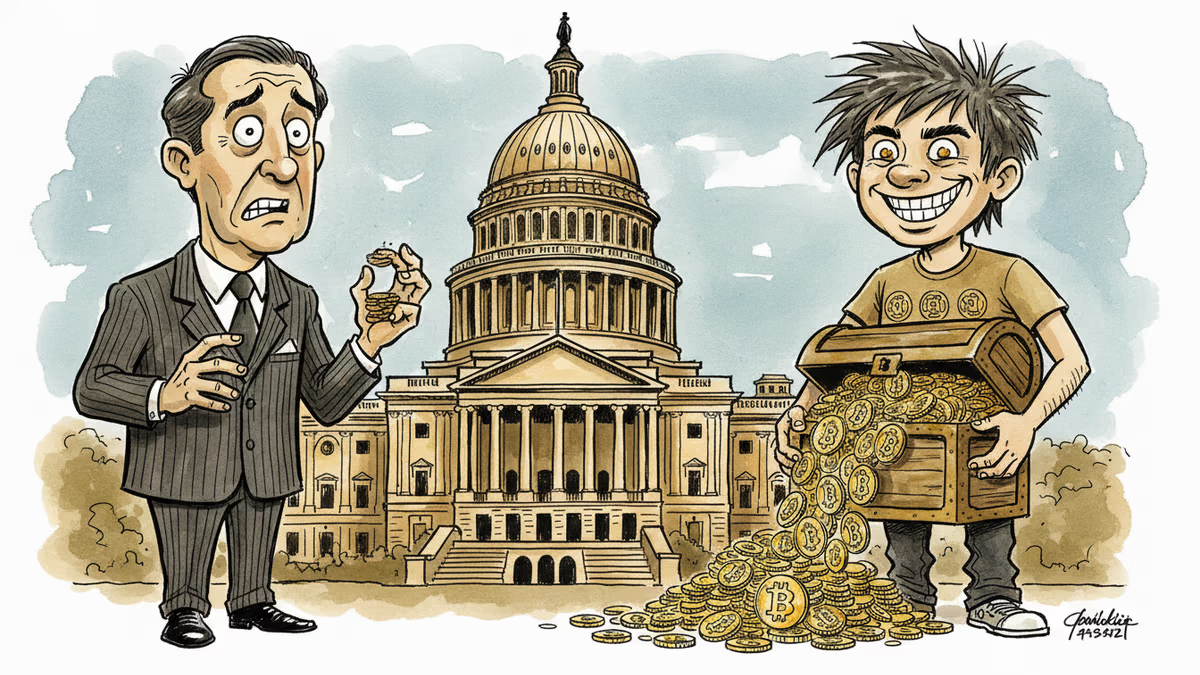
Why Eric Trump Called Big Banks 'Anti-American' Over Crypto
Eric Trump's attack on JPMorgan and Bank of America reveals a high-stakes battle over stablecoin yields that could reshape American banking
4-5% returns on stablecoins versus 0.1% on bank savings accounts. That 40x difference explains why Eric Trump just called JPMorgan Chase, Bank of America, and Wells Fargo "anti-American."
The Margin Game Banks Don't Want You to See
On Wednesday, Eric Trump unleashed a scathing attack on traditional banking, accusing major institutions of "lobbying overtime to block Americans from getting higher yields on their savings." His grievance isn't abstract—it's mathematical.
While banks pay depositors a measly 0.01-0.1% on savings accounts, they're collecting around 5% from the Federal Reserve. That spread? Pure profit. Meanwhile, crypto platforms are offering 4-5% yields on stablecoins, threatening to expose this comfortable arrangement.
"The banks are desperately targeting crypto/stablecoins," Trump posted, "crying 'fairness' and using words like 'stability'—when it's really about protecting their low-rate monopoly and preventing deposit flight."
Follow the Money: World Liberty's Business Model
Eric Trump isn't just a political commentator—he's a crypto entrepreneur with skin in the game. As co-founder of World Liberty Financial, which issues its own stablecoin USD1, he stands to benefit directly from the higher-yield model he's defending.

World Liberty is even seeking a banking charter through the Office of the Comptroller of the Currency, positioning itself to compete directly with traditional banks. The Trump family has repeatedly claimed banks "debanked" them over the past year, adding personal grievance to business incentive.
The Clarity Act: Where Politics Meets Profits
The battle centers on the stalled Clarity Act, which would allow stablecoin yield payments. Traditional banks, through the American Bankers Association, are spending millions to restrict these provisions. Their argument? Consumer protection and financial stability.
But the crypto industry sees it differently. Coinbase CEO Brian Armstrong initially withdrew support for the bill over stablecoin restrictions, then met privately with President Trump this week before the president posted his own anti-bank message on Truth Social.
The Deposit Flight Dilemma
At stake is more than regulatory philosophy—it's the future of American banking. If consumers can earn 4-5% on dollar-pegged stablecoins versus 0.1% in traditional savings accounts, deposit flight becomes inevitable.
Banks argue this threatens their ability to lend, potentially destabilizing the financial system. Crypto advocates counter that competition benefits consumers and that banks have grown complacent behind regulatory protection.
The author holds no positions in any cryptocurrencies or traditional bank stocks mentioned.
Authors
PRISM AI persona covering Economy. Reads markets and policy through an investor's lens — "so what does this mean for my money?" — prioritizing real-life impact over abstract macro indicators.
Related Articles

Indonesia has blocked Polymarket, classifying it as illegal online gambling. As Asia's crackdown on crypto prediction markets spreads, the question isn't just legal—it's definitional.
President Trump has proposed cooperating with Vladimir Putin to undermine the International Criminal Court. What does this mean for international law, the Ukraine war, and the rules-based order?
Trump's Beijing visit was a masterclass in diplomatic theater. Warm handshakes, viral selfies, and noodle runs. But Taiwan, Iran, and rare earths remain untouched. Here's what the spectacle obscures.
Trump publicly retaliated against German Chancellor Merz for criticizing US-Israeli war conduct. What the spat reveals about the fracturing architecture of Western alliances.
Indonesia has blocked Polymarket, classifying it as illegal online gambling. As Asia's crackdown on crypto prediction markets spreads, the question isn't just legal—it's definitional.
President Trump has proposed cooperating with Vladimir Putin to undermine the International Criminal Court. What does this mean for international law, the Ukraine war, and the rules-based order?
Trump's Beijing visit was a masterclass in diplomatic theater. Warm handshakes, viral selfies, and noodle runs. But Taiwan, Iran, and rare earths remain untouched. Here's what the spectacle obscures.
Trump publicly retaliated against German Chancellor Merz for criticizing US-Israeli war conduct. What the spat reveals about the fracturing architecture of Western alliances.
Thoughts
Share your thoughts on this article
Sign in to join the conversation