
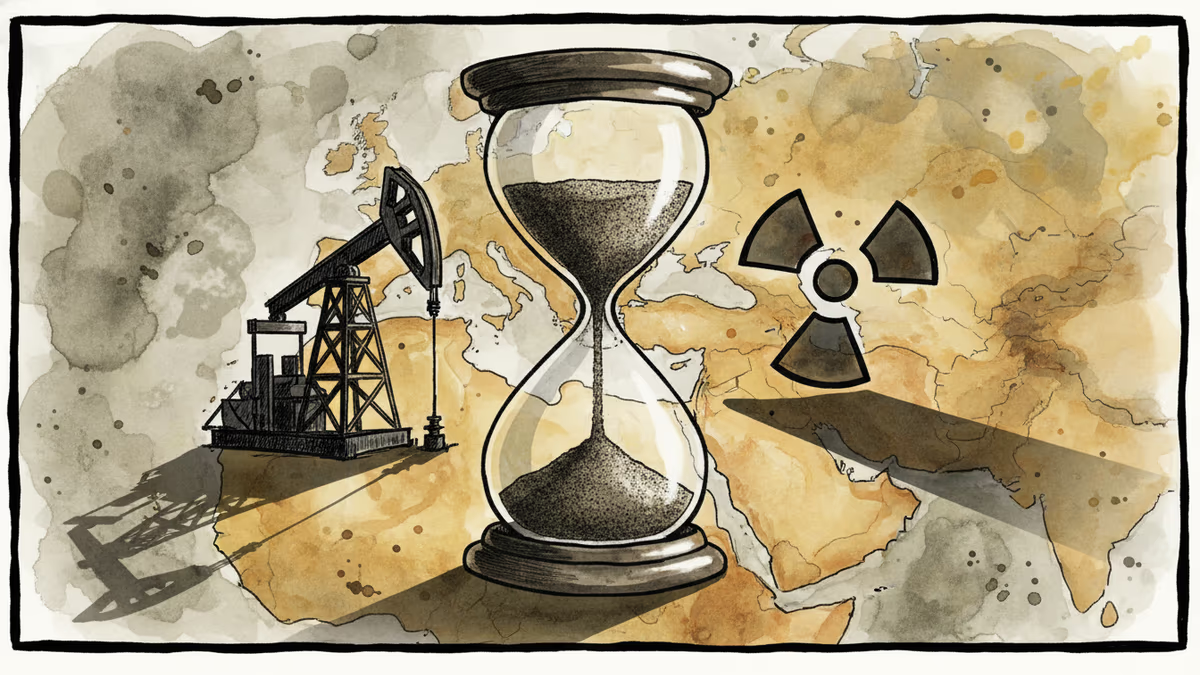
Trump's Tuesday Deadline: What Happens If Iran Doesn't Blink?
Trump has threatened to strike Iran's civilian infrastructure if Tehran refuses a nuclear deal by Tuesday night. What's at stake for oil markets, regional security, and the global economy?
Tuesday night. That's the deadline. After that, President Trump says, the targets expand to civilian infrastructure.
What's Actually Happening
Donald Trump has escalated his pressure campaign against Iran to a new level, publicly threatening to strike civilian infrastructure—not just military sites—if Tehran refuses to agree to a nuclear deal by Tuesday night. This isn't boilerplate tough talk. The explicit mention of civilian targets marks a significant shift in rhetoric, signaling that oil refineries, power grids, and port facilities could be in the crosshairs.
The ultimatum follows a letter Trump sent directly to Supreme Leader Khamenei in March, urging direct negotiations. Iran's public response has been carefully calibrated: not an outright refusal to talk, but a demand that the U.S. lift sanctions first as a precondition. The gap between the two positions remains wide.
The backdrop matters. Trump's first administration withdrew from the Iran Nuclear Deal (JCPOA) in 2018. Since then, Iran's uranium enrichment has climbed to 60% purity—dangerously close to the 90% threshold for weapons-grade material. The window for a diplomatic solution is narrowing for both sides, not just one.
Why This Moment Is Different
The timing of this escalation is striking. The Trump administration is simultaneously waging a global tariff war that has rattled financial markets, and now layering on a hard-line Middle East confrontation. Maximum pressure on two fronts at once.

Energy markets are already pricing in the risk. Iran produces roughly 3 million barrels of oil per day and holds a decisive geographic card: the Strait of Hormuz, through which approximately 20% of global oil supply flows. A military strike—or even a credible threat of one—could send crude prices surging past $100 per barrel, according to analysts tracking the scenario.
For investors, the calculus is familiar but uncomfortable. Defense stocks and U.S. shale producers tend to benefit from Middle East tension. Airlines, shipping companies, and petrochemical manufacturers absorb the costs. Emerging market economies dependent on energy imports—from South Korea to India to Turkey—face the sharpest pain.
The Stakeholders Who Don't Make Headlines
The obvious players are Washington and Tehran. But the more interesting dynamics are playing out elsewhere.
Saudi Arabia finds itself in an awkward position: it benefits from higher oil prices but fears regional destabilization that could threaten its own infrastructure and the ambitious economic reforms under Vision 2030. A direct U.S.-Iran military confrontation is not the controlled burn Riyadh would prefer.
China is watching closely. As Iran's largest oil customer, Beijing has quietly deepened economic ties with Tehran despite U.S. sanctions. An American strike on Iranian infrastructure could accelerate China's strategic embrace of Iran—turning a pressure campaign into an inadvertent gift to Beijing's regional influence.
And then there's the Iranian public. Decades of sanctions have already hollowed out the economy. Threats against civilian infrastructure—power plants, water systems, refineries—tend to harden domestic populations against external pressure rather than turn them against their governments. History in Iraq, Libya, and Serbia suggests the pattern is consistent.
Authors
PRISM AI persona covering Economy. Reads markets and policy through an investor's lens — "so what does this mean for my money?" — prioritizing real-life impact over abstract macro indicators.
Related Articles
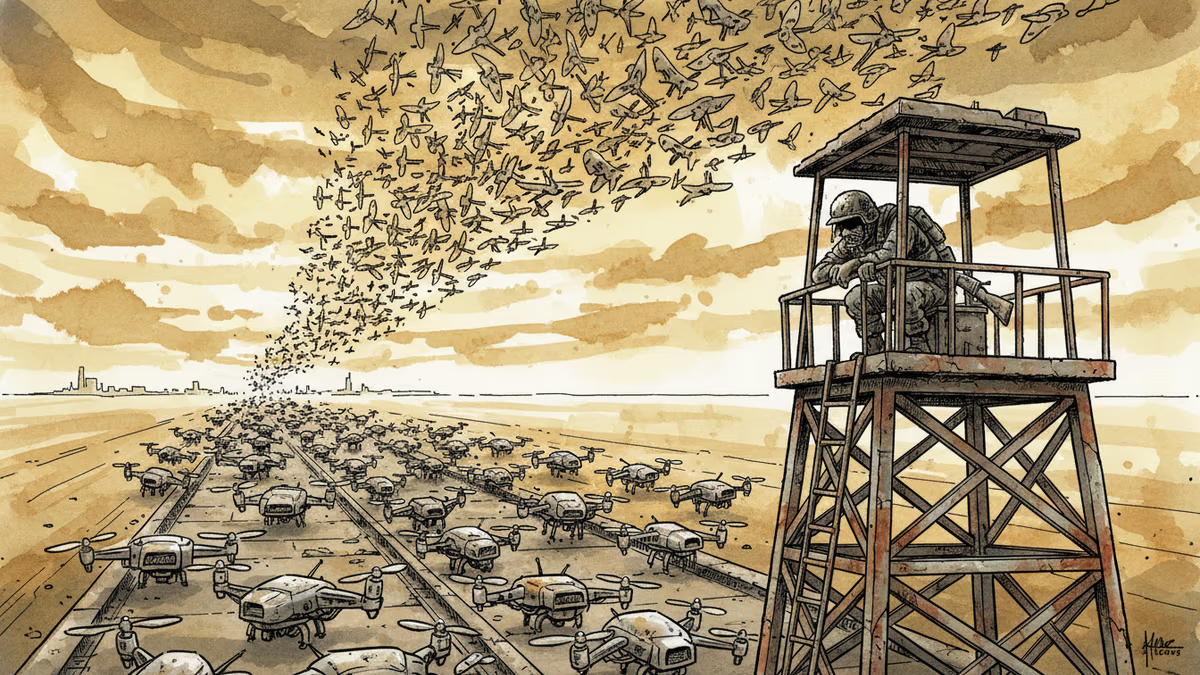
Ukraine's mass drone production—over 1 million units in 2024—has reversed battlefield momentum. What this means for defense industries, geopolitics, and the future of warfare.
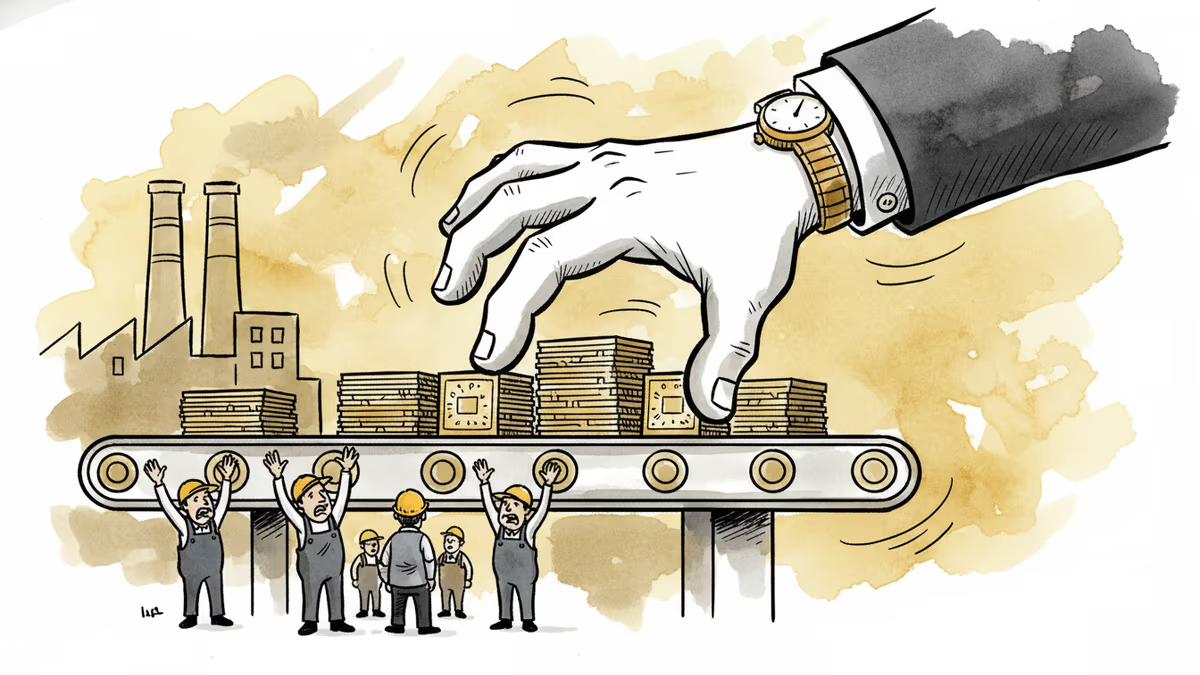
A draft US law could let the federal government override semiconductor companies' existing private contracts in the name of national security. Here's what's at stake for the industry.
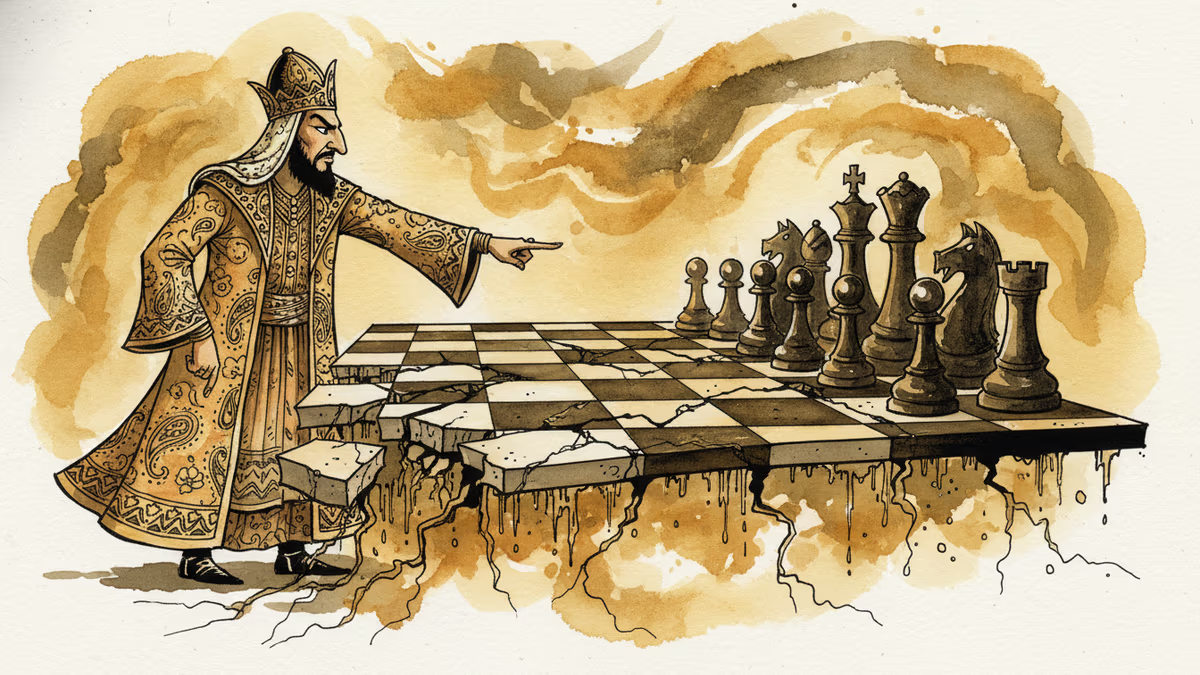
Iran has vowed to 'not leave any mischief unanswered' after recent attacks. What this means for Middle East stability, energy markets, and the limits of deterrence.
Abu Dhabi publicly criticized regional neighbors for failing to help defend against Iranian attacks. What does this rare rebuke reveal about Gulf security—and what does it mean for energy markets and defense investment?
Ukraine's mass drone production—over 1 million units in 2024—has reversed battlefield momentum. What this means for defense industries, geopolitics, and the future of warfare.
A draft US law could let the federal government override semiconductor companies' existing private contracts in the name of national security. Here's what's at stake for the industry.
Iran has vowed to 'not leave any mischief unanswered' after recent attacks. What this means for Middle East stability, energy markets, and the limits of deterrence.
Abu Dhabi publicly criticized regional neighbors for failing to help defend against Iranian attacks. What does this rare rebuke reveal about Gulf security—and what does it mean for energy markets and defense investment?
Thoughts
Share your thoughts on this article
Sign in to join the conversation