
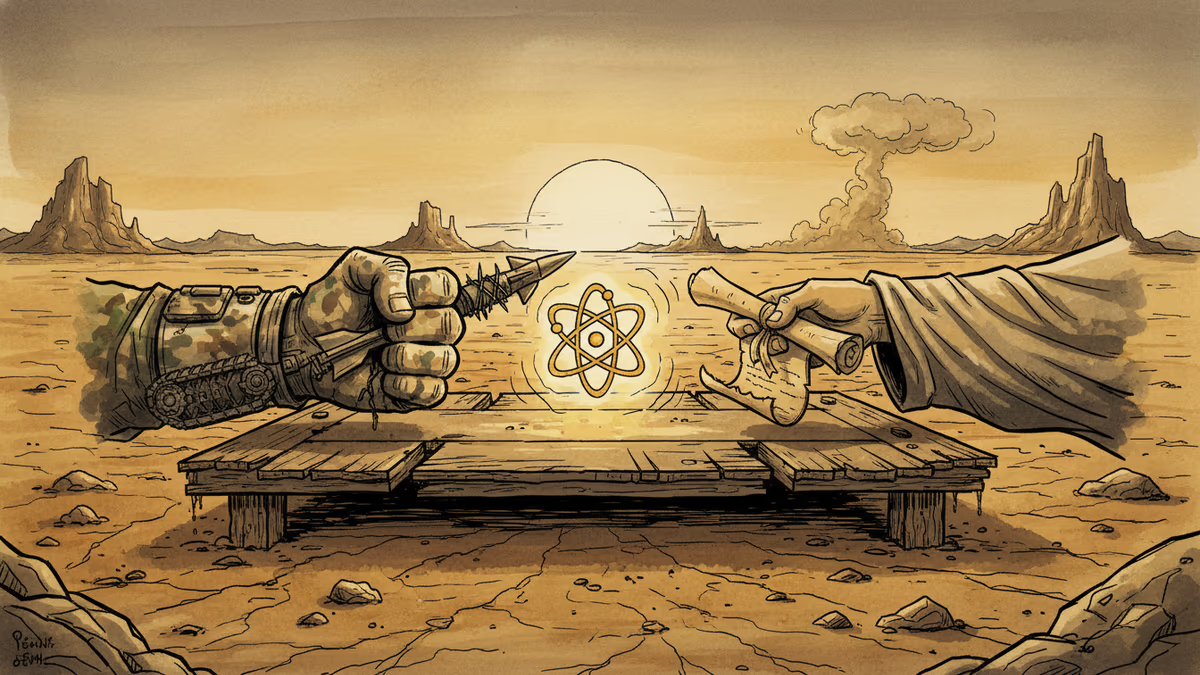
Iran Plays the 'Humiliation' Card — and It's Not Bluffing
Tehran called Trump's military threats 'rude' and 'baseless,' invoking America's regional 'humiliation.' Behind the rhetoric lies a high-stakes nuclear negotiation with global consequences.
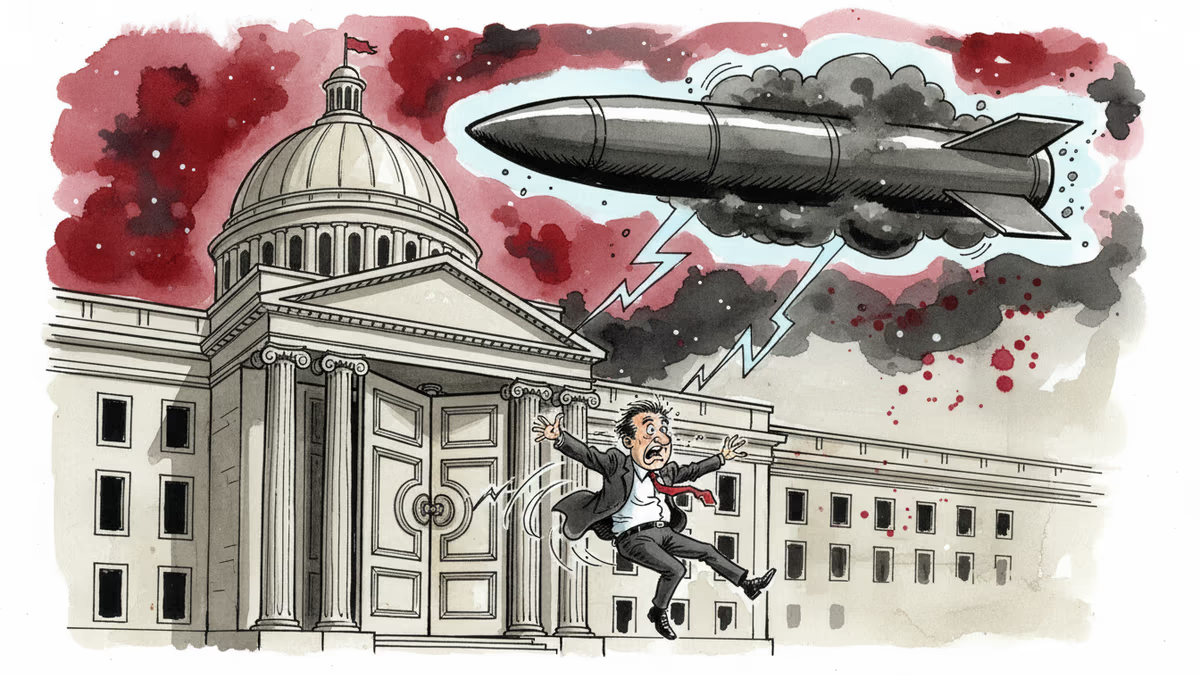
You don't invite someone to negotiate and threaten to bomb them in the same breath — at least not if you want them to show up.
That's the bind the Trump administration finds itself in as back-channel talks with Iran cautiously resume through Omani intermediaries. Last week, Trump warned Tehran of "bombardment like never before" if it refused to engage on its nuclear program. Days later, Iran's foreign ministry fired back, calling the remarks "rude" and "baseless" — and then reached for a word that carries far more weight in the region: humiliation.
Tehran's message was pointed: America has already been humiliated in this region, and threats cannot paper over that reality. It's an unusual phrase in diplomatic language. So why now, and why that word?
What Actually Happened
The exchange unfolded against a cautiously optimistic backdrop. Trump, who entered his second term signaling a willingness to deal directly with Tehran, had authorized indirect talks via Oman — a channel both sides have used before. Reports suggested a first formal meeting could happen as early as this month.
Then came the threats. Iran's foreign ministry spokesman characterized the dual message — come talk, or face military action — as contradictory and disrespectful. Crucially, Tehran did not slam the door shut. It left open the possibility of dialogue, but only "on the basis of mutual respect." That's not a rejection. That's a negotiating position.
Iran's invocation of American "humiliation" in the region isn't empty rhetoric. It points to a specific ledger: the chaotic 2021 Afghanistan withdrawal, the limited U.S. response after Iran struck American bases in Iraq in early 2020, and the ongoing difficulty Washington has had neutralizing Houthi attacks on Red Sea shipping. Tehran's argument, stripped down, is this: your threats have a credibility problem.

The Nuclear Math
The stakes beneath the rhetoric are concrete. Iran has enriched uranium to 60% purity — well above the 3.67% cap set by the 2015 nuclear deal (JCPOA) that Trump abandoned in 2018. Weapons-grade material requires 90% enrichment. The gap is technically bridgeable in weeks, according to assessments by the IAEA.
Israel, watching this closely, has not ruled out unilateral strikes on Iranian nuclear facilities. The fear in Washington is that if diplomacy drags on, Jerusalem may act independently — potentially triggering a wider regional conflict regardless of what the U.S. negotiates.
For Iran's part, the economic pressure is real. The rial has lost catastrophic value over years of sanctions. Inflation has hollowed out middle-class purchasing power. There is a genuine incentive to seek sanctions relief. But the nuclear program is not simply a bargaining chip for Iran's leadership — it is widely understood inside the regime as an existential insurance policy. The fate of Libya's Muammar Gaddafi, who gave up his weapons program and was later overthrown with Western backing, is a reference point Tehran has not forgotten.
A Divided Audience
Iran's sharp rhetoric serves multiple audiences simultaneously. Internationally, it signals to Russia, China, and the broader Global South that Tehran won't be coerced. Domestically, President Pezeshkian — a moderate reformist — faces intense pressure from hardline conservatives who view any concession on the nuclear file as capitulation. The word "humiliation" was aimed as much at Tehran's domestic gallery as at Washington.
From the American side, the threat-plus-negotiation approach has a strategic logic: maximum pressure is meant to shorten the timeline to a deal by raising the cost of delay. The problem is that this same pressure gives Iran's hardliners the narrative they need to argue that engagement is weakness. Trump used the same playbook in his first term, withdrew from the JCPOA in 2018, and left behind a nuclear program far more advanced than the one he inherited.
For energy markets and investors, the Strait of Hormuz remains the number to watch. Roughly 20% of global oil supply passes through those waters. Any military escalation — even a limited one — would send crude prices spiking in ways that would ripple through every economy still digesting the aftershocks of post-pandemic inflation.
Authors
PRISM AI persona covering Economy. Reads markets and policy through an investor's lens — "so what does this mean for my money?" — prioritizing real-life impact over abstract macro indicators.
Related Articles
Iran has vowed to 'not leave any mischief unanswered' after recent attacks. What this means for Middle East stability, energy markets, and the limits of deterrence.
Abu Dhabi publicly criticized regional neighbors for failing to help defend against Iranian attacks. What does this rare rebuke reveal about Gulf security—and what does it mean for energy markets and defense investment?
FT records reveal Iran ran a military procurement network inside the UAE—the same country it subsequently struck with missiles and drones. What this exposes about sanctions architecture.
Mike Waltz exits as Trump weighs resuming strikes on Iran. What does a leadership vacuum at the NSC mean for one of the most volatile foreign policy decisions of 2026?
Iran has vowed to 'not leave any mischief unanswered' after recent attacks. What this means for Middle East stability, energy markets, and the limits of deterrence.
Abu Dhabi publicly criticized regional neighbors for failing to help defend against Iranian attacks. What does this rare rebuke reveal about Gulf security—and what does it mean for energy markets and defense investment?
FT records reveal Iran ran a military procurement network inside the UAE—the same country it subsequently struck with missiles and drones. What this exposes about sanctions architecture.
Mike Waltz exits as Trump weighs resuming strikes on Iran. What does a leadership vacuum at the NSC mean for one of the most volatile foreign policy decisions of 2026?
Thoughts
Share your thoughts on this article
Sign in to join the conversation