

Iran Bought Supplies from the Country It Later Bombed
FT records reveal Iran ran a military procurement network inside the UAE—the same country it subsequently struck with missiles and drones. What this exposes about sanctions architecture.
What do you call a country that buys military components from a neighbor—then fires missiles at it?
According to records seen by the Financial Times, that is precisely what Iran did. Tehran operated a procurement network inside the UAE to acquire sanctioned and dual-use materials, even as it—and its proxies—subsequently struck Emirati territory with missiles and drones. The buyer and the target were the same country.
The Paper Trail
The FT documents detail how Iran used the UAE as a conduit to circumvent international sanctions, routing purchases of semiconductors, precision components, and dual-use technologies through shell companies and local intermediaries registered in the Emirates' free trade zones. Dubai's open trading environment—and its large Iranian diaspora community—made it a natural hub for this kind of financial and logistical maneuvering.
The timeline makes the arrangement especially stark. In January 2022, Iran-backed Houthi forces launched drone and missile strikes on Abu Dhabi's international airport and oil infrastructure, killing 3 people and triggering fires at fuel depots. Then in April 2024, Iran itself launched an unprecedented direct strike involving over 300 drones and ballistic missiles—primarily targeting Israel, but fundamentally reshaping the threat calculus across the entire Gulf. Through much of this period, according to the FT records, the procurement network inside the UAE remained operational.
One hand was buying. The other was arming.
Why the UAE, and Why This Keeps Happening

The UAE's role here isn't incidental—it's structural. The country sits 55 kilometers across the Strait of Hormuz from Iran, hosts hundreds of thousands of Iranian nationals, and has built one of the world's most open trading ecosystems. That openness is a core economic asset. It is also, repeatedly, a vulnerability in the Western sanctions architecture.
UN Security Council expert panels have documented UAE-based Iran sanctions evasion for years. Each time pressure mounts, Emirati authorities pledge crackdowns. The Financial Action Task Force (FATF) grey-listed the UAE in 2022 partly over concerns about sanctions enforcement—a designation that was only lifted in 2024 after Emirati authorities implemented a series of compliance reforms. Yet the fundamental tension remains: a trading hub cannot be both maximally open and maximally compliant at the same time.
This isn't uniquely an Emirati problem. Since 2022, Russia has sourced Western-made components—including chips found in recovered munitions in Ukraine—through intermediaries in Central Asia, Turkey, and Gulf states. The pattern is consistent: the more comprehensive the sanctions regime, the more creative the evasion routes, and those routes almost always run through the allies or trading partners of the sanctioning powers.
The Architecture of Leakage
Here is the harder question the FT documents raise: is this a failure of enforcement, or a feature of the system?
Sanctions are designed to change behavior by raising costs. But when the countries administering sanctions have deep economic ties to intermediary hubs—and when those hubs have their own strategic reasons to maintain back-channel relationships with sanctioned states—the enforcement incentives are structurally misaligned. The UAE needs Iran not to destabilize the Gulf. Iran needs the UAE to breathe economically. Both needs quietly coexist, even as both governments publicly oppose each other.
For defense industry investors and policymakers, the implications cut in several directions. First, the effectiveness of sanctions as a non-kinetic tool against Iran's weapons development is now harder to assert with a straight face. Second, any Western government or defense contractor selling advanced systems into the Gulf—Lockheed Martin, BAE Systems, Raytheon, and a growing list of Korean firms including LIG Nex1—is operating inside a regional security ecosystem with known dual-use leakage. That's not just a reputational risk; it's a supply-chain due diligence question with legal exposure.
Third, and most consequentially for Iran deal negotiations: if Tehran maintained active procurement networks inside a country it was simultaneously threatening and attacking, what does that signal about the relationship between Iran's diplomatic posture and its parallel operational behavior?
This content is AI-generated based on source articles. While we strive for accuracy, errors may occur. We recommend verifying with the original source.
Related Articles
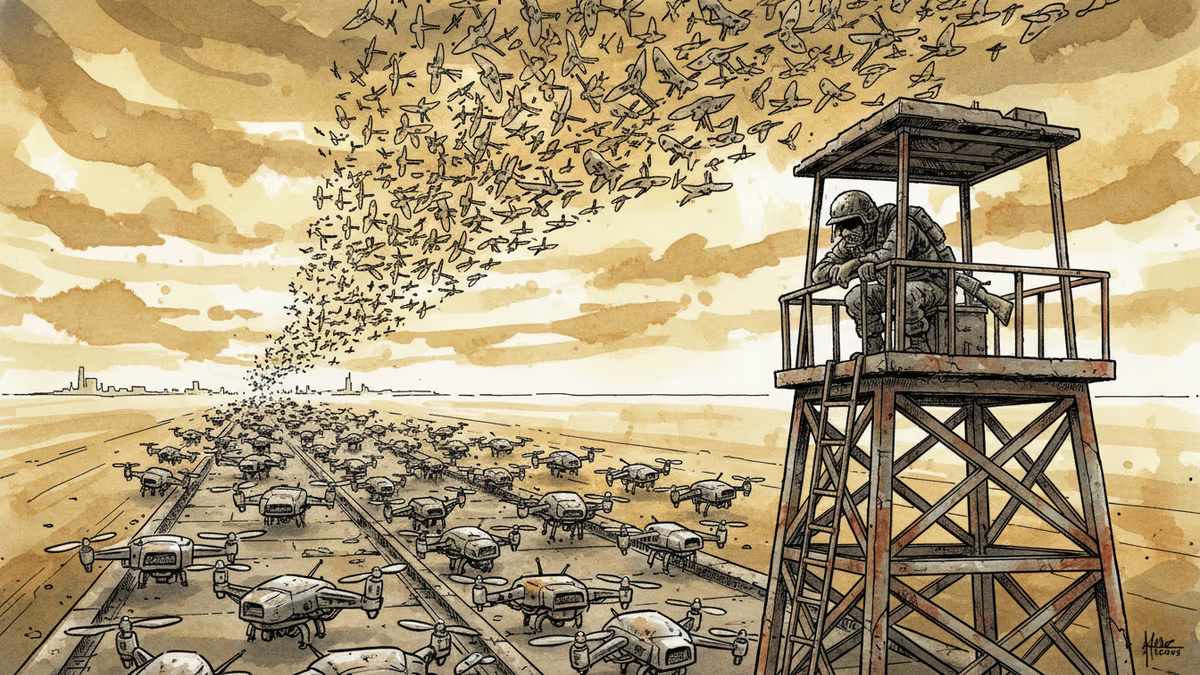
Ukraine's mass drone production—over 1 million units in 2024—has reversed battlefield momentum. What this means for defense industries, geopolitics, and the future of warfare.
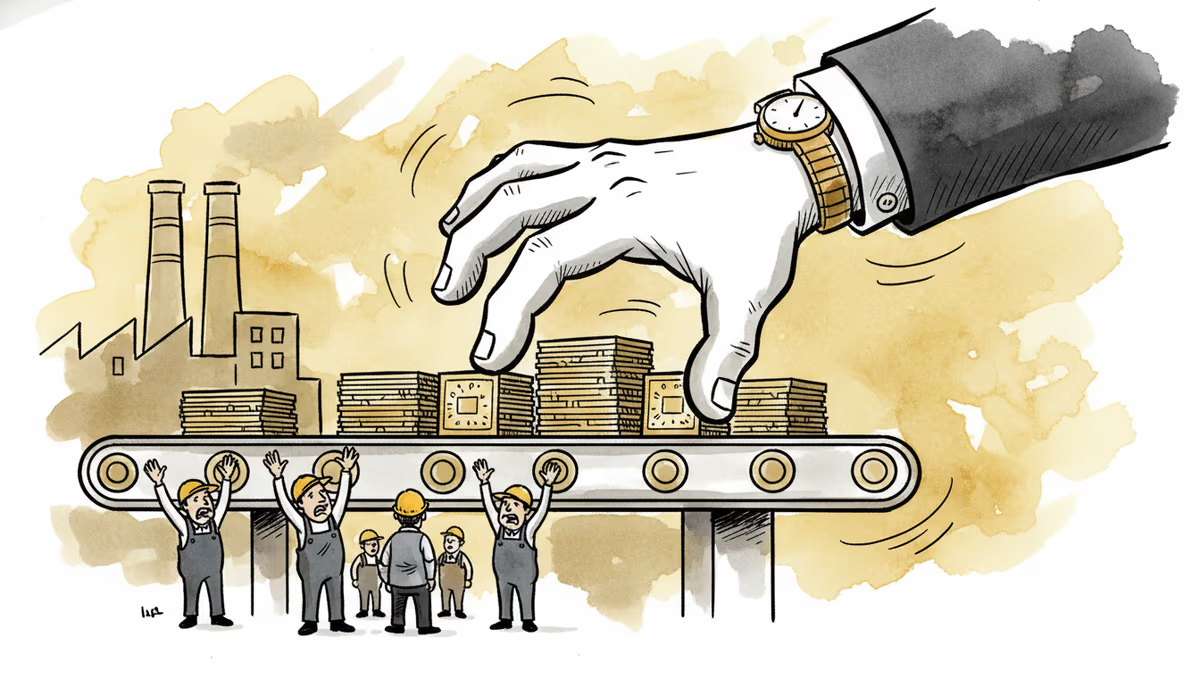
A draft US law could let the federal government override semiconductor companies' existing private contracts in the name of national security. Here's what's at stake for the industry.
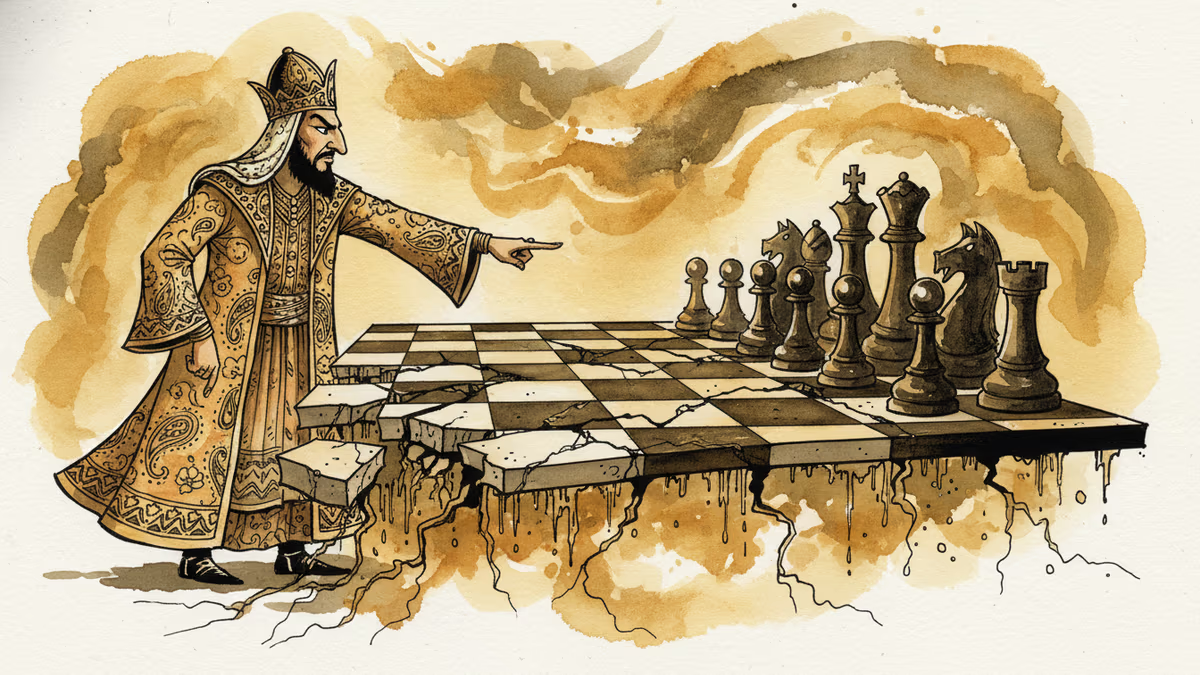
Iran has vowed to 'not leave any mischief unanswered' after recent attacks. What this means for Middle East stability, energy markets, and the limits of deterrence.
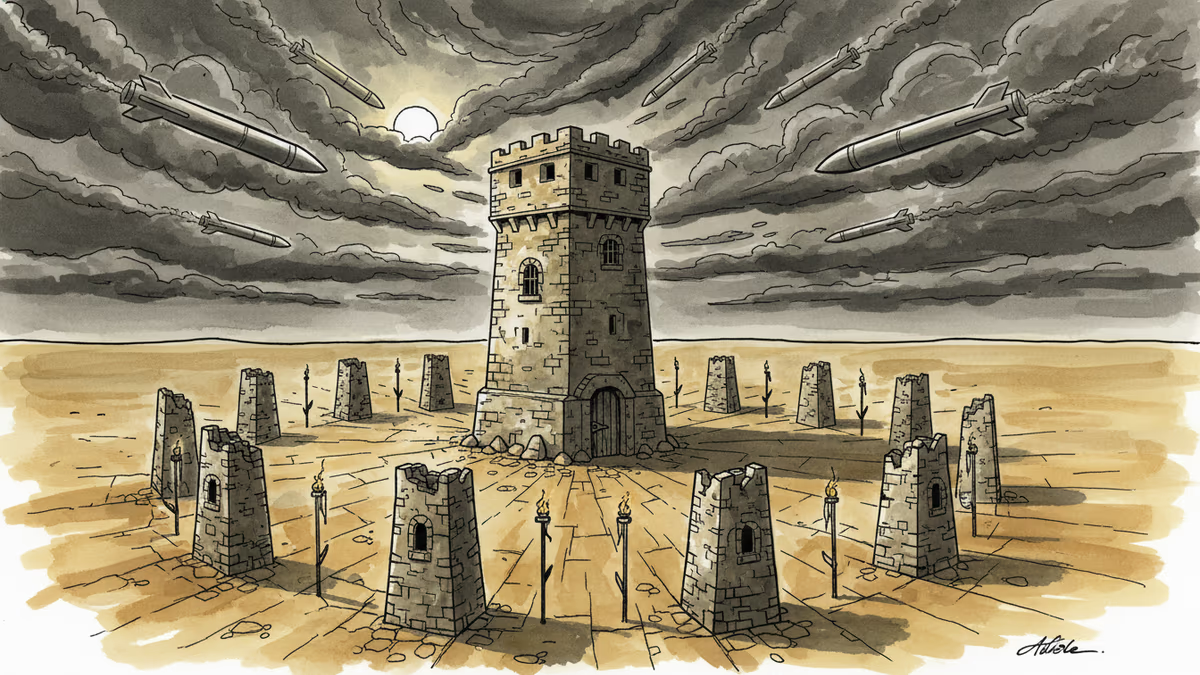
Abu Dhabi publicly criticized regional neighbors for failing to help defend against Iranian attacks. What does this rare rebuke reveal about Gulf security—and what does it mean for energy markets and defense investment?
Ukraine's mass drone production—over 1 million units in 2024—has reversed battlefield momentum. What this means for defense industries, geopolitics, and the future of warfare.
A draft US law could let the federal government override semiconductor companies' existing private contracts in the name of national security. Here's what's at stake for the industry.
Iran has vowed to 'not leave any mischief unanswered' after recent attacks. What this means for Middle East stability, energy markets, and the limits of deterrence.
Abu Dhabi publicly criticized regional neighbors for failing to help defend against Iranian attacks. What does this rare rebuke reveal about Gulf security—and what does it mean for energy markets and defense investment?
Thoughts
Share your thoughts on this article
Sign in to join the conversation