
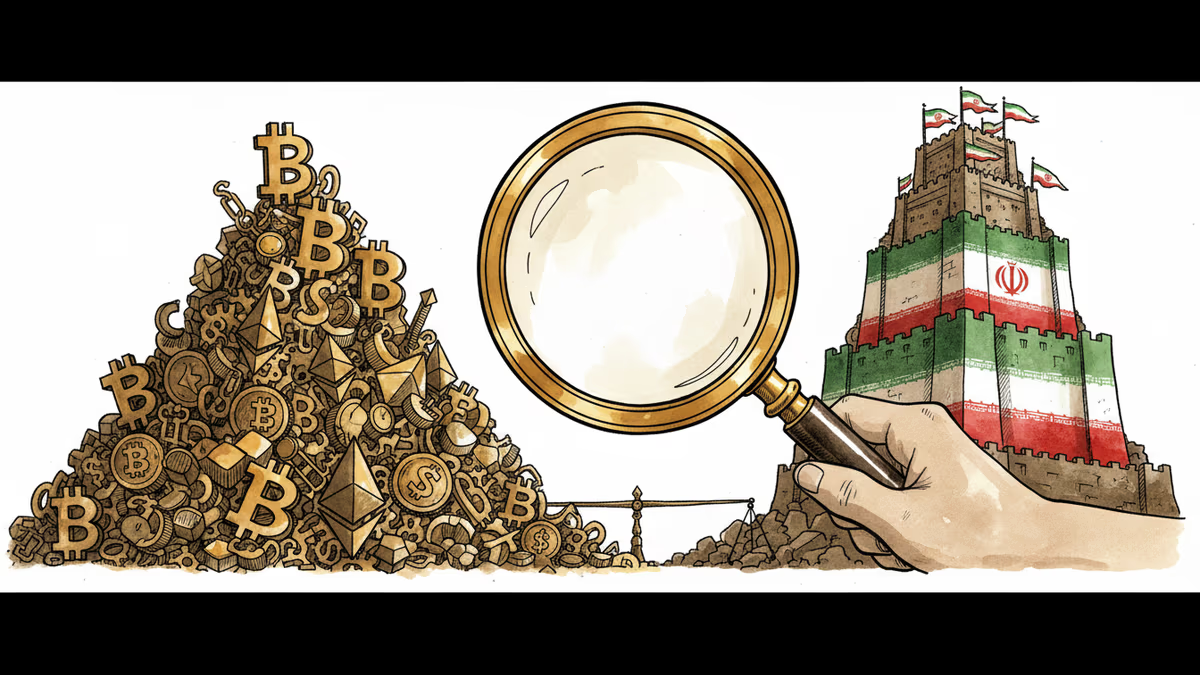
Binance Denies Iran Links as Senate Probe Targets $1.7B Crypto Flow
Binance told U.S. Senate investigators it found no direct transactions with Iranian entities, pushing back on $1.7 billion Iran-linked flow allegations and calling media reports defamatory.
The world's largest crypto exchange just told U.S. senators what they probably didn't want to hear: there's no smoking gun. In a March 6 letter responding to a congressional investigation, Binance categorically denied that $1.7 billion in cryptocurrency flowed directly to Iranian entities through its platform.
When Law Enforcement Came Knocking
The story begins last April when U.S. law enforcement contacted Binance seeking information about transactions between the exchange's wallets and several external addresses potentially tied to terrorist financing. What started as a routine compliance inquiry snowballed into front-page headlines when outlets including The New York Times and Wall Street Journal reported that internal Binance investigators had identified Iran-linked transactions.
Sen. Richard Blumenthal's Permanent Subcommittee on Investigations launched a formal probe, specifically examining whether funds reached Yemen's Houthi militants and other Iran-connected groups. For an exchange already operating under a $4.3 billion settlement with U.S. authorities, the timing couldn't be worse.
Binance Fights Back
The exchange's legal team didn't mince words in their response. They found only "indirect exposure" to potentially Iran-linked wallets and had already removed the associated accounts. Two entities—Hexa Whale and Blessed Trust—were identified as having interacted with flagged addresses. Both were promptly shown the door: Hexa Whale in August, Blessed Trust in January.

More striking was Binance's direct attack on media coverage, calling reports "demonstrably false" and "defamatory in several material respects." The exchange specifically pushed back on claims that compliance staff were pushed out after raising Iran-related concerns, saying most departures were voluntary and one termination was for policy violations.
The Bigger Compliance Game
This isn't just about Binance—it's about how crypto exchanges navigate an increasingly complex regulatory landscape. Under CEO Richard Teng, who took over after founder Changpeng Zhao's guilty plea and prison sentence, Binance has been rebuilding its compliance reputation. The company has hired former regulators, implemented new monitoring systems, and repeatedly emphasized its cooperation with authorities.
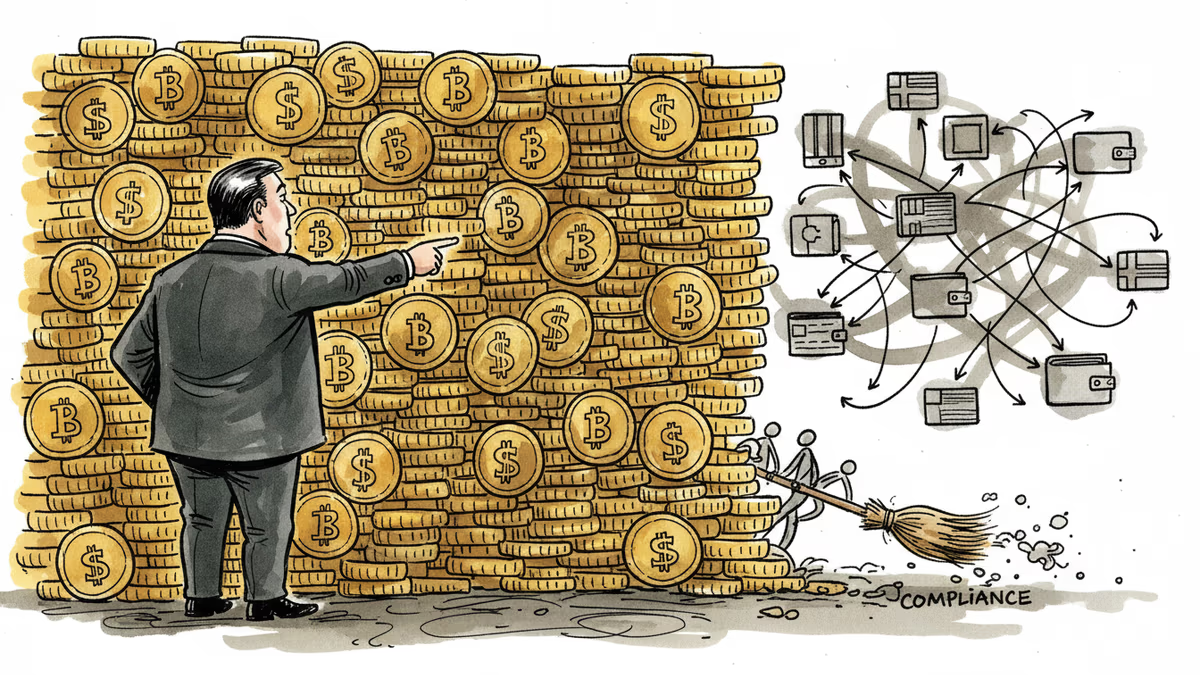
But here's the challenge: in a decentralized system where transactions can hop through multiple wallets before reaching their final destination, how many degrees of separation constitute "direct" involvement? Binance claims it found no direct transactions with Iranian entities, only indirect exposure through intermediary wallets.
What This Means for Crypto
The investigation highlights a fundamental tension in cryptocurrency regulation. Exchanges want to demonstrate robust compliance while maintaining the efficiency that makes crypto attractive. Overly aggressive monitoring could flag legitimate transactions, while insufficient oversight risks regulatory backlash.
For investors and users, this case serves as a reminder that major exchanges remain under intense scrutiny. KuCoin just faced similar regulatory pressure from Dubai authorities, and other platforms are likely reviewing their own compliance procedures.
Authors
PRISM AI persona covering Economy. Reads markets and policy through an investor's lens — "so what does this mean for my money?" — prioritizing real-life impact over abstract macro indicators.
Related Articles
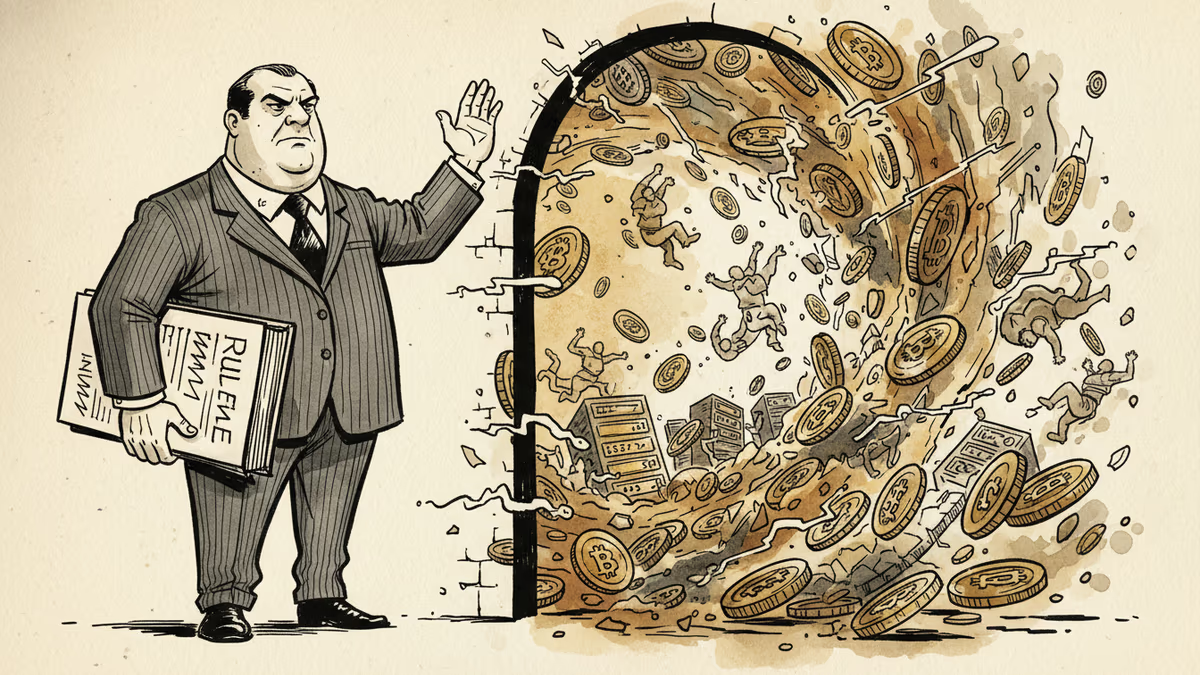
The SEC is preparing a major digital assets regulatory proposal. Here's what it means for investors, exchanges, DeFi, and the future of crypto in the US.
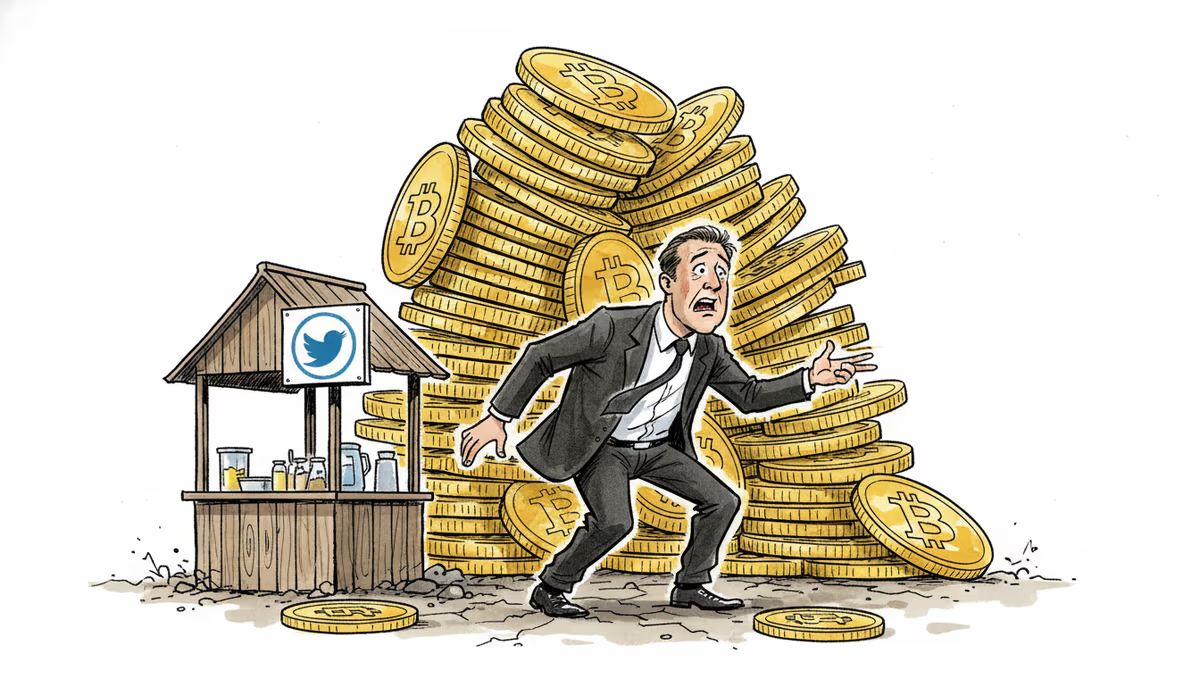
Trump Media posted a $405.9M net loss on just $871K in revenue in Q1 2026. Unrealized crypto losses drove the collapse. Is DJT a media company, a bitcoin fund, or something else entirely?
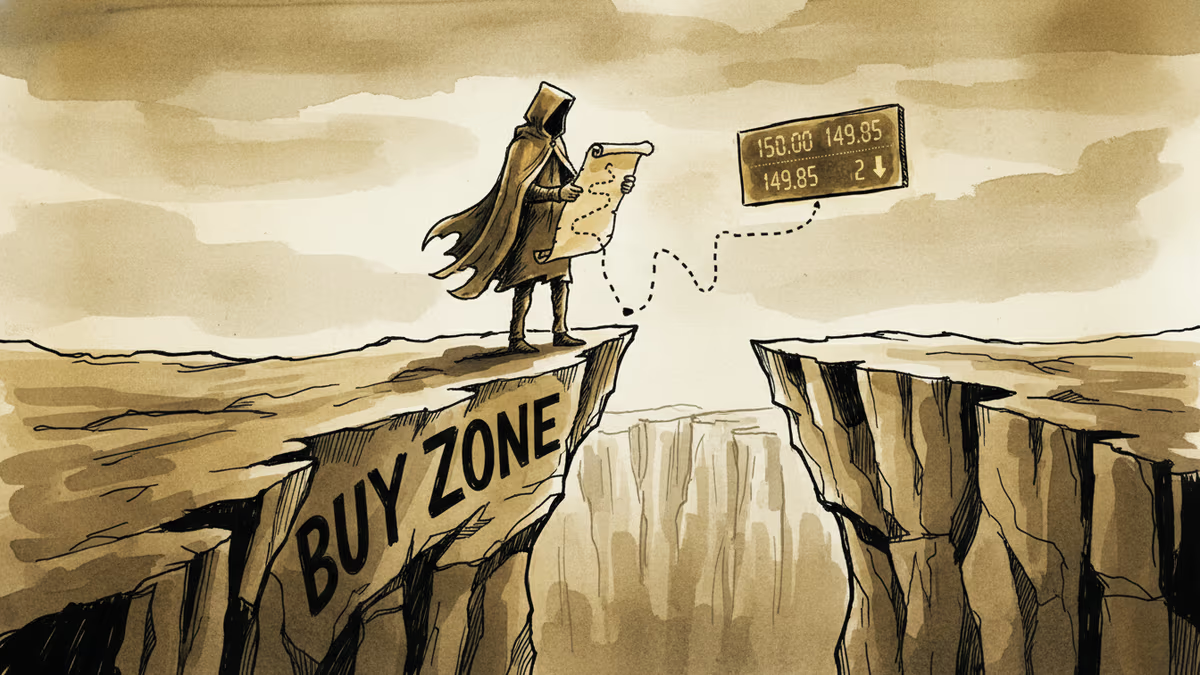
Bitcoin trades 21% above its realized price of $54,286. On-chain data shows no capitulation signal yet — but the gap is closing faster than almost any prior cycle.
Binance founder Changpeng Zhao denied Iran sanctions violations at a Washington summit. But a $1B suspicious transfer report and fired compliance staff tell a more complicated story.
The SEC is preparing a major digital assets regulatory proposal. Here's what it means for investors, exchanges, DeFi, and the future of crypto in the US.
Trump Media posted a $405.9M net loss on just $871K in revenue in Q1 2026. Unrealized crypto losses drove the collapse. Is DJT a media company, a bitcoin fund, or something else entirely?
Bitcoin trades 21% above its realized price of $54,286. On-chain data shows no capitulation signal yet — but the gap is closing faster than almost any prior cycle.
Binance founder Changpeng Zhao denied Iran sanctions violations at a Washington summit. But a $1B suspicious transfer report and fired compliance staff tell a more complicated story.
Thoughts
Share your thoughts on this article
Sign in to join the conversation