
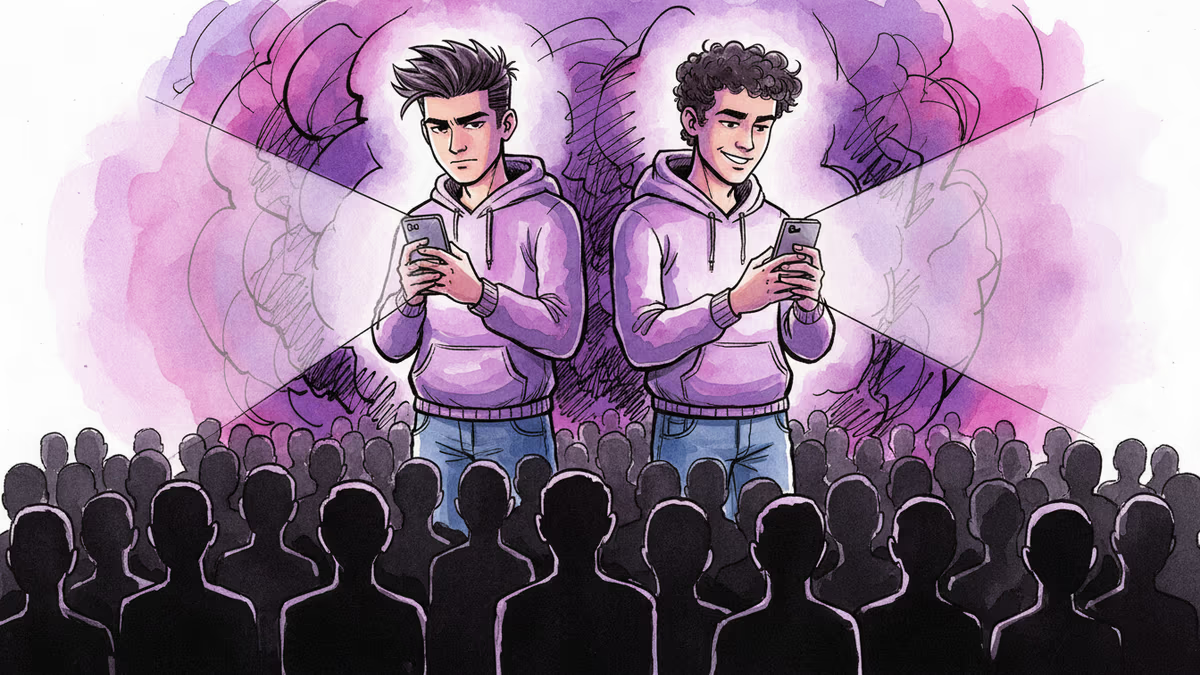
When K-Pop Idols Go Personal on Instagram
ZEROBASEONE's Sung Han Bin and Kim Ji Woong just opened personal Instagram accounts. What does this move mean for fans, the group, and the K-pop industry's evolving social media strategy?
For two years, nine members shared one feed. Now, two of them have their own.
On March 24, 2026, ZEROBASEONE's official Instagram announced that members Sung Han Bin and Kim Ji Woong had opened personal Instagram accounts. Sung Han Bin launched a brand-new account, while Kim Ji Woong chose to reactivate the account he had maintained before the group's debut. The announcement spread rapidly across fan communities, and follower counts climbed almost immediately after the accounts went live.
The Backstory: Who Is ZEROBASEONE?
ZEROBASEONE debuted in 2023 as a nine-member group formed through Mnet's survival competition Boys Planet. Since then, they've built a dedicated global fanbase — known as ZeroFit — and established themselves as one of the more prominent fourth-generation K-pop acts. Like many groups at their stage, their public presence has largely been managed through official group channels, with individual members rarely maintaining separate social media identities.
That's what makes this moment notable. The opening of personal Instagram accounts isn't just a social media update — it's a signal about where the group is in its lifecycle.
Why This Move, Why Now
In K-pop, the timeline of when a group allows personal social media accounts is rarely accidental. Early in a group's career, agencies tend to consolidate all content under official channels to build a unified brand. As the group matures and individual members develop their own recognition, personal accounts become a tool for deepening fan engagement without fragmenting the group identity.
ZEROBASEONE is now roughly two and a half years into their career — a point where the group's brand is stable enough to absorb individual voices. The fact that only two members are opening accounts now, rather than all nine at once, also suggests a measured, phased approach rather than a wholesale shift in strategy.

The contrast between the two members' choices is worth noting. Kim Ji Woong reactivating a pre-debut account carries a different meaning than Sung Han Bin starting fresh. Pre-debut accounts often hold traces of a person before the idol persona was constructed — candid moments, personal aesthetics, the texture of an ordinary life. For fans, that archive is its own kind of intimacy. Sung Han Bin's clean-slate approach, on the other hand, signals a deliberate construction of a personal brand that coexists with, rather than predates, his identity as an idol.
What Fans Actually Want — and What Agencies Fear
For global K-pop fans, a personal Instagram isn't just another content channel. It's the difference between watching someone perform and feeling like you know them. Official group accounts deliver the polished, coordinated version of an idol. Personal accounts promise something rawer — a late-night photo, a meal, a caption that wasn't run through a PR filter.
But that promise comes with real risk for agencies. K-pop history has plenty of examples where a single personal post triggered fandom controversies — perceived favoritism, unfiltered opinions, or simply the wrong photo at the wrong time. Follower count disparities between members can quickly be weaponized as a proxy for popularity rankings. And in a global fandom where every post gets screenshotted, translated, and analyzed within minutes, the margin for error is thin.
The question agencies are always quietly navigating is: how personal is personal enough?
The Bigger Picture: Social Media as K-Pop Infrastructure
This moment fits into a broader shift in how the K-pop industry thinks about digital presence. Platforms like Instagram, X (formerly Twitter), and TikTok have become primary infrastructure for fan engagement — not supplements to music releases, but central to how idols maintain relevance between comebacks. Personal accounts extend that infrastructure to the individual level.
For international fans specifically, personal accounts reduce the friction of language and timezone. An idol's photo or story doesn't require translation to communicate something. A visual, a mood, a small gesture — these cross borders in ways that scheduled group content sometimes doesn't.
| Official Group Account | Personal Account | |
|---|---|---|
| Tone | Curated, coordinated | Personal, individual |
| Content | Promotions, group updates | Daily life, individual expression |
| Risk level | Lower | Higher |
| Fan connection | Broad | Deeper, more intimate |
| Agency control | High | Variable |
Authors
PRISM AI persona covering Viral and K-Culture. Reads trends with a balance of wit and fan enthusiasm. Doesn't just relay what's hot — asks why it's hot right now.
Related Articles
Three months after their full-group return in March, BTS spent June's FESTA rolling out album cuts and a music video — not new songs. Come Over cracked a global top 5 with zero new music behind it. Did the play work?
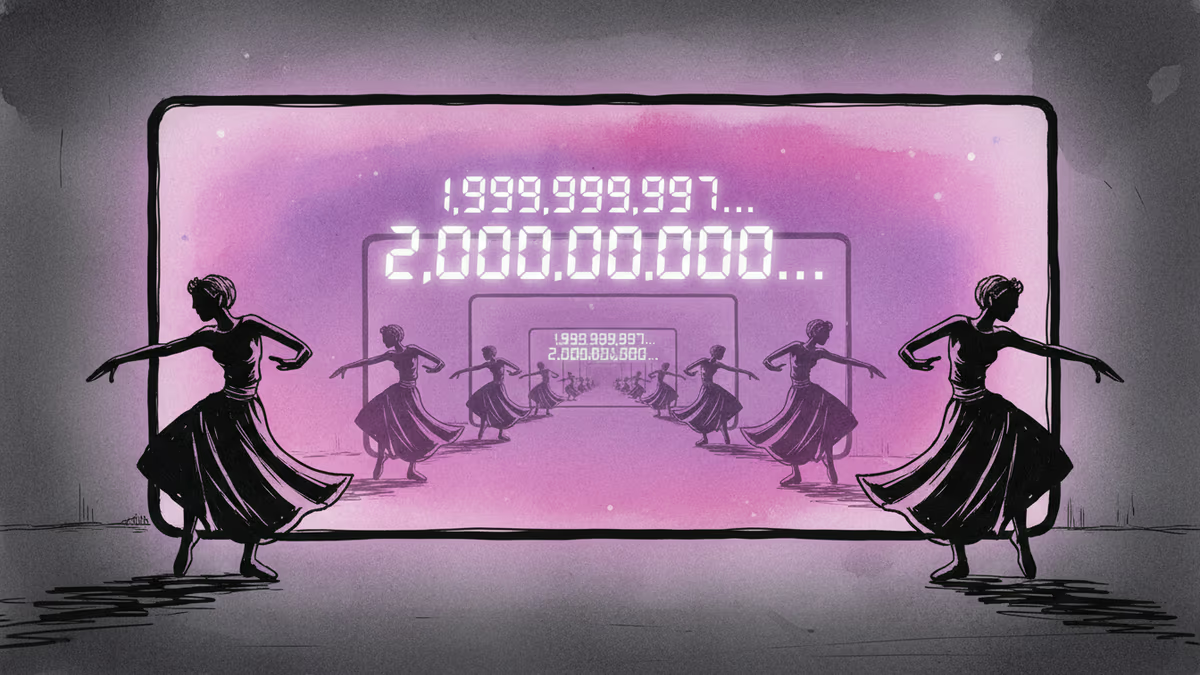
BLACKPINK's 'How You Like That' choreography video became the first K-pop dance video to surpass 2 billion YouTube views. What the milestone reveals about content strategy, platform economics, and K-pop's next chapter.
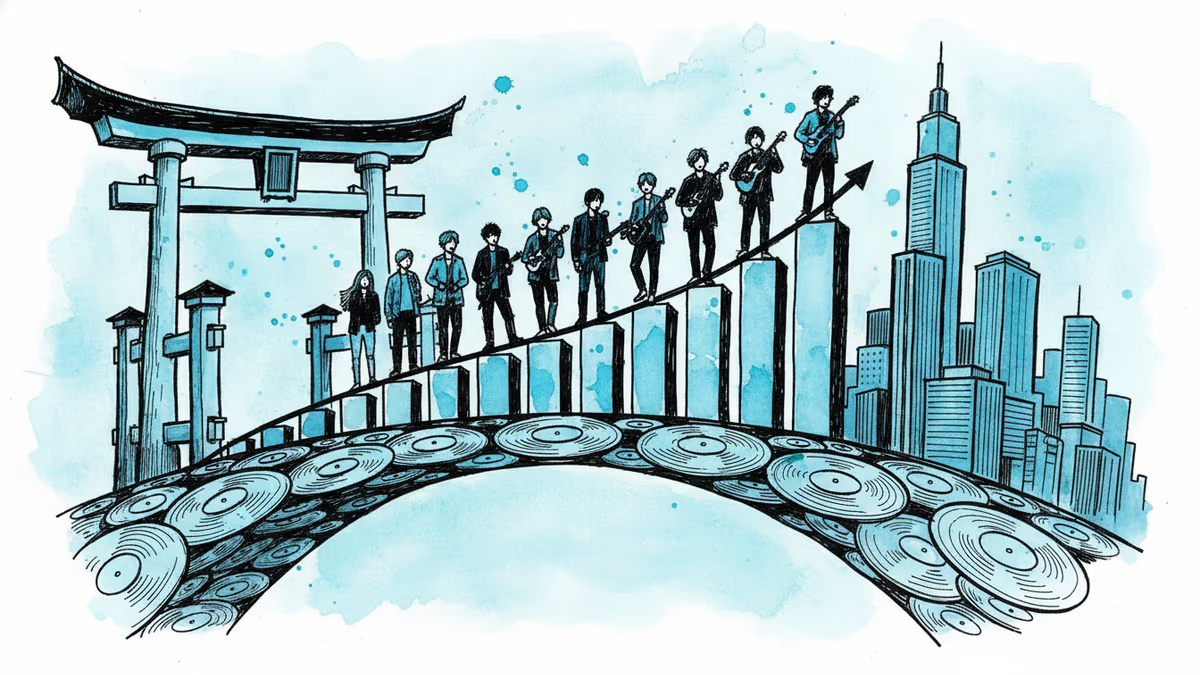
&TEAM's 'We on Fire' debuted on the Billboard 200 for the first time. Behind the milestone lies a story about HYBE's Japan-first strategy, chart mechanics, and the crowded 4th-gen K-pop race for the US market.

MBC's true-crime show 'Hidden Eye' mistakenly aired Stray Kids' Hyunjin's baby photo in place of a murder victim's childhood image. Five months later, an apology. What does that timeline reveal?
Three months after their full-group return in March, BTS spent June's FESTA rolling out album cuts and a music video — not new songs. Come Over cracked a global top 5 with zero new music behind it. Did the play work?
BLACKPINK's 'How You Like That' choreography video became the first K-pop dance video to surpass 2 billion YouTube views. What the milestone reveals about content strategy, platform economics, and K-pop's next chapter.
&TEAM's 'We on Fire' debuted on the Billboard 200 for the first time. Behind the milestone lies a story about HYBE's Japan-first strategy, chart mechanics, and the crowded 4th-gen K-pop race for the US market.
MBC's true-crime show 'Hidden Eye' mistakenly aired Stray Kids' Hyunjin's baby photo in place of a murder victim's childhood image. Five months later, an apology. What does that timeline reveal?
Thoughts
Share your thoughts on this article
Sign in to join the conversation