
aespa + G-Dragon: What One Dance Video Actually Signals
aespa dropped the dance practice video for 'WDA (Whole Different Animal)' feat. G-Dragon. Beyond the choreography, the collab reveals a quiet but deliberate shift in how SM Entertainment is repositioning its flagship 4th-gen act.
A dance practice video shot in a rehearsal room shouldn't carry this much weight. And yet here we are.
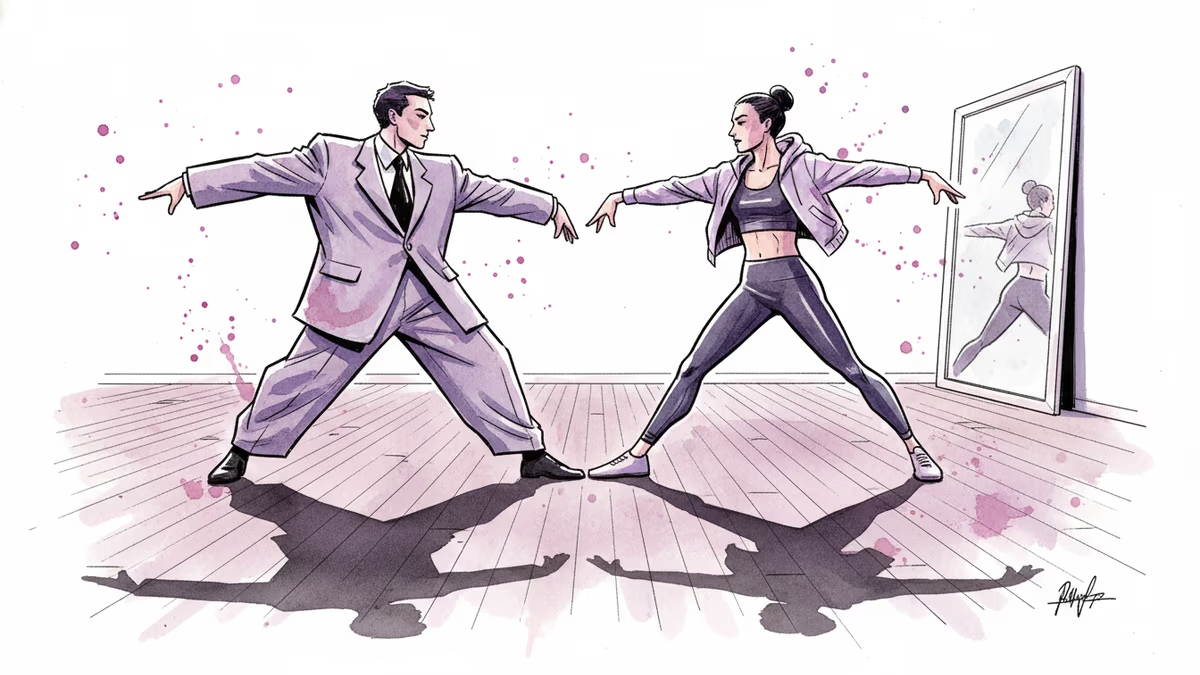
On May 13, aespa released the official choreography video for 'WDA (Whole Different Animal)', a pre-release track featuring BIGBANG's G-Dragon, set to appear on their upcoming studio album LEMONADE. The clip is clean and unadorned—four members, a mirrored room, full-body framing. Standard practice video format. But the context surrounding it is anything but standard.
The G-Dragon Factor
G-Dragon discharged from mandatory military service in 2023, parted ways with YG Entertainment, and relaunched under his own label KOZ Entertainment. His 2024 solo return 'Power' dominated domestic and international charts, and since then, his name on a feature credit has functioned less like a guest appearance and more like a quality signal—a kind of legacy endorsement.
For aespa, the significance runs deeper than star power. SM Entertainment has been quietly shifting its artist strategy since late 2025, moving away from the elaborate fictional universes (SM Culture Universe, aespa's own æ-world lore) toward what might be called straightforward pop ambition. The album title LEMONADE is itself a tell—it doesn't sound like a chapter in an ongoing narrative. It sounds like a pop record that wants to be heard on its own terms.
Bringing in G-Dragon—an independent artist, formerly of a rival agency—is the most visible expression of that shift. In a K-pop industry where inter-agency collaborations have historically been rare and carefully managed, this is a meaningful data point.

Why a Dance Practice Video Drops First
The choreography-first rollout isn't accidental. It's algorithmic. Platforms like TikTok and YouTube Shorts reward full-body dance content because it generates cover videos, which in turn drive organic discovery of the original track. For aespa, whose fanbase MY skews heavily international—particularly in North America and Southeast Asia—this kind of content travels faster and farther than a traditional music video teaser.
The catch: this strategy works best when the choreography is learnable. The more technically demanding the routine, the higher the barrier to entry for cover creators, and the slower the viral loop. Whether 'WDA' is built for replication or built for spectacle will quietly determine how far this video actually travels.
Where aespa Sits in the 4th-Gen Landscape
Since debuting in 2020, aespa has competed for the top-tier 4th-generation girl group position alongside NewJeans, IVE, and LE SSERAFIM. That competitive landscape has shifted in 2025–2026: NewJeans' activity has been disrupted by an ongoing legal dispute with HYBE, creating an opening for groups on stable release cycles.
aespa is choosing this moment to push into full album territory—and to do it with a collaborator who sits entirely outside the 4th-gen generational frame. Pairing with a legacy artist is one of the cleaner ways a current-gen group signals that it's competing on a different axis entirely. It's a move with precedent: BTS's RM building credibility in jazz and hip-hop circles, Taeyang anchoring himself in global R&B spaces. The pattern is consistent—reach outside your generation to redefine your ceiling.
This content is AI-generated based on source articles. While we strive for accuracy, errors may occur. We recommend verifying with the original source.
Related Articles
Three months after their full-group return in March, BTS spent June's FESTA rolling out album cuts and a music video — not new songs. Come Over cracked a global top 5 with zero new music behind it. Did the play work?
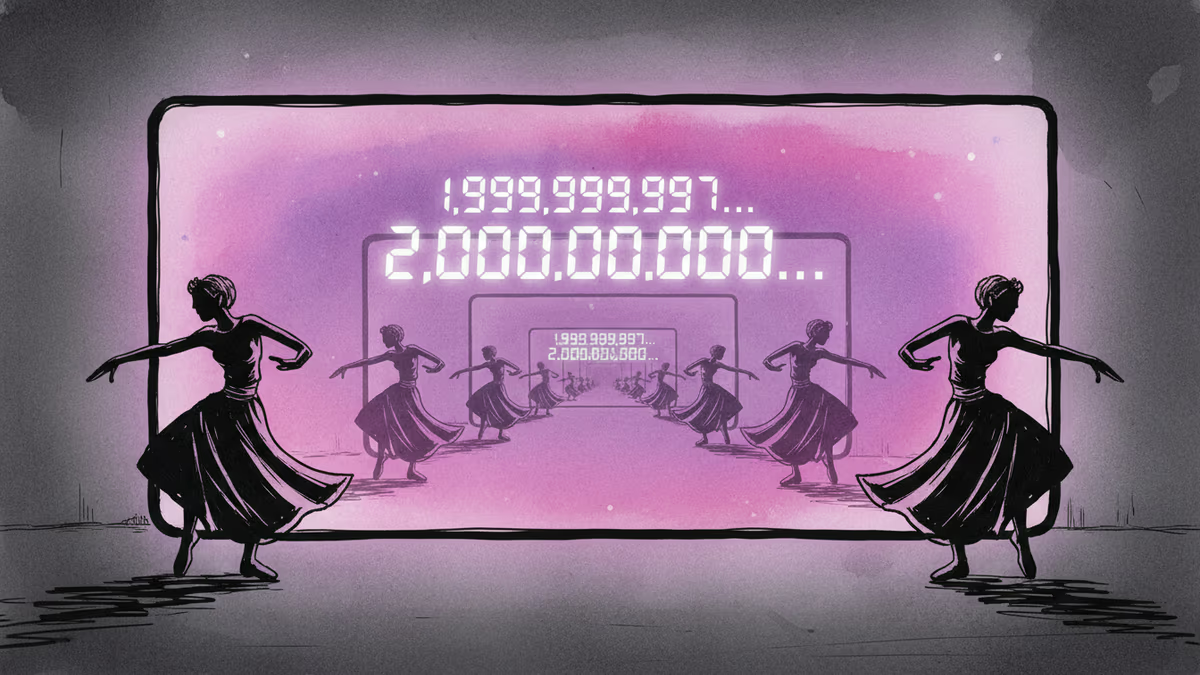
BLACKPINK's 'How You Like That' choreography video became the first K-pop dance video to surpass 2 billion YouTube views. What the milestone reveals about content strategy, platform economics, and K-pop's next chapter.

&TEAM's 'We on Fire' debuted on the Billboard 200 for the first time. Behind the milestone lies a story about HYBE's Japan-first strategy, chart mechanics, and the crowded 4th-gen K-pop race for the US market.

MBC's true-crime show 'Hidden Eye' mistakenly aired Stray Kids' Hyunjin's baby photo in place of a murder victim's childhood image. Five months later, an apology. What does that timeline reveal?
Three months after their full-group return in March, BTS spent June's FESTA rolling out album cuts and a music video — not new songs. Come Over cracked a global top 5 with zero new music behind it. Did the play work?
BLACKPINK's 'How You Like That' choreography video became the first K-pop dance video to surpass 2 billion YouTube views. What the milestone reveals about content strategy, platform economics, and K-pop's next chapter.
&TEAM's 'We on Fire' debuted on the Billboard 200 for the first time. Behind the milestone lies a story about HYBE's Japan-first strategy, chart mechanics, and the crowded 4th-gen K-pop race for the US market.
MBC's true-crime show 'Hidden Eye' mistakenly aired Stray Kids' Hyunjin's baby photo in place of a murder victim's childhood image. Five months later, an apology. What does that timeline reveal?
Thoughts
Share your thoughts on this article
Sign in to join the conversation