
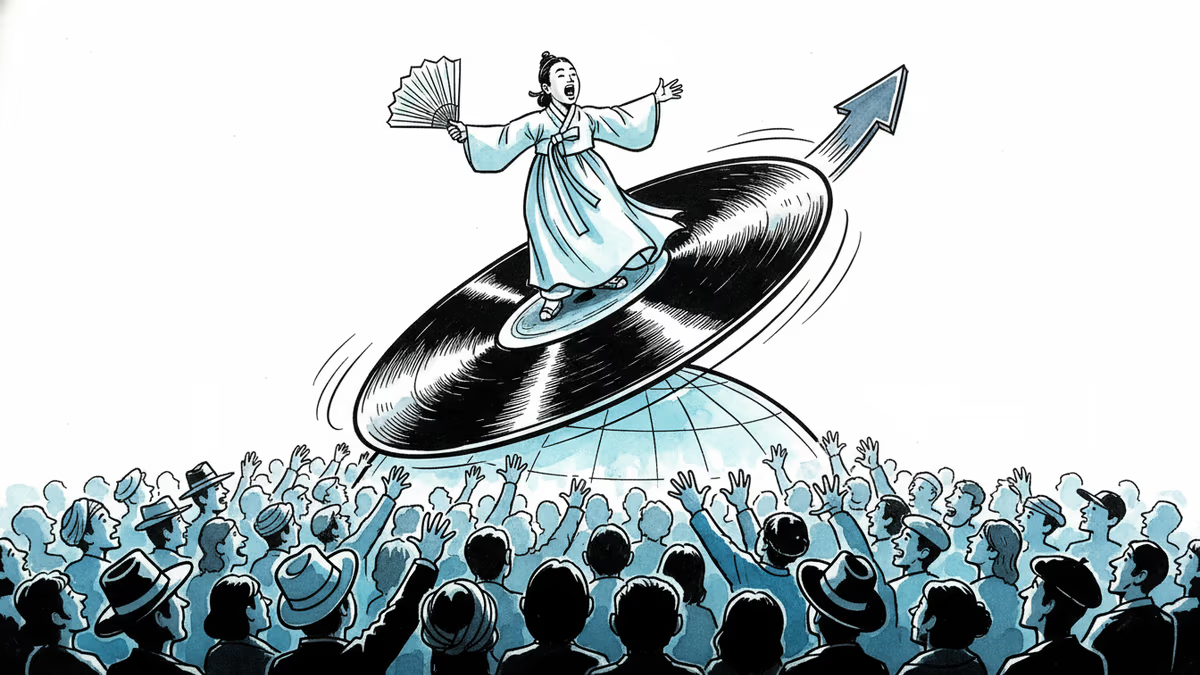
BTS's 'ARIRANG' Is Still in the Billboard 200 Top 10. That Shouldn't Be Possible.
BTS's 'ARIRANG' has spent 7 consecutive weeks in the Billboard 200 Top 10—a structural anomaly for K-pop. Here's what the numbers actually reveal about fandom, streaming, and platform economics.
Most K-pop albums fall off the Billboard 200 Top 10 within two weeks. BTS's 'ARIRANG' just completed its seventh consecutive week inside it—landing at No. 7 on the chart dated May 10. That's not a fan-driven anomaly. It's a structural data point worth unpacking.
What Actually Happened
Billboard confirmed on May 10 (local time) that 'ARIRANG', BTS's latest studio album, held its position at No. 7 on the Billboard 200, extending its Top 10 streak to seven weeks. The album debuted at No. 1 upon release, making this run a record not just for BTS but for any K-pop act in the chart's history.
The timing of the album matters. 'ARIRANG' is the first full-group studio release since all seven BTS members completed their mandatory South Korean military service—a process that began in late 2022 and concluded in stages through 2025. The album title itself, drawn from Korea's most iconic traditional folk song, frames the release as both a cultural homecoming and a deliberate identity statement. For a group that spent years navigating the tension between global pop accessibility and Korean cultural specificity, naming an album 'ARIRANG' is the least ambiguous choice they've ever made.
Why Seven Weeks Is the Real Story
The Billboard 200 aggregates streaming equivalent albums (SEA), track equivalent albums (TEA), and physical sales. K-pop groups have historically dominated the physical sales component through organized fandom bulk-buying—a model that drives massive first-week numbers but typically collapses in weeks two and three as fan purchasing saturates.
'ARIRANG' breaking that pattern suggests something different is happening in weeks four through seven: non-ARMY listeners are streaming. That's the harder metric to manufacture. Fan campaigns can move physical units; they can't sustain chart positions across a general listener base that wasn't already there.

This distinction matters for how the industry reads the result. A No. 1 debut driven by ARMY purchasing power is impressive but predictable. A No. 7 position in week seven signals crossover traction—the kind that streaming platforms and label A&R teams actually track when evaluating whether an act has broken through to the general market.
The Platform Layer Nobody's Talking About
HYBE, BTS's parent label, didn't just release an album. It deployed a content ecosystem around it. Weverse, HYBE's proprietary fan platform, ran exclusive behind-the-scenes content, member-specific solo track rollouts, and subscriber-gated material timed to sustain engagement across the album cycle. This isn't a new strategy, but 'ARIRANG' is arguably its most successful execution.
The broader context: the music industry's ongoing tension between streaming revenue (which disproportionately benefits platforms over artists) and direct-to-fan monetization has pushed major labels toward building owned platforms. HYBE's Weverse is the most developed version of this in K-pop. The seven-week chart run is partly a product of that infrastructure—each new content drop on Weverse re-energizes streaming activity, which feeds back into Billboard's algorithmic aggregation.
For the wider industry, this raises a question that goes beyond BTS: is sustained chart performance increasingly a function of platform architecture rather than musical content alone?
The 'ARIRANG' Paradox
Naming an album after a centuries-old Korean folk melody, then watching it sit in America's most mainstream album chart for nearly two months, is a paradox worth sitting with. The song Arirang has been recorded in hundreds of versions, sung by Korean diaspora communities across the world, and carries associations with displacement, longing, and return—themes that resonate beyond any specific cultural context.
Whether Western listeners engaging with the album understand that layering is an open question. But the commercial outcome suggests that cultural specificity and global reach are not, in fact, opposites—at least not in this case. The K-pop industry has debated for years whether leaning into Korean identity risks alienating non-Korean audiences. 'ARIRANG''s chart performance doesn't settle that debate, but it complicates the assumption that maximum accessibility requires cultural neutrality.
This content is AI-generated based on source articles. While we strive for accuracy, errors may occur. We recommend verifying with the original source.
Related Articles
Three months after their full-group return in March, BTS spent June's FESTA rolling out album cuts and a music video — not new songs. Come Over cracked a global top 5 with zero new music behind it. Did the play work?
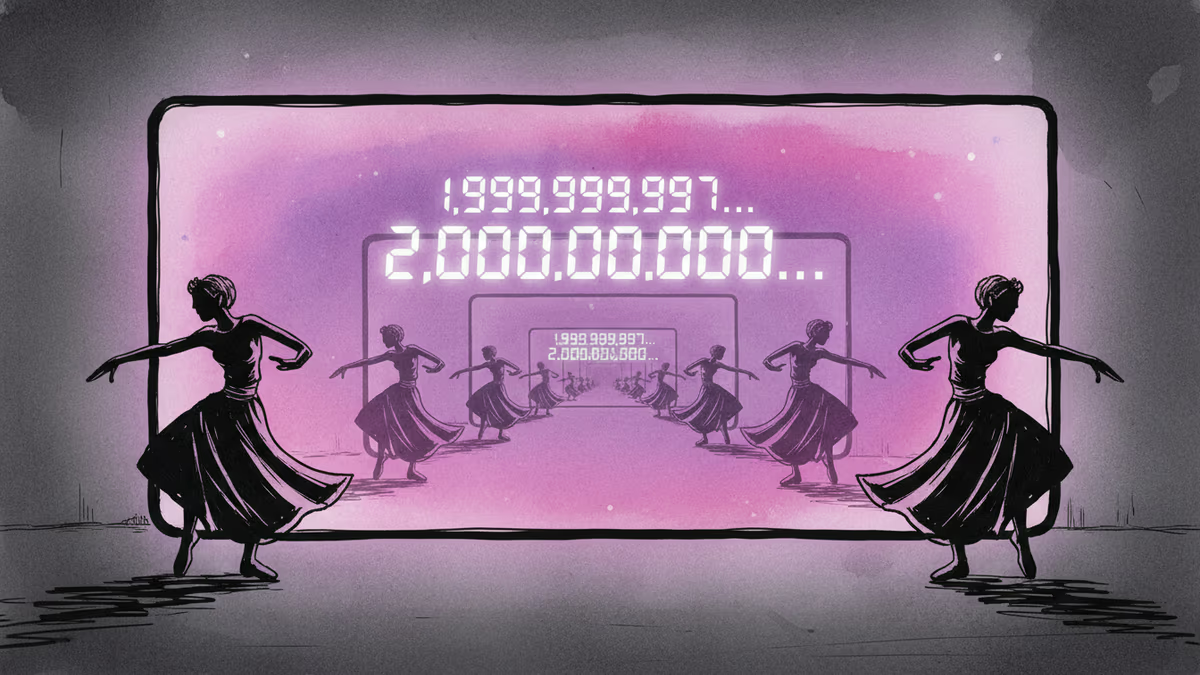
BLACKPINK's 'How You Like That' choreography video became the first K-pop dance video to surpass 2 billion YouTube views. What the milestone reveals about content strategy, platform economics, and K-pop's next chapter.
&TEAM's 'We on Fire' debuted on the Billboard 200 for the first time. Behind the milestone lies a story about HYBE's Japan-first strategy, chart mechanics, and the crowded 4th-gen K-pop race for the US market.
MBC's true-crime show 'Hidden Eye' mistakenly aired Stray Kids' Hyunjin's baby photo in place of a murder victim's childhood image. Five months later, an apology. What does that timeline reveal?
Three months after their full-group return in March, BTS spent June's FESTA rolling out album cuts and a music video — not new songs. Come Over cracked a global top 5 with zero new music behind it. Did the play work?
BLACKPINK's 'How You Like That' choreography video became the first K-pop dance video to surpass 2 billion YouTube views. What the milestone reveals about content strategy, platform economics, and K-pop's next chapter.
&TEAM's 'We on Fire' debuted on the Billboard 200 for the first time. Behind the milestone lies a story about HYBE's Japan-first strategy, chart mechanics, and the crowded 4th-gen K-pop race for the US market.
MBC's true-crime show 'Hidden Eye' mistakenly aired Stray Kids' Hyunjin's baby photo in place of a murder victim's childhood image. Five months later, an apology. What does that timeline reveal?
Thoughts
Share your thoughts on this article
Sign in to join the conversation