
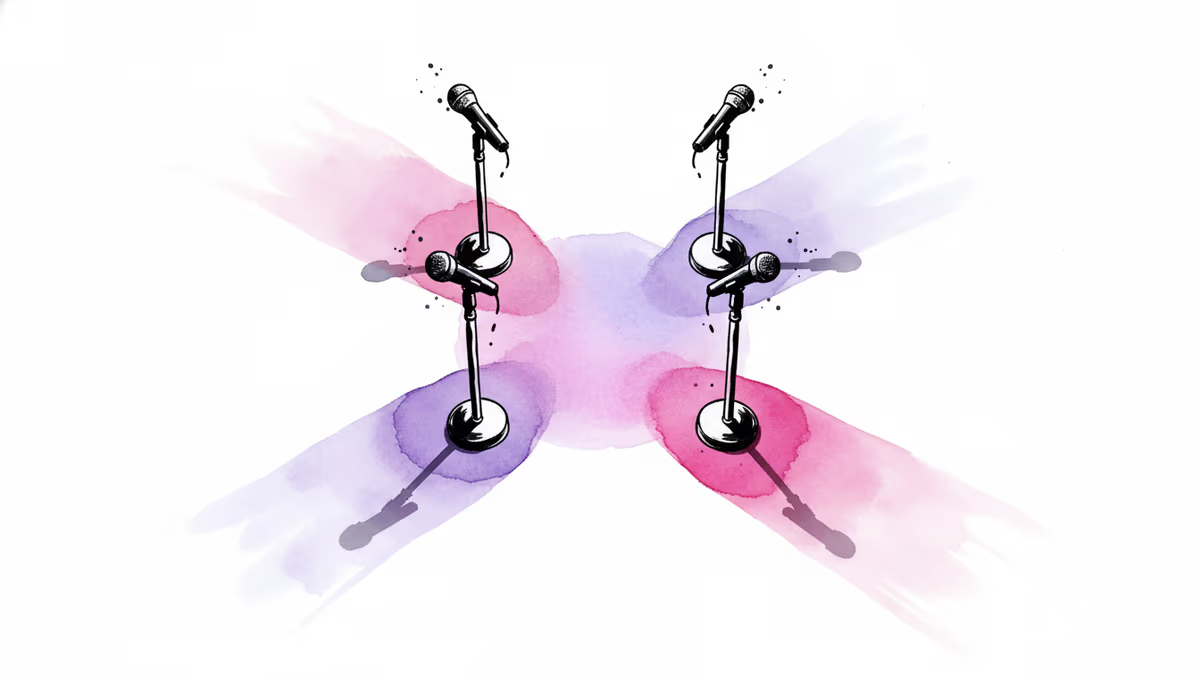
MAMAMOO's 'FORWARD': Why a Full-Group Comeback Hits Different After Four Solo Years
MAMAMOO drops the first teaser for their June comeback 'FORWARD.' After four years of solo careers, the full-group return signals a calculated bet by RBW — and a test of whether group identity survives individual stardom.
For the past four years, MAMAMOO functioned less like a group and more like a holding company with four very independent subsidiaries. Hwasa built a solo brand bold enough to fuel collaboration rumors with HYBE-affiliated labels. Solar became a multi-platform creator straddling YouTube and variety TV. Moonbyul cultivated a fanbase drawn to her genre-bending performances. And Wheein, after moving to C9 Entertainment, carved out an entirely separate trajectory. Then, on May 7 at midnight KST, all four appeared in the same teaser frame.
RBW had confirmed the full-group comeback last year — a new album in June, a world tour to follow. The teaser made it official, revealing the album title: FORWARD. What looks like a standard pre-release drop is actually something rarer in K-pop's current landscape: a deliberate reunion of artists who didn't need to reunite.
The Solo Saturation Problem — and Why Groups Are Scarce Again
Between 2023 and 2025, K-pop's commercial center of gravity shifted decisively toward solo acts. IU, G-Dragon, Jennie's independent label launch, individual breakouts from aespa — the industry rewarded solo ventures with streaming numbers and headline slots that group albums increasingly struggled to match. For mid-tier agencies, solos are also a risk management tool: no need to coordinate four or five schedules, and each member's fanbase can be monetized separately.
MAMAMOO fit this model comfortably. But solo saturation creates its own counter-pressure. When individual acts become the norm, a full-group comeback becomes scarce — and scarcity generates its own commercial gravity. The sustained market anticipation around BTS's full-group return is the most visible example of this dynamic. For MAMAMOO, the logic is similar but arguably cleaner: because all four members have proven themselves independently, the reunion reads as a choice rather than a contractual obligation. That distinction matters to fans.
The album title FORWARD isn't incidental. It's a direct narrative response to the four years of dissolution rumors and questions about whether the group still existed as a meaningful unit.

RBW's Math: The Album-Tour Bundle
The simultaneous announcement of a new album and a world tour reflects a business model that K-pop mid-sized agencies have been moving toward since 2024. With streaming revenue plateauing, live performance is the most reliable margin driver. Agencies like Belift Lab and Pledis have increasingly pre-announced tours and then reverse-engineered album rollouts around them. RBW is applying the same logic here.
The complication is structural: Wheein is no longer signed to RBW. Coordinating a full-group project across separate management structures requires a level of inter-agency negotiation that isn't visible from the outside. The fact that it happened at all signals how highly RBW values the MAMAMOO IP — and how much the members themselves wanted it to happen.
A Second-Generation Survival Test
MAMAMOO debuted in 2014, making them 12 years into a career that most K-pop groups don't survive intact. SISTAR disbanded. 2NE1's reunion was a one-off. Girls' Generation continues but on a stretched release cycle. The second-generation groups that have maintained genuine full-group activity are increasingly few.
What separates MAMAMOO from the cautionary cases is that every member arrives at this comeback with independent commercial credibility. That changes the stakes. For fans, the full-group MAMAMOO isn't a fallback — it's something they feared losing while each member thrived alone. That emotional capital is FORWARD's real opening asset, and it's not something a solo release can replicate.
This content is AI-generated based on source articles. While we strive for accuracy, errors may occur. We recommend verifying with the original source.
Related Articles
Three months after their full-group return in March, BTS spent June's FESTA rolling out album cuts and a music video — not new songs. Come Over cracked a global top 5 with zero new music behind it. Did the play work?
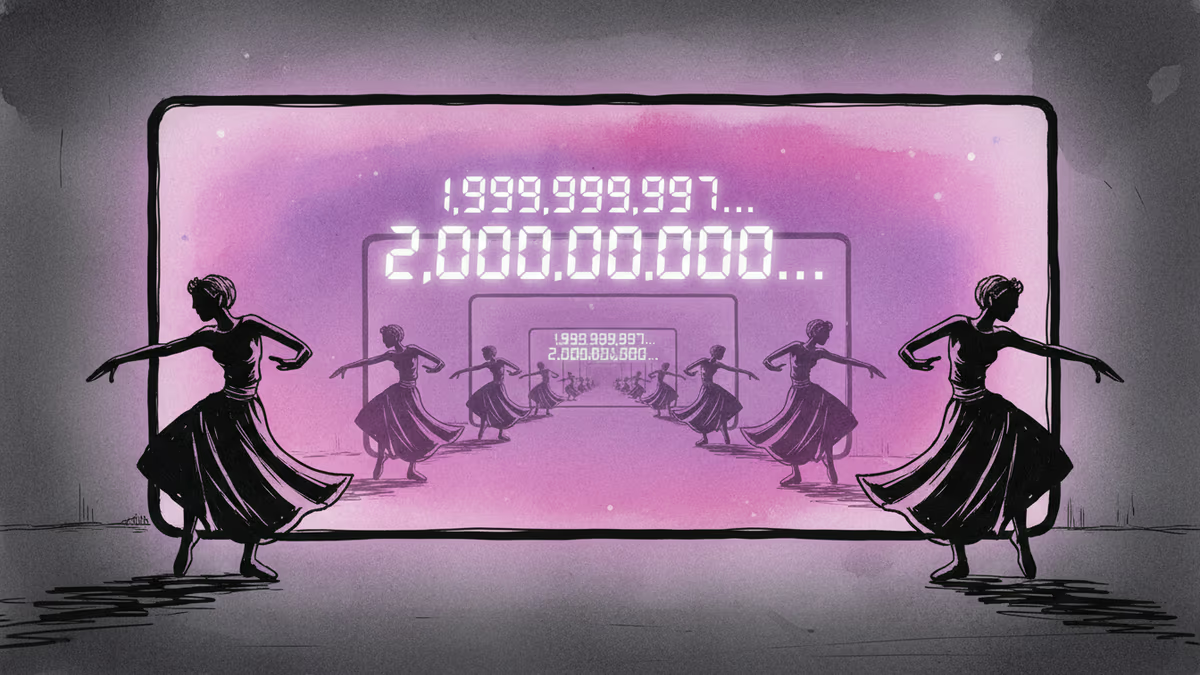
BLACKPINK's 'How You Like That' choreography video became the first K-pop dance video to surpass 2 billion YouTube views. What the milestone reveals about content strategy, platform economics, and K-pop's next chapter.
&TEAM's 'We on Fire' debuted on the Billboard 200 for the first time. Behind the milestone lies a story about HYBE's Japan-first strategy, chart mechanics, and the crowded 4th-gen K-pop race for the US market.

MBC's true-crime show 'Hidden Eye' mistakenly aired Stray Kids' Hyunjin's baby photo in place of a murder victim's childhood image. Five months later, an apology. What does that timeline reveal?
Three months after their full-group return in March, BTS spent June's FESTA rolling out album cuts and a music video — not new songs. Come Over cracked a global top 5 with zero new music behind it. Did the play work?
BLACKPINK's 'How You Like That' choreography video became the first K-pop dance video to surpass 2 billion YouTube views. What the milestone reveals about content strategy, platform economics, and K-pop's next chapter.
&TEAM's 'We on Fire' debuted on the Billboard 200 for the first time. Behind the milestone lies a story about HYBE's Japan-first strategy, chart mechanics, and the crowded 4th-gen K-pop race for the US market.
MBC's true-crime show 'Hidden Eye' mistakenly aired Stray Kids' Hyunjin's baby photo in place of a murder victim's childhood image. Five months later, an apology. What does that timeline reveal?
Thoughts
Share your thoughts on this article
Sign in to join the conversation