
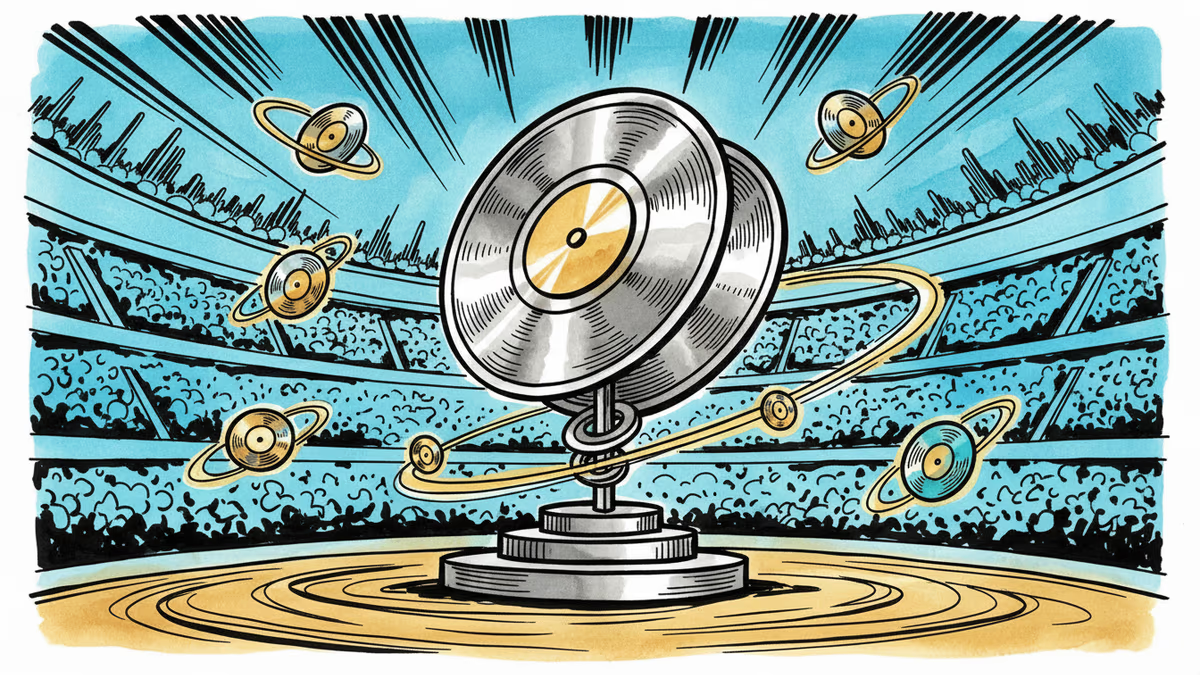
What Japan's Platinum Charts Say About K-Pop's Next Phase
BTS's 'ARIRANG' earned RIAJ triple platinum in Japan. With ATEEZ and NCT WISH also certified, the data reveals a K-pop Japan market that's diversifying—and complicating.
Seven years after BTS first cracked Japan's notoriously insular music market, their new Korean-language album 'ARIRANG' has just been certified triple platinum by the Recording Industry Association of Japan (RIAJ)—750,000 units shipped. The same certification cycle also handed ATEEZ and NCT WISH their own platinum and gold badges. Three groups, three different label strategies, one announcement. That's not a coincidence. It's a map.
The RIAJ Numbers and What They Actually Measure
The RIAJ certifies albums at gold (100,000 units) and platinum (250,000 units) thresholds, based on units shipped to retailers—not units sold to consumers. Triple platinum sits at 750,000 shipped, a figure that places 'ARIRANG' comfortably in the upper tier of any foreign artist's Japan performance in a given cycle.
The shipped-not-sold distinction matters. K-pop's multi-version release model—where the same album ships in four or five cover variants, each with different photocards—structurally inflates shipment numbers relative to actual listener demand. Industry observers have flagged this for years. Still, Japan's music economy makes the number harder to dismiss than it would be elsewhere: Japan remains the world's second-largest recorded music market, and as of 2025, physical formats still account for an estimated 60%+ of music revenue there—a ratio that looks almost anachronistic compared to the US or UK, where streaming dominates at over 80%. K-pop labels aren't gaming a dead metric. They're playing the market as it actually exists.
What's more notable about 'ARIRANG' specifically is that it's a Korean-language album. For most of K-pop's Japan history, the playbook required Japanese-language releases—localized singles, FC-exclusive editions, domestic tour tie-ins—to move serious units. BTS began disrupting that formula in the late 2010s, building a Japanese fanbase willing to import the Korean product wholesale. The triple platinum on a Korean-language record in 2026 suggests that disruption has calcified into a new normal, at least for groups at BTS's tier.

Three Groups, Three Market Positions
The more structurally interesting story isn't BTS—it's who's standing next to them in the same certification announcement.
ATEEZ, debuting in 2018, built its initial momentum through North American and European fandoms before converting that global visibility into Japanese market penetration. Their certification reflects a 4th-generation group that has successfully run the full circuit: global buzz → domestic Korean chart presence → Japan physical market. NCT WISH, by contrast, was explicitly architected for Japan from the start—an SM Entertainment unit launched with Japanese-language singles as a core strategy, not an afterthought.
Three groups, three different routes to the same certification board. That plurality is new. Through roughly 2022, Japan's K-pop chart landscape was functionally a duopoly between BTS and a handful of early 4th-gen acts. The current picture is more distributed. Whether that's a sign of a healthier, deeper market—or simply a more fragmented one where no single act can command the cultural gravity BTS once held—is a question the next two years of certification cycles will start to answer.
The Returning-Act Variable
There's a context layer specific to BTS that the raw numbers can't capture: 'ARIRANG' is their first major Korean release following the completion of mandatory military service by all seven members. The reunion album dynamic carries its own commercial physics—pent-up demand, symbolic weight, media amplification—that makes direct comparison to their pre-hiatus Japan numbers complicated. Triple platinum is impressive; triple platinum as a post-military comeback is a different kind of data point. It tells you the fanbase held. It doesn't yet tell you whether the fanbase grew.
This content is AI-generated based on source articles. While we strive for accuracy, errors may occur. We recommend verifying with the original source.
Related Articles

Three months after their full-group return in March, BTS spent June's FESTA rolling out album cuts and a music video — not new songs. Come Over cracked a global top 5 with zero new music behind it. Did the play work?
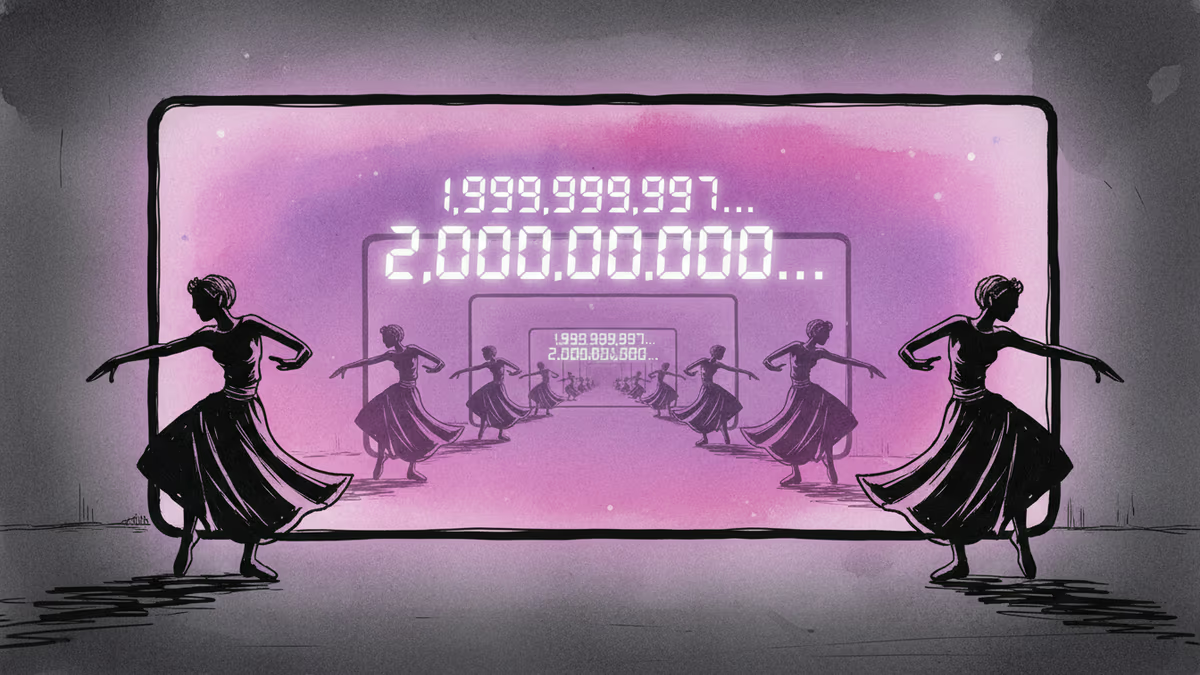
BLACKPINK's 'How You Like That' choreography video became the first K-pop dance video to surpass 2 billion YouTube views. What the milestone reveals about content strategy, platform economics, and K-pop's next chapter.
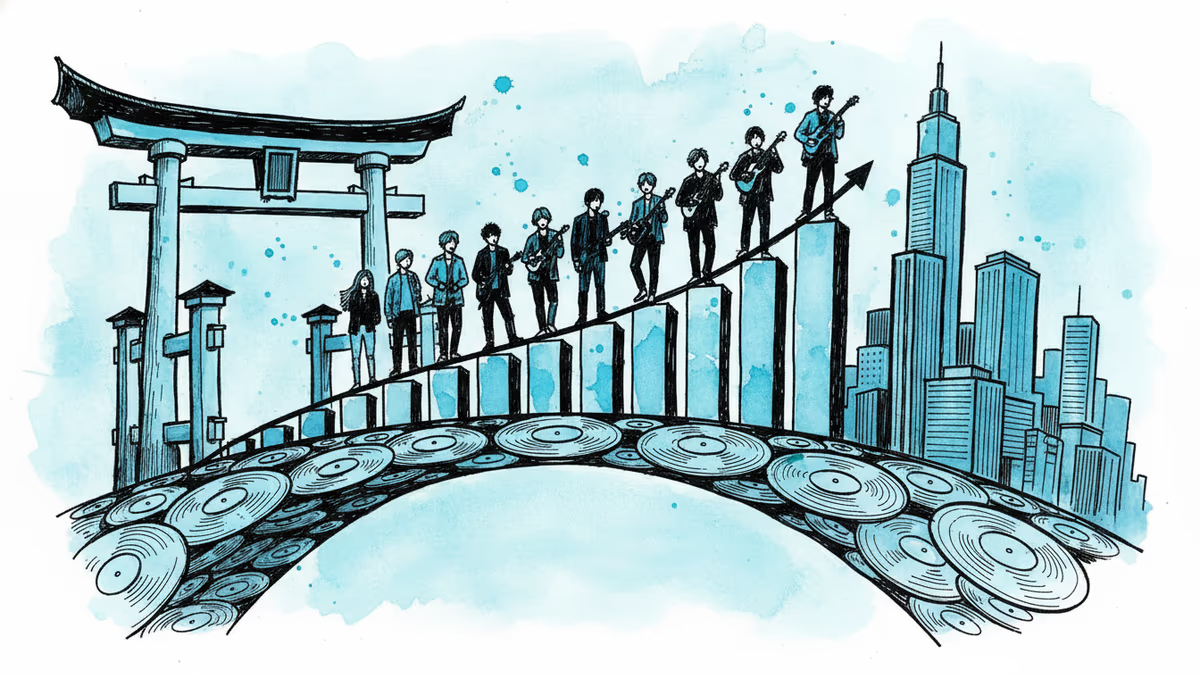
&TEAM's 'We on Fire' debuted on the Billboard 200 for the first time. Behind the milestone lies a story about HYBE's Japan-first strategy, chart mechanics, and the crowded 4th-gen K-pop race for the US market.

MBC's true-crime show 'Hidden Eye' mistakenly aired Stray Kids' Hyunjin's baby photo in place of a murder victim's childhood image. Five months later, an apology. What does that timeline reveal?
Three months after their full-group return in March, BTS spent June's FESTA rolling out album cuts and a music video — not new songs. Come Over cracked a global top 5 with zero new music behind it. Did the play work?
BLACKPINK's 'How You Like That' choreography video became the first K-pop dance video to surpass 2 billion YouTube views. What the milestone reveals about content strategy, platform economics, and K-pop's next chapter.
&TEAM's 'We on Fire' debuted on the Billboard 200 for the first time. Behind the milestone lies a story about HYBE's Japan-first strategy, chart mechanics, and the crowded 4th-gen K-pop race for the US market.
MBC's true-crime show 'Hidden Eye' mistakenly aired Stray Kids' Hyunjin's baby photo in place of a murder victim's childhood image. Five months later, an apology. What does that timeline reveal?
Thoughts
Share your thoughts on this article
Sign in to join the conversation