
K-Pop as Diplomacy: What Paris Reveals About Hallyu's Next Phase
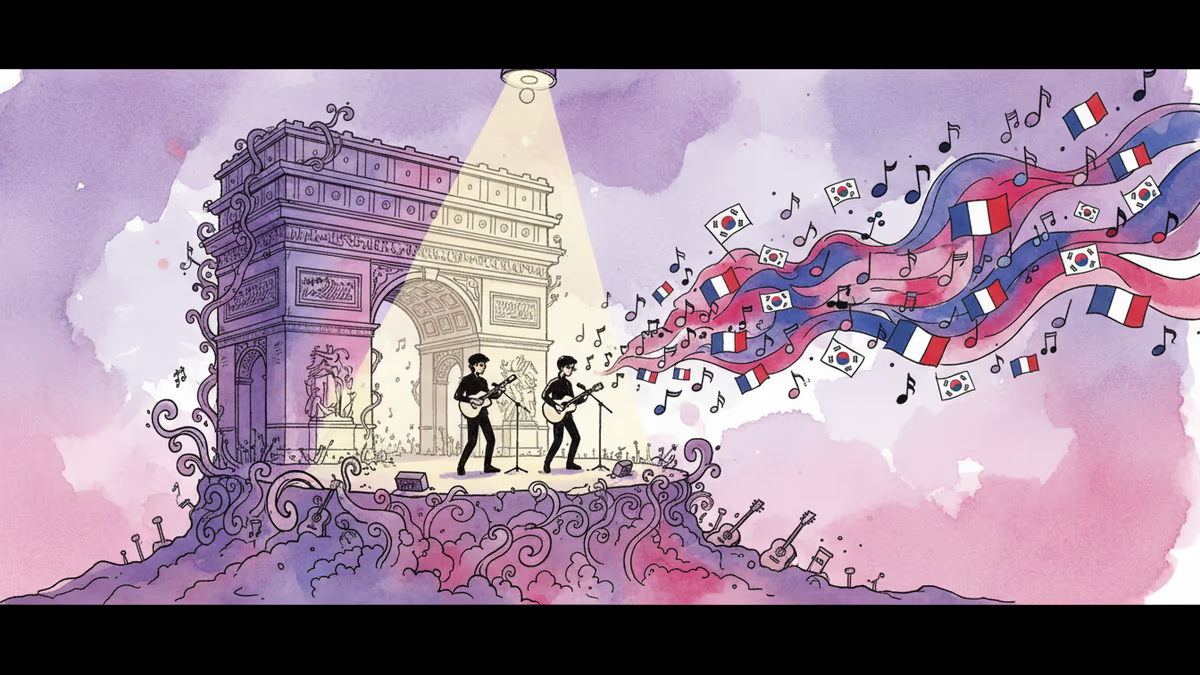
SBS's 'K-EXPO Inkigayo in Paris' taps Taemin and NCT WISH for a Korea-France diplomatic anniversary. Behind the lineup lies a calculated bet on K-pop as state soft power.
When did a country's foreign policy start needing a setlist?
On May 11, SBS announced the first performer lineup for K-EXPO Inkigayo in Paris — a special event marking the 140th anniversary of diplomatic relations between South Korea and France. SHINee's Taemin and rookie group NCT WISH will headline. This isn't just a fan concert abroad. It's a state-adjacent cultural event where pop music and diplomatic protocol share the same stage — and that combination says something worth unpacking.
The Logic Behind the Lineup
The pairing of Taemin and NCT WISH isn't accidental. Taemin debuted with SHINee in 2008, making him an 18-year industry veteran with a loyal European fanbase built through years of solo work. In France — consistently one of K-pop's strongest Western markets — his name carries the weight of K-pop's foundational era. He represents the genre's proven credibility.
NCT WISH, by contrast, debuted in 2024. They are K-pop's present tense. Placing both acts on the same bill creates a deliberate temporal arc: here is where we came from, here is where we are. For a diplomatic anniversary event, that kind of historical framing is exactly the point.
Inkigayo Abroad: Brand Extension or One-Off?

Inkigayo has aired on SBS since 1991 and remains one of Korea's three major weekly music chart shows alongside Music Bank and M Countdown. Exporting that brand name to a Parisian venue is more than a marketing decision — it's an attempt to transplant a domestic cultural institution into international territory.
The closest comparison is Mnet's KCON, which launched in Los Angeles in 2012 and has since expanded to more than 10 cities globally, blending fan conventions with live performances into a repeatable format. Whether SBS's K-EXPO Inkigayo becomes a recurring global IP or remains a one-time diplomatic gesture will depend largely on how Paris performs — in attendance, media coverage, and the kind of cultural footprint it leaves behind.
The Soft Power Equation
That K-pop now occupies space once reserved for traditional performances and academic exchanges at diplomatic anniversary events reflects a deliberate shift in South Korea's public diplomacy since the 2010s. The Korean government has increasingly formalized Hallyu as a soft power asset, and events like this are where that policy becomes visible.
France's presence in this equation is equally telling. The country is famous for its exception culturelle — a longstanding policy of protecting French cultural industries from foreign domination. Yet French youth consumption of K-pop has grown to a point where it can no longer be dismissed as a niche import. For both governments, a K-pop event in Paris offers a convenient stage to perform cultural reciprocity without either side conceding ground.
For SM Entertainment and SBS, the calculus is more straightforward: brand exposure in a high-prestige diplomatic context, with the implicit endorsement of state backing, at a moment when the global K-pop market is facing saturation pressures at home.
This content is AI-generated based on source articles. While we strive for accuracy, errors may occur. We recommend verifying with the original source.
Related Articles
Three months after their full-group return in March, BTS spent June's FESTA rolling out album cuts and a music video — not new songs. Come Over cracked a global top 5 with zero new music behind it. Did the play work?
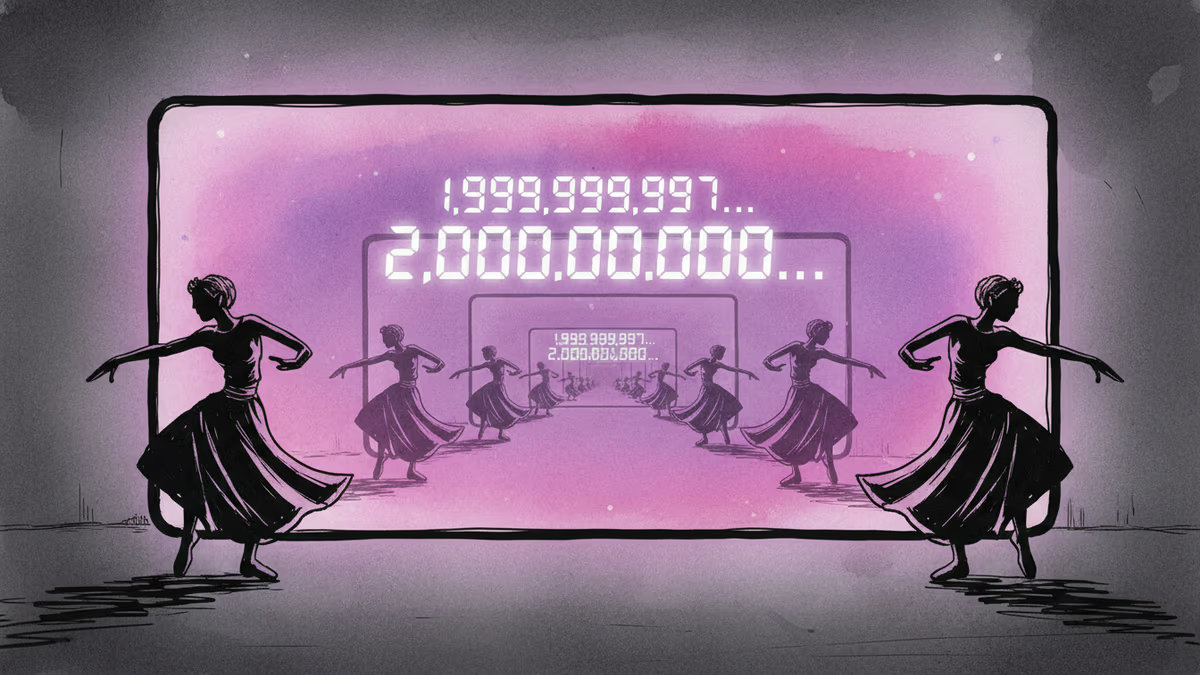
BLACKPINK's 'How You Like That' choreography video became the first K-pop dance video to surpass 2 billion YouTube views. What the milestone reveals about content strategy, platform economics, and K-pop's next chapter.
&TEAM's 'We on Fire' debuted on the Billboard 200 for the first time. Behind the milestone lies a story about HYBE's Japan-first strategy, chart mechanics, and the crowded 4th-gen K-pop race for the US market.
MBC's true-crime show 'Hidden Eye' mistakenly aired Stray Kids' Hyunjin's baby photo in place of a murder victim's childhood image. Five months later, an apology. What does that timeline reveal?
Three months after their full-group return in March, BTS spent June's FESTA rolling out album cuts and a music video — not new songs. Come Over cracked a global top 5 with zero new music behind it. Did the play work?
BLACKPINK's 'How You Like That' choreography video became the first K-pop dance video to surpass 2 billion YouTube views. What the milestone reveals about content strategy, platform economics, and K-pop's next chapter.
&TEAM's 'We on Fire' debuted on the Billboard 200 for the first time. Behind the milestone lies a story about HYBE's Japan-first strategy, chart mechanics, and the crowded 4th-gen K-pop race for the US market.
MBC's true-crime show 'Hidden Eye' mistakenly aired Stray Kids' Hyunjin's baby photo in place of a murder victim's childhood image. Five months later, an apology. What does that timeline reveal?
Thoughts
Share your thoughts on this article
Sign in to join the conversation