

YouTube's AI Purge: Why The Ban on Fake Movie Trailers Is a Warning Shot for All Creators
YouTube's ban on two AI movie trailer channels is a critical warning. PRISM analyzes why this signals a new era of accountability for AI content creators.
The Lede: Beyond the Ban
YouTube's termination of two AI-generated movie trailer channels, commanding a combined 2 million subscribers, is far more than a routine content moderation action. For executives and creators in the digital media space, this is a landmark event. It signals the end of the 'Wild West' era for generative AI content on major platforms and the beginning of a new, high-stakes reality where authenticity and disclosure are no longer best practices, but survival requirements. This isn't about two rogue channels; it's about YouTube drawing a hard line on digital deception, fundamentally altering the risk calculus for the entire creator economy.
Why It Matters: The Ripple Effects
The shuttering of 'Screen Culture' and 'KH Studio' establishes a critical precedent with significant second-order effects:
- The Trust Tax is Due: Platforms like YouTube run on user trust. Deceptive, AI-generated content, even if engaging, erodes this trust over time. This ban is Google acknowledging that the long-term cost of platform pollution outweighs the short-term engagement gains from viral fakes. Every platform will now have to calculate its own 'trust tax'.
- The Moderation Arms Race Escalates: This moves platform enforcement beyond simple demonetization. The initial, softer approach failed. Full termination shows that platforms are willing to use their ultimate weapon. This will fuel an arms race between AI generation tools that create plausible fakes and AI detection tools designed to spot them, creating a new sub-sector of the tech industry focused on digital provenance.
- The Burden Shifts to Creators: The message is unequivocal: plausible deniability is dead. Creators can no longer hide behind inconsistent disclaimers. The responsibility for clear, consistent, and upfront labeling of synthetic or conceptual content now rests squarely on their shoulders. Failure to do so is an existential threat to their channel and brand.
The Analysis: From Novelty to Liability

We are witnessing a classic platform maturation cycle, accelerated by the velocity of generative AI. Historically, platforms have tolerated disruptive new content formats (e.g., clickbait headlines, reaction videos) during their initial growth phase, prioritizing user acquisition and engagement. However, as these formats scale, their negative externalities—in this case, audience confusion and the potential for scaled misinformation—become a liability.
YouTube's action is also a competitive differentiator. In a landscape where TikTok and other platforms are wrestling with their own floods of AI-generated content, YouTube is making a brand safety play. By positioning itself as a more stringently moderated platform, it signals to high-value advertisers that their brands are less likely to be associated with deceptive or low-quality synthetic media. The initial demonetization was a warning shot; the final termination is a declaration of policy. Engagement without integrity is now officially bad for business.
- Proactive Watermarking: Tools that embed invisible, persistent markers into AI-generated content at the point of creation.
- Third-Party Verification Services: Platforms that act as neutral arbiters, certifying content as authentic, human-made, or clearly labeled AI parody.
- Creator Compliance Tools: Software that helps creators manage and automate the disclaimers and metadata required by platform policies, reducing their risk of non-compliance.
This new ecosystem will become as essential to the creator economy as analytics and monetization tools are today.
PRISM's Take: An Inevitable and Necessary Correction
YouTube's decision was not just justified; it was inevitable. The promise of generative AI is to augment human creativity, not to perfect digital deception for clicks. Allowing these channels to flourish under a thin veil of 'parody' would have set a dangerous precedent, encouraging a race to the bottom where the most convincing fake wins.
This act forces a necessary maturation upon the AI creator community. The next wave of successful AI-driven channels will not be built on trickery, but on transparency. They will use AI as a powerful tool for ideation and production, but their core value proposition will be their unique human creativity and their trust-based relationship with their audience. This isn't the death of AI content on YouTube; it's the end of its infancy and the beginning of its accountability.
Authors
Related Articles
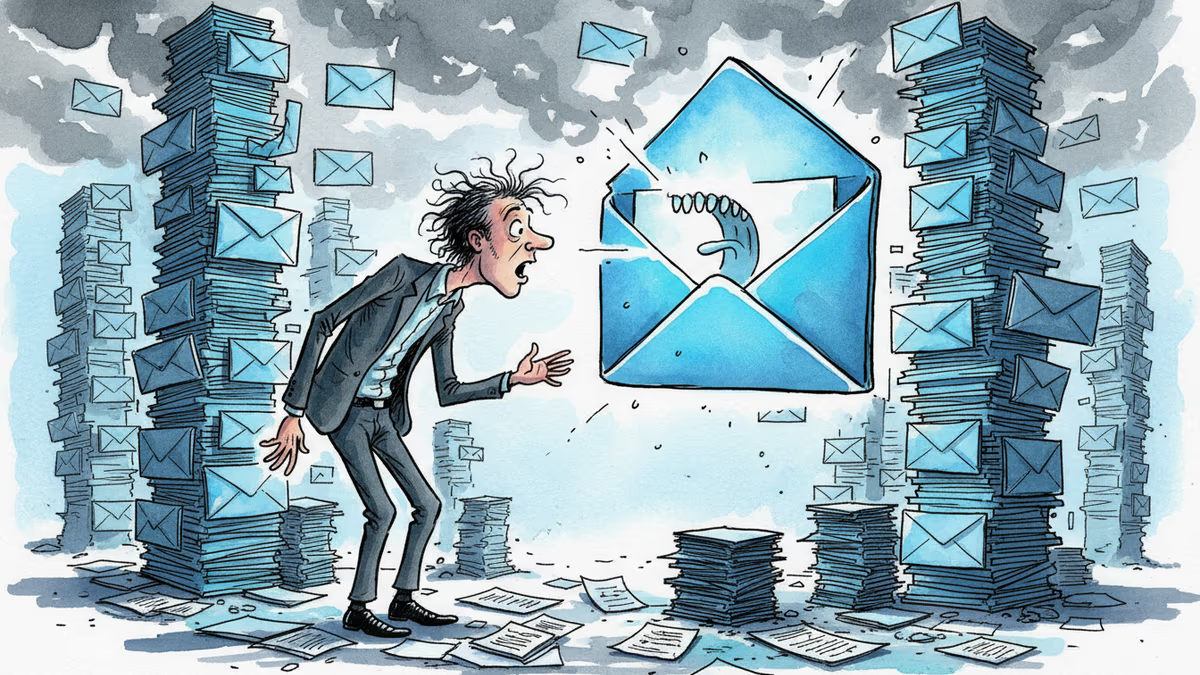
Google's Gmail Live lets you ask your inbox questions out loud. Announced at I/O 2026, it's AI's pitch to skeptics — and a reminder of how much Google already knows about you.
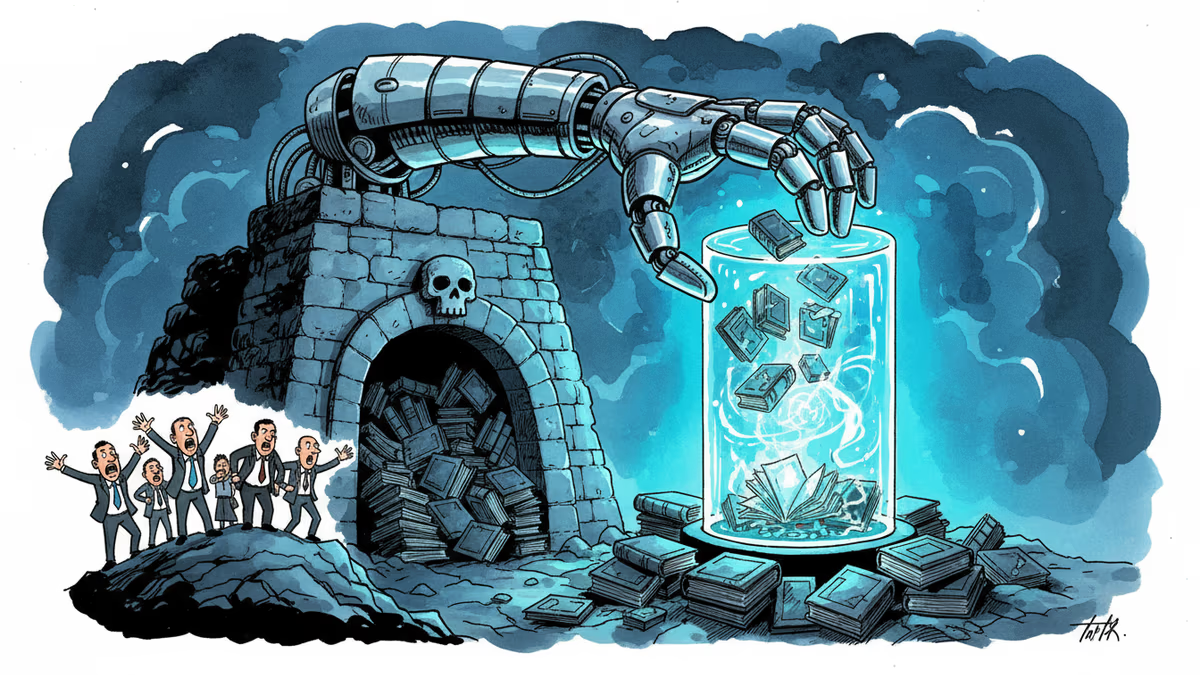
Five major publishers and author Scott Turow have filed a class action lawsuit against Meta, alleging the company used illegal pirate sites like LibGen to train its Llama AI models without permission.
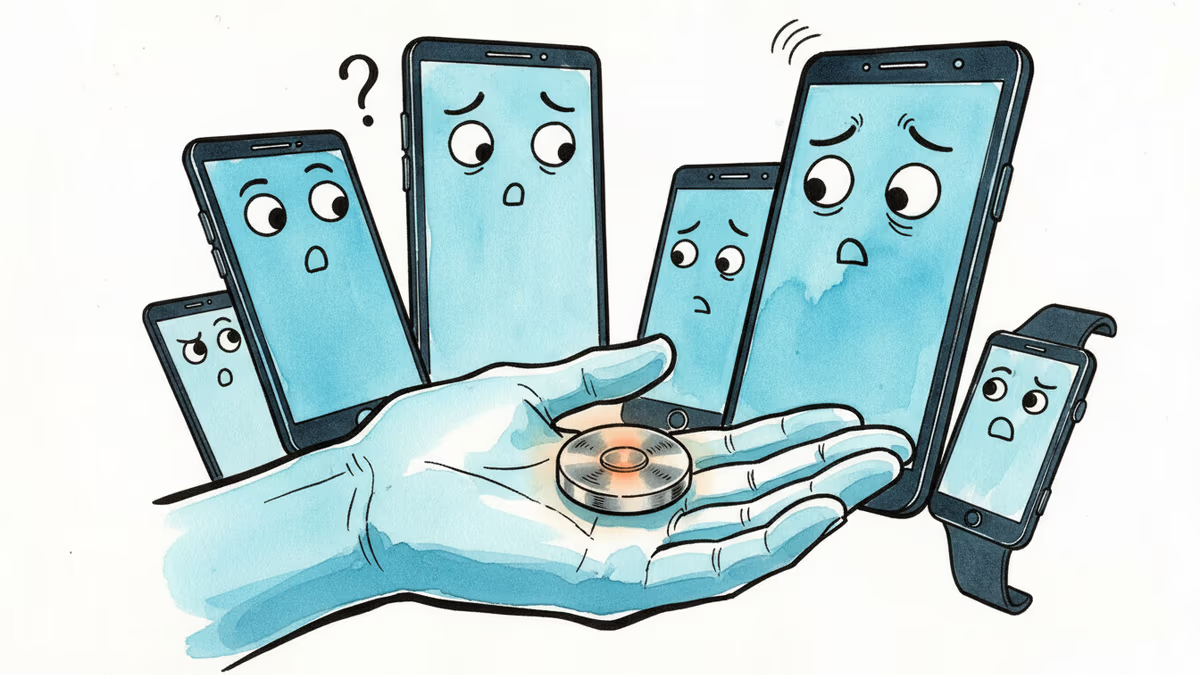
Two ex-Apple engineers built an AI puck that only listens when you press it. At $179, Button is a deliberate bet that dedicated AI hardware beats the Swiss Army knife approach of smartphones.
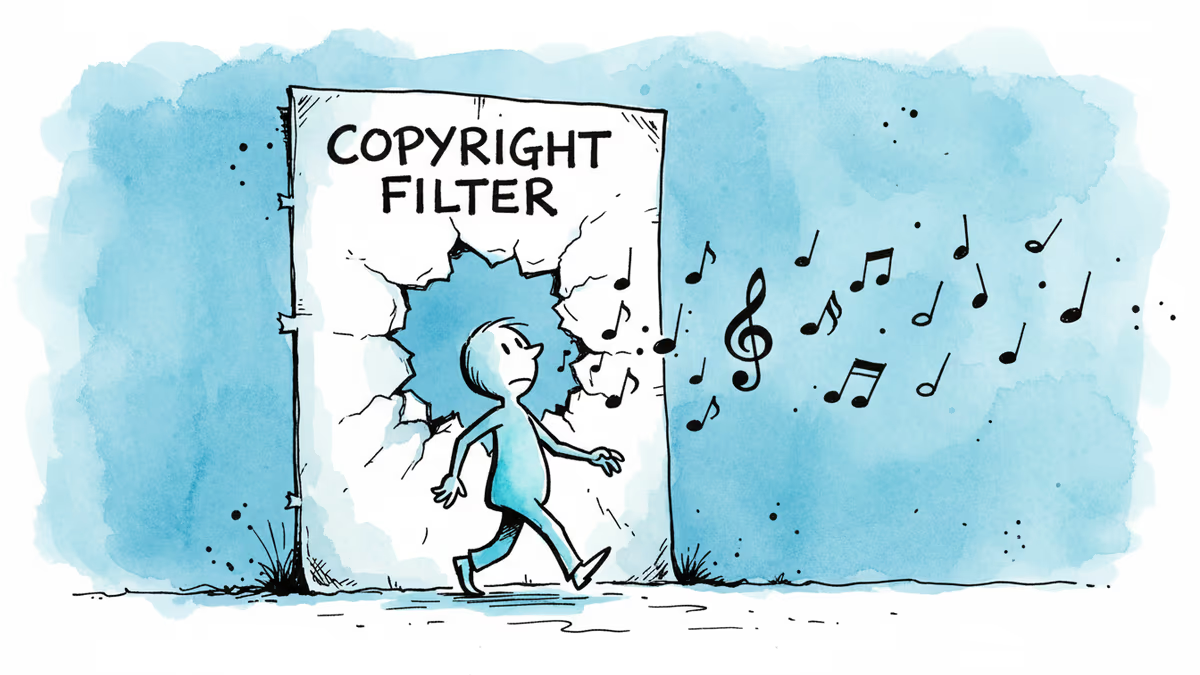
Suno's AI music platform claims to block copyrighted content, but researchers found its filters can be bypassed with minimal effort and free tools, generating near-identical imitations of Beyoncé, Black Sabbath, and more.
Google's Gmail Live lets you ask your inbox questions out loud. Announced at I/O 2026, it's AI's pitch to skeptics — and a reminder of how much Google already knows about you.
Five major publishers and author Scott Turow have filed a class action lawsuit against Meta, alleging the company used illegal pirate sites like LibGen to train its Llama AI models without permission.
Two ex-Apple engineers built an AI puck that only listens when you press it. At $179, Button is a deliberate bet that dedicated AI hardware beats the Swiss Army knife approach of smartphones.
Suno's AI music platform claims to block copyrighted content, but researchers found its filters can be bypassed with minimal effort and free tools, generating near-identical imitations of Beyoncé, Black Sabbath, and more.
Thoughts
Share your thoughts on this article
Sign in to join the conversation