
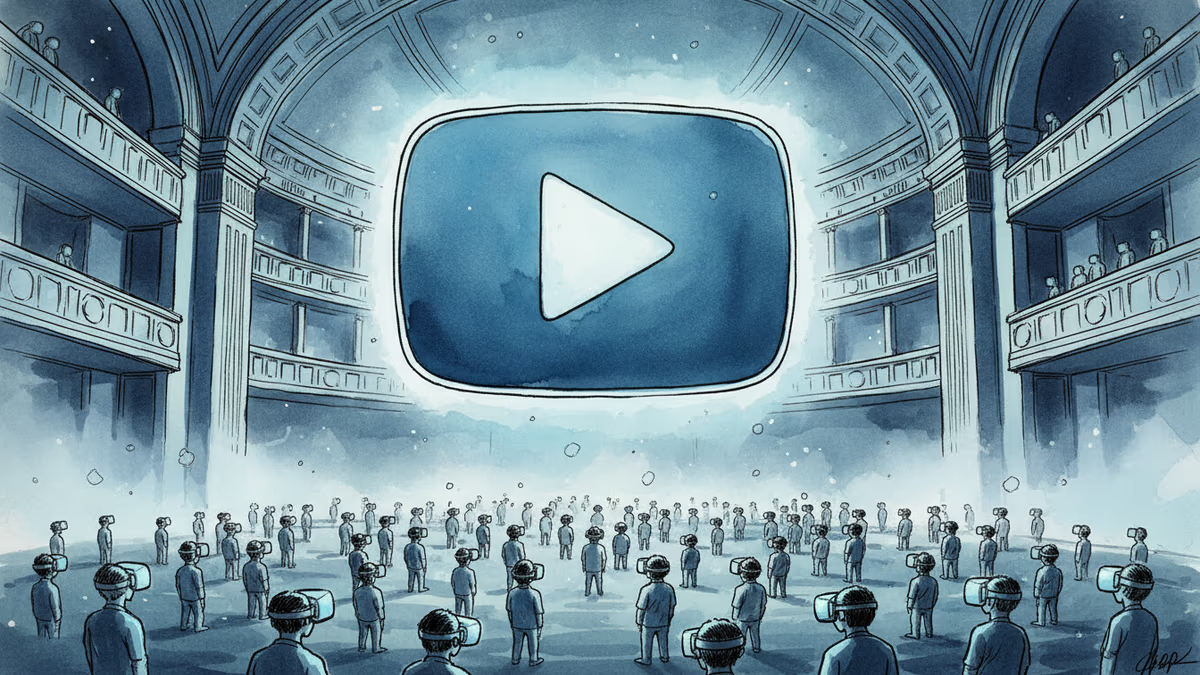
Why YouTube Finally Built a Vision Pro App (It's Not What You Think)
After two years of resistance, YouTube launches its Vision Pro app just as Apple's headset sales plummet. The timing reveals a strategic bet on spatial computing's future.
45,000 units. That's how many Vision Pros Apple sold in Q4 2025
Two years after launch, Apple's $3,499 headset has gone from tech darling to production halt rumors. So why did YouTube choose this exact moment to finally release its dedicated app? After telling users to "just use Safari" for two years, the timing seems... curious.
The Holdout Strategy That Almost Worked
While Disney+, Prime Video, and Netflix rolled out native Vision Pro apps on day one, YouTube took a different path. Users had to navigate through Safari, missing out on offline downloads, gesture controls, and the seamless experience that makes VR compelling.
Third-party solutions like Juno briefly filled the gap before YouTube's legal team shut them down for ToS violations. Users were stuck in limbo – paying premium prices for a compromised experience.
Now YouTube's official app delivers 8K playback (on M5 models), a dedicated Spatial tab for 360° content, and theater-sized virtual screens. Technically, it's everything users wanted. But why now?
Platform Economics: The Waiting Game
YouTube's delay wasn't stubbornness – it was calculation. Developing for new platforms requires resources, and the math has to work. Early Vision Pro sales looked promising, but sustained engagement told a different story.

The Financial Times reported Apple halted production due to weak demand and slashed marketing budgets across key markets. By traditional metrics, this would be the worst time to launch an app.
Apple's perspective: Content ecosystem expansion is critical. Hardware alone won't drive adoption.
YouTube's angle: Getting in early while competition is minimal. Better to be first in a small market than late to a crowded one.
User reality: Premium hardware deserves premium software experiences, regardless of install base.
The Spatial Video Bet
The app's standout feature isn't 8K playback – it's the Spatial tab. YouTube is betting that immersive content will drive the next wave of engagement. With creators already experimenting with VR180 and 360-degree formats, the platform is positioning itself for when spatial content goes mainstream.
This mirrors YouTube's early mobile strategy: build the infrastructure before the audience arrives, then scale when adoption accelerates.
Market Signals vs. Strategic Positioning
Traditional business logic suggests YouTube should have waited for clearer market signals. But platform wars aren't won by following conventional wisdom. They're won by recognizing inflection points before competitors do.
Consider the parallels: YouTube launched mobile apps when smartphone adoption was still nascent. Instagram bet on mobile-first when desktop ruled social media. Sometimes the best time to enter a market is when everyone else is leaving.
Authors
Related Articles
After 15 years of fragmented mobile messaging, Apple and Google are rolling out end-to-end encrypted RCS messaging between iPhones and Android devices. Here's what changed, why it took so long, and what it means for your privacy.
Apple agreed to pay $250 million to settle claims it misled iPhone 16 buyers about Apple Intelligence features. What this means for consumers, Big Tech marketing, and the AI industry.
Apple quietly removed the entry-level $599 Mac Mini, raising the starting price to $799 — just one day after Tim Cook warned of chip supply constraints on the earnings call.
Apple names John Ternus, its hardware engineering chief, as the next CEO. The shift from operator to product person signals where Apple thinks its next decade of growth will come from — and raises real questions about what comes next.
After 15 years of fragmented mobile messaging, Apple and Google are rolling out end-to-end encrypted RCS messaging between iPhones and Android devices. Here's what changed, why it took so long, and what it means for your privacy.
Apple agreed to pay $250 million to settle claims it misled iPhone 16 buyers about Apple Intelligence features. What this means for consumers, Big Tech marketing, and the AI industry.
Apple quietly removed the entry-level $599 Mac Mini, raising the starting price to $799 — just one day after Tim Cook warned of chip supply constraints on the earnings call.
Apple names John Ternus, its hardware engineering chief, as the next CEO. The shift from operator to product person signals where Apple thinks its next decade of growth will come from — and raises real questions about what comes next.
Thoughts
Share your thoughts on this article
Sign in to join the conversation