
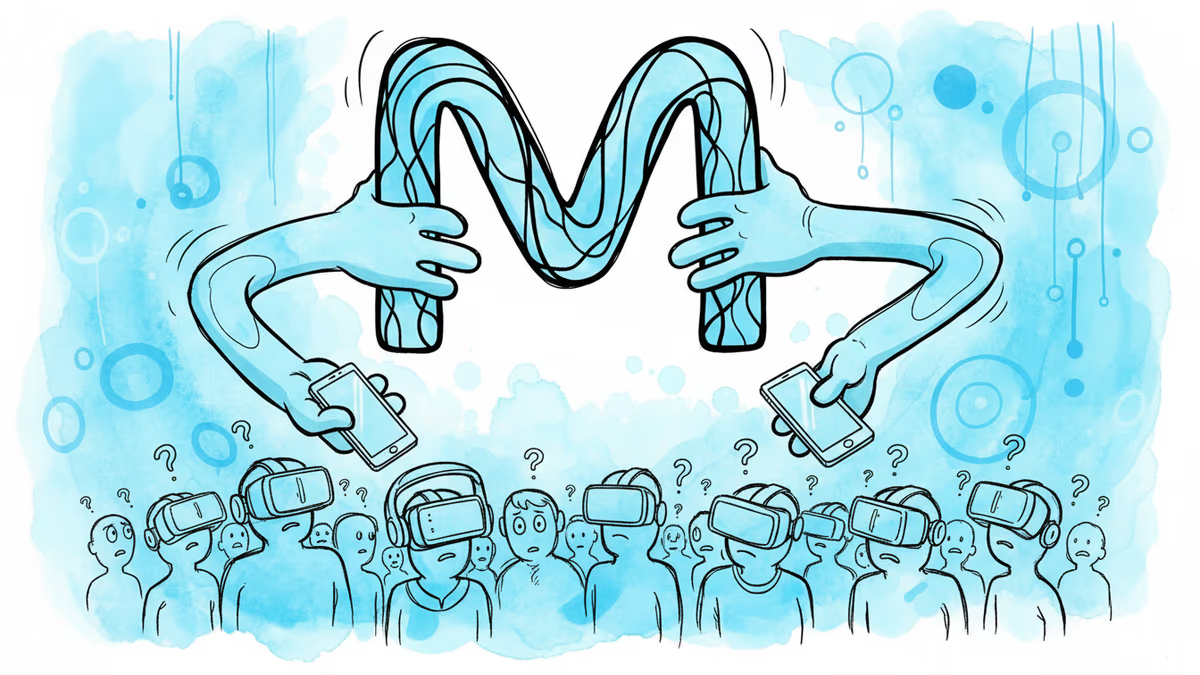
Meta Abandons VR Dreams, Pivots Horizon Worlds to Mobile
Meta shifts Horizon Worlds from VR-exclusive to mobile-first, directly challenging Roblox and Fortnite. A strategic retreat or smart pivot?
$30 Billion Later, Meta Changes Course
After three years and $30 billion in Reality Labs losses, Meta is making a dramatic U-turn. Horizon Worlds, once the flagship of VR social experiences, is "shifting focus to be almost exclusively mobile," according to Samantha Ryan, VP of Reality Labs content. The company is "explicitly separating" its Quest VR platform from its Worlds platform.
This isn't just a strategy tweak—it's a fundamental admission. The path to the metaverse won't run through expensive VR headsets. It'll happen on the devices already in everyone's pocket.
The writing was on the wall. Meta recently laid off 10% of its Reality Labs workforce, shuttered three VR studios, and discontinued new content for its VR fitness app Supernatural. Even its workplace metaverse got the axe.
The Roblox Reality Check
Meta's new strategy puts it in direct competition with Roblox and Fortnite—platforms that have already cracked the code on social virtual worlds. The difference? They never bet everything on VR.
Roblox boasts 300 million monthly active users, mostly teens and young adults who've never owned a VR headset. Meanwhile, Horizon Worlds' user count remains mysteriously undisclosed, with industry estimates suggesting it's stuck in the hundreds of thousands.

The math is brutal. A Quest headset costs $500+ and requires dedicated space and setup time. A smartphone? Already in your pocket, works anywhere, and doesn't give you motion sickness.
Developers: Relief or Concern?
The developer community's reaction is mixed. VR developers who've spent years mastering spatial computing feel somewhat abandoned. "We've been building for the future of social interaction," says one indie VR developer who requested anonymity. "Now Meta's saying that future is... mobile apps?"
But mobile developers see opportunity. Meta's new Meta Horizon game engine, already powering Horizon Central, could democratize 3D social experiences. If Meta can make it as easy to build virtual worlds as it is to create TikTok videos, the platform could explode.
The bigger question: Will this cannibalize Meta's VR ambitions entirely? The company insists it's "separating" rather than abandoning VR, but resources are finite.
The Metaverse Redefined
Meta's pivot forces us to reconsider what the metaverse actually is. Mark Zuckerberg's 2021 vision featured photorealistic avatars in immersive VR environments. The new reality looks more like... well, like what kids are already doing in Roblox.
This shift has implications beyond Meta. Apple's Vision Pro, ByteDance's Pico, and other VR platforms were counting on social experiences as their killer app. If the biggest player in VR social is going mobile-first, what's left for VR?
Maybe VR finds its niche in gaming, training, and specialized applications. But the dream of VR as the primary interface for social connection? That dream just got a lot smaller.
Authors
Related Articles

A law firm marketing itself on AI-powered legal success submitted fake citations in a federal appeal. Now its lawyers face sanctions — and the broader AI legal industry faces a credibility crisis.
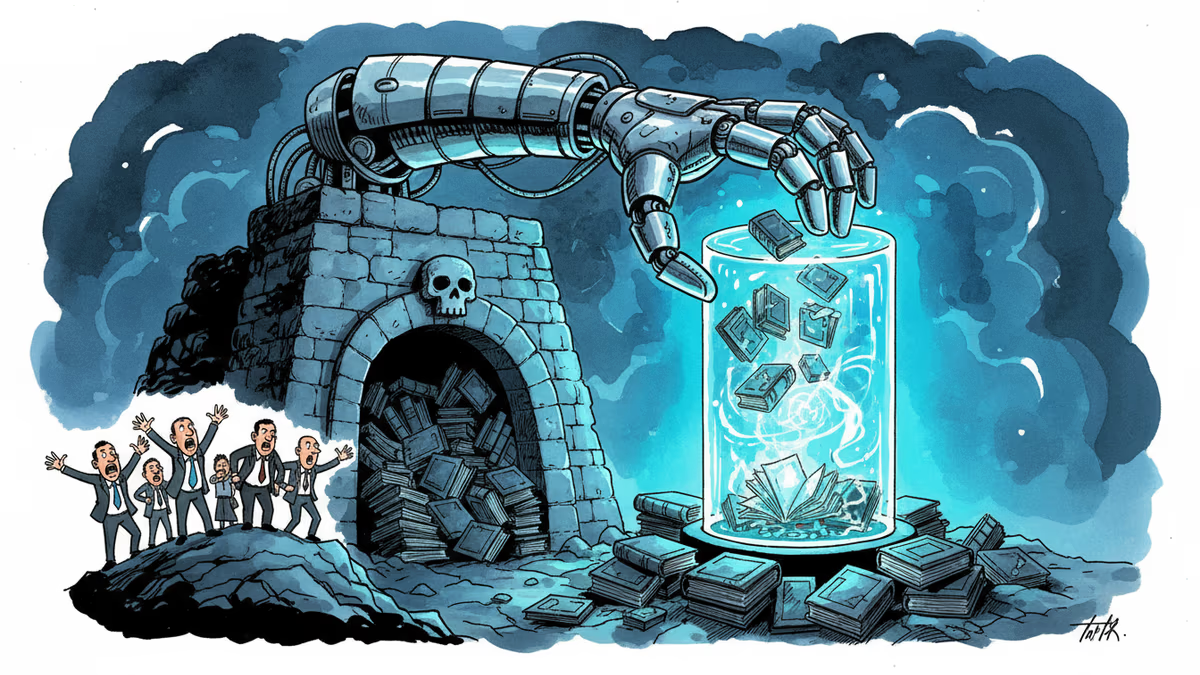
Five major publishers and author Scott Turow have filed a class action lawsuit against Meta, alleging the company used illegal pirate sites like LibGen to train its Llama AI models without permission.

New Mexico already won $375 million from Meta. Now it wants something harder to give: a court order forcing Facebook, Instagram, and WhatsApp to redesign themselves. A three-week trial starts Monday.
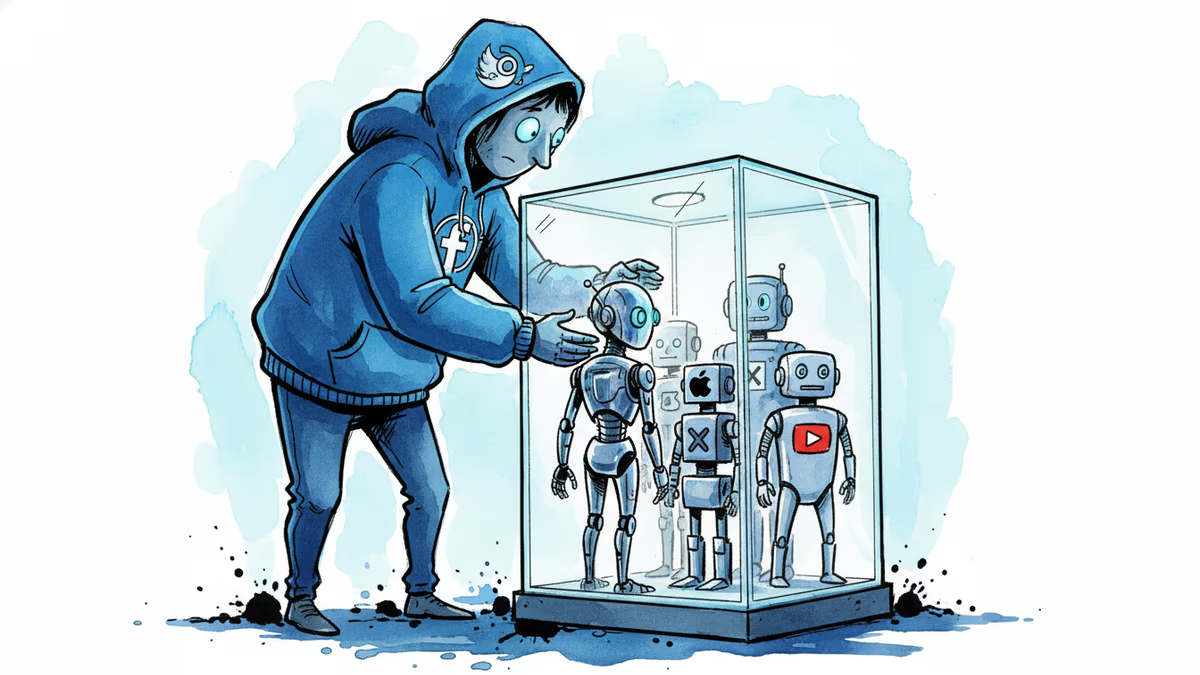
Meta acquired humanoid robotics startup ARI, adding to a Big Tech arms race in physical AI. The real prize isn't a robot product — it's a new way to train intelligence.
A law firm marketing itself on AI-powered legal success submitted fake citations in a federal appeal. Now its lawyers face sanctions — and the broader AI legal industry faces a credibility crisis.
Five major publishers and author Scott Turow have filed a class action lawsuit against Meta, alleging the company used illegal pirate sites like LibGen to train its Llama AI models without permission.
New Mexico already won $375 million from Meta. Now it wants something harder to give: a court order forcing Facebook, Instagram, and WhatsApp to redesign themselves. A three-week trial starts Monday.
Meta acquired humanoid robotics startup ARI, adding to a Big Tech arms race in physical AI. The real prize isn't a robot product — it's a new way to train intelligence.
Thoughts
Share your thoughts on this article
Sign in to join the conversation