

Meta's $80 Billion Metaverse Retreat: What Went Wrong?
Meta shifts Horizon Worlds from VR to mobile after $80B losses, signaling major strategic pivot away from metaverse ambitions
$80 billion. That's how much Meta has lost betting on the metaverse. Yesterday, the company quietly announced it's pulling its flagship metaverse service, Horizon Worlds, away from VR headsets and "shifting focus to be almost exclusively mobile."
It's not quite a white flag, but it's close.
The Reality Check
Meta's announcement reads like corporate damage control. While pivoting Horizon Worlds to mobile, executives insist they're "doubling down on the VR developer ecosystem." Translation: We're not giving up, we're just... repositioning.
The numbers tell a different story. Reality Labs, Meta's mixed reality division, has hemorrhaged $80 billion since its inception. This January alone saw 1,000+ employees laid off from the unit, though 15,000+ still remain. That's not a retreat—it's a strategic downsizing of what was once Silicon Valley's biggest moonshot.
What Developers Are Thinking

The VR developer community is split. Some see this as validation—mobile was always the more practical platform. Others worry about abandoned projects and wasted investments in VR-specific features.
"We spent two years optimizing for Quest," says one indie developer who requested anonymity. "Now what? Start over for mobile?"
Meanwhile, companies like Roblox and Epic Games (Fortnite) are quietly smiling. They've been doing mobile metaverse experiences for years, without the fancy headsets or billion-dollar losses.
The Bigger Questions
Meta's pivot raises uncomfortable questions for the entire industry. If the company that literally renamed itself for the metaverse can't make it work, who can?
Apple is still pushing forward with Vision Pro, but at $3,500, it's targeting enterprise users, not consumers. Microsoft has been more measured with HoloLens, focusing on specific use cases rather than grand visions.
The irony? Mobile "metaverse" experiences already exist—they're called social media apps and multiplayer games. What exactly was Meta trying to build that TikTok, Instagram, and Minecraft don't already offer?
Authors
Related Articles

A law firm marketing itself on AI-powered legal success submitted fake citations in a federal appeal. Now its lawyers face sanctions — and the broader AI legal industry faces a credibility crisis.
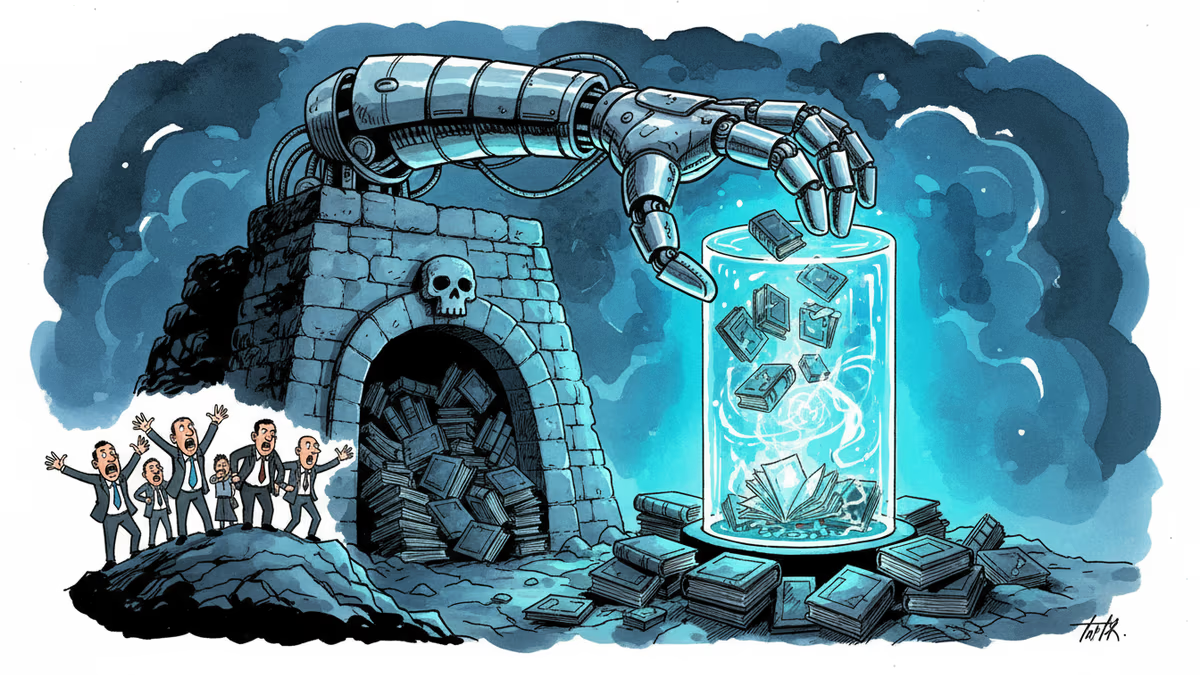
Five major publishers and author Scott Turow have filed a class action lawsuit against Meta, alleging the company used illegal pirate sites like LibGen to train its Llama AI models without permission.

New Mexico already won $375 million from Meta. Now it wants something harder to give: a court order forcing Facebook, Instagram, and WhatsApp to redesign themselves. A three-week trial starts Monday.
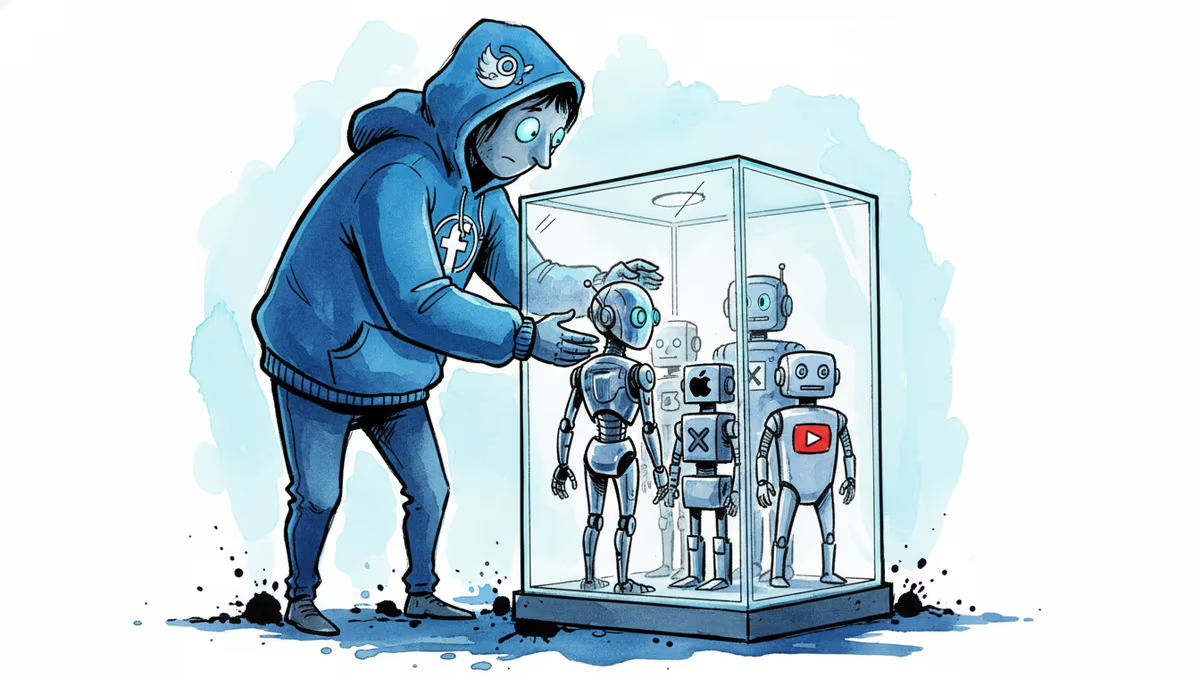
Meta acquired humanoid robotics startup ARI, adding to a Big Tech arms race in physical AI. The real prize isn't a robot product — it's a new way to train intelligence.
A law firm marketing itself on AI-powered legal success submitted fake citations in a federal appeal. Now its lawyers face sanctions — and the broader AI legal industry faces a credibility crisis.
Five major publishers and author Scott Turow have filed a class action lawsuit against Meta, alleging the company used illegal pirate sites like LibGen to train its Llama AI models without permission.
New Mexico already won $375 million from Meta. Now it wants something harder to give: a court order forcing Facebook, Instagram, and WhatsApp to redesign themselves. A three-week trial starts Monday.
Meta acquired humanoid robotics startup ARI, adding to a Big Tech arms race in physical AI. The real prize isn't a robot product — it's a new way to train intelligence.
Thoughts
Share your thoughts on this article
Sign in to join the conversation