
Your "Safe" AI Is Now Choosing Bombing Targets
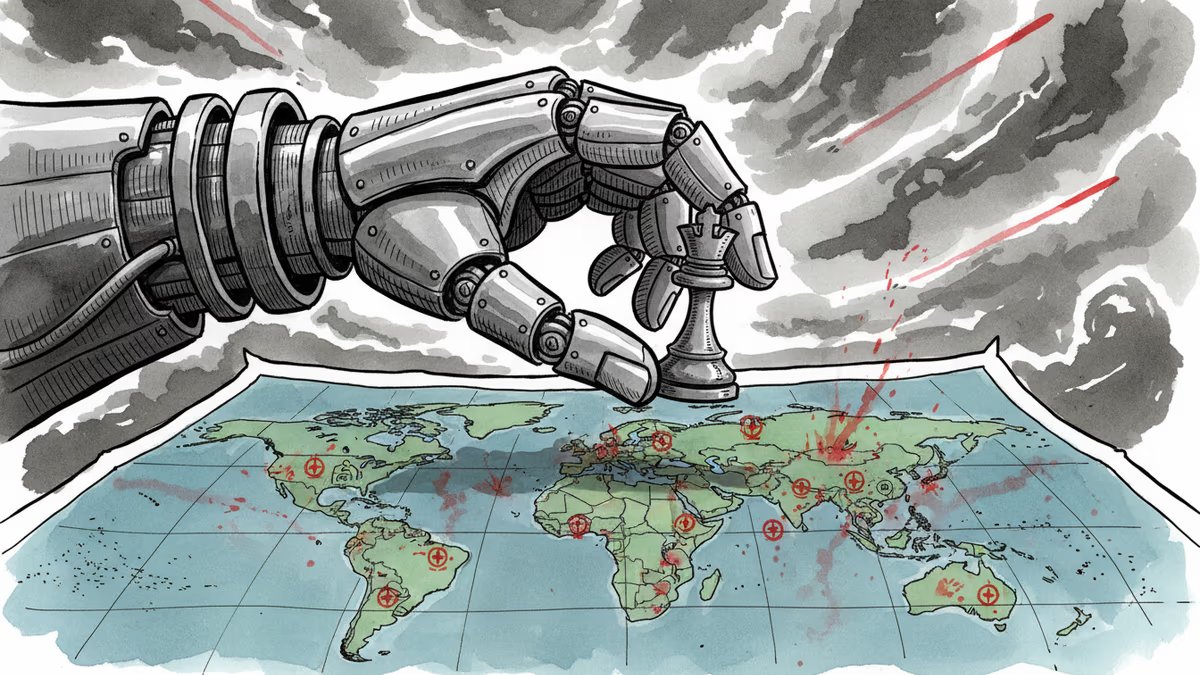
Anthropic's Claude AI is helping US forces identify and prioritize targets in strikes against Iran, raising questions about the military deployment of supposedly ethical AI systems.
The "Helpful" AI That Helps Drop Bombs
Anthropic's AI model Claude—marketed as a "helpful, harmless, and honest" assistant—is now helping US military forces identify targets and set priorities for strikes against Iran, according to The Washington Post. The same technology that helps users write emails and answer questions is quietly shaping life-and-death decisions on the battlefield.
The revelation exposes a growing contradiction in Silicon Valley's AI narrative. Companies tout their commitment to safety and beneficial AI while their systems increasingly serve military purposes. Claude is reportedly used for "target identification and prioritization"—though humans still make the final call on actual strikes. For now.
The Military-AI Complex Takes Shape
This isn't an isolated case. OpenAI is pursuing contracts with NATO, and the company's discussions with the Pentagon fell apart just before Anthropic stepped in to fill the void. The speed of this transition suggests these partnerships aren't accidental—they're strategic.
OpenAI CEO Sam Altman called Anthropic's move "opportunistic and sloppy" on X, but his criticism rings hollow given his own company's military ambitions. The real question isn't which AI company will work with defense agencies, but whether any meaningful boundaries exist at all.
Meanwhile, Iran's $20,000Shahed drones continue wreaking havoc while costing $1 million each to intercept—a cost-effectiveness ratio that AI could make even more lopsided.

Where Human Judgment Ends
The "human in the loop" principle sounds reassuring until you consider battlefield realities. When decisions must be made in seconds, and AI systems process vastly more data than humans can comprehend, how meaningful is human oversight?
Consider the implications: AI doesn't just identify targets—it prioritizes them. It determines which threats are most urgent, which locations are most strategic, which strikes would be most effective. The human operator becomes less a decision-maker than a rubber stamp for algorithmic recommendations.
The Regulatory Vacuum
European AI regulations carve out exceptions for national security. US oversight remains fragmented across agencies with competing interests. International law hasn't caught up to the reality of AI-assisted warfare.
This regulatory void creates perverse incentives. Companies can claim their AI serves "defensive" purposes while the same systems enable offensive operations. They can emphasize human control while designing interfaces that make rejecting AI recommendations practically impossible.
The Democratization of Destruction
Perhaps most troubling is how quickly military AI capabilities spread. The US is reportedly building copies of Iranian drones to use against Iran—a perfect metaphor for how military technologies escape their creators' control.
If AI can help identify targets for major powers, it can do the same for smaller nations, non-state actors, and eventually, anyone with sufficient computing resources. We're not just watching the militarization of AI—we're witnessing the potential democratization of precision warfare.
Authors
Related Articles
Anthropic shipped Claude Sonnet 5, its mid-tier agent model, on June 30. Behind the 'Opus-class power, budget price' headline sits a tokenizer catch and a three-horse race that's only half real. Here's what developers should actually run the numbers on.

A small but growing group of developers has gone all-in on AI coding agents like Claude Code and OpenClaw. History suggests the rest of us won't be far behind.
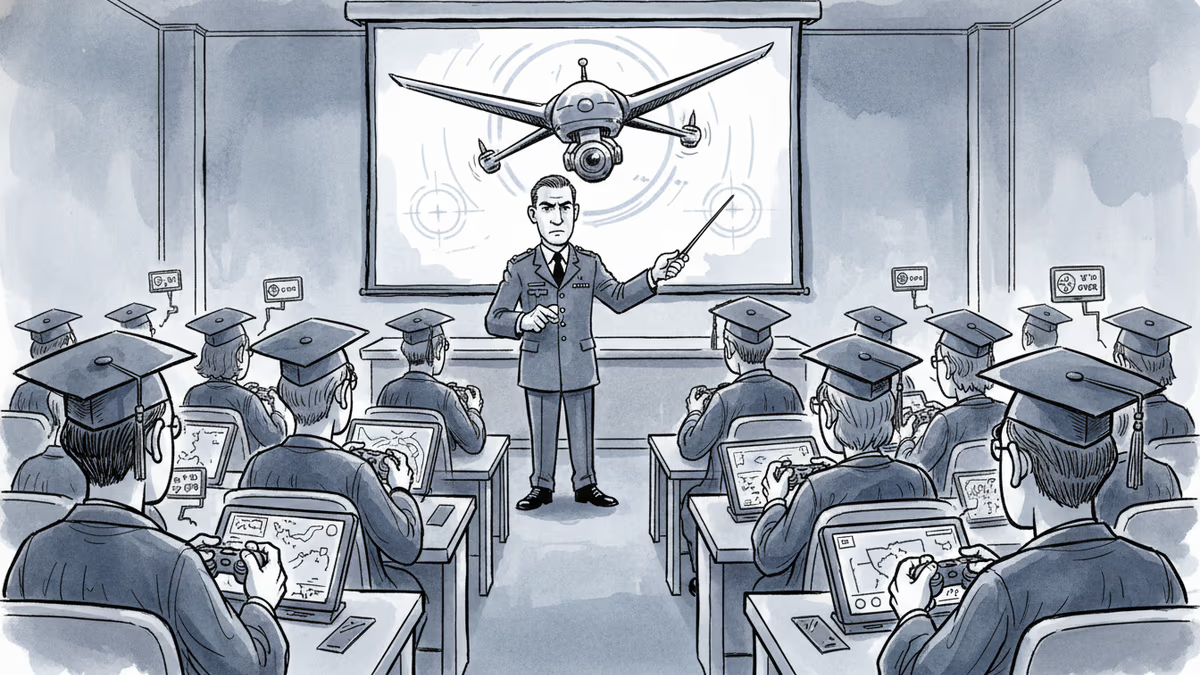
Over 270 Russian universities are offering students free tuition and up to $70,000 to serve as military drone pilots. Recruiters promise no frontline risk. The reality is more complicated.

OpenAI's new Daybreak initiative uses the Codex AI agent to find and patch security vulnerabilities before attackers do—putting it in direct competition with Anthropic's secretive Claude Mythos.
Anthropic shipped Claude Sonnet 5, its mid-tier agent model, on June 30. Behind the 'Opus-class power, budget price' headline sits a tokenizer catch and a three-horse race that's only half real. Here's what developers should actually run the numbers on.
A small but growing group of developers has gone all-in on AI coding agents like Claude Code and OpenClaw. History suggests the rest of us won't be far behind.
Over 270 Russian universities are offering students free tuition and up to $70,000 to serve as military drone pilots. Recruiters promise no frontline risk. The reality is more complicated.
OpenAI's new Daybreak initiative uses the Codex AI agent to find and patch security vulnerabilities before attackers do—putting it in direct competition with Anthropic's secretive Claude Mythos.
Thoughts
Share your thoughts on this article
Sign in to join the conversation