
World Cup Memes 2026: How a Duck Beat Every Goal
A three-nation World Cup turned fan culture into viral gold — Merlin the duck, Japan's cleanup, and Korea-Mexico bromance top every goal scored.
Forget the Goals. A Duck Is Winning the 2026 World Cup
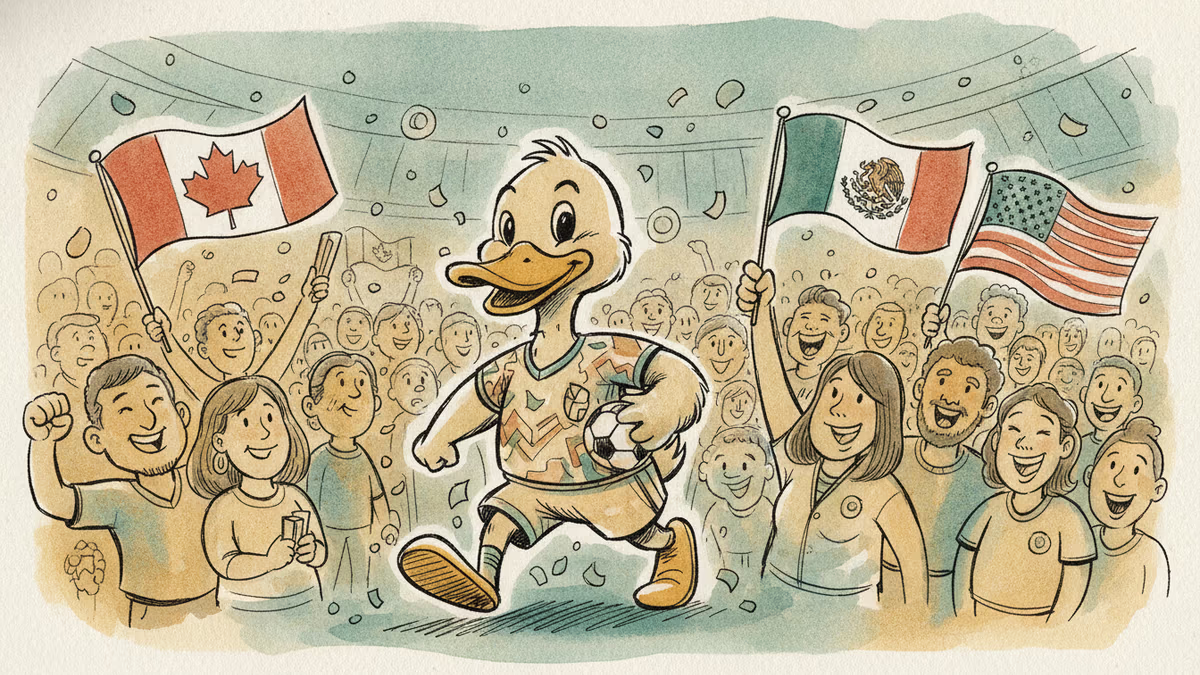
A domestic duck wearing a tiny Mexico jersey has been shared more than 8 million times — within four hours of the original photo dropping. That's the count Yahoo Sports and TODAY put on the Reuters image. No goal at this tournament has traveled that fast.
His name is Merlin. He belongs to a Mexico City street vendor named Gómez, who got him as a gift from a customer two years ago. After Mexico opened the tournament with a 2-0 win over South Africa on June 11 2026, a photo of Merlin — mini national kit, green socks and all — swallowed timelines whole. The caption: "Viva El Pato." Long live the duck. By June 22, President Claudia Sheinbaum had invited Gómez's family to her morning press briefing, calling Merlin, in so many words, a symbol of the World Cup and of what Mexican families aspire to be (via Reuters, TODAY and NBC). One thing to clear up: several outlets have labeled Merlin a "FIFA ambassador." He isn't. The verified title is ambassador for the host city of Mexico City — a local honor, not a FIFA one.
What happens when you pour three countries into one tournament
There's a reason a duck ended up at a presidential briefing, and it starts with the format. This is the first World Cup co-hosted by three nations — the United States, Canada and Mexico — and the first with 48 teams, spread across 16 cities. Different foods, different languages, different ways of singing your heart out, all physically colliding inside one event. That friction is the content.
Take Freddy (@FreddyLA7), a German fan whose fast-food pilgrimage became a genre unto itself. Six weeks on the road across the U.S. and Canada following his team, he rolled into his first-ever Waffle House at 1 a.m. and filed a review: "10/10, we will be coming back" (The Takeout). Buc-ee's mega gas stations, Walmart, Taco Bell, ranch dressing on a salad — the everyday stuff Americans never think twice about became, per Yahoo and ABC News, the most durable meme of the tournament. For a European traveler, a 24-hour diner that serves hash browns "scattered, smothered and covered" at 1 a.m. reads like science fiction. That gap is the whole joke, and Americans loved watching an outsider fall for their most ordinary institutions.
Scotland's "Tartan Army" won on sheer volume. Back at a World Cup for the first time in roughly 28 years, the fans crossed the Atlantic in force. At Boston's Sam Adams brewery, they drank 70 kegs dry in four days (ESPN). In Miami's Little Havana, an estimated 8,000 of them marched while belting out "Yes Sir, I Can Boogie," a 1970s disco track that's somehow their unofficial anthem (ABC News, WLRN). A video of bagpipes at 6:30 a.m. in Boston pulled more than 9 million views, and when neighbor Mike Morrison started grilling sausages for the visitors, the whole thing curdled — deliciously — into a U.S.-Scotland bromance (NBC Boston).
Japan's supporters made headlines by doing the opposite of a party. After Japan drew 2-2 with the Netherlands in a Group F match in Dallas, hundreds of fans pulled out trash bags and cleaned their own section (FOX4, CBS Texas). They left the locker room spotless too. Even NFL quarterback Jameis Winston, on assignment as a FOX Sports correspondent, grabbed a bag. It's a habit dating back to the 1998 World Cup in France, rooted in the way Japanese schoolchildren clean their own classrooms and in the proverb "tatsu tori ato wo nigosazu" — a departing bird leaves no mess behind — as ESPN and Japan Today explained. One supporter kept it short: "This is our culture." Read it not as an exotic quirk but as a portable ritual — the same thing these fans do at home, now performed 6,000 miles away.

Korea's moment happened off the pitch
South Korea's contribution to the meme economy didn't come from a goal at all. When the Korean squad arrived at their Guadalajara hotel, hundreds of Mexican supporters showed up to welcome them, and a clip spread with the caption "Coreano, hermano, ya eres Mexicano" — Korean brother, now you're Mexican (NPR).
The roots go back eight years. In the final group match of the 2018 World Cup in Russia, South Korea beat Germany 2-0, a result that helped push Mexico into the knockout round. Mexican fans in Mexico City were so grateful they hoisted South Korea's consul general, Han Byung-jin, into the air. In 2026, that friendship reignited (NPR, ABC7). If you're wondering why a Korean team gets a hero's welcome in Mexico, that's the whole backstory: one favor, never forgotten.
A pure moment, or a manufactured one?
The same phenomenon splits into two readings, and both hold up.
One side sees borderless cultural exchange. The physical contact created by three-nation hosting produced spontaneous hospitality — sausages on a grill, a Waffle House review, a diplomat tossed in the air. The Coreano hermano bond, eight years in the making, is real. Nobody staged Mike Morrison.
The other side sees commercialized viral consumption. FIFA and its sponsors reportedly run dedicated teams to capture viral moments within seconds of a goal (Forbes). Critics have argued that while fans hit visa walls and matches kick off in the dead of night, the corporate hype floats free of how local fans actually feel (Inside World Football). One survey found 88% of consumers say authenticity drives their brand choices — which sets up the paradox on full display here: authenticity itself has become the thing being marketed.
And there's a variable that blurs the line further: AI-generated fakes. Manipulated crowd scenes and clips stitched with words nobody said have circulated alongside the real thing, making this, as Euronews' fact-checkers noted, the first World Cup where genuine memes and AI fabrications share a timeline. Which moments are real hospitality and which are staged for the algorithm isn't always easy to tell as they scroll past.
Merlin's family has gone back to the street stall. The Tartan Army has moved on to the next host city. The tournament is still underway, and nobody knows which city the next meme detonates in. What's certain is that across the opening three weeks, the most-shared scenes weren't goals — they were a duck in a jersey, supporters with trash bags, and a neighbor at a grill.
This content is AI-generated based on source articles. While we strive for accuracy, errors may occur. We recommend verifying with the original source.
Related Articles
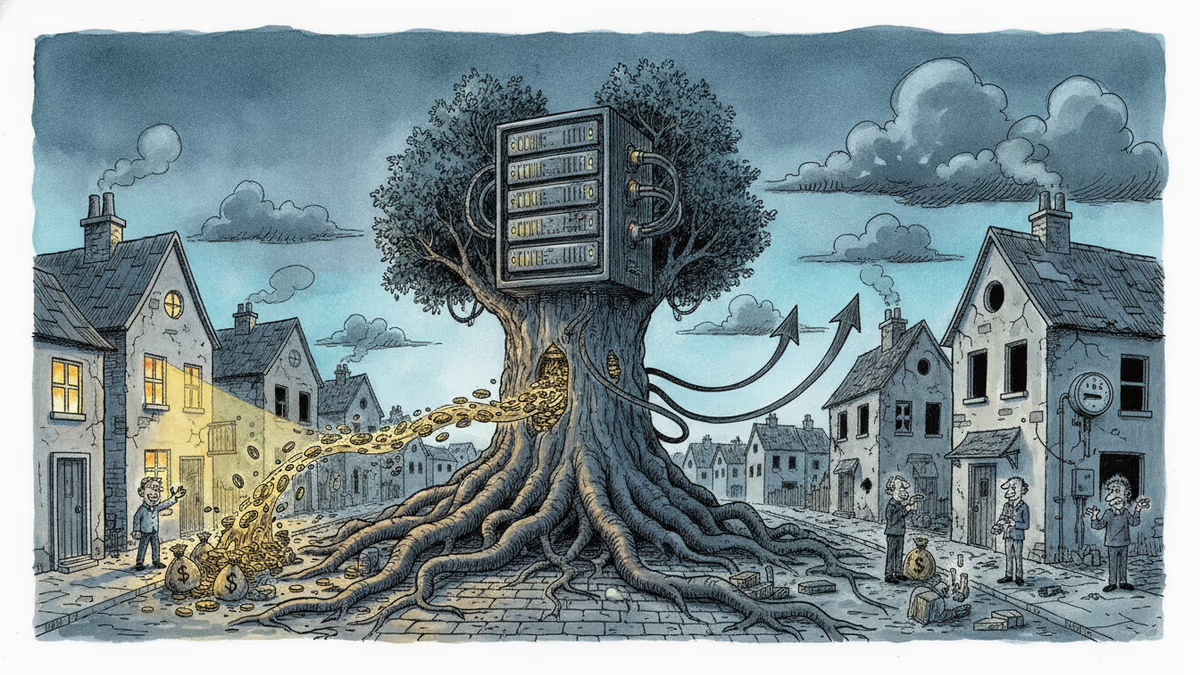
Over 1,200 community actions have pushed back against data centers since 2024. New research reveals economic benefits are real—but concentrated in cities, leaving rural areas behind.
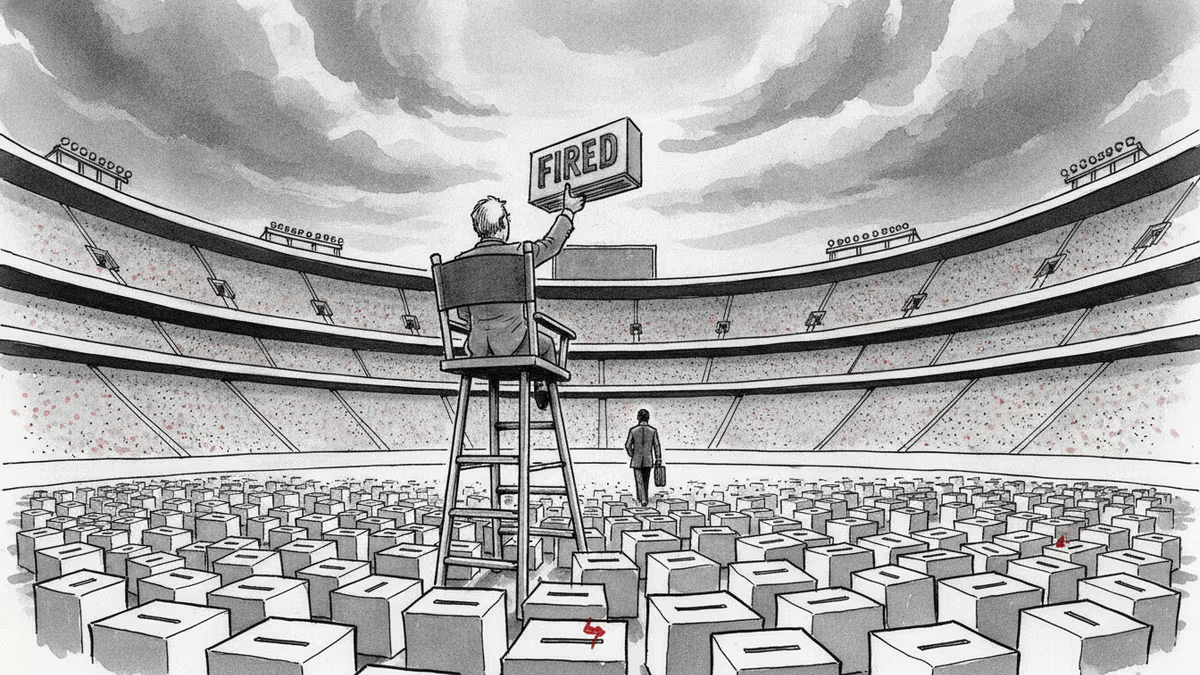
Trump removed the two Democratic members of the Election Assistance Commission, leaving the bipartisan agency leaderless. A Supreme Court ruling made it legal. Here's why a non-crisis can still be a warning sign.
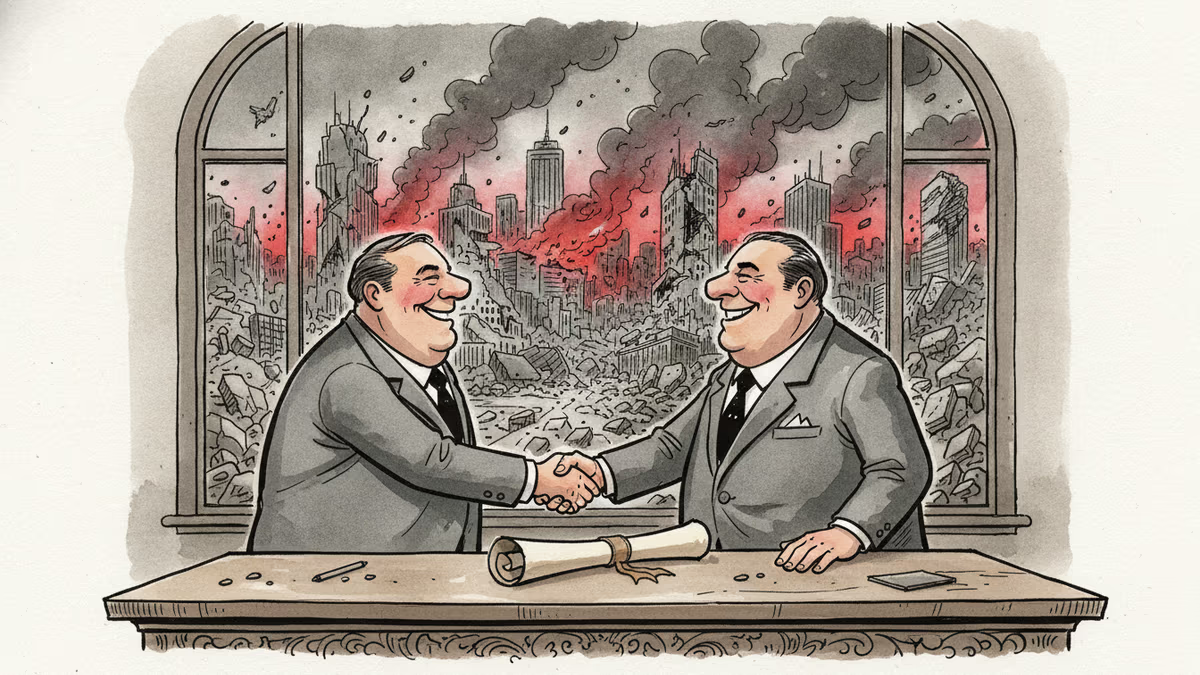
Lebanon and Israel signed a framework agreement in June 2026. Hezbollah rejected it. Israel kept fighting. History suggests this moment is real—and fragile.
Trump says he wants to 'take' Cuba. But this desire isn't new—it stretches back to Thomas Jefferson. Why this centuries-old obsession is coming to a head right now.
Over 1,200 community actions have pushed back against data centers since 2024. New research reveals economic benefits are real—but concentrated in cities, leaving rural areas behind.
Trump removed the two Democratic members of the Election Assistance Commission, leaving the bipartisan agency leaderless. A Supreme Court ruling made it legal. Here's why a non-crisis can still be a warning sign.
Lebanon and Israel signed a framework agreement in June 2026. Hezbollah rejected it. Israel kept fighting. History suggests this moment is real—and fragile.
Trump says he wants to 'take' Cuba. But this desire isn't new—it stretches back to Thomas Jefferson. Why this centuries-old obsession is coming to a head right now.
Thoughts
Share your thoughts on this article
Sign in to join the conversation