
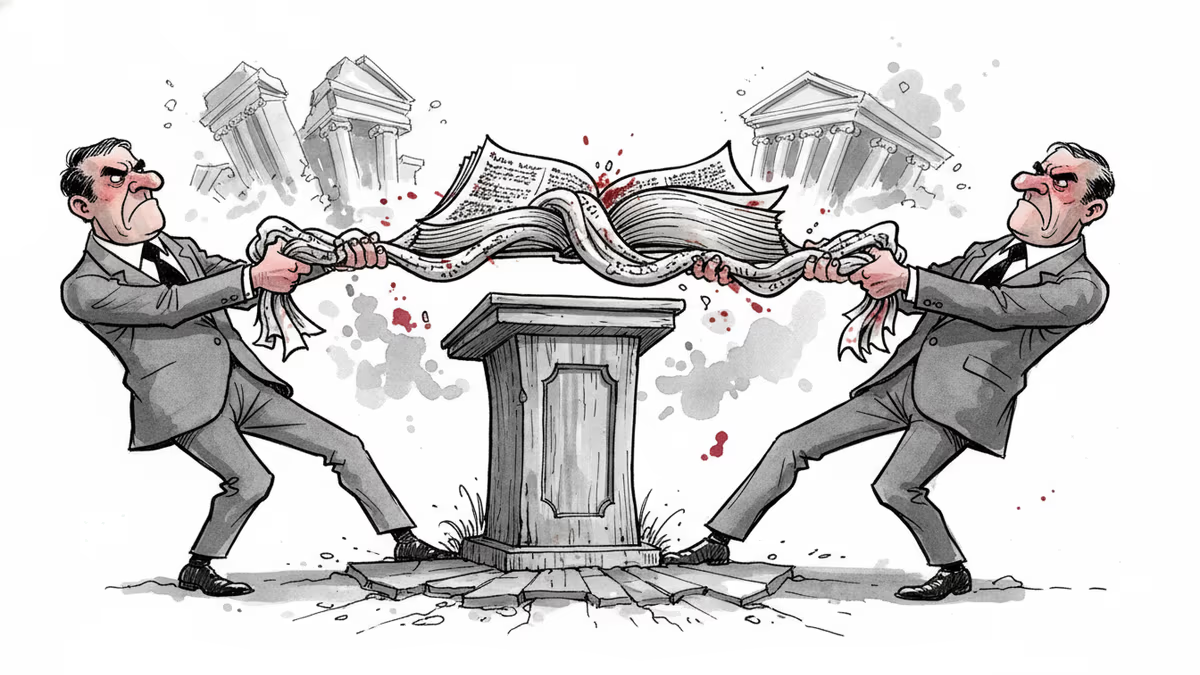
Two Christians, One Senate Seat, Zero Agreement
Texas's 2026 Senate race pits Ken Paxton's Christian nationalism against James Talarico's progressive faith. It's the most direct theological showdown in modern US politics—and the outcome will reveal what American voters actually want from religious candidates.
Both candidates are Christian. Both cite Scripture. Both say the other is doing it wrong.
Texas's 2026 Senate race is shaping up to be something American politics hasn't seen in a long time: a genuine theological argument on the ballot. On one side, Ken Paxton, the Republican attorney general and self-styled champion of Christian nationalism. On the other, James Talarico, a Presbyterian seminarian running as a Democrat on a platform of what he calls "radical love." The state is reliably red. The race, improbably, is being watched everywhere.
What Each Candidate Actually Believes
Talarico's Christianity is rooted in mainline Protestantism. His denomination, the Presbyterian Church (USA), ordains women, affirms same-sex marriage, and welcomes transgender congregants—positions that have earned it the label "woke" from the religious right. Talarico leans into the tension. He argues that the powerful have hijacked Christian language to protect their own interests, and that a genuine reading of the Gospels demands economic justice, not culture war.
"These politicians want a Christian nation," he said on The Ezra Klein Show, "unless it means providing healthcare to the sick or funding food assistance for the hungry or raising the minimum wage for the poor." His campaign deliberately avoids the standard anti-Trump playbook. Instead, he talks about oligarchs, corruption, and the gap between what politicians profess and what they deliver.
Paxton's Christianity is a different thing entirely. He sits firmly in the Christian nationalist tradition—a movement that rejects the separation of church and state, seeks to embed Biblical morality into law, and holds that the United States carries a unique divine mandate. As attorney general, Paxton pushed for the Lord's Prayer in public school classrooms and the Ten Commandments on public property. "Our nation was founded on the rock of Biblical Truth," he declared last September, "and I will not stand by while the far-left attempts to push our country into the sinking sand."
These aren't just policy disagreements. They reflect two incompatible understandings of what Christianity is for in public life.
The Inconvenient Footnotes

But the race isn't only a theological debate. It's also a referendum on personal conduct—and here, the contrast is stark.
Talarico's record is clean. Paxton's is not. He was charged with securities fraud (later settled without admission of guilt), impeached by the Republican-controlled Texas state house on bribery and corruption allegations (then acquitted in his Senate trial), and is currently navigating a divorce his wife initiated on, as reported, "biblical grounds." His primary opponent John Cornyn ran ads asking Texas mothers whether they'd want their daughters to marry a man like Paxton. Paxton's own pastor joined Cornyn's campaign.
Talarico has called Paxton "morally unfit" and "the most corrupt Attorney General of our lifetime." Paxton won the primary anyway—sealed by a Donald Trump endorsement that proved decisive with the Republican base.
This dynamic will sound familiar to anyone who followed the Trump era's internal debates within the religious right. The argument went: a flawed vessel can still carry righteous policy. Anti-abortion judges, religious liberty protections, and a privileged space for evangelical Christianity in public life were worth tolerating the personal baggage. Paxton is now asking Texas Republicans to apply the same logic to him.
Conservative commentators are already splitting. National Review's Jeffrey Blehar called Paxton "odious" but argued Talarico was "morally worse"—because the ideas Talarico advances under the banner of faith are themselves wrong. New York Times evangelical columnist David French took the opposite view, praising Talarico as one of the few politicians who "acts like a Christian," while still opposing his positions on abortion.
Why This Race Reaches Beyond Texas
For most of the past two decades, "Christian" in American politics has been a reliable shorthand for "Republican." Democrats largely ceded the terrain of faith, betting on a secular coalition. That bet has cost them, particularly with Latino voters and working-class communities where church remains central to daily life.
Talarico represents a deliberate attempt to reclaim that ground. He's not the first Democrat to try—Jimmy Carter, Barack Obama, and Joe Biden all spoke openly about faith—but he's among the most direct in framing his progressive politics as theologically required rather than merely compatible with Christianity. That's a different argument, and a more confrontational one.
Whether it works in Texas—a state that hasn't sent a Democrat to the Senate since 1988—is a separate question. Paxton will hammer Talarico on abortion and LGBT rights, betting that cultural conservatism outweighs personal scandal in a state that has moved rightward for a generation. Talarico will bet that enough Republicans are tired of defending the indefensible.
The global context matters too. Religious identity is reasserting itself in politics across the world—in India's Hindu nationalism, in Europe's debates over Christian heritage, in the Middle East's theocratic governance models. American Christian nationalism is part of that broader current. What makes the Texas race unusual is that the challenge to it is also coming from inside the faith, not from secular critics dismissing religion altogether.
This content is AI-generated based on source articles. While we strive for accuracy, errors may occur. We recommend verifying with the original source.
Related Articles
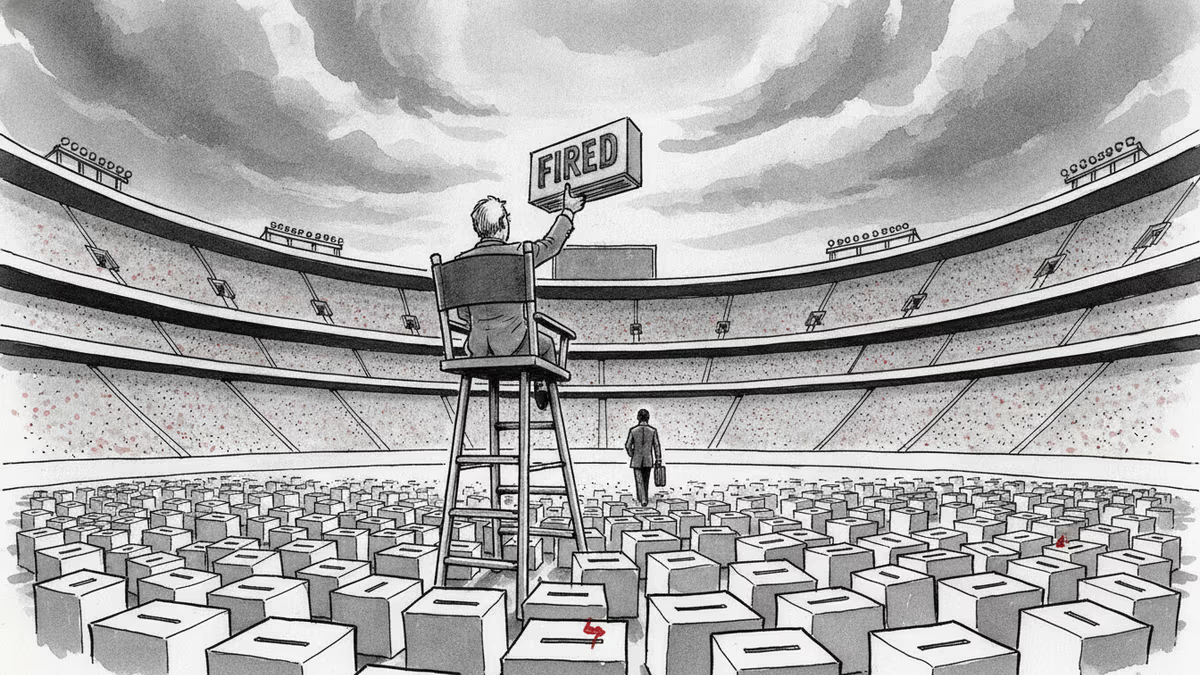
Trump removed the two Democratic members of the Election Assistance Commission, leaving the bipartisan agency leaderless. A Supreme Court ruling made it legal. Here's why a non-crisis can still be a warning sign.
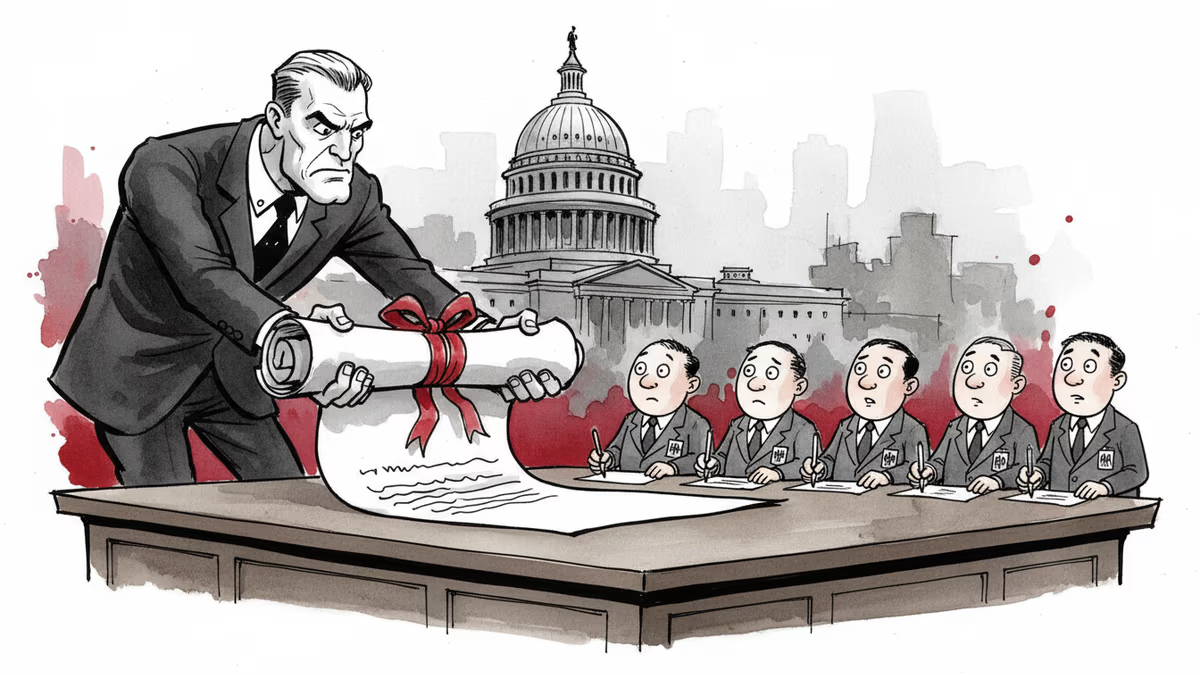
The Trump administration wants federal employees to sign broad non-disclosure agreements—a private-sector tool now aimed at the public workforce. What happens when government runs like a corporation?
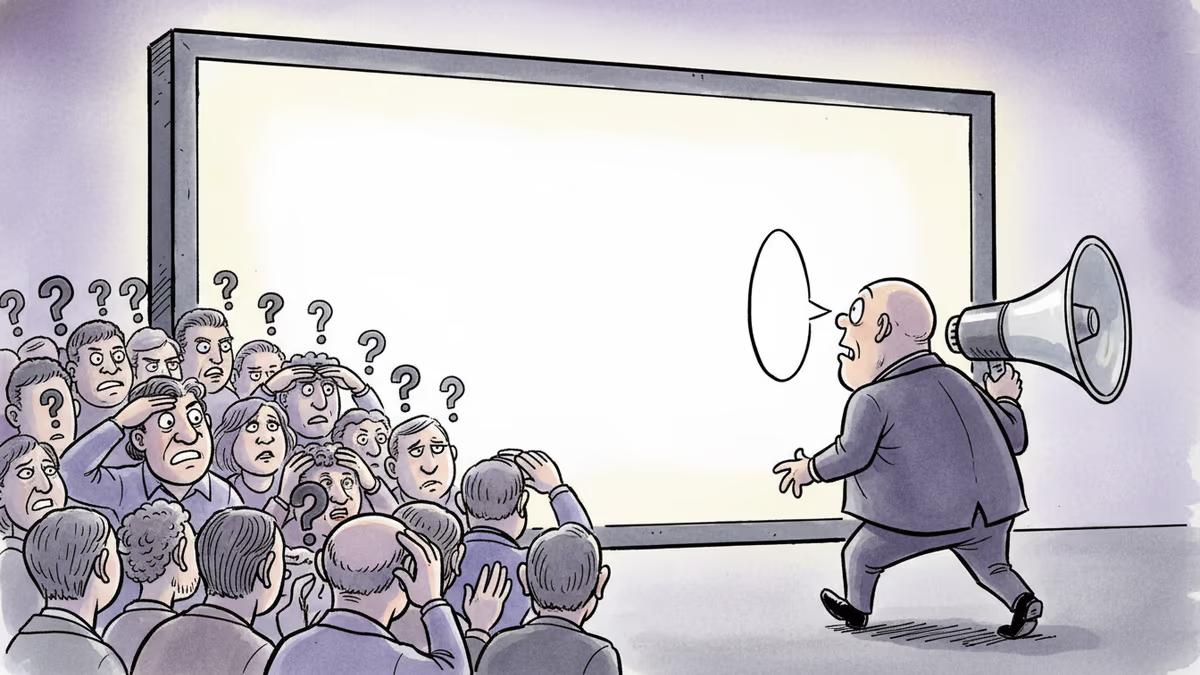
After the 2024 defeat, Democrats have reached a private consensus on moderation — but without a public reckoning. Can a 'vibe shift' actually rebuild a party brand?
Thousands gathered on the National Mall to 'rededicate America to God,' backed by $150M in federal funds and corporate sponsors. Inside the New Apostolic Reformation's most visible moment yet.
Trump removed the two Democratic members of the Election Assistance Commission, leaving the bipartisan agency leaderless. A Supreme Court ruling made it legal. Here's why a non-crisis can still be a warning sign.
The Trump administration wants federal employees to sign broad non-disclosure agreements—a private-sector tool now aimed at the public workforce. What happens when government runs like a corporation?
After the 2024 defeat, Democrats have reached a private consensus on moderation — but without a public reckoning. Can a 'vibe shift' actually rebuild a party brand?
Thousands gathered on the National Mall to 'rededicate America to God,' backed by $150M in federal funds and corporate sponsors. Inside the New Apostolic Reformation's most visible moment yet.
Thoughts
Share your thoughts on this article
Sign in to join the conversation