
God's Army Has Come to Washington — and It Has a Budget
Thousands gathered on the National Mall to 'rededicate America to God,' backed by $150M in federal funds and corporate sponsors. Inside the New Apostolic Reformation's most visible moment yet.
By 10 a.m., the line to dedicate America to God was already three hours long.
What Happened on the National Mall
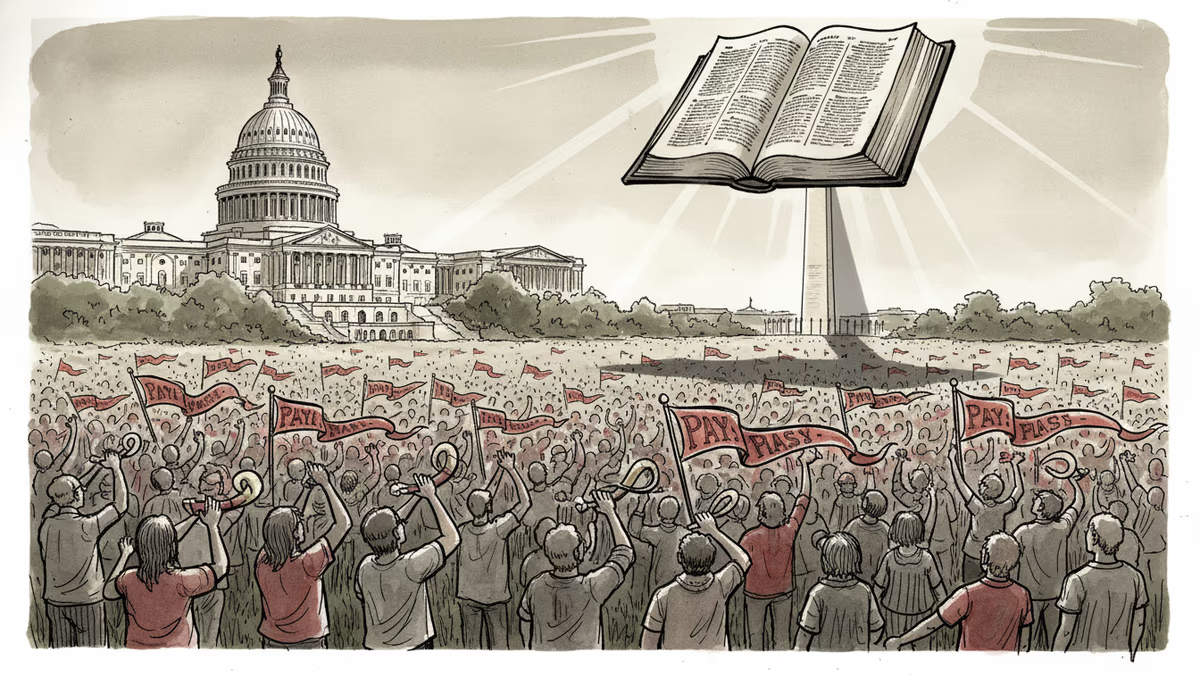
On May 17, thousands of Americans descended on Washington D.C.'s National Mall for a rally called Rededicate 250 — billed as a "jubilee of prayer, praise and Thanksgiving" marking the nation's approaching 250th anniversary. They came with prayer flags, shofars (hollowed-out ram's horns used in spiritual warfare, according to charismatic theology), and T-shirts declaring their roles in a cosmic battle: Prayer Warrior. Intercessor for America. I Am the Weapon. One man wheeled a full-sized wooden cross toward the entrance before a security guard turned him away.
The event was organized by Freedom 250, a nonprofit aligned with President Trump. Congress has allocated $150 million for the broader series of anniversary celebrations, and corporate sponsors include Exxon Mobil, Lockheed Martin, and Palantir. Speakers included Paula White-Cain — an apostle who now leads the White House Faith Office — along with Lou Engle, a prominent apostle and prophet, and Guillermo Maldonado, who leads one of the largest Latino churches in the country. Secretary of Defense Pete Hegseth and Secretary of State Marco Rubio both took the stage, arguing that the United States was founded as a Christian nation — a claim historians broadly reject. Trump appeared via prerecorded video, reading from the Old Testament.
House Speaker Mike Johnson brought the crowd to its feet with a declaration: "We hereby rededicate the United States of America as one nation under God."
The Movement Behind the Moment
To understand who filled that lawn, you need to understand the New Apostolic Reformation (NAR) — a charismatic Christian movement that began gathering momentum in the 1990s and has since become the leading edge of the American religious right.

The NAR's central belief is that God has anointed Trump as a vessel in a literal, ongoing spiritual war against demonic forces. This isn't metaphor. Joel Balin, who came from Atlanta, told a reporter that the gathering itself was "scattering demonic forces" and that Trump, by enabling the event, had "opened a door for us to do spiritual warfare." David Hitt, an accountant also from Atlanta, explained that the prayers of those assembled were creating actual portals — openings for the Holy Spirit to enter battle. He calculated that one person's prayer could put 1,000 demons to flight; two people's prayers, 10,000.
NAR leaders were instrumental in mobilizing voters in the 2024 election. They were also present at the January 6, 2021 Capitol attack, when many participants believed they were claiming the building for God's kingdom.
The movement's growth tracks a broader shift in American religious life. At least 15% of all American adults now identify as nondenominational Christians, and most of them are embracing charismatic ideas about signs, wonders, and spiritual warfare. Almost everyone at the rally had a story about leaving a Baptist, Pentecostal, or Methodist congregation for churches with names like Oasis, Free Chapel, Anchor, and Abundant Harvest — nondenominational congregations that are growing as traditional denominations decline.
Why This, Why Now
Adriel Lam, who flew in from Hawaii where he works for Capitol Ministries — an organization dedicated to bringing prayer into state legislatures — and is currently running for Congress, framed the moment as "post-postmodernism." His argument: modernism promised that science could explain everything; postmodernism questioned all foundations; and now a third wave is emerging, one that wants to return to "the first century, when Jesus united the physical and the spiritual."
This framing matters because it positions the movement not as a retreat from modernity but as its successor. Balin put it directly: people he knows are exhausted by "materialism," "dualism," and "an Enlightenment mindset" that can't account for supernatural forces shaping earthly events. He said the separation of church and state is a "myth." Lam described the gathering as evidence that "an outpouring of the Holy Spirit is under way across America."
Critics see something different. Outside the barricades, a small group of protesters held signs supporting LGBTQ people and immigrants, blasting metal music as a counterpoint to the worship bands inside. Scholars and civil liberties advocates have raised pointed questions about the use of federal funds for an event with near-total religious homogeneity — no meaningful representation from Jewish, Muslim, Hindu, or secular American traditions — and the direct participation of cabinet officials in what amounts to a theological argument about the nation's founding.
The crowd inside, for its part, paid the protesters little attention. Debbie Cloud, a retiree from California's central coast, watched the stage and wept. "This is what we've been praying for," she said. "For our country to turn back to God."
This content is AI-generated based on source articles. While we strive for accuracy, errors may occur. We recommend verifying with the original source.
Related Articles
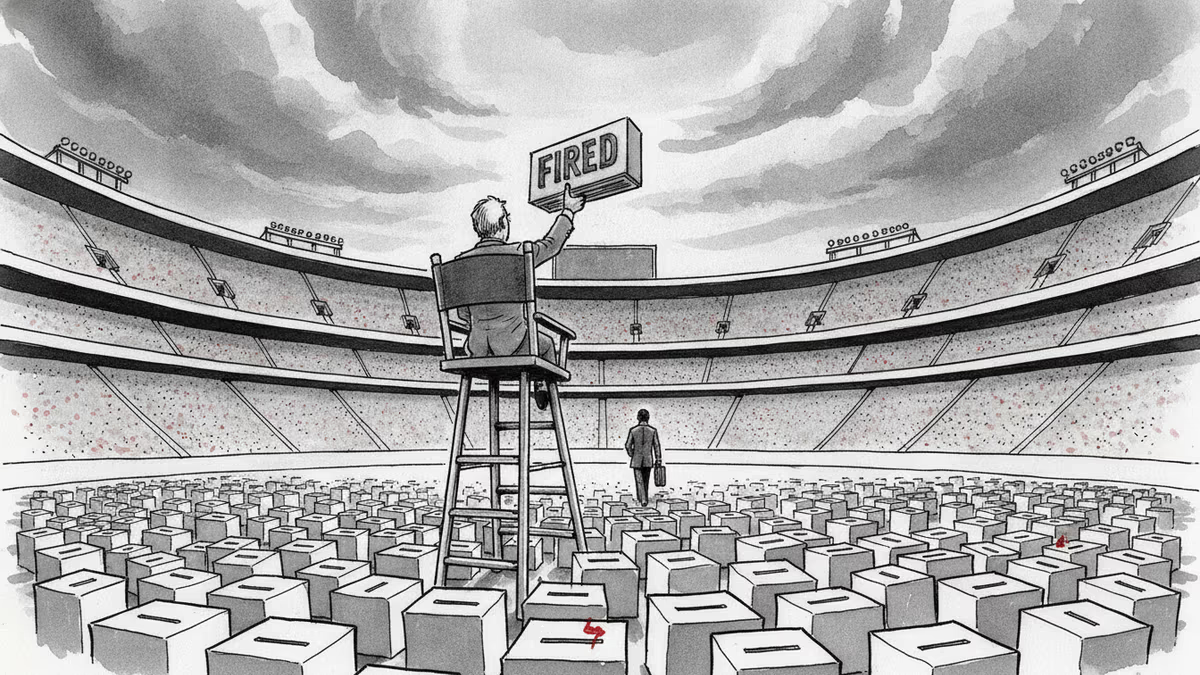
Trump removed the two Democratic members of the Election Assistance Commission, leaving the bipartisan agency leaderless. A Supreme Court ruling made it legal. Here's why a non-crisis can still be a warning sign.
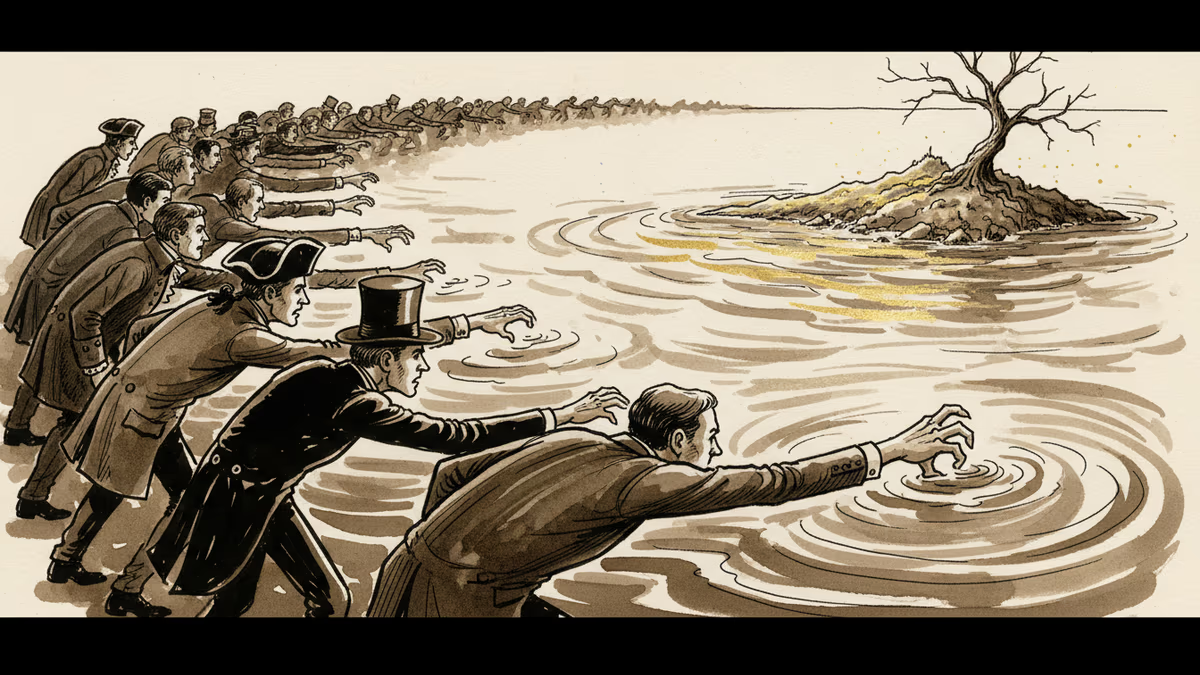
Trump says he wants to 'take' Cuba. But this desire isn't new—it stretches back to Thomas Jefferson. Why this centuries-old obsession is coming to a head right now.
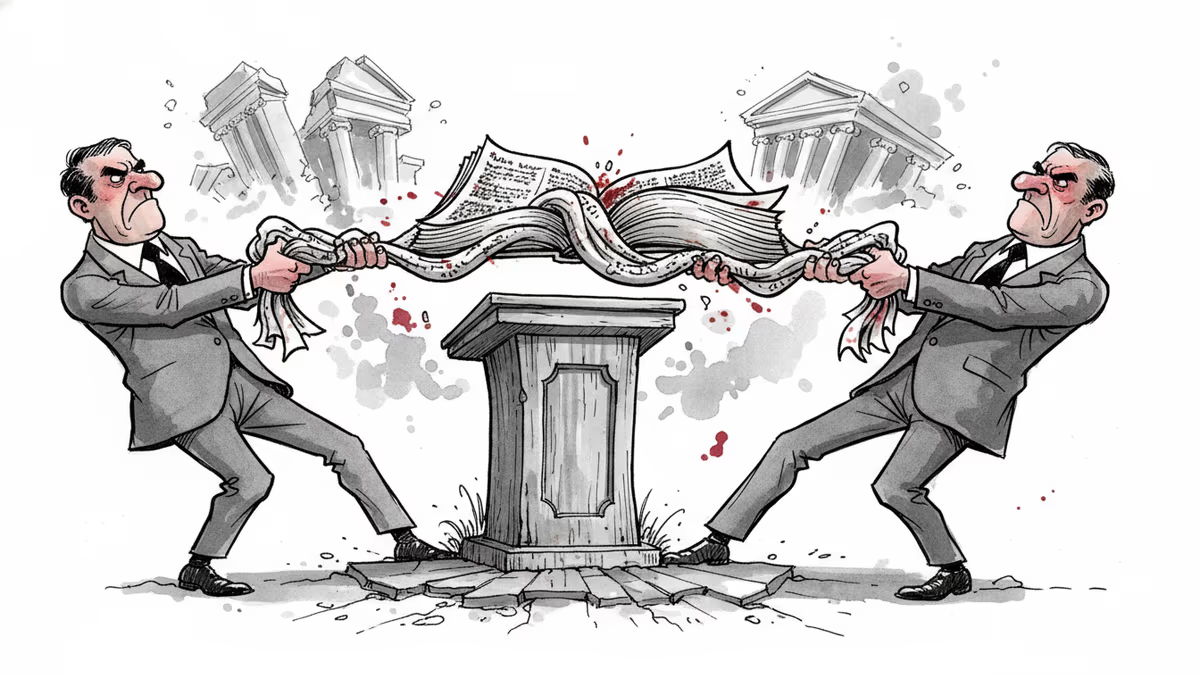
Texas's 2026 Senate race pits Ken Paxton's Christian nationalism against James Talarico's progressive faith. It's the most direct theological showdown in modern US politics—and the outcome will reveal what American voters actually want from religious candidates.
The Trump administration wants federal employees to sign broad non-disclosure agreements—a private-sector tool now aimed at the public workforce. What happens when government runs like a corporation?
Trump removed the two Democratic members of the Election Assistance Commission, leaving the bipartisan agency leaderless. A Supreme Court ruling made it legal. Here's why a non-crisis can still be a warning sign.
Trump says he wants to 'take' Cuba. But this desire isn't new—it stretches back to Thomas Jefferson. Why this centuries-old obsession is coming to a head right now.
Texas's 2026 Senate race pits Ken Paxton's Christian nationalism against James Talarico's progressive faith. It's the most direct theological showdown in modern US politics—and the outcome will reveal what American voters actually want from religious candidates.
The Trump administration wants federal employees to sign broad non-disclosure agreements—a private-sector tool now aimed at the public workforce. What happens when government runs like a corporation?
Thoughts
Share your thoughts on this article
Sign in to join the conversation