
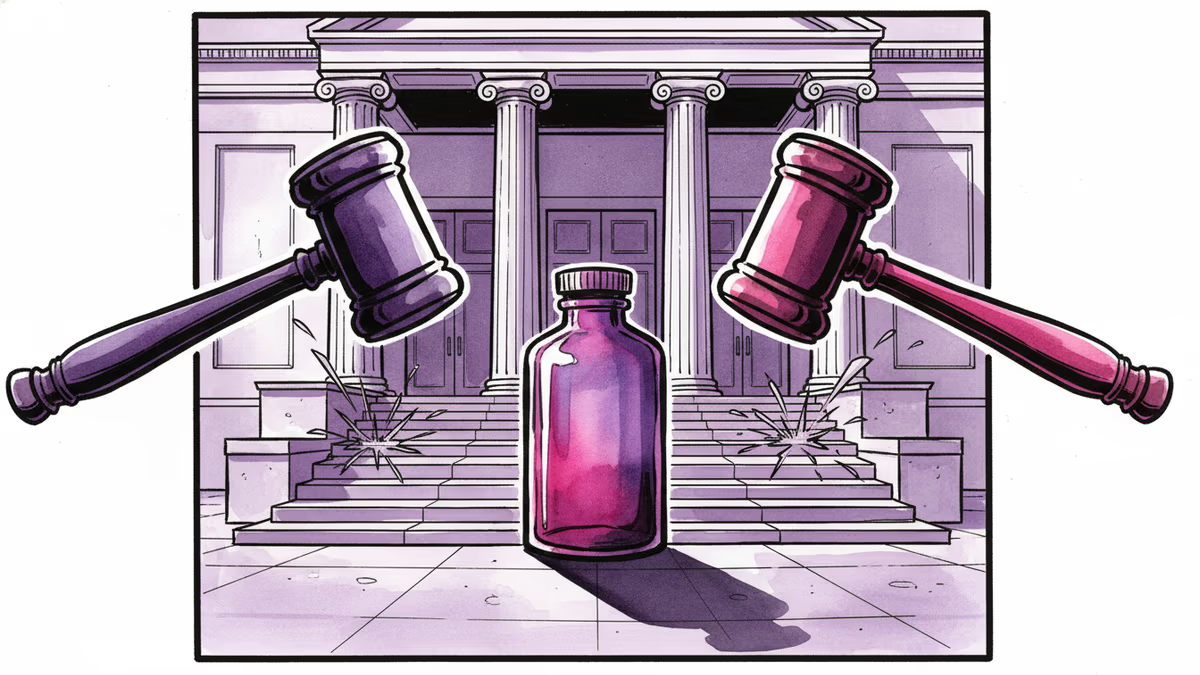
Mifepristone Survives Again — But the Clock Is Ticking
The Supreme Court has blocked a lower court's attempt to restrict mifepristone for the second time. Justices Thomas and Alito dissented sharply, invoking an 1873 law. The drug is safe until at least 2027 — but what comes next is far from settled.
The same drug. The same court trying to ban it. The second time it has walked free.
The U.S. Supreme Court issued a brief order Thursday blocking a Fifth Circuit ruling that would have severely restricted access to mifepristone, the most widely used abortion drug in the United States. The case, Danco Laboratories v. Louisiana, didn't produce a full opinion — just a short stay order that will remain in effect until the case is fully litigated. In practical terms, that means mifepristone stays federally legal until at least June 2027, barring action from Congress or the FDA.
At least five justices voted to block the lower court's ruling. The Court's shadow docket procedure doesn't require disclosure of individual votes — but Justices Clarence Thomas and Samuel Alito made their opposition visible by publishing written dissents.
What the Fifth Circuit Actually Did
The Fifth Circuit's order was technically narrower than an outright ban. It targeted mifepristone's distribution by mail specifically. But it also struck down the FDA's prescribing regulations without replacing them with anything else — meaning that, had the Supreme Court not stepped in, it was genuinely unclear whether the drug could have remained on the market at all.
This is the second time the Fifth Circuit has gone after mifepristone. The first attempt, in FDA v. Alliance for Hippocratic Medicine (2024), ended when a unanimous Supreme Court found that the plaintiffs lacked standing to bring the case in the first place. Legal observers note that Danco carries similar jurisdictional weaknesses — which likely explains why a majority of justices moved to block it without needing to reach the merits.
The Language of the Dissents
The more revealing story isn't the outcome — it's what Thomas and Alito wrote in dissent.

Justice Thomas called the pharmaceutical companies that manufacture mifepristone a "criminal enterprise," grounding his argument in the Comstock Act — an 1873 federal law that broadly prohibits mailing materials related to sex. The law has never been formally repealed, though it has been functionally dormant for decades.
Justice Alito went further in a different direction, suggesting that one of the drug's manufacturers was engaged in an "unlawful conspiracy" because mifepristone is banned in Louisiana — even though it remains legal in the majority of states and carries full FDA approval.
Neither argument won the day. But both are now part of the official legal record, available to be cited in future cases. That matters. Dissents have a long history of becoming majority opinions in later decades.
Why This Case Is Bigger Than Abortion
Mifepristone is used in more than 60% of abortions in the United States. Since Roe v. Wade was overturned in 2022, the practical battleground for abortion access has shifted from surgical procedures to medication — and from clinics to mailboxes. For women in states with few or no abortion providers, mail access to this drug is not a convenience; it's often the only option.
But the implications extend beyond reproductive rights. At its core, Danco is a question about FDA authority: can a lower federal court effectively override a federal agency's approval of a medication? If that precedent were established, it wouldn't stop at mifepristone. Any approved drug that faces political opposition could theoretically be challenged the same way.
The Comstock Act angle adds another layer. The law's language is broad enough to cover contraceptives, not just abortion drugs. Several legal scholars have argued that a serious effort to enforce Comstock would represent a more sweeping rollback of reproductive rights than even the fall of Roe. The fact that a sitting Supreme Court justice invoked it approvingly — even in dissent — is not a footnote.
The Road to 2027 and Beyond
For now, the stay holds. Mifepristone remains available. But "available until 2027" is not the same as "settled." The case will continue to be litigated through the lower courts. When it eventually returns to the Supreme Court for a full hearing — likely in the 2026–2027 term — the justices will have to engage with the substance, not just the procedure.
The composition of the Court, the posture of the FDA under the current administration, and whether Congress moves to codify or restrict access will all shape what that hearing looks like. The stay buys time. It doesn't resolve anything.
This content is AI-generated based on source articles. While we strive for accuracy, errors may occur. We recommend verifying with the original source.
Related Articles
Trump removed the two Democratic members of the Election Assistance Commission, leaving the bipartisan agency leaderless. A Supreme Court ruling made it legal. Here's why a non-crisis can still be a warning sign.
Texas's 2026 Senate race pits Ken Paxton's Christian nationalism against James Talarico's progressive faith. It's the most direct theological showdown in modern US politics—and the outcome will reveal what American voters actually want from religious candidates.
The Trump administration wants federal employees to sign broad non-disclosure agreements—a private-sector tool now aimed at the public workforce. What happens when government runs like a corporation?
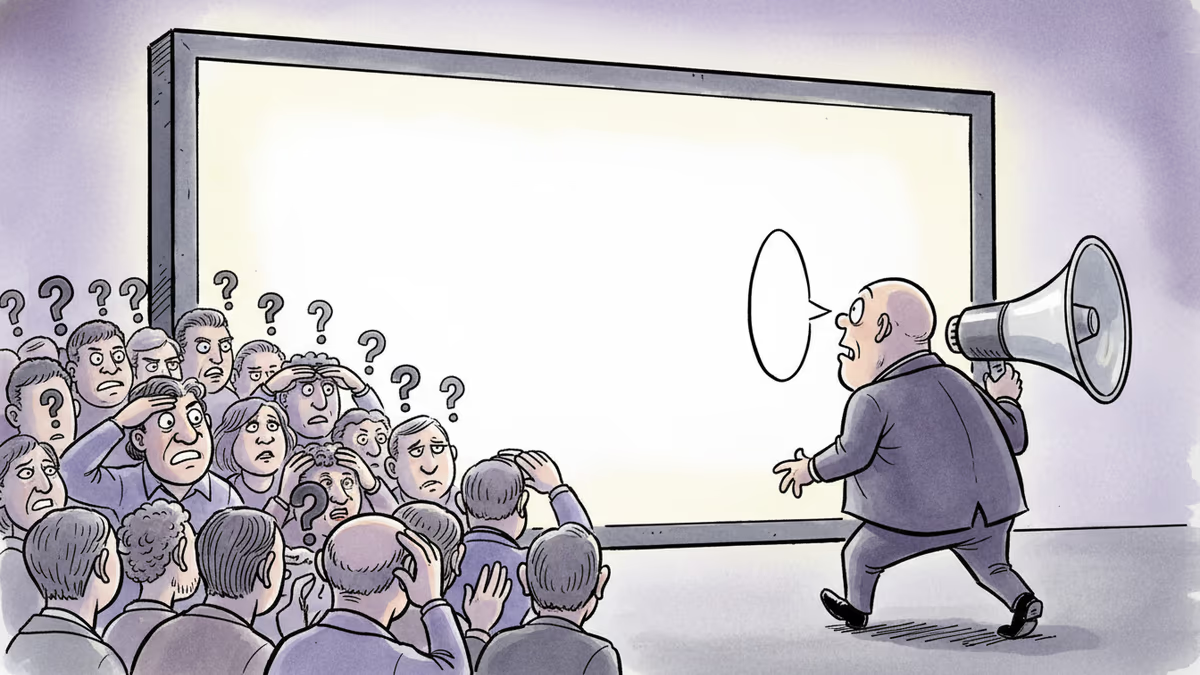
After the 2024 defeat, Democrats have reached a private consensus on moderation — but without a public reckoning. Can a 'vibe shift' actually rebuild a party brand?
Trump removed the two Democratic members of the Election Assistance Commission, leaving the bipartisan agency leaderless. A Supreme Court ruling made it legal. Here's why a non-crisis can still be a warning sign.
Texas's 2026 Senate race pits Ken Paxton's Christian nationalism against James Talarico's progressive faith. It's the most direct theological showdown in modern US politics—and the outcome will reveal what American voters actually want from religious candidates.
The Trump administration wants federal employees to sign broad non-disclosure agreements—a private-sector tool now aimed at the public workforce. What happens when government runs like a corporation?
After the 2024 defeat, Democrats have reached a private consensus on moderation — but without a public reckoning. Can a 'vibe shift' actually rebuild a party brand?
Thoughts
Share your thoughts on this article
Sign in to join the conversation