
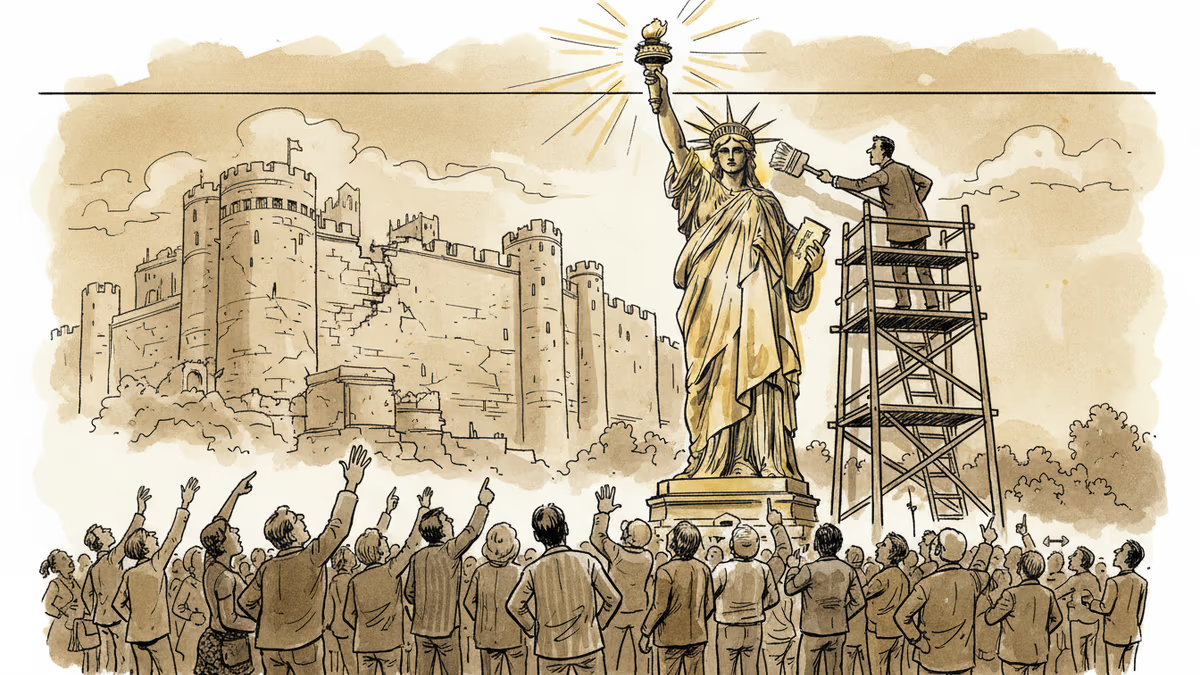
Rubio's Old Dream in a MAGA Wrapper
Marco Rubio invoked the immigrant American Dream in a viral clip — overlaid with Trump's image. Is this what post-Trump conservatism looks like, or just clever rebranding?
Can you speak the language of Reagan inside the house that Trump built?
On May 6, 2026, Secretary of State Marco Rubio stood at the White House podium for over 45 minutes, filling in for press secretary Karoline Leavitt while she was on maternity leave. He traded rap lyrics with reporters. He fielded foreign policy questions with practiced ease. And then, in response to a gentle question about his "hope for America," he said something that felt like a transmission from a different era entirely.
"We want it to continue to be the place where anyone from anywhere can achieve anything, where you're not limited by the circumstances of your birth, by the color of your skin, by your ethnicity."
No anti-DEI diatribes. No grievance. No doom. Just the old melting-pot ideal, delivered with the calm of a man who had clearly said these words before — because he had, back in 2016, when he was running for president on a platform of optimism and inclusion that the Republican Party ultimately rejected in favor of Donald Trump.
Rubio's team noticed. They clipped one minute of his answer, set it to soaring music, and posted it to both his official and personal social media accounts. The most telling detail: they overlaid his words with images of Trump.
The Return of a Message That Once Lost
To understand why this moment matters, you need to go back a decade. In 2016, Rubio ran as the Republican Party's answer to its own identity crisis. After the 2012 presidential loss, the GOP had published a self-critical "autopsy report" urging outreach to Latino, young, and minority voters. Rubio — the son of Cuban immigrants, bilingual, young, telegenic — was supposed to be the solution.
Then Trump happened. Rubio lost decisively, eventually abandoned his earlier flirtation with immigration reform, and spent the years since becoming one of Trump's most reliable allies. His reward: Secretary of State in 2024.
So when he stood at that podium and revived the language of American exceptionalism — "our history is not one of perfection, but it's still better than anybody else's history" — it landed with a strange double resonance. It was both familiar and jarring, like hearing a song you'd forgotten existed.
"This was the healthy vision that I supported Marco Rubio on in 2016," said Mike Madrid, a longtime California GOP strategist and prominent Trump critic. "He not only failed miserably; he capitulated and stuck a knife in that by becoming a Trumper. So to see him trying to resuscitate it is fascinating."
Two Visions of What America Is

Rubio's clip is doing more than building his personal brand. It's drawing a quiet but sharp line between two competing visions of what the Republican Party should be — and who it's actually for.
On one side: JD Vance, Trump's vice president and presumed heir. At the 2024 Republican National Convention, Vance declared that America "is not an idea" but rather "a group of people with a shared history and a common future." His wing of the party tends toward skepticism of legal immigration, celebrates deep-rooted "heritage Americans" as the nation's core, and embraces what critics call ethnic nationalism and supporters call civilizational conservatism.
On the other: Rubio's vision of America as a proposition — a nation defined not by ancestry but by shared aspiration. The Reaganesque "shining city on a hill." The immigrant who makes it. The melting pot as feature, not bug.
The gap between these two positions isn't just rhetorical. It reflects fundamentally different answers to the question of who belongs in America and what the Republican Party is actually protecting.
What makes Rubio's positioning interesting is how he's threading this needle. The clip doesn't reject Trump — it wraps his words in Trump's imagery, presenting the old pre-MAGA message as if it were the natural culmination of the Trump era. It's not a break. It's a reinterpretation.
"What he's going to try to do is say this is what Trumpism has always been about," Madrid told Vox. "He's trying to put an aspirational mask on grievance. He's trying to put a forward-thinking, shining-city-on-a-hill veneer on top of a pile of hate and division."
Giancarlo Sopo, a Florida-based Republican strategist, sees it differently. "Conservatism was never meant to be ideological. Edmund Burke would have recognized his own vision in what Secretary Rubio articulated. It is a better, more authentic kind of conservatism."
The Math Problem: Primary vs. General
Rubio has repeatedly denied any interest in running for president. He's reportedly close to Vance. And yet betting markets are suddenly pricing him as a serious 2028 contender, partly because Vance's numbers have softened and partly because Rubio has managed to stay relatively untarnished by the administration's most chaotic moments — even as he oversees foreign policy during an unpopular conflict.
His Vatican visit this week — meeting Pope Leo with warmth and exchanging gifts — was a quiet contrast to the feuding between the Pope and both Trump and Vance. Rubio played diplomat while others played culture warrior.
But the harder question is whether his message can survive a Republican primary. The GOP base had the chance to choose Rubio's vision in 2016 and rejected it decisively. The party has moved considerably further from that vision since. Electability arguments — the idea that a more moderate nominee can win a general election — have struggled to gain traction in Republican primaries since Trump proved in 2016 that the conventional wisdom was wrong.
There's also the Latino voter question. Trump's 2024 gains with Hispanic voters, achieved while running on mass deportation, seemed to settle the debate about whether Republicans needed a softer immigration message to win that demographic. But by 2026, Hispanic and Asian American voters appear to be drifting back toward Democrats in polls and special elections. If that trend holds, Rubio's bilingual, immigrant-heritage pitch could matter again — particularly among Spanish-dominant voters who, as Sopo notes, represent "the next frontier" for Republican outreach.
The primary math, though, runs through a base that has absorbed ten years of a very different political diet. "Did the Republican party just go on a bender and everyone's going to ignore it?" Madrid asked. "It's about isolationism and protectionism. It's not about expanding Jeffersonian ideals."
This content is AI-generated based on source articles. While we strive for accuracy, errors may occur. We recommend verifying with the original source.
Related Articles
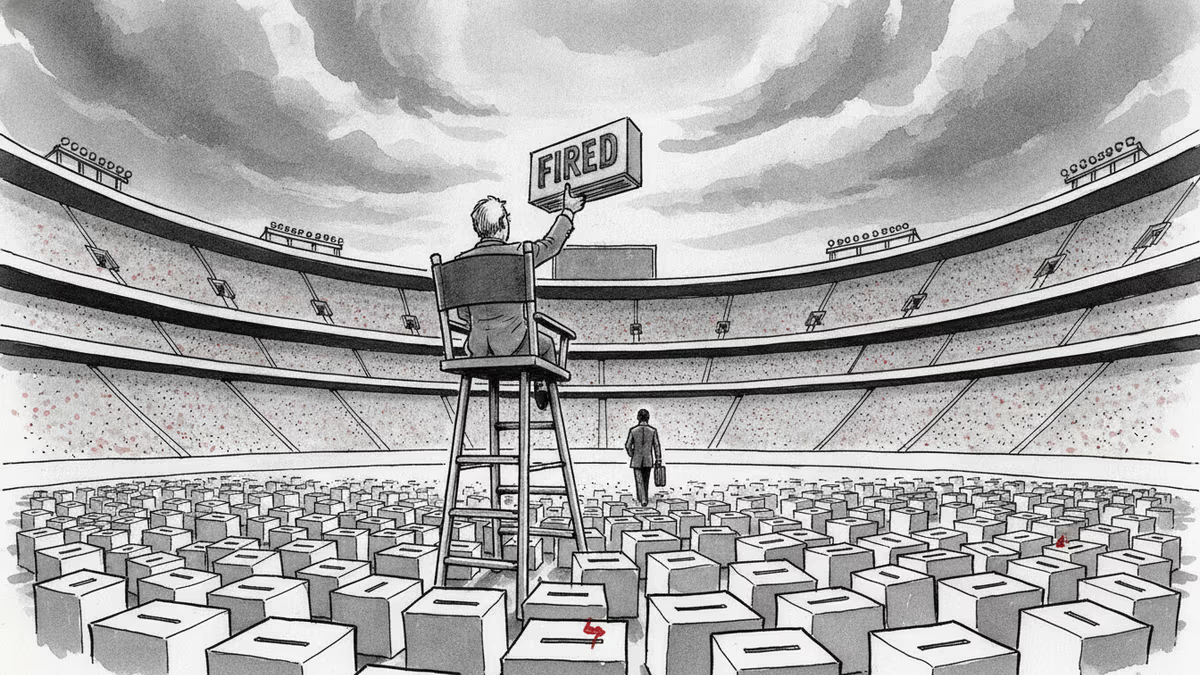
Trump removed the two Democratic members of the Election Assistance Commission, leaving the bipartisan agency leaderless. A Supreme Court ruling made it legal. Here's why a non-crisis can still be a warning sign.
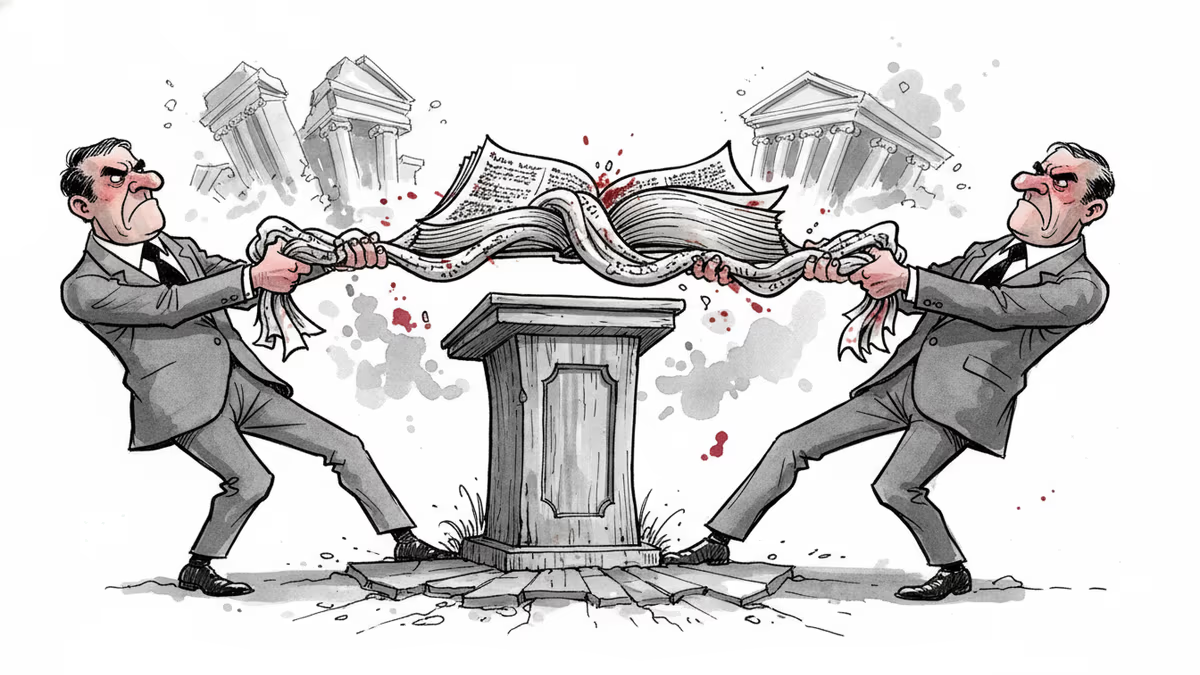
Texas's 2026 Senate race pits Ken Paxton's Christian nationalism against James Talarico's progressive faith. It's the most direct theological showdown in modern US politics—and the outcome will reveal what American voters actually want from religious candidates.
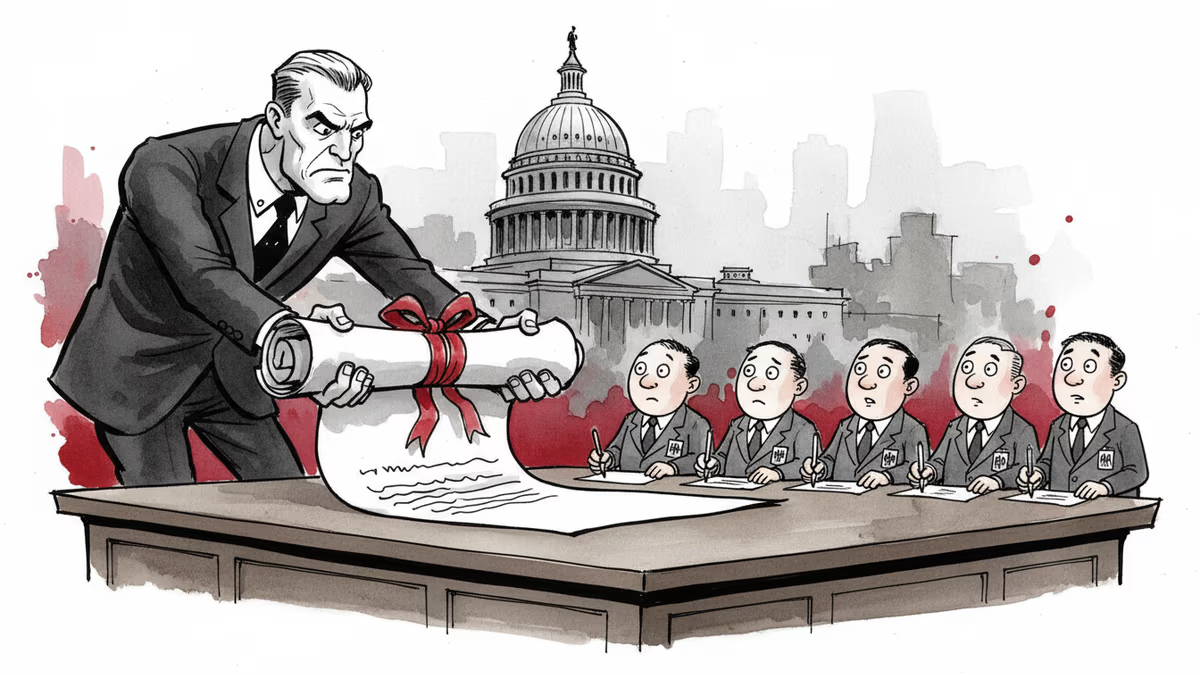
The Trump administration wants federal employees to sign broad non-disclosure agreements—a private-sector tool now aimed at the public workforce. What happens when government runs like a corporation?
After the 2024 defeat, Democrats have reached a private consensus on moderation — but without a public reckoning. Can a 'vibe shift' actually rebuild a party brand?
Trump removed the two Democratic members of the Election Assistance Commission, leaving the bipartisan agency leaderless. A Supreme Court ruling made it legal. Here's why a non-crisis can still be a warning sign.
Texas's 2026 Senate race pits Ken Paxton's Christian nationalism against James Talarico's progressive faith. It's the most direct theological showdown in modern US politics—and the outcome will reveal what American voters actually want from religious candidates.
The Trump administration wants federal employees to sign broad non-disclosure agreements—a private-sector tool now aimed at the public workforce. What happens when government runs like a corporation?
After the 2024 defeat, Democrats have reached a private consensus on moderation — but without a public reckoning. Can a 'vibe shift' actually rebuild a party brand?
Thoughts
Share your thoughts on this article
Sign in to join the conversation