
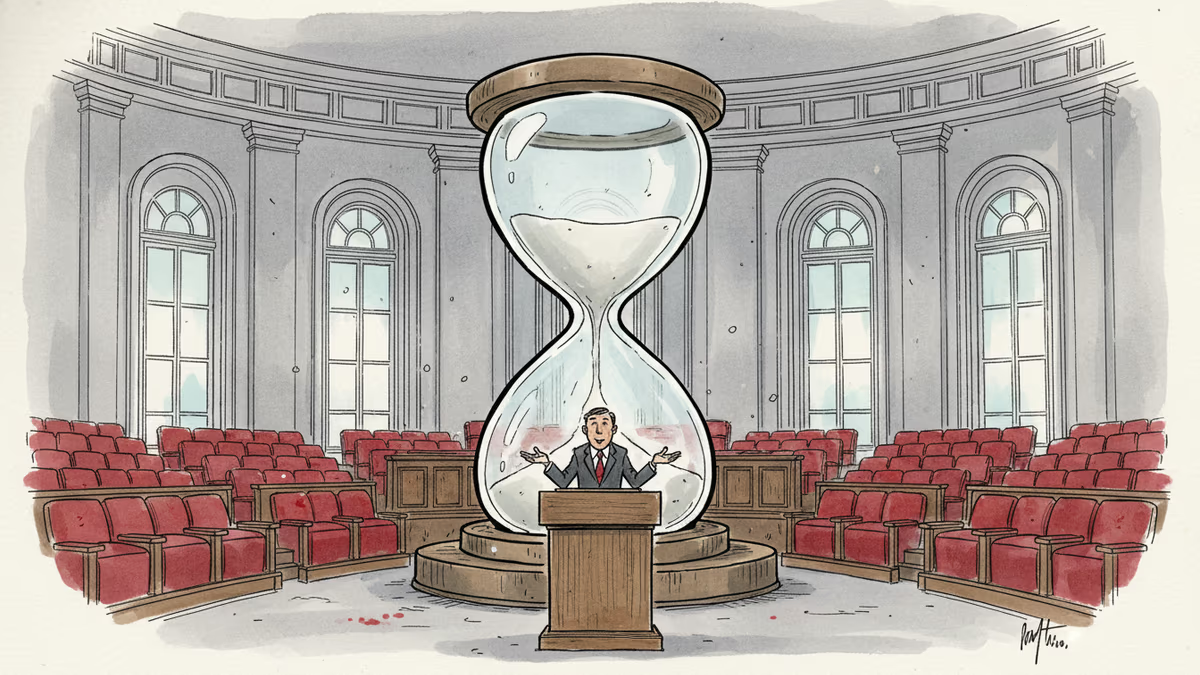
The War That Nobody Will End
Trump's Iran war has hit the 60-day War Powers Resolution deadline. Congress was supposed to act. It didn't. What happens when the rules everyone agreed on simply stop working?
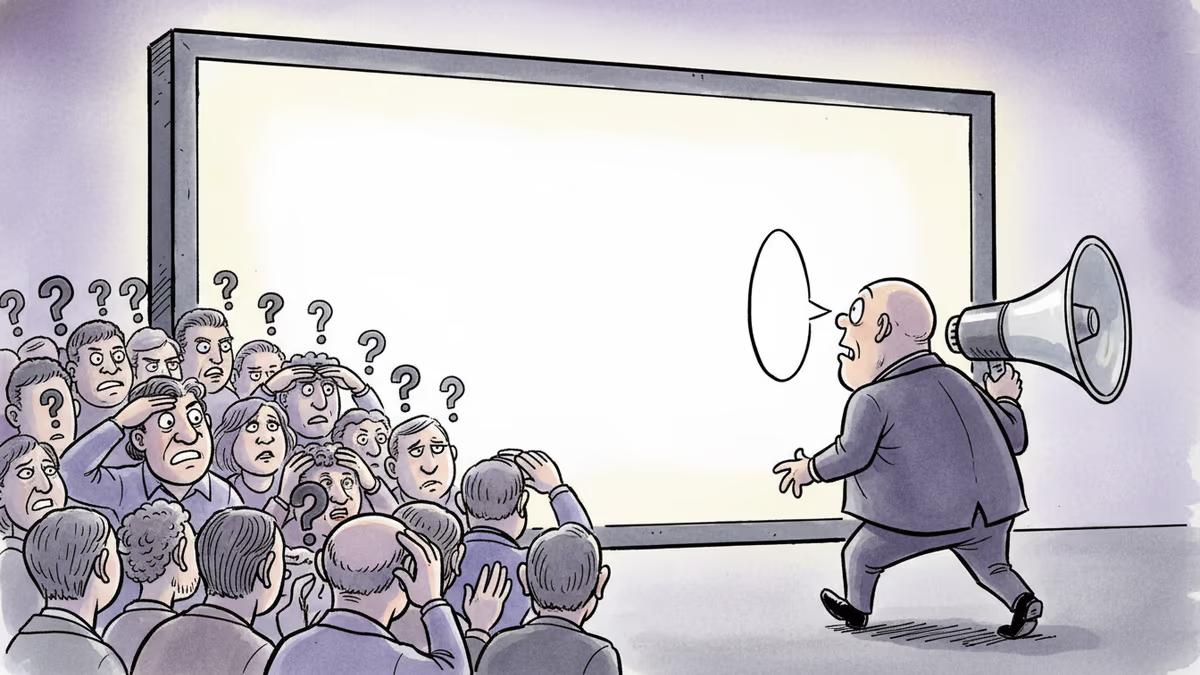
The clock ran out. Nobody moved.
Sixty Days, Six Votes, Zero Results
May 2, 2026 was supposed to mean something. Under the War Powers Resolution (WPR) — a law passed by Congress in 1973 specifically to prevent presidents from waging open-ended wars without legislative approval — today marked the 60-day deadline since President Trump formally notified Congress of military action against Iran on March 2. (Air strikes had already begun two days earlier, on February 28.)
The law is clear. By this date, one of three things must happen: Congress authorizes the war, the president withdraws U.S. forces, or Trump invokes a 30-day extension for an orderly pullout. None of those things happened.
Instead, the White House sent Congress a letter claiming the war has "terminated" because of a current cease-fire. House Speaker Mike Johnson echoed the line on NBC: "We are not at war. I don't think we have an active, kinetic military bombing, firing, or anything like that."
The problem with that logic is obvious. If a cease-fire equals termination, a president could engineer a brief pause every two weeks and never face congressional scrutiny again. By any practical measure, the war continues: thousands of U.S. service members remain deployed, thousands of ships are trapped in the Persian Gulf, and negotiations with Iran have not just stalled — they barely appear to exist. Trump recently threatened Iran with a meme of himself wielding an assault rifle in front of explosions, captioned No More Mr. Nice Guy!
Democrats forced six separate votes over two months attempting to trigger the WPR. Republicans defeated all six.
A Law Without an Enforcer

The deeper problem is structural. The WPR was never self-enforcing. It was written on the assumption that Congress would want to use it. That assumption has been tested — and failed — repeatedly across administrations.
In 2011, the Obama administration spent upwards of $1 billion bombing Libya and still argued the WPR didn't apply because, in its telling, "U.S. operations do not involve sustained fighting or active exchanges of fire with hostile forces." The Trump administration has recycled the same argument to justify strikes on vessels in the Caribbean and Pacific: if no one shoots back, it's not really a war.
This bipartisan erosion matters. It means the WPR's weakness isn't a partisan failure — it's an institutional one. The law exists. The political will to enforce it, across both parties, has consistently withered when it mattered most.
On the same week as the WPR deadline, the House finally ended a partial Department of Homeland Security shutdown that had begun on Valentine's Day — the longest such shutdown in U.S. history. The Senate had passed a fix at the end of March. The House simply left town. A senior House Republican, speaking to NOTUS, offered a blunt assessment: "This is what happens when you have leadership who can't organize a one-car parade."
Gallup's latest survey put congressional disapproval at 86%, matching its all-time worst.
When the Referee Can't Blow the Whistle
With legislative options exhausted, some Democrats are now exploring a lawsuit against the Trump administration for violating the WPR. Constitutional scholar Erwin Chemerinsky has advocated for the courts as a venue. But even he acknowledges the outlook is murky: in recent decades, federal courts have routinely classified such disputes as "political questions" outside judicial scope. During Trump's first term, Democratic lawmakers who sued over emoluments clause violations saw their cases dismissed on standing grounds.
The situation reveals a genuine paradox at the heart of American constitutional design. The legislature — theoretically a co-equal branch — is being asked to turn to an entirely different branch to do the work it is unwilling or unable to do itself. That's not a legal strategy. It's an admission.
Some Republican senators — Lisa Murkowski of Alaska, Susan Collins of Maine, Rand Paul of Kentucky — have signaled openness to bipartisan action. Murkowski is reportedly drafting an authorization bill. But signals are not votes, and votes in the Senate are not votes in the House. The distance between a few principled gestures and both chambers actually constraining a president remains vast.
This content is AI-generated based on source articles. While we strive for accuracy, errors may occur. We recommend verifying with the original source.
Related Articles
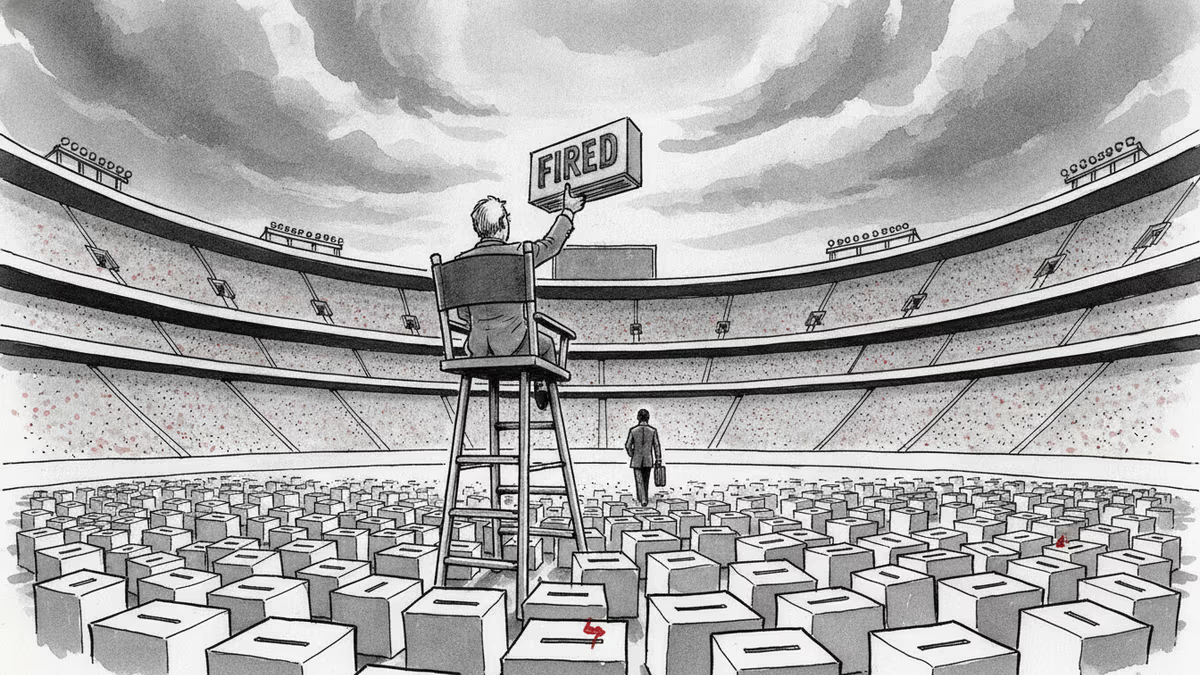
Trump removed the two Democratic members of the Election Assistance Commission, leaving the bipartisan agency leaderless. A Supreme Court ruling made it legal. Here's why a non-crisis can still be a warning sign.
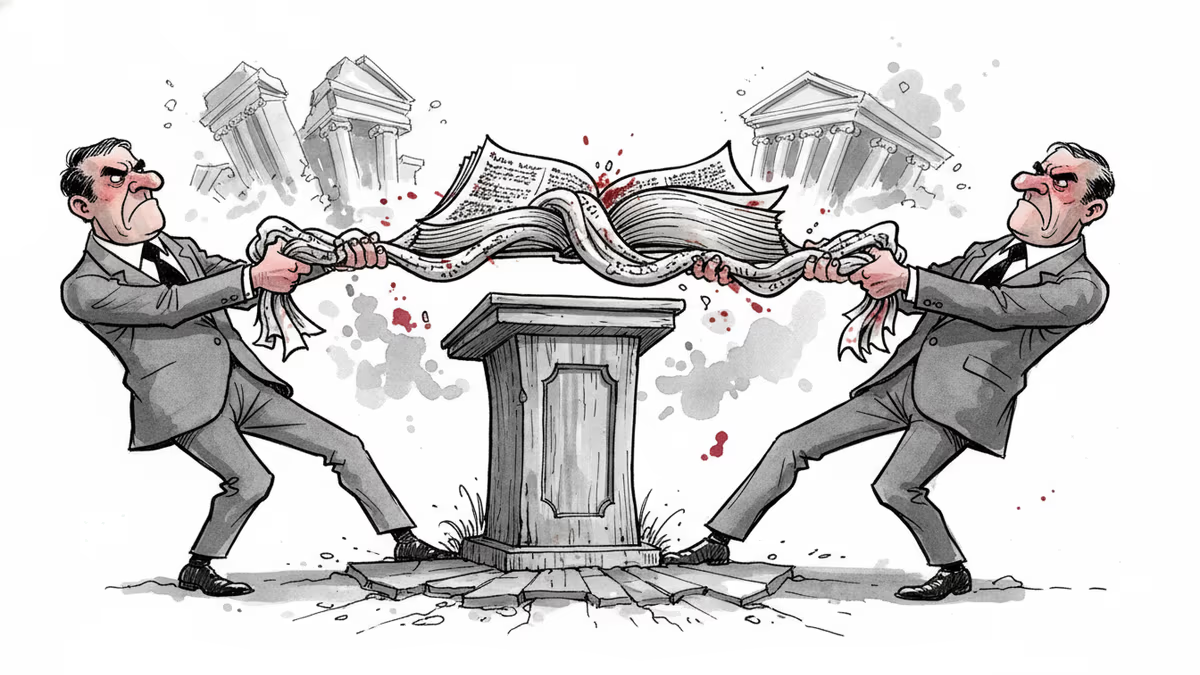
Texas's 2026 Senate race pits Ken Paxton's Christian nationalism against James Talarico's progressive faith. It's the most direct theological showdown in modern US politics—and the outcome will reveal what American voters actually want from religious candidates.
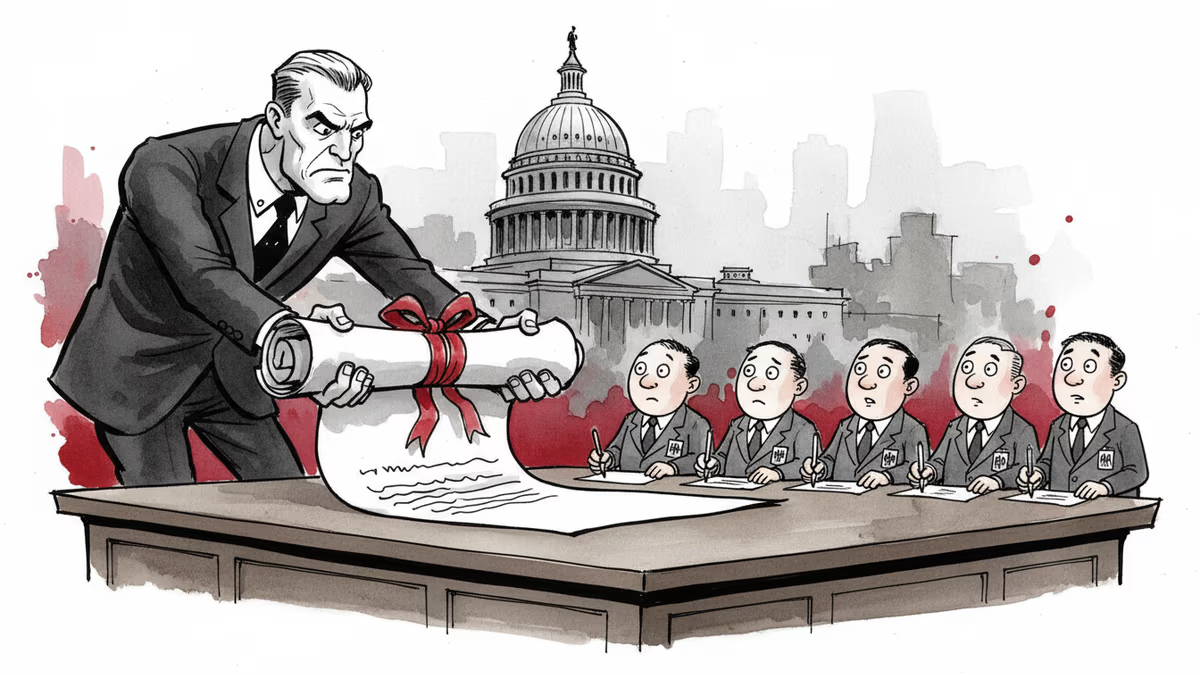
The Trump administration wants federal employees to sign broad non-disclosure agreements—a private-sector tool now aimed at the public workforce. What happens when government runs like a corporation?
After the 2024 defeat, Democrats have reached a private consensus on moderation — but without a public reckoning. Can a 'vibe shift' actually rebuild a party brand?
Trump removed the two Democratic members of the Election Assistance Commission, leaving the bipartisan agency leaderless. A Supreme Court ruling made it legal. Here's why a non-crisis can still be a warning sign.
Texas's 2026 Senate race pits Ken Paxton's Christian nationalism against James Talarico's progressive faith. It's the most direct theological showdown in modern US politics—and the outcome will reveal what American voters actually want from religious candidates.
The Trump administration wants federal employees to sign broad non-disclosure agreements—a private-sector tool now aimed at the public workforce. What happens when government runs like a corporation?
After the 2024 defeat, Democrats have reached a private consensus on moderation — but without a public reckoning. Can a 'vibe shift' actually rebuild a party brand?
Thoughts
Share your thoughts on this article
Sign in to join the conversation