
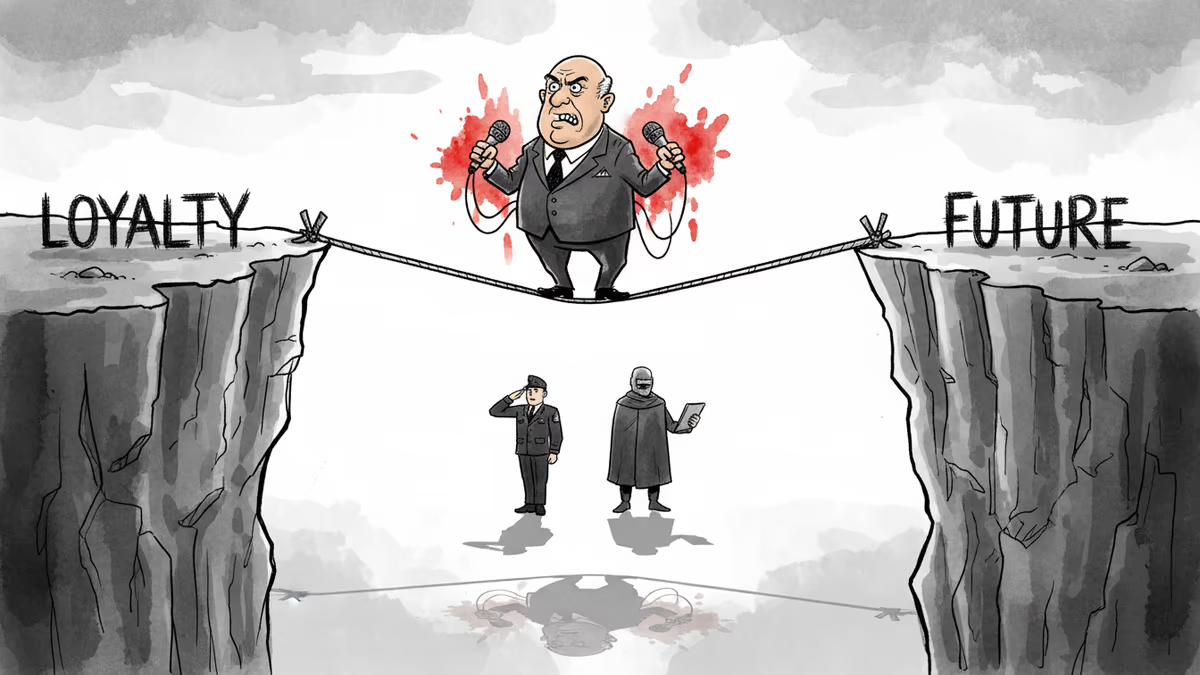
The Man Who Denied and Confirmed in the Same Breath
JD Vance called The Atlantic's reporting false, then immediately confirmed its substance. His Iran war tightrope reveals the impossible geometry of loyalty politics in the Trump era.
A denial usually has one job: make the story go away. JD Vance found a way to do the opposite.
Appearing on Fox News last week, the Vice President called The Atlantic's latest reporting "false"—then, within the same answer, confirmed exactly what the story said. "Of course I am concerned about our readiness," he told host Will Cain, "because that is my job to be concerned." The report he had just labeled false? It said he had raised concerns about U.S. military readiness in private meetings. He had just raised them again, on national television.
Call it what it is: not a denial, not a confirmation, but something new—a confirmation-denial. And it tells you more about the impossible geometry of Vance's political position than any single statement he could have made.
What The Atlantic Actually Reported
The story at issue was straightforward. The Atlantic reported that Vance had, in private meetings, repeatedly questioned the Pentagon's depiction of the Iran war and expressed concern that the Defense Department was understating the depletion of U.S. missile stockpiles. These weren't fringe concerns—similar worries have surfaced among some members of Congress and others inside the administration.
Vance's Fox News response was textbook crisis communications—until it wasn't. He insisted the piece ascribed views to him he was "100 percent certain" he had never expressed. Then he pivoted: "It's of course my job to ask these questions."
The substance of the denial evaporated the moment he kept talking.
There's a footnote worth noting. Vance told viewers not to trust "papers like The Atlantic"—except The Atlantic is a magazine, not a newspaper. A small detail, but one that matters: Vance knows the outlet well. In July 2016, he pitched an essay to it, portraying himself as a thinker capable of standing up to Trump's demagoguery. His relationship with the publication is, to put it gently, complicated.
The Iran War and an Inconvenient Identity

To understand why Vance is tied in knots, you have to understand what the Iran war means for his political future.
The military campaign began roughly two months ago. In its opening days, Vance was conspicuously absent from public view. While Secretary of State Marco Rubio stood frequently at Trump's side, the Vice President was scarce. When he did emerge, his defenses of the war were tepid enough that Trump himself acknowledged Vance was "maybe less enthusiastic" than other advisers.
That reputation for skepticism is precisely why Iran reportedly requested Vance as its interlocutor in negotiations. Tehran read his anti-interventionist history and used it as a lever. The result, so far: Iran has secured a cease-fire without surrendering control of the Strait of Hormuz or its nuclear program. Whether that outcome reflects Vance's influence, Iran's negotiating skill, or both remains unclear.
What is clear is that Vance has spent his career building one of the few consistent political identities in a party that prizes loyalty above ideology: opposition to foreign military interventions. That identity is now colliding with a war he cannot openly oppose without defying the president he serves.
The Geometry of Loyalty Politics
The trap Vance is in is not unique to him. Mike Pence, Mike Pompeo, Paul Ryan—the list of Republicans who tried to maintain independent credibility while staying in Trump's good graces is long. The list of those who succeeded at both is short.
Vance's version of the problem is particularly acute. He needs to be seen by Trump as a loyal deputy. He needs to be seen by future voters as a sober realist who asked hard questions when it mattered. He needs to raise missile stockpile concerns in private without having them reported. And when they are reported, he needs to deny them without actually lying—because the concerns are legitimate, and he knows it.
The confirmation-denial is what happens when those four requirements can't all be satisfied at once.
His advisers might argue this is strategy: keep distance from an unpopular war, maintain plausible deniability, preserve optionality for 2028. And there's something to that. A vice president who quietly raises readiness concerns is doing his job. But a vice president who then publicly calls accurate reporting "false" is doing something else—and the gap between those two things is visible to anyone watching.
The Iran war's economic ripple effects are already being felt globally, with disruption to shipping lanes threatening supply chains that run through the Strait of Hormuz. The longer the conflict runs, the harder it becomes for any senior official to maintain studied ambiguity about their role in it.
This content is AI-generated based on source articles. While we strive for accuracy, errors may occur. We recommend verifying with the original source.
Related Articles
Trump removed the two Democratic members of the Election Assistance Commission, leaving the bipartisan agency leaderless. A Supreme Court ruling made it legal. Here's why a non-crisis can still be a warning sign.
Trump says he wants to 'take' Cuba. But this desire isn't new—it stretches back to Thomas Jefferson. Why this centuries-old obsession is coming to a head right now.
Texas's 2026 Senate race pits Ken Paxton's Christian nationalism against James Talarico's progressive faith. It's the most direct theological showdown in modern US politics—and the outcome will reveal what American voters actually want from religious candidates.
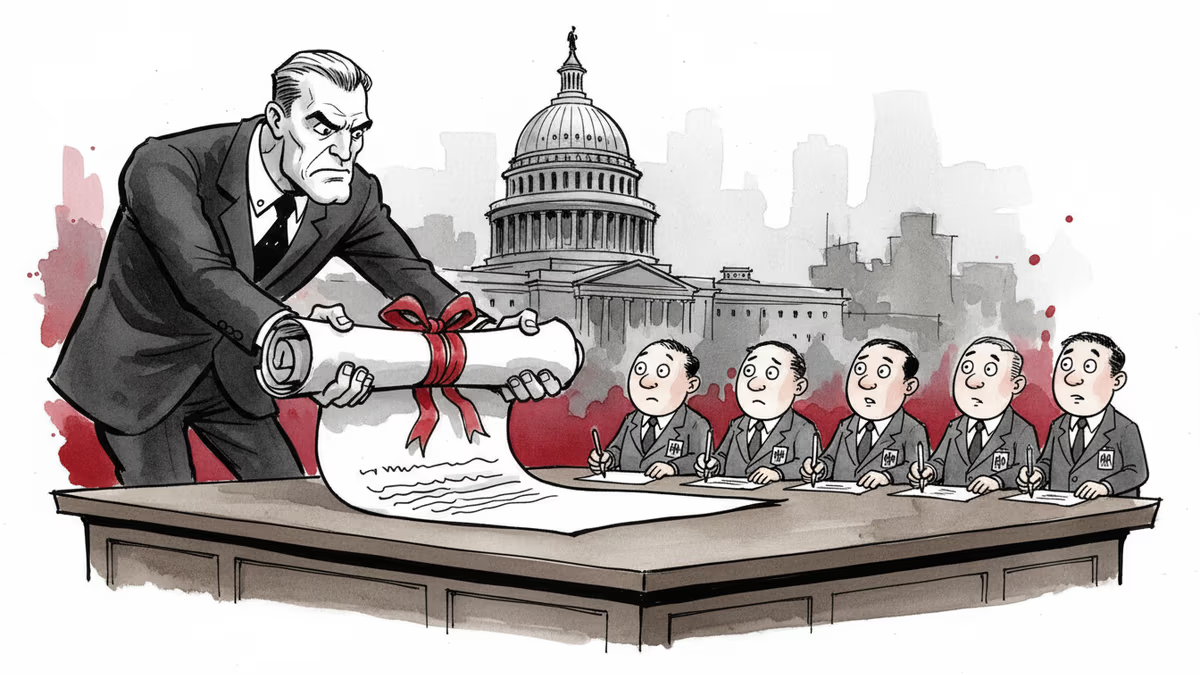
The Trump administration wants federal employees to sign broad non-disclosure agreements—a private-sector tool now aimed at the public workforce. What happens when government runs like a corporation?
Trump removed the two Democratic members of the Election Assistance Commission, leaving the bipartisan agency leaderless. A Supreme Court ruling made it legal. Here's why a non-crisis can still be a warning sign.
Trump says he wants to 'take' Cuba. But this desire isn't new—it stretches back to Thomas Jefferson. Why this centuries-old obsession is coming to a head right now.
Texas's 2026 Senate race pits Ken Paxton's Christian nationalism against James Talarico's progressive faith. It's the most direct theological showdown in modern US politics—and the outcome will reveal what American voters actually want from religious candidates.
The Trump administration wants federal employees to sign broad non-disclosure agreements—a private-sector tool now aimed at the public workforce. What happens when government runs like a corporation?
Thoughts
Share your thoughts on this article
Sign in to join the conversation