
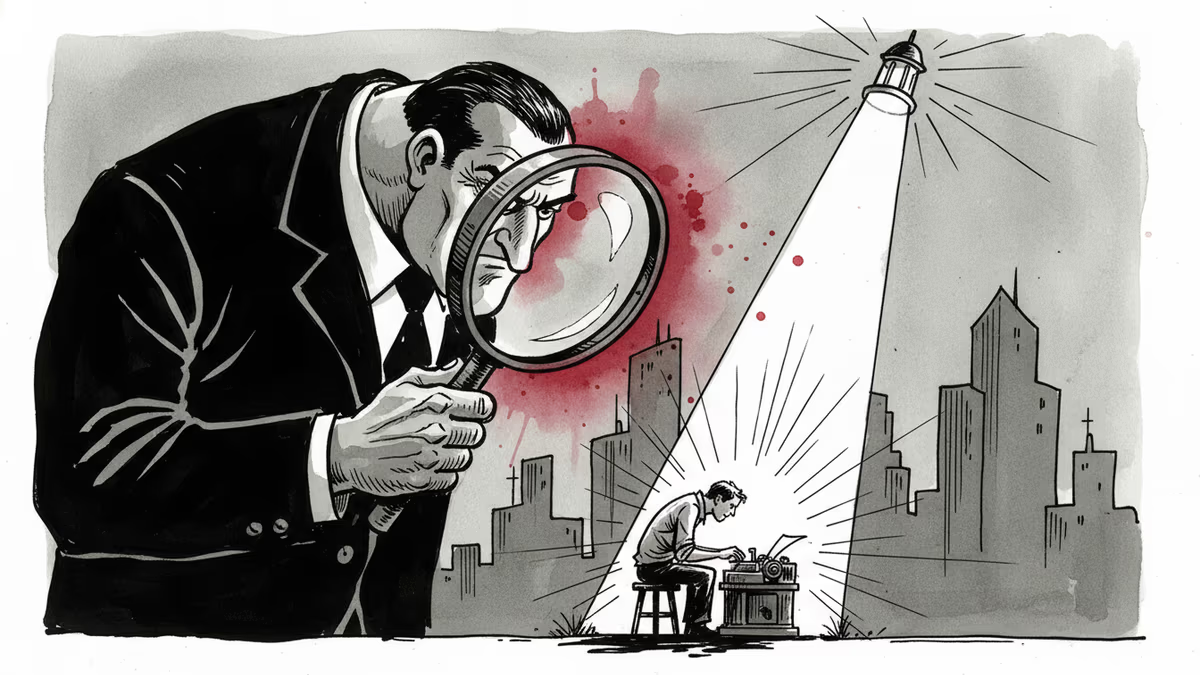
The FBI Is Investigating the Reporter Who Wrote About the FBI Director
The FBI reportedly launched a criminal investigation into Atlantic journalist Sarah Fitzpatrick over her critical profile of Director Kash Patel—a story that contained no classified information.
The story had no classified information. The reporter is still being investigated.
Last month, Sarah Fitzpatrick of The Atlantic published a detailed profile of FBI Director Kash Patel. Sourced to more than two dozen people, the piece portrayed Patel as paranoid, frequently drunk, and poorly suited for one of the most powerful law enforcement jobs in the country. It was damaging. It was embarrassing. And by all accounts, it contained nothing that would normally trigger a federal criminal investigation.
Yet on Wednesday, MS NOW reported that the FBI has launched exactly that—a federal criminal investigation focused on Fitzpatrick herself, not on whoever may have spoken to her.
The FBI denied it. Fitzpatrick published a second story about Patel the same day.
Why This Case Is Legally Unusual
To understand why press freedom advocates are alarmed, it helps to know what's normal. When the government investigates journalism, it typically targets the source—the government official or insider who allegedly leaked protected information. Going after the reporter directly is rare. Going after a reporter for a story that contains no classified material is rarer still.
That's what makes the reported investigation structurally odd. There's no obvious legal hook. Journalists are not generally prohibited from publishing unflattering accounts of public officials, even senior ones. The First Amendment is fairly robust on this point. Which raises an uncomfortable question: if the legal basis is thin, what is the purpose?
One answer, familiar to media law scholars, is the chilling effect. You don't need a conviction—or even an indictment—to make a journalist think twice. The investigation itself is the message.
A Pattern, Not an Isolated Incident

Wednesday's report didn't arrive in a vacuum. Since the start of Trump's second term, a string of similar episodes has accumulated.
A New York Times reporter who covered Patel and his girlfriend's alleged use of FBI resources was investigated. That probe was later dropped. Washington Post reporter Hannah Natanson had her devices seized by the FBI as part of a leak investigation targeting one of her sources. This week, Natanson won a Pulitzer Prize for that same reporting.
Also on Wednesday—the same day as the Fitzpatrick news—FBI agents raided the office of Virginia state Senator Louise Lucas, a Democrat who led a redistricting effort that has complicated Trump's midterm election strategy. The FBI cited possible corruption allegations. The timing, as multiple observers noted, is at minimum conspicuous.
Taken individually, each case has its own facts. Taken together, they describe something that looks less like coincidence and more like a governing style.
How Different Sides Read the Same Events
For Trump supporters and allies of Patel, the framing is straightforward: leakers inside the FBI are undermining a legitimately appointed director, and the government has both the right and the responsibility to find out who they are. From this view, Fitzpatrick's stories are politically motivated attacks dressed up as journalism, and investigating their origins is fair game.
For press freedom organizations, the picture is different. Reporters Without Borders has steadily downgraded the United States on its annual press freedom index—the US now ranks 57th globally, a position that would have seemed implausible to American audiences a decade ago. The concern isn't just about individual cases; it's about the cumulative signal sent to every journalist covering federal institutions.
There's also a structural argument worth considering. The US press freedom framework was largely built to prevent prosecution, not to shield journalists from investigation. The distinction matters. An investigation can consume resources, expose sources, and generate fear without ever reaching a courtroom.
What Comes Next—and What Doesn't
Fitzpatrick hasn't stopped reporting. Her second Patel story—about his habit of handing out personalized engraved bourbon bottles—ran the same day the investigation was reported. Whether that's defiance or simply journalism continuing as it should, the effect is the same: the story is still being told.
What remains genuinely unclear is whether the reported investigation will proceed, expand, or quietly disappear as the Times investigation did. The FBI's denial complicates the picture without resolving it. And the broader question—whether these episodes represent a durable shift in how the US government relates to the press—won't be answered by any single case.
This content is AI-generated based on source articles. While we strive for accuracy, errors may occur. We recommend verifying with the original source.
Related Articles
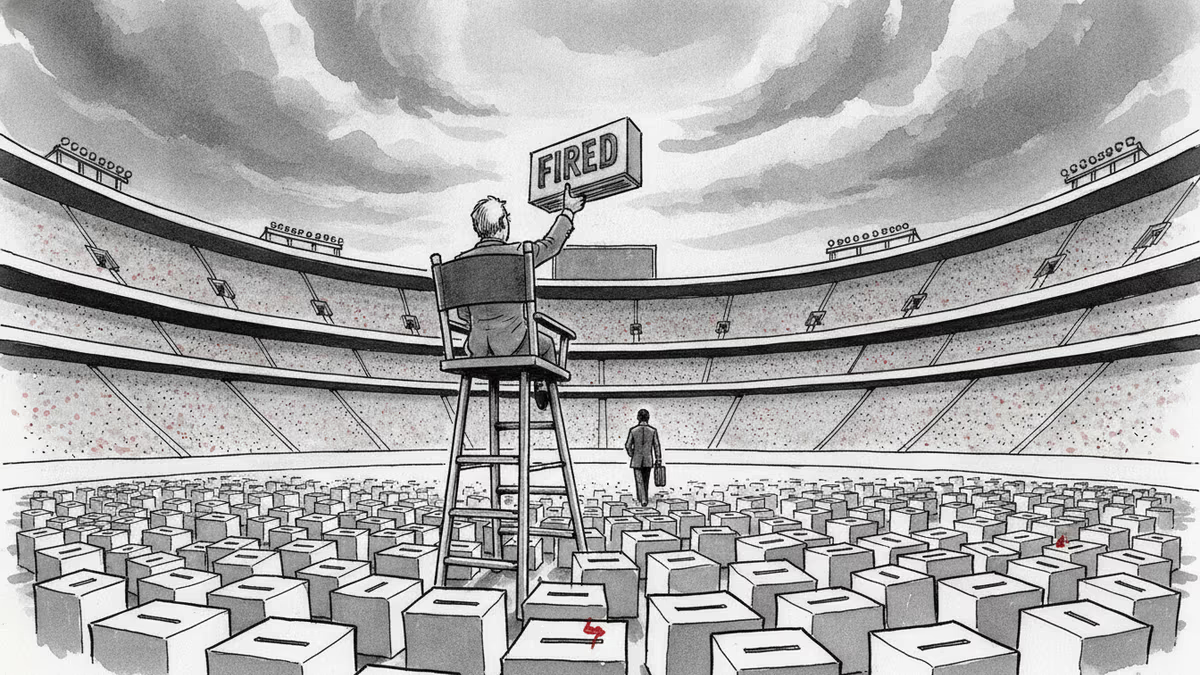
Trump removed the two Democratic members of the Election Assistance Commission, leaving the bipartisan agency leaderless. A Supreme Court ruling made it legal. Here's why a non-crisis can still be a warning sign.
Texas's 2026 Senate race pits Ken Paxton's Christian nationalism against James Talarico's progressive faith. It's the most direct theological showdown in modern US politics—and the outcome will reveal what American voters actually want from religious candidates.
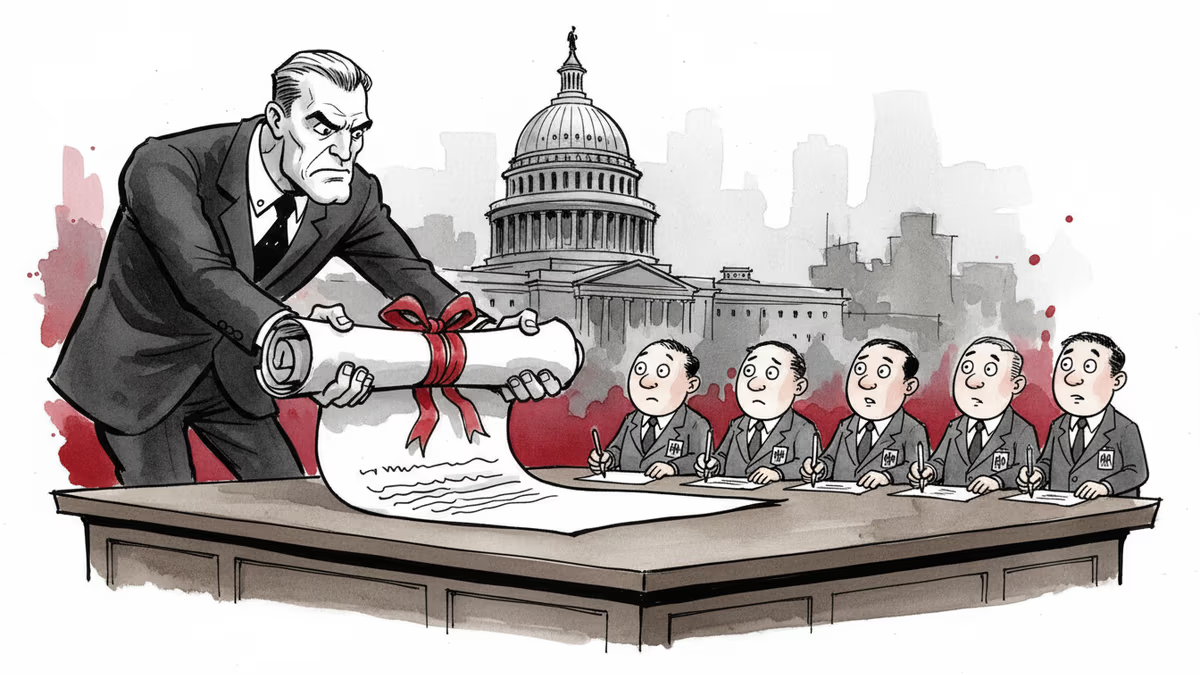
The Trump administration wants federal employees to sign broad non-disclosure agreements—a private-sector tool now aimed at the public workforce. What happens when government runs like a corporation?
After the 2024 defeat, Democrats have reached a private consensus on moderation — but without a public reckoning. Can a 'vibe shift' actually rebuild a party brand?
Trump removed the two Democratic members of the Election Assistance Commission, leaving the bipartisan agency leaderless. A Supreme Court ruling made it legal. Here's why a non-crisis can still be a warning sign.
Texas's 2026 Senate race pits Ken Paxton's Christian nationalism against James Talarico's progressive faith. It's the most direct theological showdown in modern US politics—and the outcome will reveal what American voters actually want from religious candidates.
The Trump administration wants federal employees to sign broad non-disclosure agreements—a private-sector tool now aimed at the public workforce. What happens when government runs like a corporation?
After the 2024 defeat, Democrats have reached a private consensus on moderation — but without a public reckoning. Can a 'vibe shift' actually rebuild a party brand?
Thoughts
Share your thoughts on this article
Sign in to join the conversation