
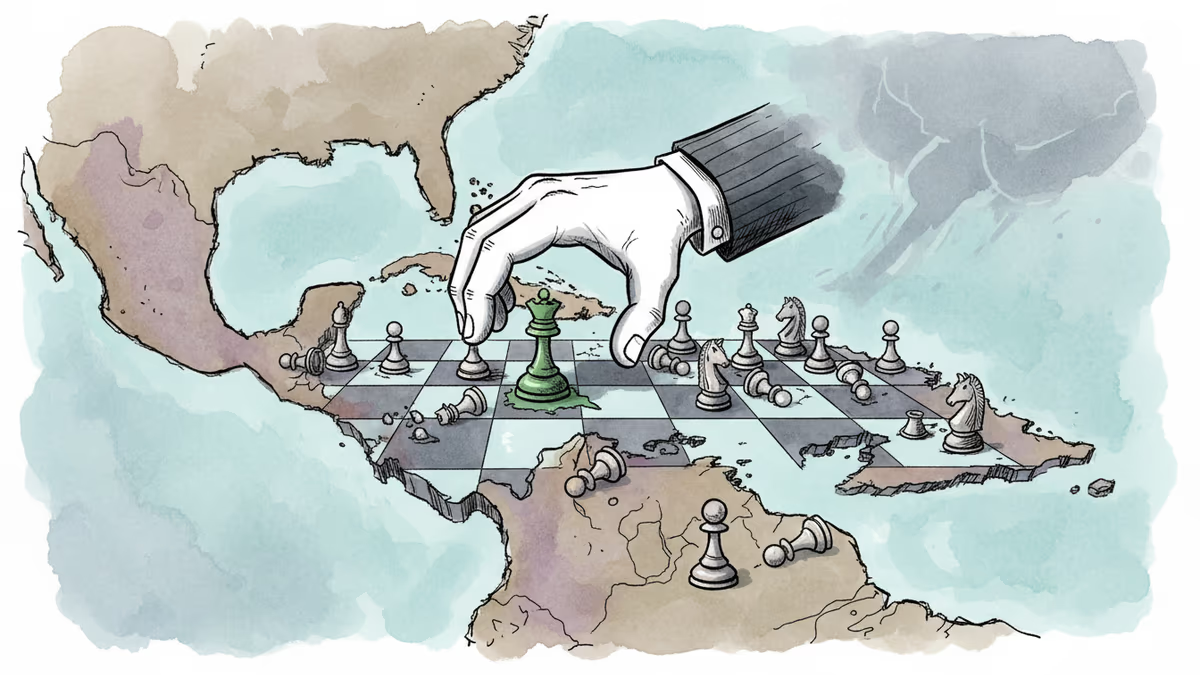
Cuba Is Next — But Nobody Knows What That Means
Trump has implied Cuba is next on his regime change list. But after Venezuela and Iran, the administration's Cuba strategy remains murky — and the island's resilience may outlast Washington's attention.
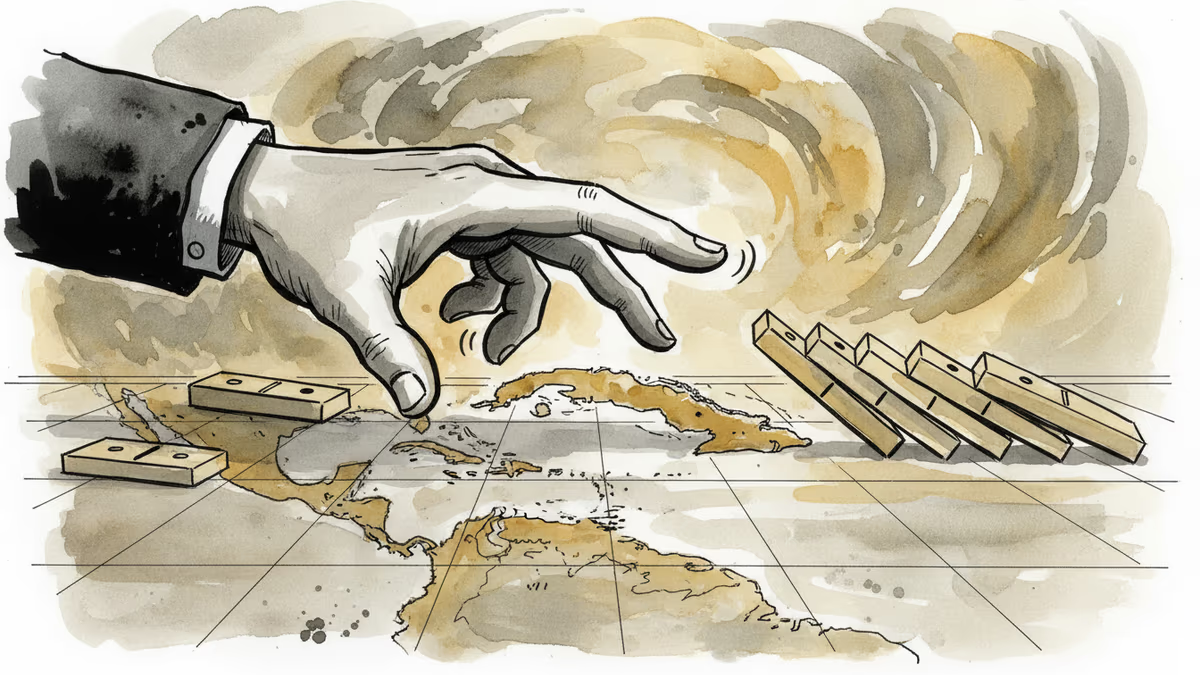
Twelve US presidents have tried to solve Cuba. All twelve failed. Donald Trump believes he'll be the thirteenth — and the first to succeed.
"All my life I've been hearing about the United States and Cuba," Trump said recently. "I do believe I'll have the honor of taking Cuba." It's the kind of remark that gets dismissed as bluster — until you notice that the Pentagon is now quietly preparing military options for the island, and that Senate Democrats have felt alarmed enough to sponsor legislation blocking any unilateral military action.
This isn't bluster anymore. It's policy in motion. The question is: what does "taking" Cuba actually mean — and does anyone in Washington have a coherent answer?
The Tightest Squeeze Since the Missile Crisis
The pressure campaign against Cuba escalated sharply in January, right after the ouster of Venezuelan president Nicolás Maduro — Cuba's closest ally and its primary oil supplier. The Trump administration cut off Venezuelan oil shipments to the island, then threatened tariffs against any country that tried to fill the gap. Mexico halted its shipments almost immediately. A Russian tanker carrying 100,000 tons of crude was allowed through at the end of March — a telling exception that suggests even Washington is calibrating the pressure carefully.
The effect on the ground has been severe. Cuba was already suffering repeated nationwide blackouts before the squeeze began. Now food prices are climbing, garbage is piling up in Havana's streets, and the country's once-celebrated public health system is struggling to keep ventilators running. Hospitals are canceling surgeries. Chris Sabatini, senior fellow for Latin America at Chatham House, calls it "a different level of desperation."
Yet desperation alone has never brought down the Cuban government. The island survived the "Special Period" of the early 1990s, when the Soviet Union's collapse wiped out its main patron almost overnight. The regime absorbed that shock and kept going. Sabatini's assessment is blunt: "They've always been willing to just let their people suffer as long as they remain in power."
Alongside the pressure, there's diplomacy. A US State Department delegation landed in Havana earlier this month — the first American government aircraft to touch Cuban soil since the brief Obama-era thaw. Their demands included economic reforms, the release of political prisoners, compensation for Americans whose properties were seized in the 1959 revolution, and permission to offer Starlink internet access on the island. Cuba's response, publicly at least, has been to keep talking without committing.
Why Cuba Isn't Venezuela

The administration's template for Cuba appears to be Venezuela, where Maduro was removed and replaced by a more pliable figure — his own former Vice President Delcy Rodríguez — who remains in power under implied threat of further action. It was regime change without regime removal: a leadership swap that left Washington satisfied enough to move on.
But Cuba's political architecture makes that kind of maneuver far harder to execute. Venezuela's government was fractured into competing factions, some of which had long maintained quiet channels to Washington. Cuba's leadership is ideologically unified in a way that Venezuela's never was. Michael Bustamante, a professor of Cuban-American studies at the University of Miami, puts it plainly: "There's no one who has a consistent track record of having stood for economic liberalization, even in a modest way."
The name currently circulating in diplomatic circles is Raúl Castro's 41-year-old grandson — also named Raúl, nicknamed "El Cangrejo" (the crab). He's seen as relatively business-friendly and as a conduit to his 94-year-old grandfather, who is officially retired but still widely considered influential. But experts view him as a useful intermediary, not a potential successor. And cutting any deal that leaves a Castro-connected figure in power would likely conflict with the 1996 Helms-Burton Act, which bars lifting the embargo as long as either Fidel or Raúl Castro remains part of the governing structure — and sets free elections and the dismantlement of Cuba's state security apparatus as explicit preconditions.
Current president Miguel Díaz-Canel, who became Cuba's first non-Castro leader in 2021, could theoretically be pressured into exile. But who comes next? Unlike Venezuela, there's no waiting faction with a reform agenda and US contacts ready to step in.
In Marco We Trust
If there's one person who explains why Cuba has suddenly become a US foreign policy priority, it's Marco Rubio. The Secretary of State — whose parents were born in Cuba — has spent his entire political career pushing for the end of the Castro regime. He was one of the loudest critics of Obama's normalization effort. He's been the face of the administration's assertive posture across Latin America. And unlike Iran, where Rubio has played a notably low-profile role, Cuba is personal.
Ricardo Herrero, executive director of the Cuba Study Group, frames it starkly: "The only person in office today who would care enough to make Cuba a priority for the United States is Marco Rubio. This makes him both the chief threat, but also the chief opportunity that Cuba is facing."
The opportunity part is counterintuitive. Rubio is a hardliner — which is precisely why he might be the only American politician capable of selling a compromise deal to the Cuban-American community in Miami and to a skeptical Congress. Think Nixon going to China. Rubio has left the door open: he's said the embargo could be lifted if there were "new people in charge" and major economic reform, while also suggesting Cuba "doesn't have to change all at once." That's a significant softening from the maximalist position.
Bustamante captures the mood in the Cuban-American community with a phrase that's equal parts hope and resignation: "'In Marco we trust' is sort of the vibe."
On the streets of Havana, graffiti reading "Viva Trump" and "Make Cuba Great Again" has been appearing with more frequency. Boris González Arenas, a prominent journalist and human rights activist in the city, cautions against reading this as ideological alignment. "People perceive that pressure from the president of the United States could change the government in Cuba," he explains. "They don't have access to elections. They know the government is the cause of their situation — the famine, the lack of medicine."
González Arenas says he would support military intervention, but only under a specific condition: that it restores sovereignty to the Cuban people rather than simply swapping one form of control for another. "Cuba is not a country incapable of self-governance," he says. "Cuba is a nation kidnapped by a criminal group."
This content is AI-generated based on source articles. While we strive for accuracy, errors may occur. We recommend verifying with the original source.
Related Articles
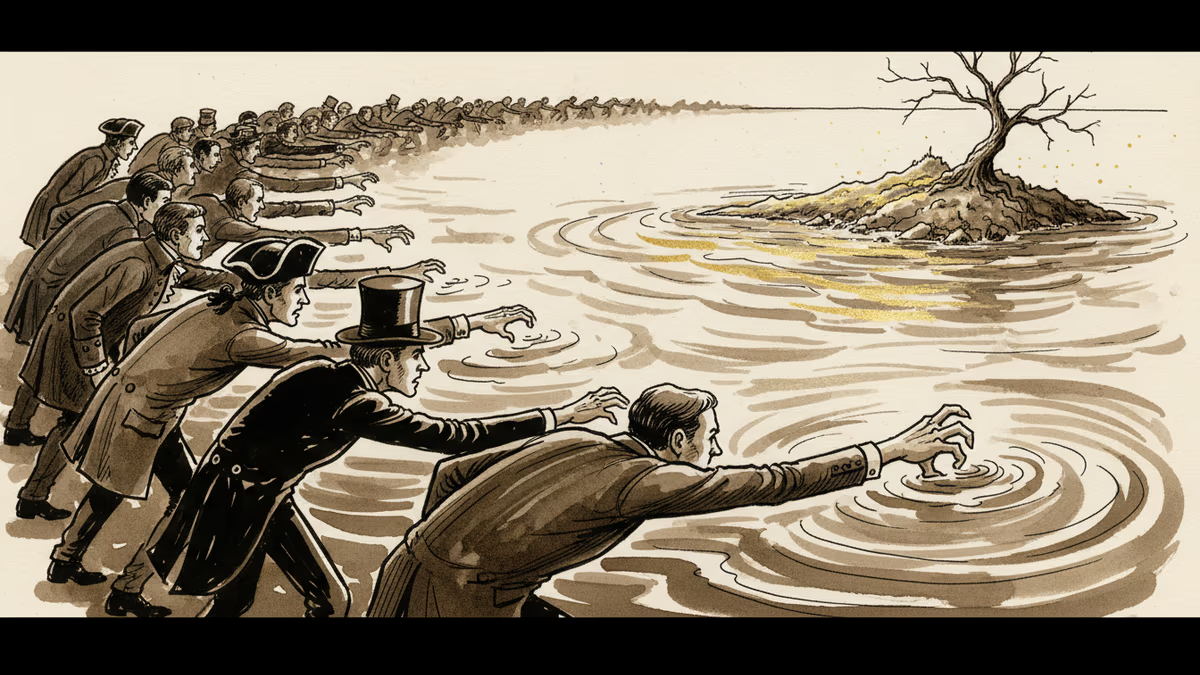
Trump says he wants to 'take' Cuba. But this desire isn't new—it stretches back to Thomas Jefferson. Why this centuries-old obsession is coming to a head right now.
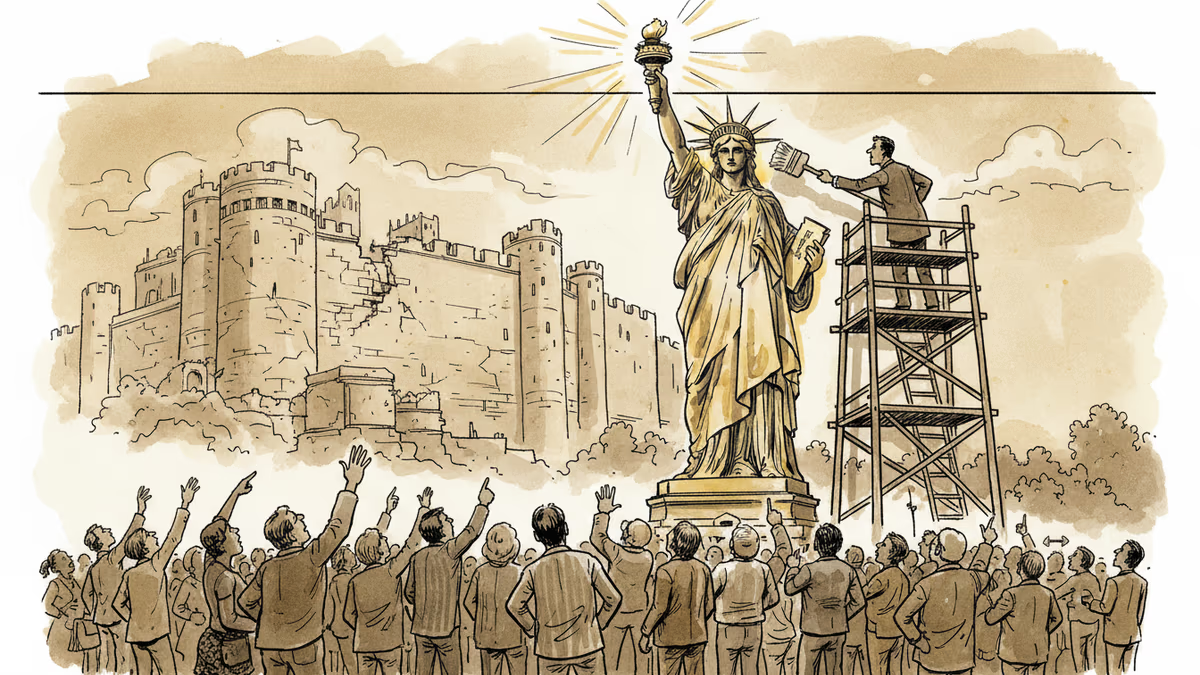
Marco Rubio invoked the immigrant American Dream in a viral clip — overlaid with Trump's image. Is this what post-Trump conservatism looks like, or just clever rebranding?
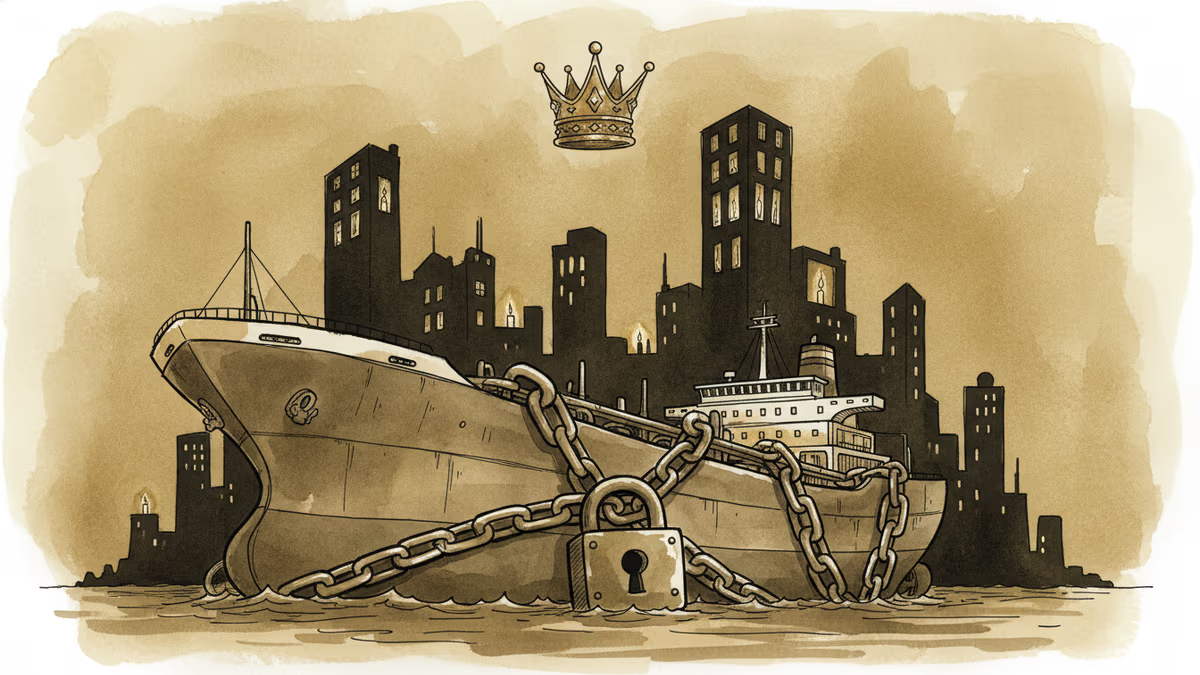
The Trump administration's oil blockade has plunged Cuba into blackouts, food spoilage, and medical collapse. Officials call it working as intended. That's the most troubling part.
Trump says Cuba will 'fall pretty soon.' After Venezuela and Iran, the White House sees a winning streak. But regime change has a way of writing its own ending.
Trump says he wants to 'take' Cuba. But this desire isn't new—it stretches back to Thomas Jefferson. Why this centuries-old obsession is coming to a head right now.
Marco Rubio invoked the immigrant American Dream in a viral clip — overlaid with Trump's image. Is this what post-Trump conservatism looks like, or just clever rebranding?
The Trump administration's oil blockade has plunged Cuba into blackouts, food spoilage, and medical collapse. Officials call it working as intended. That's the most troubling part.
Trump says Cuba will 'fall pretty soon.' After Venezuela and Iran, the White House sees a winning streak. But regime change has a way of writing its own ending.
Thoughts
Share your thoughts on this article
Sign in to join the conversation