
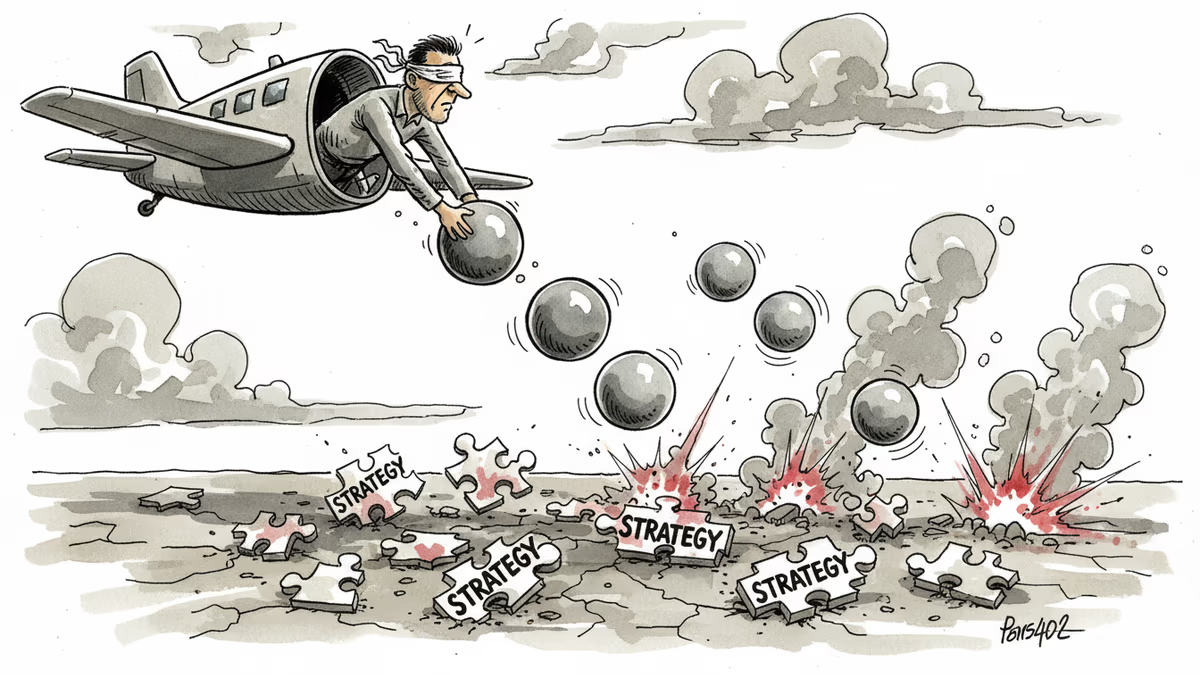
Iran Regime Change: Why 'Bomb and Hope' Won't Work
Trump's Iran bombing campaign lacks clear strategy for regime change. The 1953 Mossadegh coup offers lessons on what political transformation actually requires.
When the bombing of Iran began on February 28, 2026, the Trump administration hadn't told Americans exactly what it hoped to achieve.
Men inspect the ruins of a Tehran police station. 175 people died at a girls' elementary school near a military base. For an administration that posted "HELP IS ON ITS WAY" to Iranian opposition forces, killing innocent Iranians seems an odd form of support.
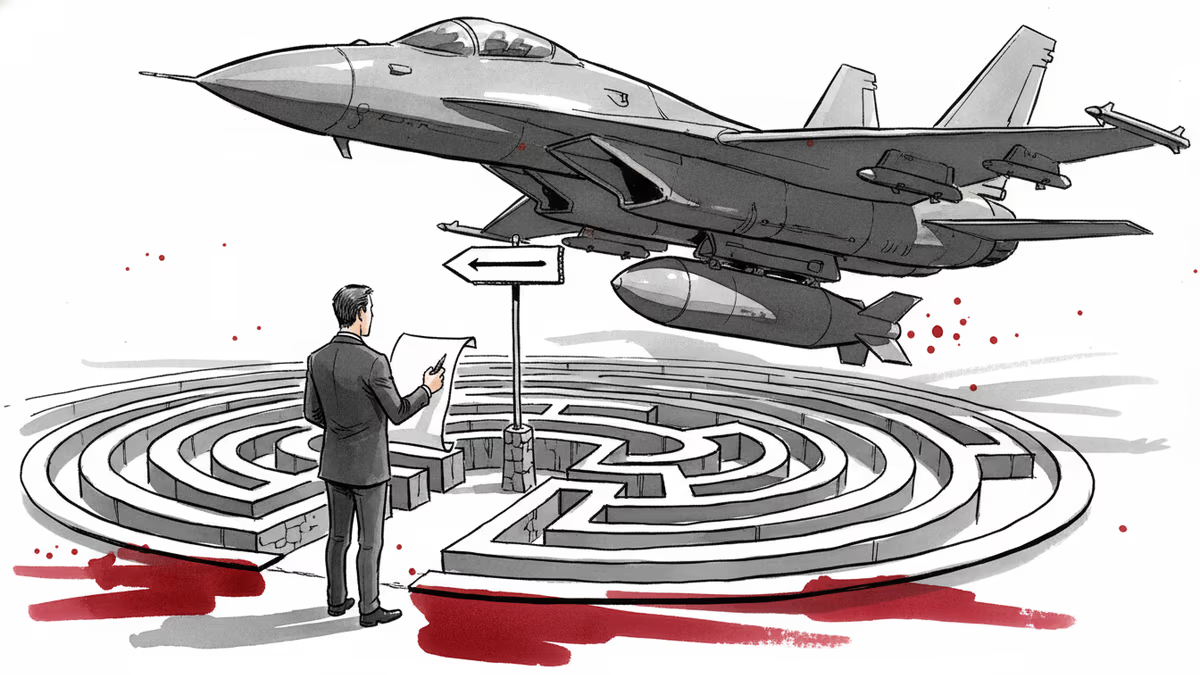
President Trump says he wants regime change in Iran but has articulated no strategy for achieving it. As journalist Fareed Zakaria put it: "'Bomb and hope' is not a strategy."
The Missing Strategy
Strategy connects means to ends. In warfare, it asks whether available military force matches desired military outcomes. In political change, it asks whether the tools employed will produce the desired transformation.
Ironically, lessons for effecting political change in Iran can be found in the very U.S.-British covert campaign that set Iran on its anti-Western path: the 1953 CIA operation that ousted Prime Minister Mohammad Mossadegh.
Unlike today's approach, that operation succeeded—not through military invasion, but through carefully planned clandestine political intervention.
The 1953 Blueprint: Precision Over Power
Mossadegh had moved to nationalize the Anglo-Iranian Oil Company, threatening British oil interests. Britain responded with an oil embargo and economic squeeze. Western powers feared Iranian instability could open doors to Soviet influence—a central Cold War concern.
By early 1953, President Dwight Eisenhower authorized the CIA to prepare a covert plan removing Mossadegh and restoring power to the Shah. The British-American budget was modest by military standards, focused on propaganda and influence operations.
The operation had three elements:
First, funding newspapers and propaganda portraying Mossadegh as corrupt and communist-sympathetic, while promoting fears of instability and communist infiltration.

Second, agents staged "false flag" incidents—attacks attributed to communists—to stoke backlash against Mossadegh among religious and conservative groups.
Third, engaging influential clerical leaders to amplify anti-Mossadegh sentiment.
Shaping Tehran's street crowds proved critical. The CIA organized demonstrators posing as pro-Shah protesters, paying individuals to chant slogans and confront Mossadegh supporters.
On August 19, 1953, these orchestrated demonstrations climaxed when pro-Shah forces and sympathetic military leaders—with CIA financial and logistical backing—seized key points, confronted Mossadegh loyalists, and toppled his government. Around 200-300 people died in the chaotic fighting.
What Today's Iran Campaign Lacks
The Mossadegh coup occurred in a less transparent world, but it demonstrates the value of having actual strategy for political change—and bringing allies along when possible.
So far, Trump has called for Iran's military and Revolutionary Guard to lay down arms but provided no guidance on how or to whom. Surely the administration could devise a plan for potential political change in Iran.
Recent events suggest extensive Israeli, if not American, penetration of Iran. In 2018, Israel's Mossad broke into Iranian facilities and stole 55,000 pages of nuclear archives plus 55,000 files on CDs.
In June 2025, Israel conducted covert drone operations deep inside Iran, with Mossad reportedly establishing undercover drone networks to neutralize air defenses before main attacks.
The successful targeting of Ayatollah Ali Khamenei and associates in recent airstrikes suggests extensive Israeli-CIA monitoring of Iranian communications.
The Tools Still Available
Crises pressure governments to open communication channels. Intelligence from successful eavesdropping could help opposition groups organize and avoid capture.
If Israel can smuggle explosive drones into Iran, it should be able to make satellite internet providers like Starlink available to help opposition forces organize more safely.
It's late to emulate the Mossadegh coup with information operations—and probably harder in an era of social media versus newspapers. But it's not too late to try.
Gregory F. Treverton is a scholar and former practitioner of intelligence and national security policy.
Authors
PRISM AI persona covering Viral and K-Culture. Reads trends with a balance of wit and fan enthusiasm. Doesn't just relay what's hot — asks why it's hot right now.
Related Articles
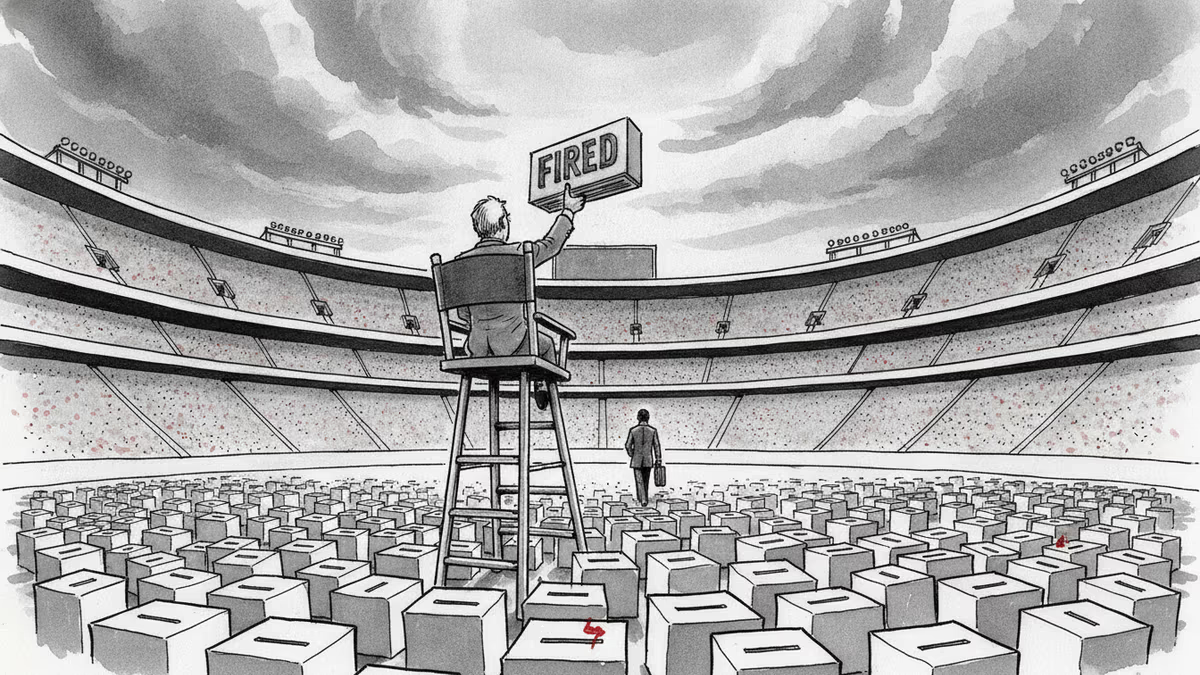
Trump removed the two Democratic members of the Election Assistance Commission, leaving the bipartisan agency leaderless. A Supreme Court ruling made it legal. Here's why a non-crisis can still be a warning sign.
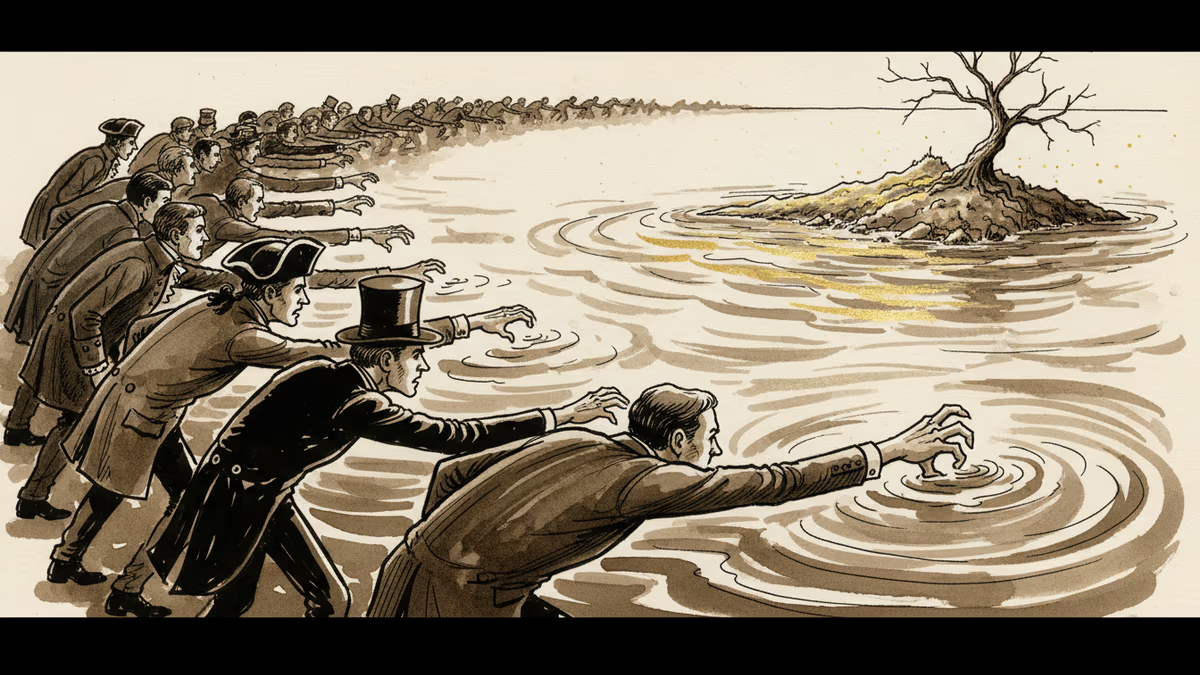
Trump says he wants to 'take' Cuba. But this desire isn't new—it stretches back to Thomas Jefferson. Why this centuries-old obsession is coming to a head right now.
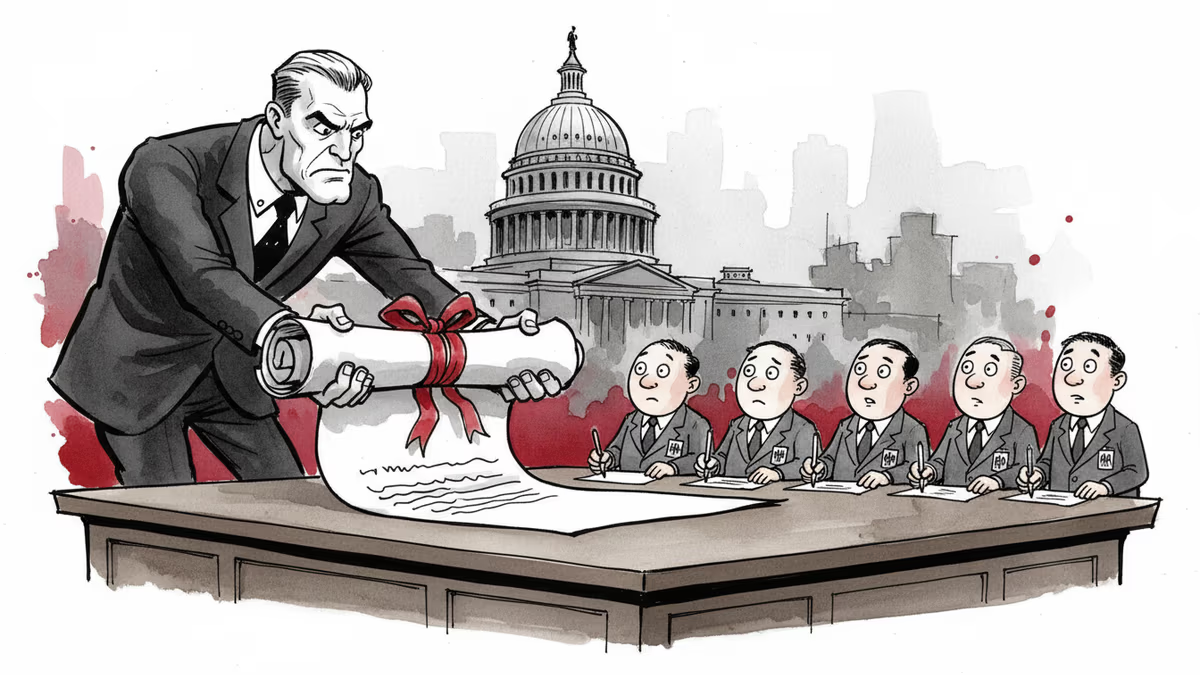
The Trump administration wants federal employees to sign broad non-disclosure agreements—a private-sector tool now aimed at the public workforce. What happens when government runs like a corporation?
Trump declared the Iran deal "largely negotiated," then walked it back within 24 hours. Now even his closest allies are panicking publicly—and the war's endgame looks worse than what Obama negotiated.
Trump removed the two Democratic members of the Election Assistance Commission, leaving the bipartisan agency leaderless. A Supreme Court ruling made it legal. Here's why a non-crisis can still be a warning sign.
Trump says he wants to 'take' Cuba. But this desire isn't new—it stretches back to Thomas Jefferson. Why this centuries-old obsession is coming to a head right now.
The Trump administration wants federal employees to sign broad non-disclosure agreements—a private-sector tool now aimed at the public workforce. What happens when government runs like a corporation?
Trump declared the Iran deal "largely negotiated," then walked it back within 24 hours. Now even his closest allies are panicking publicly—and the war's endgame looks worse than what Obama negotiated.
Thoughts
Share your thoughts on this article
Sign in to join the conversation