
Trump's War, Trump's Dead End
Trump declared the Iran deal "largely negotiated," then walked it back within 24 hours. Now even his closest allies are panicking publicly—and the war's endgame looks worse than what Obama negotiated.
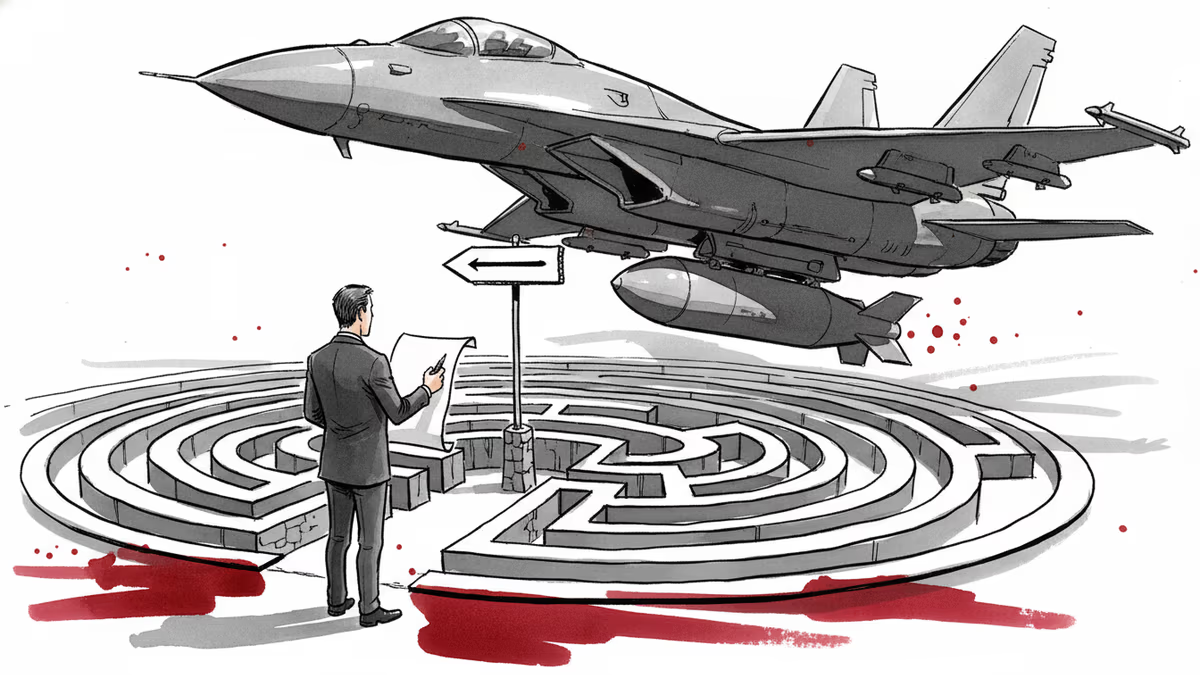
On Friday, it was "largely negotiated" and close to "finalization." By Saturday afternoon, it "isn't even fully negotiated yet." In between, Donald Trump posted a meme of a fighter jet carrying a bomb.
This is the current state of American diplomacy with Iran.
When Your Own Allies Sound the Alarm
What makes this moment genuinely unusual isn't the chaos—that's become ambient noise. It's who is alarmed. The sharpest criticism of Trump's emerging Iran deal isn't coming from Democrats or foreign governments. It's coming from his own political base.
Lindsey Graham posted that any deal that "caves to Iran makes one wonder why the war started to begin with." Roger Wicker called a possible 60-day ceasefire a "disaster." Ted Cruz floated the possibility that the president is being maneuvered by "some voices in the administration"—a polite way of suggesting Trump doesn't know what his own team is negotiating.
Then Mike Pompeo, Trump's own former Secretary of State and CIA Director, weighed in with the most pointed comparison possible: he warned the deal's outline resembled what Barack Obama's team might have designed when they built the 2015 Joint Comprehensive Plan of Action (JCPOA)—the very agreement Trump has spent years denouncing as a catastrophic sellout.
The White House's response was telling. Communications director Steven Cheung fired back at Pompeo on X: "He should shut his stupid mouth and leave the real work to the professionals." A sitting administration official, publicly melting down over criticism from a former cabinet secretary. Whatever is happening inside the White House right now, it doesn't look like confidence.
How America Got Here
To understand the endgame, you have to go back to the beginning—and the beginning was built on a flawed premise.

Trump reportedly launched the military campaign against Iran after Israeli Prime Minister Benjamin Netanyahu suggested the regime would collapse under pressure. CIA Director John Ratcliffe reportedly told him that prediction was "farcical." Trump went ahead anyway.
The regime didn't fall. So the war's stated purpose quietly shifted. What began as something resembling a liberation campaign became, in retrospect, a mission to prevent Iran from acquiring nuclear weapons. But Iran is now at the negotiating table behaving like the side that won: demanding terms over the Strait of Hormuz, pushing the nuclear question into a future conversation, and presenting itself as the aggrieved party.
The bitter irony is that the JCPOA—the deal Trump trashed in 2018—was, by most independent assessments, actually working at the time he killed it. Iran was in compliance. There was no credible evidence of a nuclear sprint in 2026. Trump had options: maintain the agreement, watch for violations, and build a legitimate casus belli if Iran broke the terms. He would have had congressional and international support for action under those conditions. Instead, he withdrew from the deal without a plan, started a war without a plan, and is now searching for an exit without a plan.
The Paper That Will Come Out of Pakistan
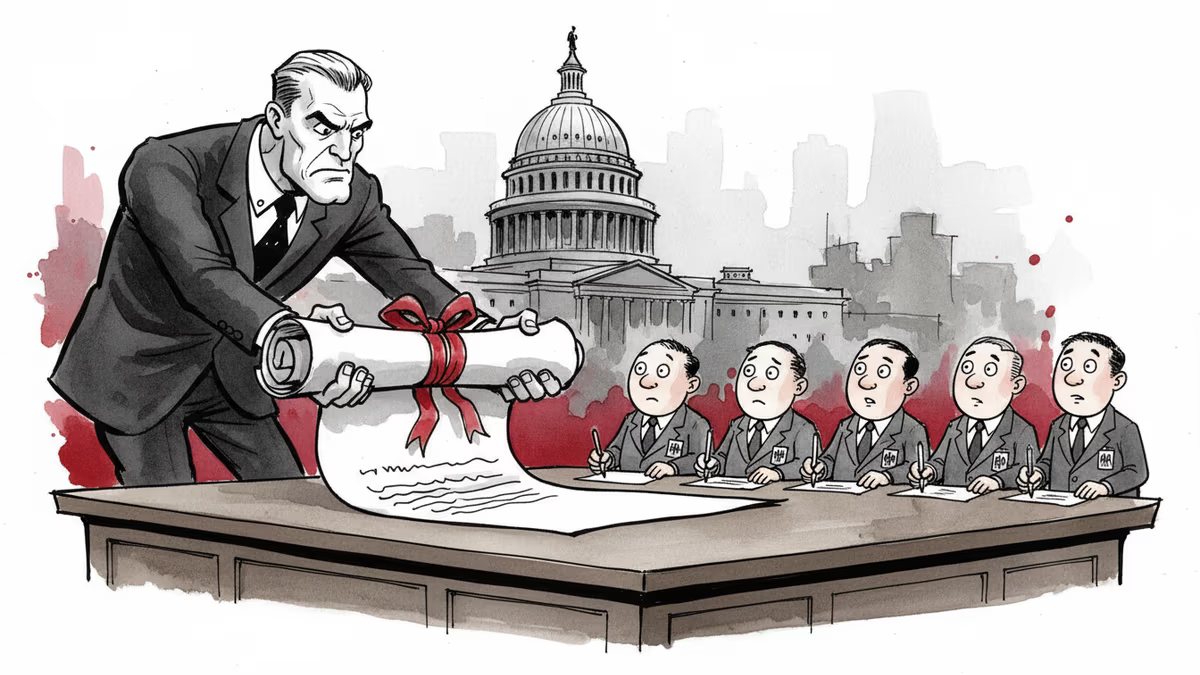
At some point, a document will emerge from a meeting room—reportedly in Pakistan. It will formalize what analysts are already calling a strategic defeat for the United States. Iran's theocratic government will remain in power. Its grip on the Strait of Hormuz, through which roughly 20% of the world's seaborne oil passes, will be no weaker than before the war began—and possibly stronger, because Iran has now demonstrated it can withstand American military pressure and negotiate from a position of leverage.
The agreement, whatever its specific terms, will almost certainly be more permissive toward Iran than the JCPOA was. That's not a partisan talking point—it's the logical consequence of negotiating from a weakened position. Obama's team spent years building a multilateral framework with international inspectors, phased sanctions relief, and verification mechanisms. The current negotiation is happening in a hurry, under duress, with Iran holding cards it didn't hold three months ago.
For markets and energy policy, the Hormuz dimension matters enormously. A settlement that leaves Iran with meaningful leverage over that chokepoint is a variable that oil traders, shipping companies, and Asian economies—which depend heavily on Gulf energy flows—will be pricing in for years.
The Deeper Question About American Credibility
The JCPOA debate a decade ago was genuinely complex. Reasonable people disagreed about whether front-loading concessions to Iran was wise strategy or dangerous naivety. Obama himself acknowledged the gamble, telling The Atlantic's editor in chief in 2015: "If Iran has a nuclear weapon, it's my name on this."
But the lesson that other governments—allies and adversaries alike—are drawing from this episode isn't really about the specific terms of any Iran agreement. It's about what American commitments are worth when the political winds shift. The US withdrew from a functioning multilateral agreement on the basis of domestic politics. It then launched a military campaign on optimistic intelligence assessments. It is now negotiating an exit under pressure.
That sequence is visible to every government that might one day be asked to enter into an agreement with Washington—or to trust an American security guarantee.
This content is AI-generated based on source articles. While we strive for accuracy, errors may occur. We recommend verifying with the original source.
Related Articles
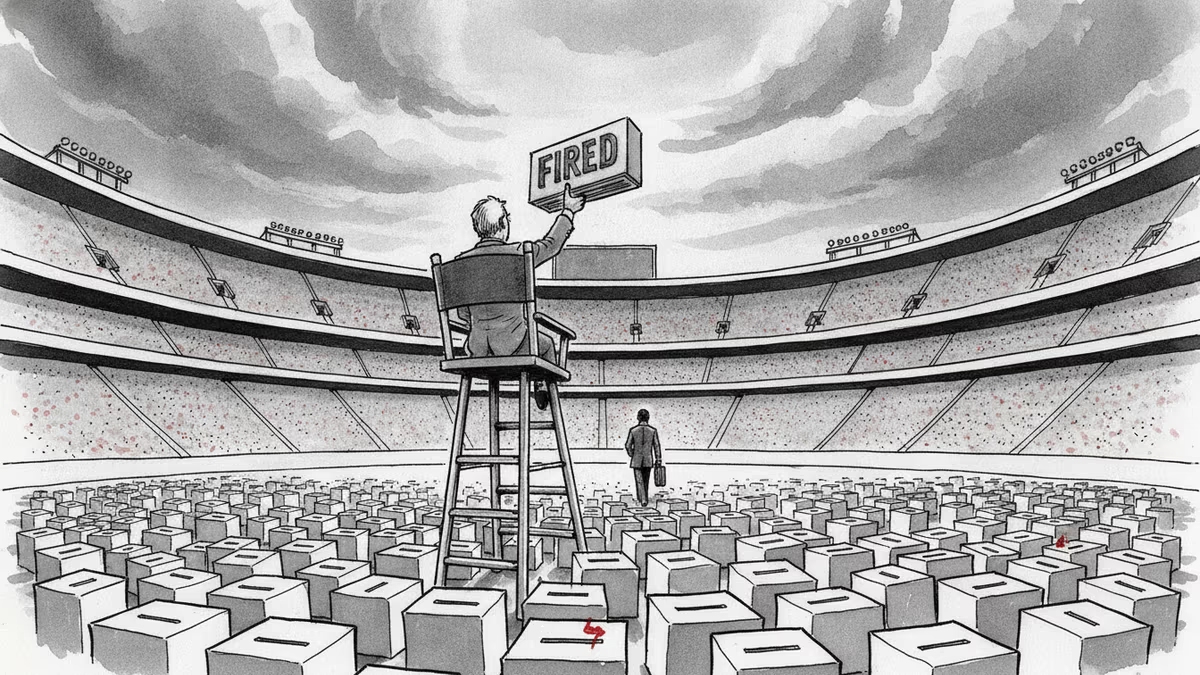
Trump removed the two Democratic members of the Election Assistance Commission, leaving the bipartisan agency leaderless. A Supreme Court ruling made it legal. Here's why a non-crisis can still be a warning sign.
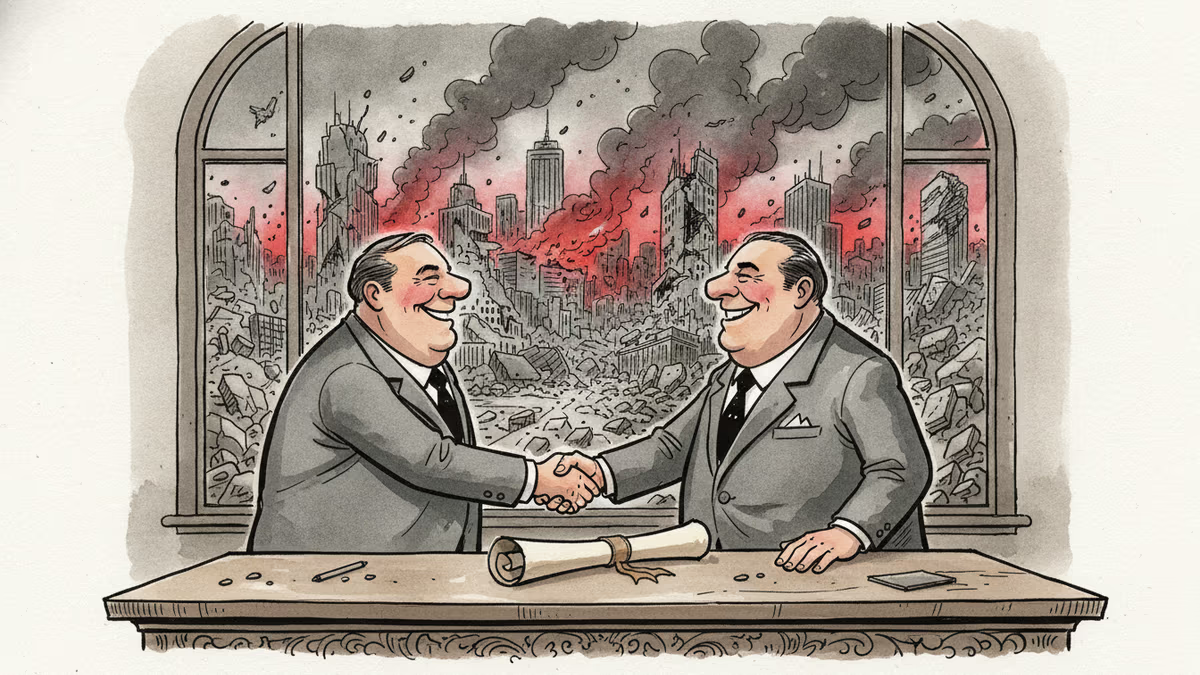
Lebanon and Israel signed a framework agreement in June 2026. Hezbollah rejected it. Israel kept fighting. History suggests this moment is real—and fragile.
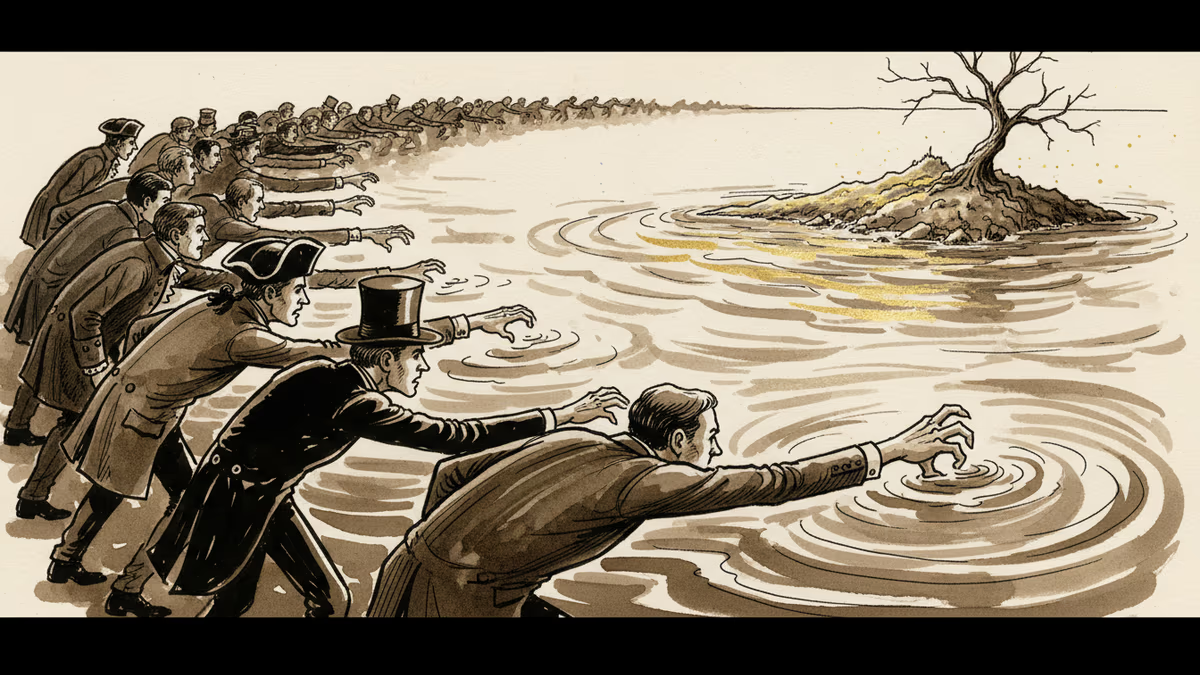
Trump says he wants to 'take' Cuba. But this desire isn't new—it stretches back to Thomas Jefferson. Why this centuries-old obsession is coming to a head right now.
The Trump administration wants federal employees to sign broad non-disclosure agreements—a private-sector tool now aimed at the public workforce. What happens when government runs like a corporation?
Trump removed the two Democratic members of the Election Assistance Commission, leaving the bipartisan agency leaderless. A Supreme Court ruling made it legal. Here's why a non-crisis can still be a warning sign.
Lebanon and Israel signed a framework agreement in June 2026. Hezbollah rejected it. Israel kept fighting. History suggests this moment is real—and fragile.
Trump says he wants to 'take' Cuba. But this desire isn't new—it stretches back to Thomas Jefferson. Why this centuries-old obsession is coming to a head right now.
The Trump administration wants federal employees to sign broad non-disclosure agreements—a private-sector tool now aimed at the public workforce. What happens when government runs like a corporation?
Thoughts
Share your thoughts on this article
Sign in to join the conversation