
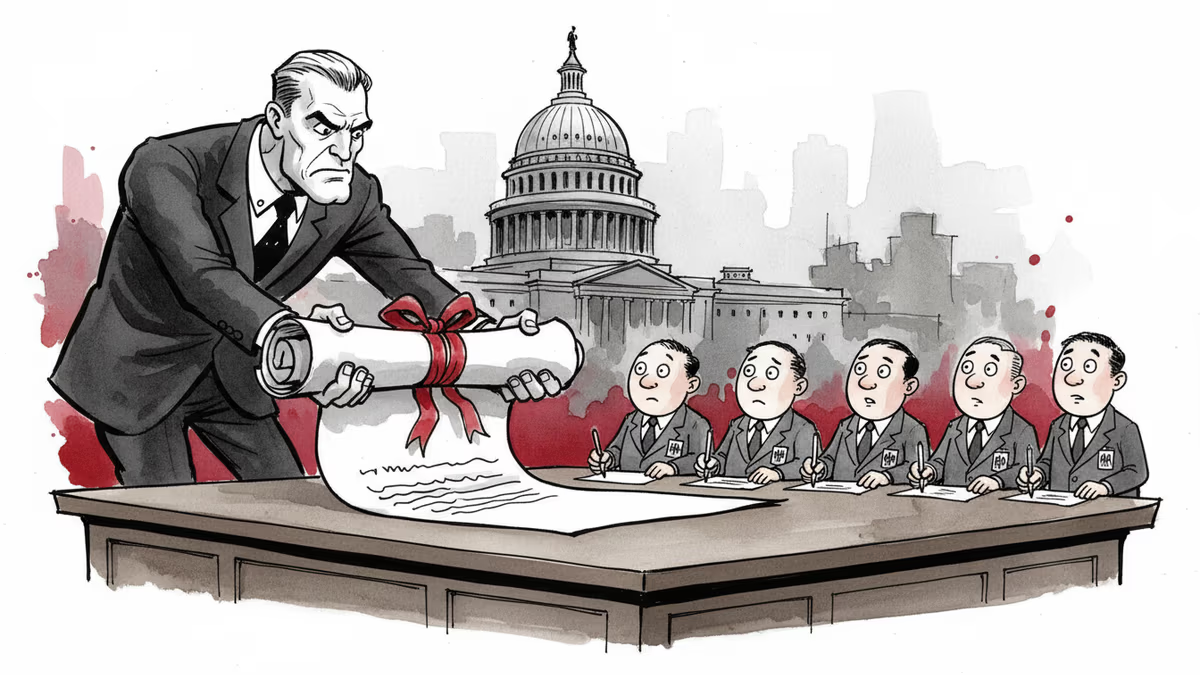
When Governments Borrow the Boss's Playbook
The Trump administration wants federal employees to sign broad non-disclosure agreements—a private-sector tool now aimed at the public workforce. What happens when government runs like a corporation?
Every new employee at a tech startup knows the drill: sign the NDA before you touch the codebase. Now the Trump administration wants to bring that ritual to the federal government—all of it.
What's Being Proposed
The Office of Personnel Management is drafting a broad non-disclosure agreement that would require federal employees across agencies to formally acknowledge their obligation to protect "non-public, confidential, or proprietary information." The plan is still in draft form and must survive a 30-day public comment period before any agency can adopt it—and adoption would be agency-by-agency, not automatic government-wide.
On paper, the NDA creates no new legal obligations. Federal workers are already bound by laws governing classified and sensitive information. What it does create is a new contractual layer—and with it, a new mechanism for enforcement, and perhaps more importantly, a new atmosphere of deterrence.
This isn't the administration's first move in this direction. The Defense Department and several other agencies have already rolled out NDAs and, in some cases, polygraph tests for their employees during Trump's second term. The current proposal would extend that logic across the entire federal workforce.
The Administration's Case—and Its Critics

Trump and his team have been explicit about the target: leakers. Over the past year, sensitive details about US-Iran war deliberations, FBI Director Kash Patel's personal conduct, and internal policy debates have all surfaced in the press—to the administration's visible fury. From their perspective, a government that cannot keep its own deliberations private cannot govern effectively. The NDA, in this framing, is simply accountability paperwork.
The counterargument is rooted in what leaks have actually produced. The exposure of the Pentagon Papers. Abu Ghraib. The NSA's mass surveillance programs. Across modern American history, unauthorized disclosures by government insiders have repeatedly served as the last line of democratic accountability when official channels failed. The question isn't whether leaks can be harmful—they can—but whether the cure is worse than the disease.
Legal scholars are already flagging a potential collision with the Whistleblower Protection Act, which shields federal employees who disclose evidence of waste, fraud, or abuse. If an NDA creates a chilling effect on disclosures that are legally protected, the document becomes not just a policy instrument but a litigation waiting to happen.
The Bigger Pattern: Governing Like an Owner
Zoom out, and the NDA proposal fits a consistent template of Trump's second term: the importation of private-sector management instincts into public institutions. Former personal attorneys now hold senior roles at the Justice Department. A UFC fight was staged on the White House lawn. The Oval Office has been redecorated in a style that would look at home in a Manhattan penthouse.
NDAs are a tool that private employers use when they believe their employees work for them. The constitutional premise of the federal civil service is different—public employees work for the American people, not for the administration in power. That distinction is not semantic. It determines who has the right to know what the government is doing, and through what channels.
Different democracies have reached different conclusions here. The UK's Official Secrets Act imposes sweeping confidentiality obligations on civil servants with criminal penalties. France maintains strict rules around administrative secrecy. The US system has historically leaned toward broader disclosure norms, undergirded by the Freedom of Information Act and robust whistleblower protections. The proposed NDA would nudge that balance in a direction more familiar to Westminster systems—but without the parliamentary oversight mechanisms those systems pair with secrecy rules.
This content is AI-generated based on source articles. While we strive for accuracy, errors may occur. We recommend verifying with the original source.
Related Articles
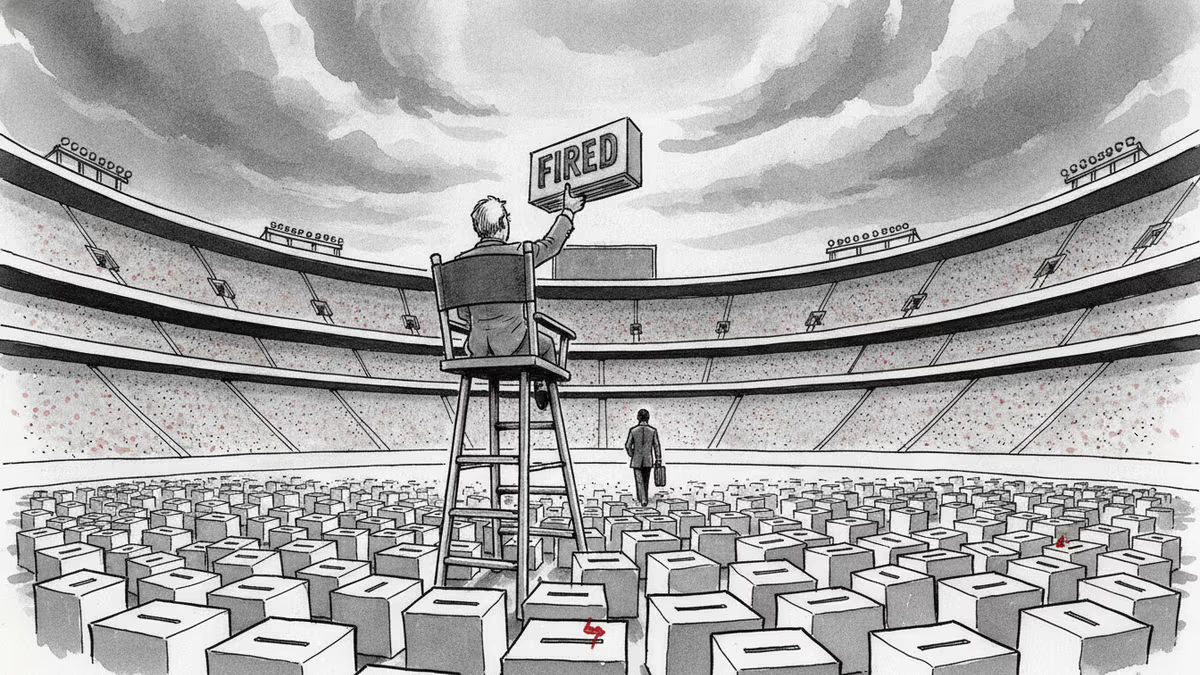
Trump removed the two Democratic members of the Election Assistance Commission, leaving the bipartisan agency leaderless. A Supreme Court ruling made it legal. Here's why a non-crisis can still be a warning sign.
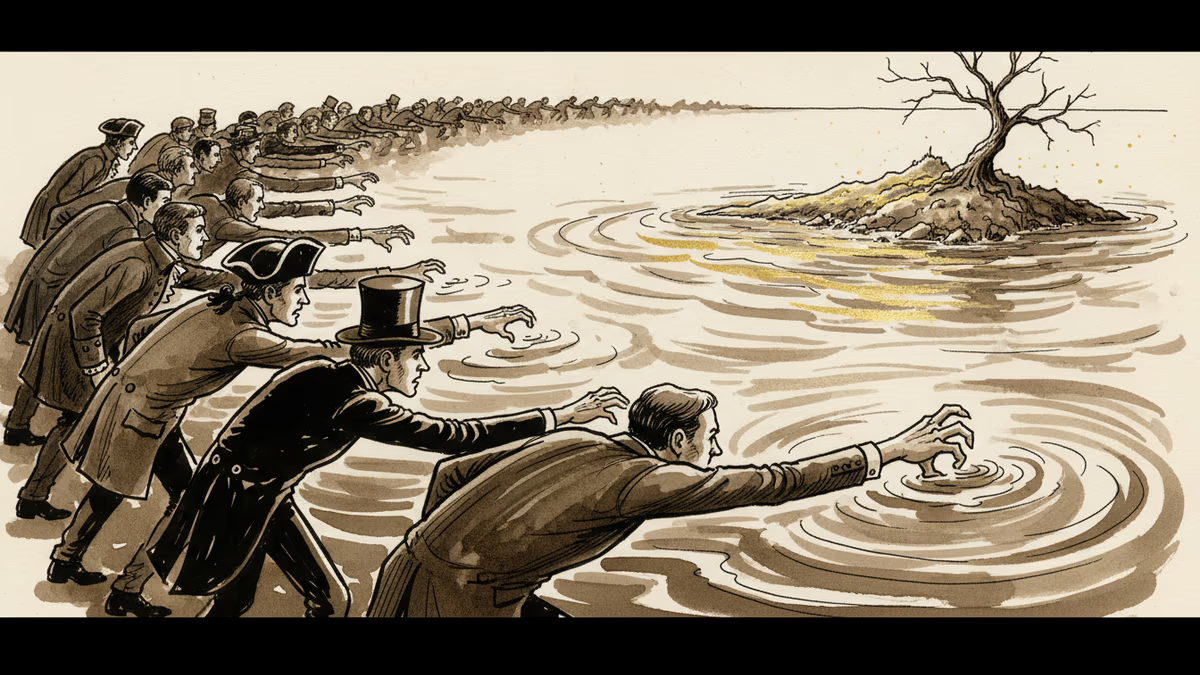
Trump says he wants to 'take' Cuba. But this desire isn't new—it stretches back to Thomas Jefferson. Why this centuries-old obsession is coming to a head right now.
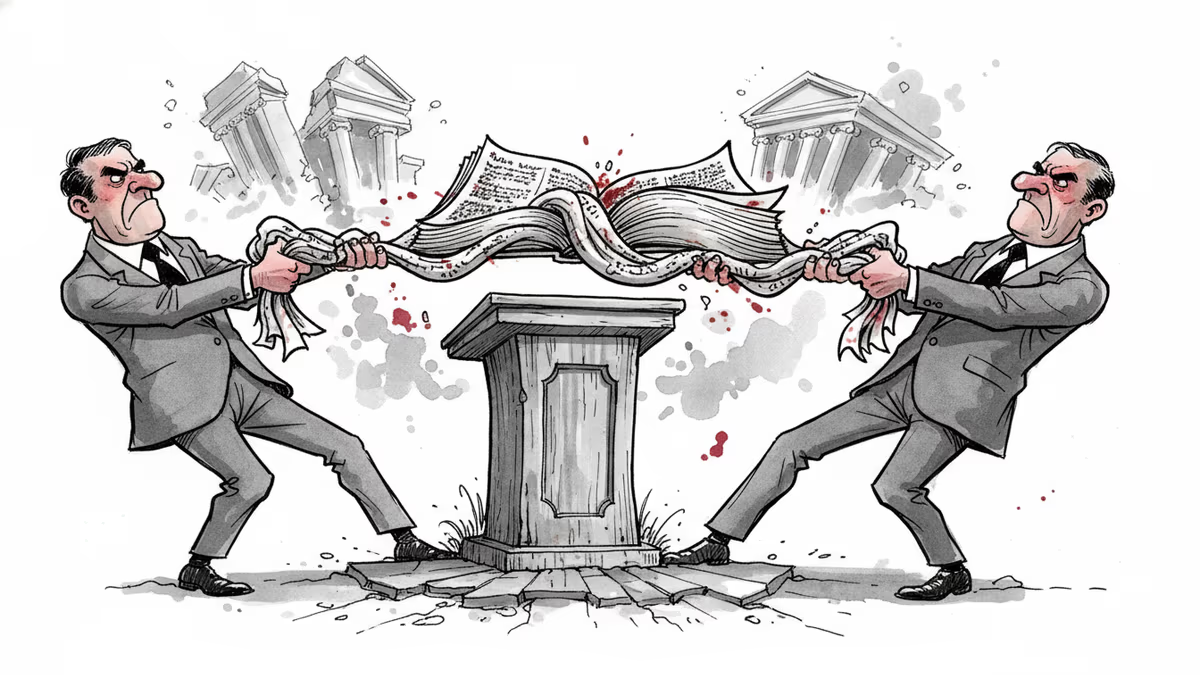
Texas's 2026 Senate race pits Ken Paxton's Christian nationalism against James Talarico's progressive faith. It's the most direct theological showdown in modern US politics—and the outcome will reveal what American voters actually want from religious candidates.
Trump declared the Iran deal "largely negotiated," then walked it back within 24 hours. Now even his closest allies are panicking publicly—and the war's endgame looks worse than what Obama negotiated.
Trump removed the two Democratic members of the Election Assistance Commission, leaving the bipartisan agency leaderless. A Supreme Court ruling made it legal. Here's why a non-crisis can still be a warning sign.
Trump says he wants to 'take' Cuba. But this desire isn't new—it stretches back to Thomas Jefferson. Why this centuries-old obsession is coming to a head right now.
Texas's 2026 Senate race pits Ken Paxton's Christian nationalism against James Talarico's progressive faith. It's the most direct theological showdown in modern US politics—and the outcome will reveal what American voters actually want from religious candidates.
Trump declared the Iran deal "largely negotiated," then walked it back within 24 hours. Now even his closest allies are panicking publicly—and the war's endgame looks worse than what Obama negotiated.
Thoughts
Share your thoughts on this article
Sign in to join the conversation